The Honda Element Real-Time 4WD: A Unique SUV Differential
When discussing differential maintenance for trucks and SUVs in 2026, the conversation often defaults to heavy-duty solid axles, Dana 60s, and 75W-140 synthetic gear oils. However, the compact SUV segment—specifically the cult-favorite Honda Element—utilizes a vastly different architecture. The Honda Element’s Real-Time 4WD system relies on a rear differential that functions more like an automatic transmission than a traditional hypoid gearset. Understanding the nuances of Honda Element differential fluid is critical for maintaining AWD engagement, preventing drivetrain chatter, and upgrading your SUV for light overlanding and performance driving.
The Anatomy of the Element’s Dual Pump System (DPS)
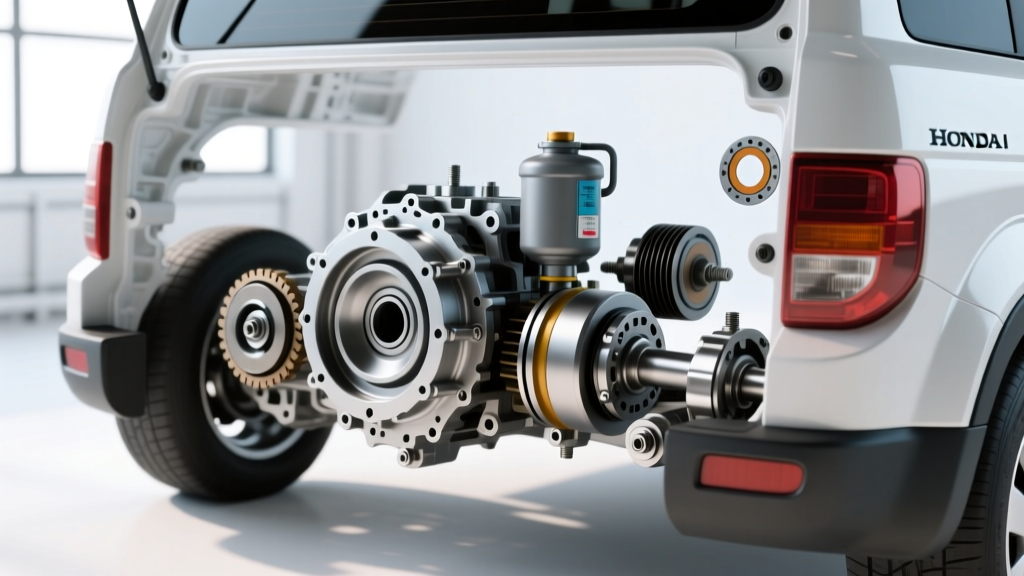
Unlike a traditional truck equipped with a locking rear differential or a Torsen limited-slip unit, the Honda Element (2003–2011) uses a hydraulic Dual Pump System (DPS) in the rear axle. This transverse-mounted differential contains a wet clutch pack and two hydraulic pumps: one driven by the front wheels via the propeller shaft, and one driven by the rear wheels.
When the front wheels slip, the pressure differential between the two pumps engages a pilot clutch. This pilot clutch then mechanically locks the main wet clutch pack, sending torque to the rear wheels. Because the system relies on wet-clutch friction rather than gear-to-gear meshing, standard 75W-90 GL-5 gear oil will destroy the system. You must use specialized friction-modified fluids designed specifically for hydraulic clutch engagement.
Fluid Specifications: OEM vs. Aftermarket Alternatives
The most common failure mode in neglected Element rear differentials is the infamous "AWD Groan"—a shuddering chatter during tight, low-speed turns caused by degraded friction modifiers failing to smoothly engage the wet clutches. To prevent this, fluid selection is paramount.
| Fluid Brand / Type | Part Number | Base Stock | Estimated Cost (2026) | Verdict |
|---|---|---|---|---|
| Honda Genuine DPSF-II | 08200-9002 | Synthetic Blend | $11 - $14 / Qt | The absolute gold standard. Formulated specifically for the DPS wet clutch pack. |
| Idemitsu Type HP | 10107-042F | Synthetic Blend | $9 - $12 / Qt | Excellent alternative. Idemitsu is the OEM manufacturer for Honda's DPS fluid. |
| Valvoline Multi-Vehicle ATF | VV986 | Full Synthetic | $8 - $10 / Qt | Use only in emergencies. Lacks the precise shear stability required for prolonged DPS use. |
According to service bulletins available via Honda Tech Info, the original DPSF was superseded by DPSF-II to provide better shear stability and thermal resistance. Always opt for DPSF-II or its direct Idemitsu equivalent.
Performance Maintenance: The Double Drain-and-Fill
Because the Element’s rear differential lacks a true internal filter, debris from clutch wear circulates freely. A single drain only removes about 70% of the old fluid. For performance maintenance and AWD restoration, a "double drain-and-fill" is the industry standard.
Required Parts and Tools
- 2 Quarts of Honda DPSF-II (Part # 08200-9002)
- 4 Aluminum Crush Washers, 18mm (Part # 90471-PX4-000) - Available at Honda Parts Now
- 17mm Socket and 3/8" Torque Wrench
- Fluid Transfer Pump
Step-by-Step Procedure
- Preparation: Ensure the SUV is on perfectly level ground. Jack up the rear and support it securely on jack stands.
- Fill Plug First: ALWAYS remove the upper fill plug (17mm) before the drain plug. If the fill plug is seized and you drain the fluid first, the vehicle is undrivable.
- Drain: Remove the lower drain plug (17mm). Allow the fluid to drain completely. Inspect the magnetic drain plug for excessive metal shavings (a fine paste is normal; chunks indicate clutch or bearing failure).
- Prep Washers: Install new 18mm aluminum crush washers on both plugs. Never reuse aluminum crush washers, as they work-harden and will leak.
- Torque Specs: Reinstall the drain plug and torque to 33 lb-ft (44 Nm).
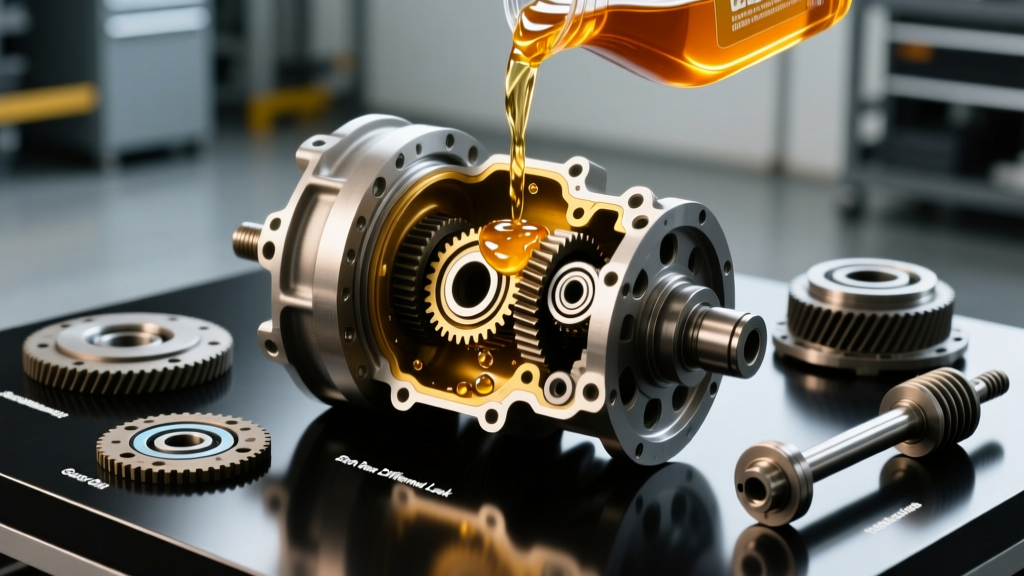
- Refill: Pump exactly 1.1 Liters (1.2 US Quarts) of DPSF-II into the fill hole. The correct level is exactly at the bottom lip of the fill hole.
- Final Torque: Reinstall the fill plug with a new crush washer and torque to 33 lb-ft (44 Nm).
- The Second Cycle: Drive the vehicle for 50–100 miles, engaging the AWD system on loose gravel or wet pavement to cycle the clutches. Repeat the drain and fill process to achieve near 100% fluid purity.
Upgrading the Element AWD for Light Off-Road
"The Element's Real-Time 4WD is reactive, not proactive. It only engages after front-wheel slip occurs. Upgrading your differential maintenance routine is the only way to ensure that when slip happens, engagement is instantaneous."
For enthusiasts pushing the Element into light overlanding or beach driving in 2026, thermal management is the biggest bottleneck. The small 1.1L fluid capacity means the differential heats up rapidly under continuous AWD slip. While you cannot easily install a traditional aftermarket diff cover with cooling fins due to the transverse packaging and exhaust routing, you can upgrade your maintenance strategy:
- Shorter Service Intervals: If you frequently drive on sand or deep mud, reduce your DPSF-II service interval from the standard 90,000 miles to every 30,000 miles.
- Skid Plate Fabrication: The rear differential sits relatively low. Fabricating or sourcing an aftermarket steel skid plate prevents catastrophic casing damage from rocks, which would otherwise result in a $1,500+ replacement from a salvage yard.
- Tire Sizing Awareness: Never run mismatched tire tread depths front-to-rear. A variance of more than 2/32" between front and rear axles will cause a constant speed differential, keeping the DPS clutch pack partially engaged on dry pavement, leading to rapid fluid degradation and clutch burnout.
How the Element Compares to Traditional Truck Differentials
To contextualize this within the broader scope of differential maintenance for trucks and SUVs, let us compare the Element’s DPS to a traditional truck setup, such as the Toyota Tacoma’s 8-inch rear differential or the Ford F-150’s 8.8-inch axle.
| Feature | Honda Element (Real-Time 4WD) | Toyota Tacoma / Ford F-150 (Solid Axle) |
|---|---|---|
| Differential Type | Transverse Wet-Clutch Pack (DPS) | Hypoid Ring & Pinion (LSD or Open) |
| Fluid Capacity | 1.1 Liters (1.2 qts) | 2.5 to 3.5 Liters (2.6 - 3.7 qts) |
| Required Fluid | Honda DPSF-II (Friction Modified) | 75W-90 or 75W-140 GL-5 Gear Oil |
| Engagement | Reactive (Hydraulic Pressure) | Constant (Mechanical Gearing) |
| Common Failure | Clutch Chatter / Fluid Shear | Pinion Bearing Wear / Ring Gear Spalling |
As shown, treating an Element rear differential like a truck differential is a fatal error. Pouring GL-5 gear oil into the Element will cause immediate hydraulic pump cavitation and clutch pack destruction. Conversely, understanding the unique requirements of your specific SUV drivetrain ensures longevity and peak performance.
Final Thoughts on SUV Drivetrain Longevity
Maintaining the Honda Element differential fluid is a straightforward, low-cost procedure that yields massive dividends in AWD reliability. By sticking to OEM Honda DPSF-II (or Idemitsu Type HP), utilizing fresh 18mm aluminum crush washers, and adhering strictly to the 33 lb-ft torque specification, you eliminate the most common drivetrain complaints associated with this platform. Whether you are daily driving or outfitting your Element for weekend expeditions, respecting the engineering of the Dual Pump System is the key to unlocking the full potential of Honda's compact SUV lineup.
For sourcing OEM hardware like the 90471-PX4-000 washers or complete differential assemblies, platforms like RockAuto remain invaluable resources for keeping aging SUV platforms on the road in 2026 and beyond.