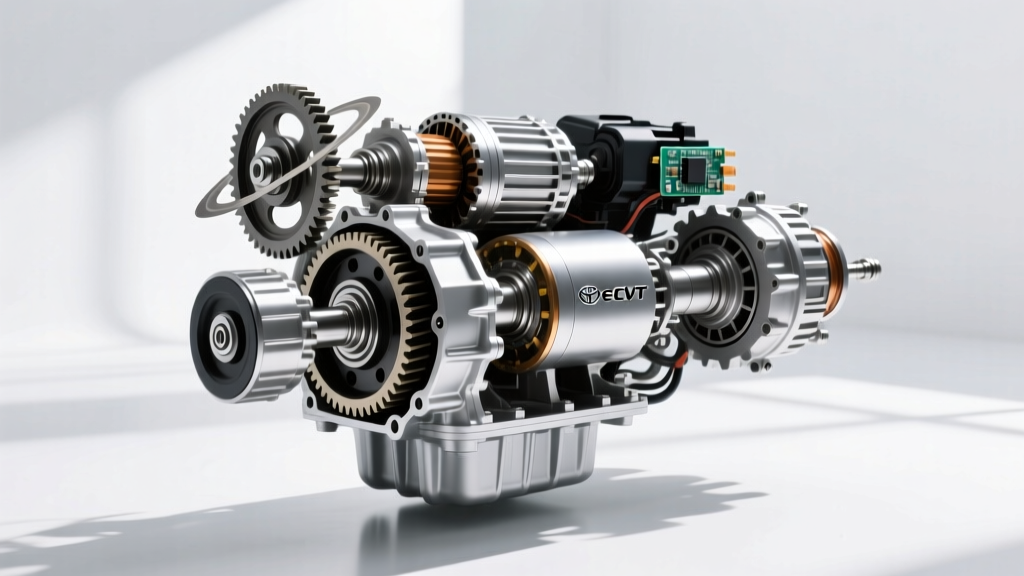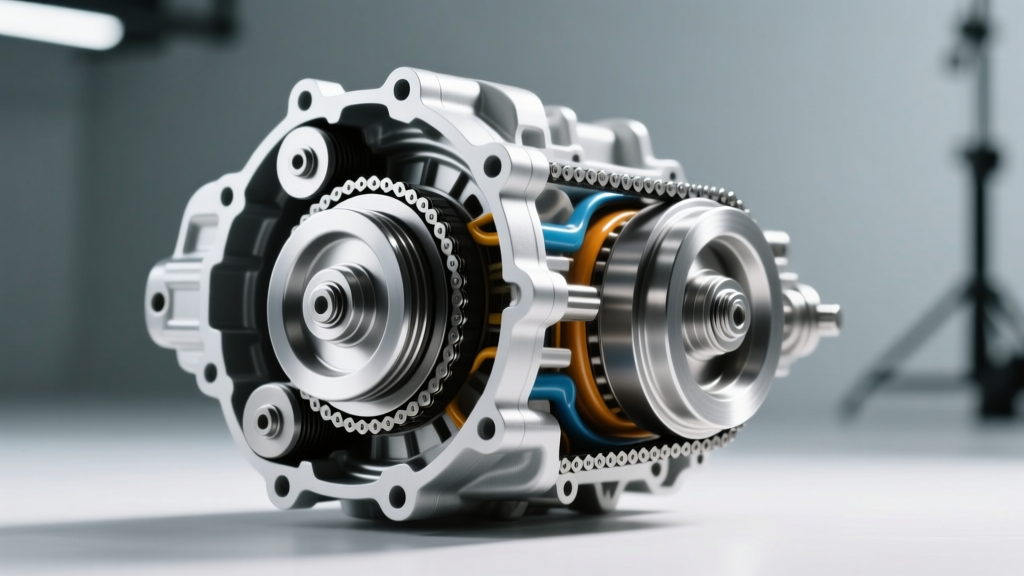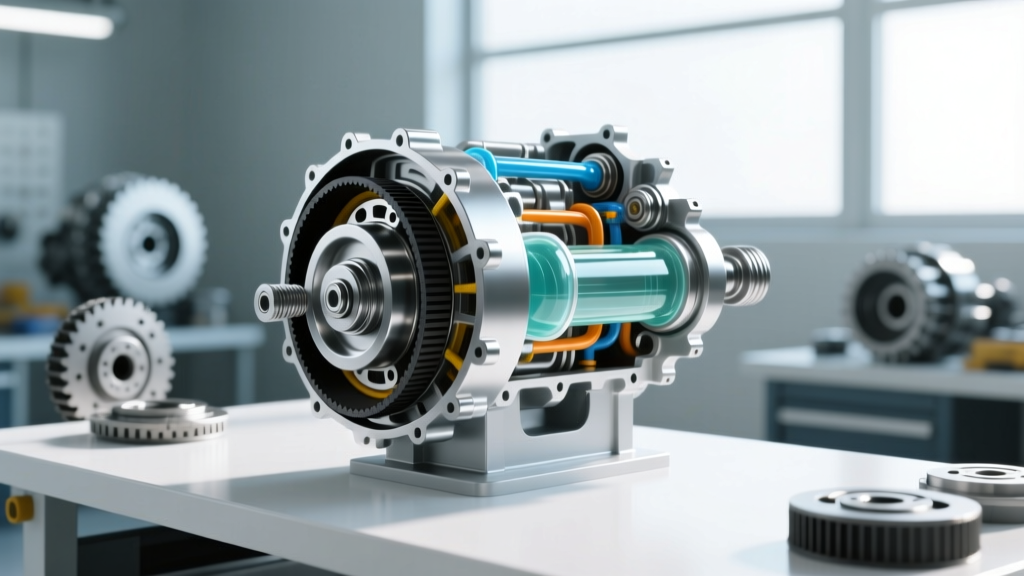
When drivers and automotive enthusiasts ask, what is CVT transmission in cars, the standard answer usually revolves around a pair of variable-diameter pulleys and a steel push-belt or chain. While that mechanical description is accurate, it entirely misses the unsung hero of the continuously variable transmission: the highly specialized CVT fluid. As a drivetrain specialist, I can tell you that 90% of premature CVT failures we see in the workshop are directly traceable to fluid degradation, incorrect fluid application, or neglected service intervals.
The Chemistry of CVT Fluid: Why Standard ATF Will Destroy Your Transmission
Traditional automatic transmissions rely on Automatic Transmission Fluid (ATF) primarily for hydraulic actuation, lubrication, and cooling. CVTs, however, operate on a fundamentally different friction principle. The fluid in a Jatco JF011E or an Aisin K313 CVT must maintain a precise coefficient of friction between the steel belt elements and the pulley sheaves. If the friction is too low, the belt slips, causing catastrophic sheave scoring. If the friction is too high, the belt shudders and binds during ratio changes.
Furthermore, CVT fluids contain advanced shear-stable polymers. The intense shearing forces generated between the pulleys and the chain or belt links will rapidly destroy the viscosity index improvers found in standard ATF. Using a multi-vehicle universal ATF in a modern CVT is a guaranteed path to a $4,500 replacement bill. The fluid must also act as a hydraulic medium for the valve body, requiring specific anti-foaming agents to prevent aeration under high-RPM operation.
OEM Fluid Specifications, Capacities, and Part Numbers
To maintain optimal clamping pressure and hydraulic valve body function, you must use the exact OEM-specified fluid. Below is a reference table for the most common CVT platforms on the road today.
| Manufacturer | Fluid Type | OEM Part Number | Drain & Fill Capacity | Dry Fill Capacity |
|---|---|---|---|---|
| Nissan / Mitsubishi | NS-3 | 999MP-NS300P | ~4.5 Quarts | ~10.2 Quarts |
| Subaru | CVTF-III | SOA868V9270 | ~4.0 Quarts | ~13.0 Quarts |
| Honda | HCF-2 | 08200-HCF2 | ~3.9 Quarts | ~8.5 Quarts |
| Toyota | CVTF TC / FE | 08886-02105 | ~4.2 Quarts | ~9.5 Quarts |
Note: Capacities vary slightly by specific vehicle model and drivetrain configuration (AWD vs. FWD). Always verify via the factory service manual.
Debunking the Lifetime Fluid Myth
Many manufacturer maintenance schedules claim CVT fluid is a lifetime fill. In the automotive engineering world, lifetime simply means the duration of the powertrain warranty, typically 60,000 to 100,000 miles. If you plan to keep your vehicle beyond the warranty period, a lifetime fluid is a planned obsolescence trap.
Expert Best Practice: For severe driving conditions (stop-and-go traffic, towing, mountainous terrain), perform a CVT drain-and-fill every 30,000 miles. For normal highway driving, a 60,000-mile interval is the industry expert consensus for maximum variator longevity.
Expert Step-by-Step Drain-and-Fill Procedure
Unlike a traditional automatic transmission with a dipstick and a large fluid pan, most modern CVTs require a precise, temperature-dependent leveling procedure. Here is the professional workflow for a Nissan or Renault CVT utilizing NS-3 fluid.
1. Preparation and Draining
- Ensure the vehicle is perfectly level on a lift or jack stands.
- Remove the aerodynamic undertray to access the transmission pan.
- Remove the 10mm hex drain plug. Torque Spec Note: The drain plug crush washer must be replaced. Reinstall the plug and torque to exactly 31 ft-lbs (42 Nm).
- Drop the transmission pan. Clean the internal magnets. You will find a fine metallic paste; this is normal clutch and belt wear material. Large chunks or brass flakes indicate impending failure.
- Replace the paper pan gasket (Part # 31397-1XF0A) and torque the pan bolts to 65 in-lbs (7.4 Nm) in a crisscross pattern to prevent warping.
2. Filling and Temperature Leveling
This is where amateur mechanics ruin perfectly good transmissions. CVTs do not have a traditional dipstick. You must fill the transmission through the overflow or check plug until fluid begins to weep out of the level check hole. However, fluid volume expands with heat.
- Connect an OBD2 bi-directional scan tool to monitor the CVT Fluid Temperature sensor.
- Start the engine and cycle the shifter through all gears to fill the valve body and torque converter.
- Monitor the fluid temperature. Nissan specifies the level check must be performed when the fluid is between 104°F and 113°F (40°C - 45°C).
- With the engine idling and the vehicle level, remove the overflow plug. If a steady stream flows, wait. When it slows to a slow drip, reinstall the overflow plug and torque to 14 ft-lbs (19 Nm).
Platform-Specific Quirks: Honda and Toyota
Honda HCF-2 and the Inline Filter
Honda CVTs (found in the Civic, Accord, and CR-V) feature an external inline fluid filter housed in a 3-bolt cartridge near the transmission fluid dipstick or fill tube. During every drain-and-fill, this filter must be replaced. Neglecting this $15 part will cause restricted flow to the valve body, resulting in delayed forward engagement and eventual clutch pack burnout. The housing bolts should be torqued to a gentle 8 ft-lbs to avoid stripping the aluminum casing.
Toyota Direct-Shift CVT (K120)
Toyota's K120 Direct-Shift CVT features a physical launch gear to improve off-the-line acceleration and reduce the load on the steel belt. Because this transmission utilizes both a traditional belt variator and physical planetary gear clutches, the CVTF TC fluid requires a highly specific friction profile. Never substitute Toyota CVTF TC with older CVTF FE formulations, as the friction modifiers will cause the launch gear clutches to chatter violently during 1st-to-2nd gear transitions.
Common Fluid-Related CVT Failure Modes
Aeration from Overfilling
If a CVT is overfilled, the rotating internal components will whip the fluid into a foam. Hydraulic pumps cannot pump foam. This leads to a severe drop in line pressure, resulting in belt slip, delayed engagement, and eventual burning of the forward and reverse clutch packs.
Thermal Degradation and Varnish
CVTs generate immense heat, particularly during high-ratio highway cruising or low-ratio steep incline climbing. When fluid exceeds 260°F (126°C) consistently, the friction modifiers break down, and the base oil oxidizes into a hard varnish. This varnish clogs the microscopic passages in the valve body and causes the stepper motor valves to stick, leading to the infamous CVT judder or ratio-hunting.
Final Expert Takeaway
Understanding what is CVT transmission in cars requires looking past the marketing brochures and into the hydraulic realities of the drivetrain. By adhering to strict OEM fluid specifications, utilizing precise torque values during service, and ignoring the deceptive lifetime fluid marketing, you can easily push a modern Jatco or Aisin CVT past the 200,000-mile mark without major internal repairs. Treat your CVT fluid with the same respect you would give to timing belt intervals, and your transmission will reward you with seamless, reliable service.
For official maintenance schedules and technical service bulletins, always consult the Nissan Owner's Maintenance Portal or the Subaru Vehicle Maintenance Hub to verify the exact requirements for your specific model year and VIN.