The Core Question: Do EV Cars Have a Transmission?
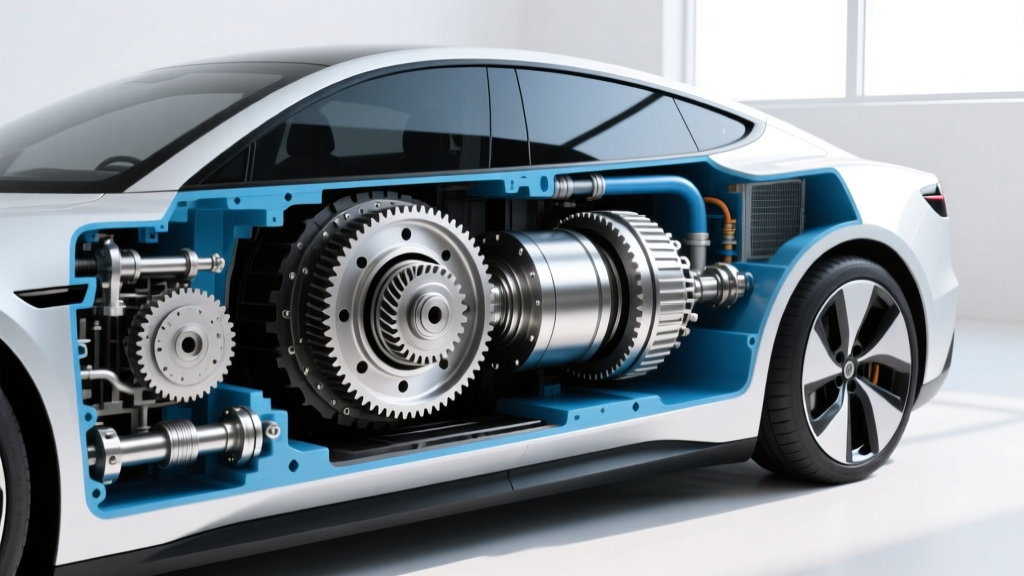
When consumers and enthusiasts search the internet asking, "does ev cars have transmission", the grammatical quirk aside, the mechanical answer is a definitive yes. However, the architecture is vastly different from the 8-speed automatics or CVTs found in internal combustion engine (ICE) vehicles. According to the U.S. Department of Energy, electric vehicles utilize a transmission to transfer power from the electric motor to the wheels, but because electric motors deliver maximum torque at zero RPM and can rev up to 20,000+ RPM, they typically require only a single-speed reduction gearbox.
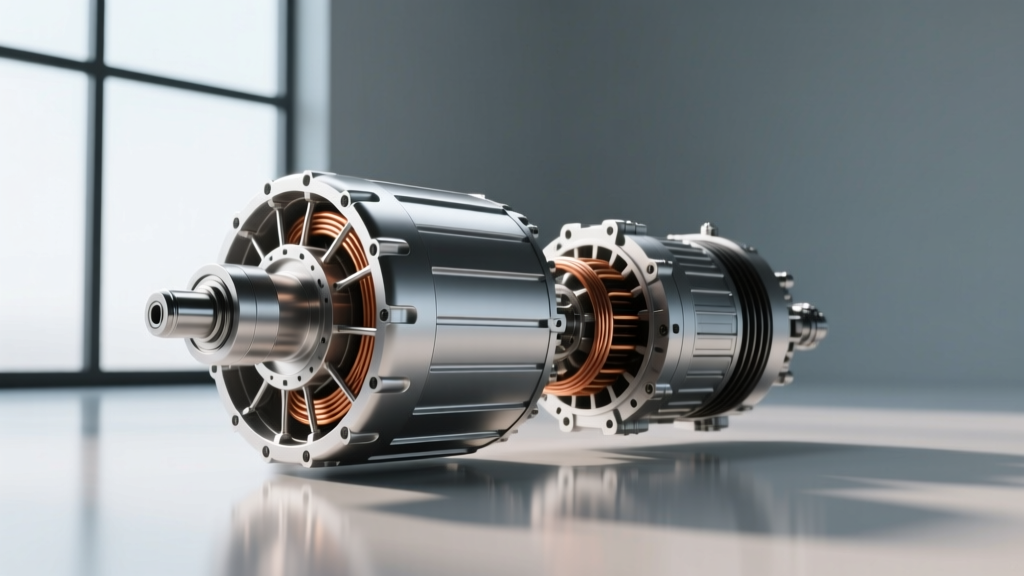
As an automotive drivetrain specialist, I see a growing influx of EVs in the bay exhibiting driveline anomalies. Because the electric motor and gearbox are often housed in a single integrated Drive Unit (DU), misdiagnosing a mechanical gear fault as an inverter or stator issue can lead to unnecessary $6,000+ component replacements. This guide breaks down electric car gearbox design and provides a rigorous diagnostic framework for troubleshooting reduction gear failures.
Electric Car Gearbox Design: Parallel Shaft vs. Planetary
To diagnose a fault, you must first understand the internal architecture of the EV reduction gear. There are two primary designs currently dominating the market:
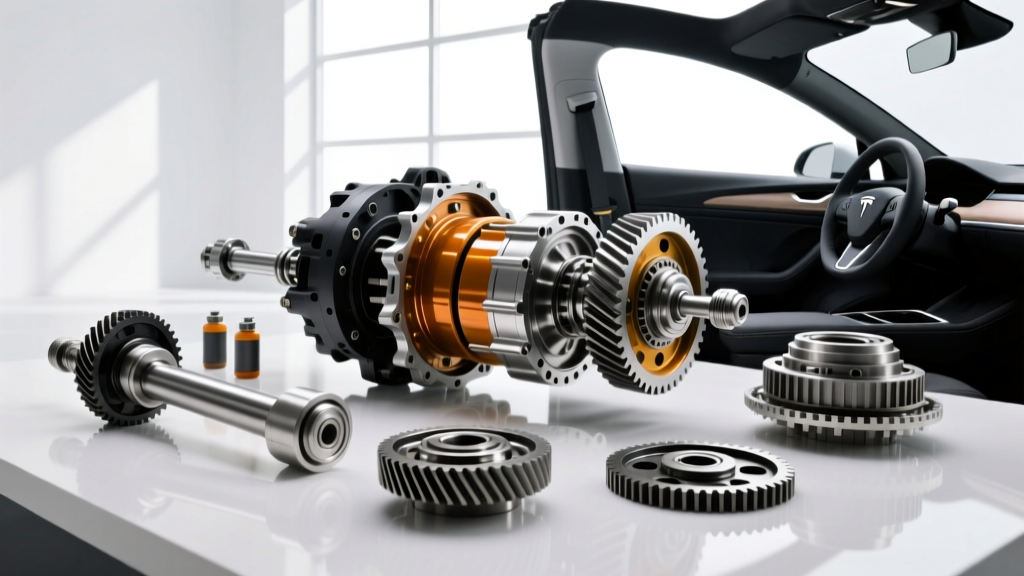
- Parallel-Axis Helical Gears: Used in the Tesla Model 3/Y Rear Drive Units (RDU), Rivian EDUs, and most traditional OEM adaptations. These utilize an input shaft, an intermediate counter-shaft, and a differential ring gear. They are robust, relatively quiet, and handle high-torque loads efficiently, but require precise bearing preloads to maintain gear mesh alignment.
- Planetary Gearsets: Used in coaxial designs like the early Nissan Leaf, Chevy Bolt, and various VW MEB platform vehicles. The motor shaft acts as the sun gear, driving planet gears that turn a ring gear attached to the differential. This allows for a highly compact, coaxial packaging but can be susceptible to planet-carrier bearing wear under high-torque launch scenarios.
The Exception: Multi-Speed EV Transmissions
While 95% of EVs use a single-speed reduction gear, high-performance applications demand more. The Porsche Taycan and Audi e-tron GT utilize a ZF-designed 2-speed automatic transmission on the rear axle. This unit features a first gear with a ratio of roughly 16:1 for violent launch control acceleration, and an 8:1 second gear for top-speed efficiency and highway cruising. Diagnosing shift-clunk or hesitation in these models requires analyzing the wet-clutch actuator pressures and shift solenoid PWM signals, bridging the gap between traditional ICE transmission diagnostics and EV powertrain management.
Symptom Diagnosis: The EV Gearbox NVH Matrix
Noise, Vibration, and Harshness (NVH) is the primary indicator of electric gearbox degradation. Because EVs lack the masking acoustic noise of an ICE engine, gear whine, bearing rumble, and spline clunks are immediately apparent to the driver. Use the following matrix to isolate the root cause.
| Audible Symptom | Frequency / Condition | Probable Root Cause | Diagnostic Protocol |
|---|---|---|---|
| High-Pitch Whine | Scales linearly with vehicle speed; present on coast and drive. | Helical gear mesh wear or loss of bearing preload. | Perform chassis-ear NVH analysis. Calculate Gear Mesh Frequency (GMF). If GMF matches, gearbox teardown is required. |
| Low-Frequency Rumble | Most prominent between 20-45 mph; felt through the chassis floor. | Intermediate shaft bearing spalling or cage failure. | Use an accelerometer on the drive unit casing. Look for non-synchronous frequency spikes indicating bearing defect. |
| Metallic Clunk | Occurs exactly at torque reversal (e.g., lifting off the accelerator to regen braking). | Half-shaft spline wear, differential pin wear, or degraded motor mount bushings. | Command 0 Nm torque via bi-directional scanner, then step to 50 Nm and -50 Nm. Measure rotational lash with a dial indicator on the half-shaft. |
| Grinding / Crunching | Continuous under load; worsens with heat. | Catastrophic fluid starvation leading to gear surface micropitting. | Immediate drain and fluid analysis. Look for ferrous shimmer and copper particles from the synchro/bearing cages. |
Deep Dive: Isolating Gear Whine from Electromagnetic Noise
The most common diagnostic trap in EV drivetrain troubleshooting is confusing mechanical gear whine with inverter switching noise. Both produce high-frequency acoustic signatures, but their origins—and repair costs—are wildly different.
The Coast-Down Test
To separate mechanical faults from electrical faults, perform a controlled coast-down test on a dynamometer or a closed, safe track. Accelerate to 60 mph, then shift the vehicle into Neutral (or use a diagnostic tool to command zero torque output from the inverter) and let the vehicle coast.
- If the whine persists identically during zero-torque coast: The issue is mechanical. The gears and bearings are still spinning at road-speed RPM, indicating a bearing preload issue, gear runout, or insufficient backlash.
- If the whine disappears or changes pitch drastically: The issue is likely electromagnetic (EM). EM whine is tied to the inverter's Pulse Width Modulation (PWM) switching frequency and stator slot harmonics, which change based on torque load, not just rotational speed.
Fluid Degradation & Thermal Breakdown in EV Gearboxes
Electric vehicle reduction gears do not use standard GL-4 or GL-5 manual transmission fluids, nor do they use standard Dexron ATF. EV gearboxes require highly specialized dielectric fluids. Because the electric motor's copper windings and stator laminations are often cooled by the same fluid that lubricates the gearbox (in integrated oil-cooled motor designs), the fluid must possess specific dielectric breakdown voltage properties to prevent short-circuiting the motor.
Real-World Specs: Tesla Model 3 Rear Drive Unit (RDU)
Let us look at exact service data for a widely serviced platform, the Tesla Model 3 Rear Drive Unit (Part # 1060081-00-E and subsequent revisions):
- Fluid Type: Castrol SAF-XJ or OEM-equivalent dielectric EV gear oil.
- Capacity: Approximately 1.6 Liters (Gearbox section only; motor cooling loop is separate on earlier models, integrated on later ones).
- Drain Plug Torque: 35 Nm (26 lb-ft).
- Fill Plug Torque: 35 Nm (26 lb-ft).
- Diagnostic Insight: The drain plug is magnetic. A fine, grey paste is normal for the first 20,000 miles as helical gears wear in. However, if you find chunky metallic flakes or copper shards, the intermediate shaft needle bearings are disintegrating, requiring an immediate RDU teardown or replacement.
Repair vs. Replace: Cost Analysis & OEM Part Data
Unlike ICE vehicles where dropping a transmission pan and replacing a solenoid pack is routine, EV gearbox repair is heavily constrained by OEM part availability. Most manufacturers do not sell internal bearings, seals, or individual helical gears to the aftermarket or even to dealerships.
The Dealership Route: Complete Drive Unit Replacement
If a bearing fails and causes gear misalignment, the OEM solution is replacing the entire Drive Unit (Motor + Inverter + Gearbox).
Cost: $5,500 to $9,000 for the remanufactured assembly, plus 8 to 12 hours of labor, high-voltage system decommissioning, and coolant vacuum-filling.
The Independent Specialist Route: Teardown and Bearing Kits
Specialized EV drivetrain shops are now reverse-engineering bearing kits and sourcing SKF or NTN equivalents.
Cost: A complete bearing and seal kit for a Tesla Model 3 RDU costs between $250 and $450. However, the labor is intense. The casing must be split using a hydraulic press, bearing preloads must be set using selective shims and a dial indicator (measuring to the micron), and the housing must be resealed with high-temperature anaerobic sealant. Total independent repair cost usually lands between $2,500 and $3,500.
Expert Warning: Never attempt to flush an integrated EV Drive Unit with standard solvent-based flushing machines. Residual solvents will destroy the dielectric properties of the new fluid and degrade the enamel insulation on the motor's copper windings, leading to a catastrophic high-voltage ground fault and a bricked drive unit.
Summary
So, do EV cars have a transmission? Yes. Whether it is a single-speed parallel helical reduction gear or a complex 2-speed ZF automatic, the gearbox remains a critical, high-stress mechanical link in the EV drivetrain. By leveraging NVH frequency analysis, understanding dielectric fluid requirements, and performing rigorous torque-reversal tests, technicians can accurately diagnose EV driveline faults, saving customers thousands of dollars in unnecessary high-voltage component replacements.