The Engineering Reality: Do Electric Cars Have a Gearbox?
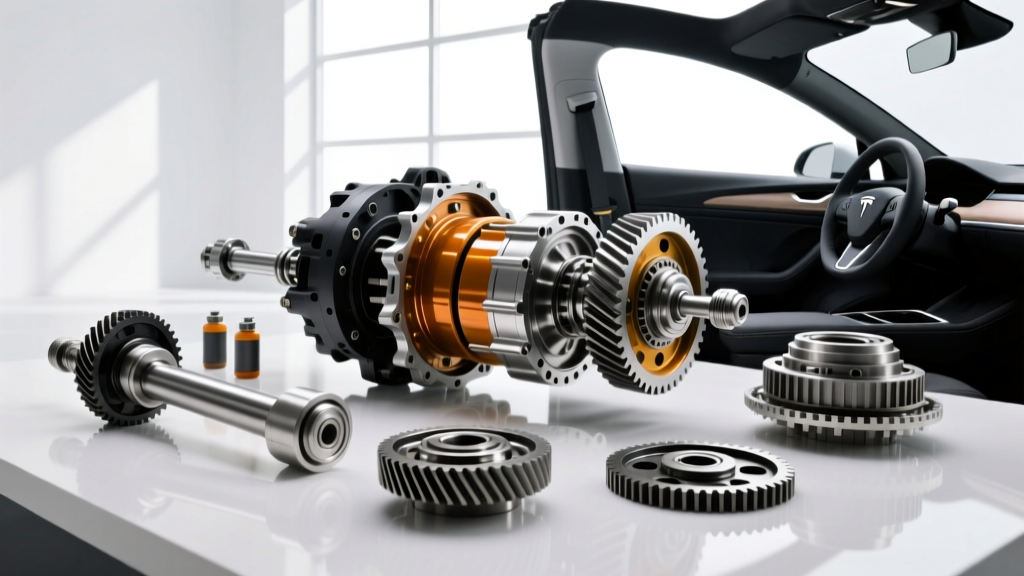
A frequent question among transitioning consumers and novice technicians is: do electric cars have a gearbox? The short answer is an emphatic yes. While the vast majority of electric vehicles (EVs) do not utilize the complex 8-speed or 10-speed automatic transmissions found in internal combustion engine (ICE) vehicles, they absolutely rely on a specialized reduction gearbox to multiply torque and transfer power to the wheels. Because electric motors operate efficiently across a massive RPM band (often up to 20,000 RPM), a single-speed reduction gear—typically featuring a ratio between 9:1 and 10.5:1—is sufficient to translate high-speed, low-torque motor output into usable, high-torque wheel propulsion.
However, the term "transmission" in the EV space is evolving. For instance, the Porsche Taycan utilizes a highly complex two-speed automatic transmission on its rear axle to balance blistering off-the-line acceleration with high-speed efficiency. You can read more about the Porsche Taycan two-speed transmission engineering to understand how multi-speed EV gearboxes are pushing the boundaries of performance.
From a preventive maintenance perspective, treating an EV reduction gearbox as a "sealed-for-life" component is a critical mistake. The extreme thermal cycling, high-RPM bearing loads, and integration with power electronics demand strict adherence to fluid service intervals. This guide breaks down the exact specifications, torque values, and failure modes you need to know to maintain an EV drivetrain in 2026 and beyond.
EV Reduction Gear vs. Multi-Speed Transmissions
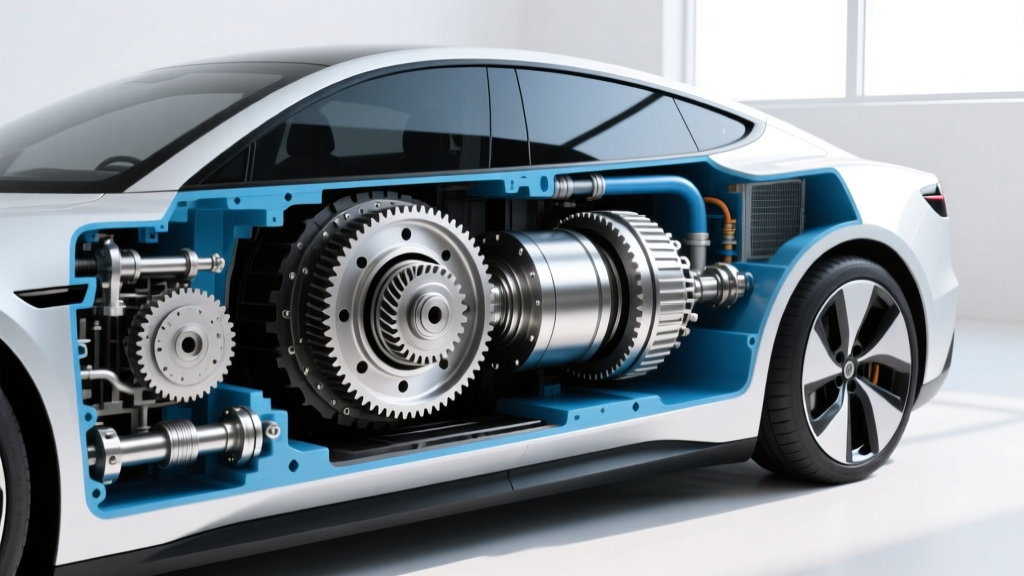
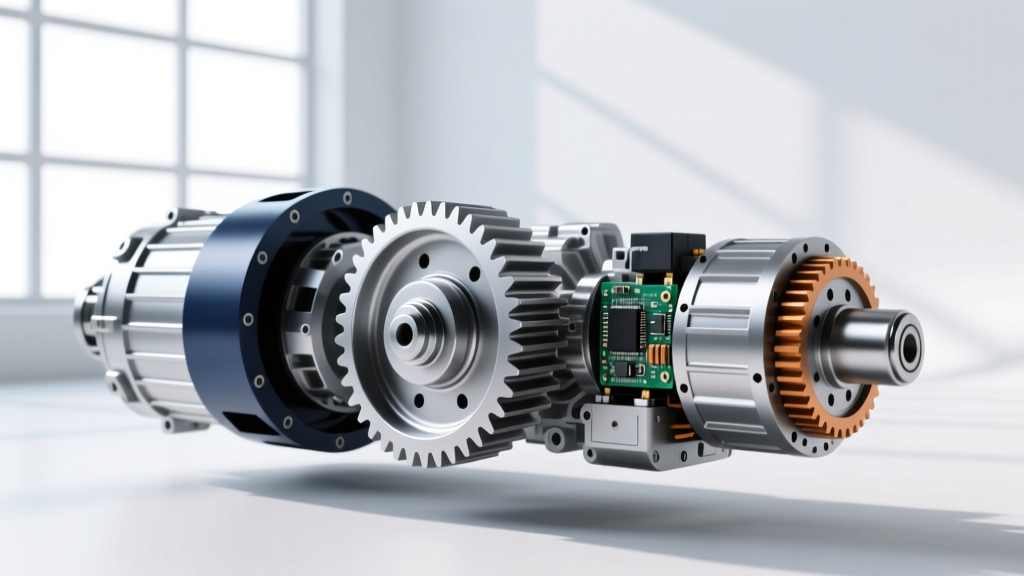
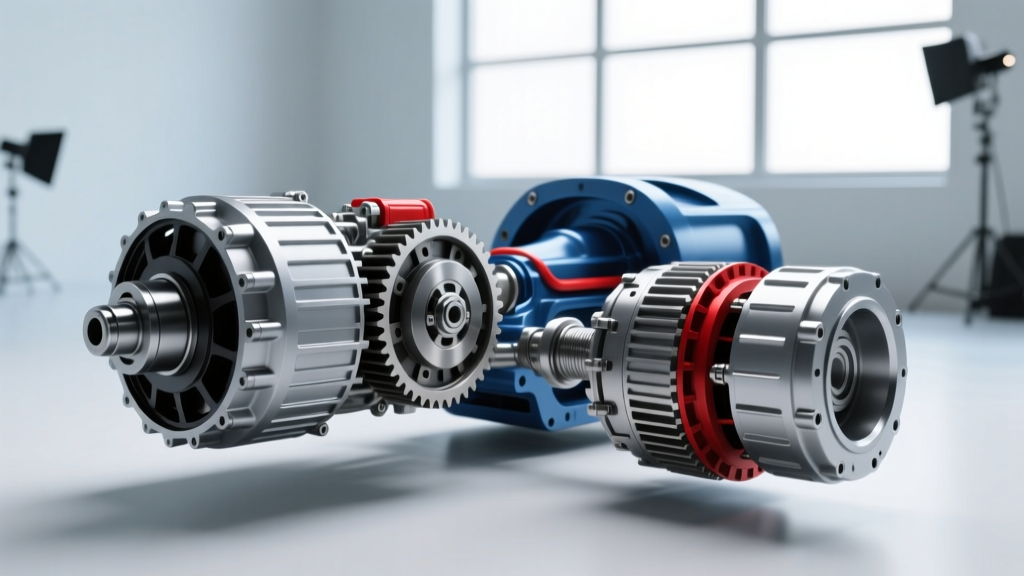
Before pulling a drain plug, it is vital to understand the architecture of the unit you are servicing. Most modern EV platforms, such as the Hyundai E-GMP or the GM Ultium drive units, house the electric motor, inverter, and reduction gearbox in a single integrated casing known as an e-axle or electric drive unit (EDU).
In many of these integrated units, the gearbox fluid also acts as a dielectric coolant, bathing the motor stator and rotor to manage heat. This dual-purpose requirement means EV transmission fluids must possess high dielectric breakdown resistance, anti-wear properties for helical gears, and copper corrosion inhibitors to protect the motor windings. Using standard ICE automatic transmission fluid (ATF) in an integrated e-axle can lead to catastrophic dielectric failure, causing high-voltage arcing and destroying the inverter.
Preventive Maintenance: EV Gearbox Fluid Specifications
Automakers often claim EV gearbox fluids are "lifetime" fills. Independent tribologists and high-mileage EV fleet operators strongly disagree. Thermal degradation and shear breakdown of the synthetic base stocks occur over time, especially under heavy regenerative braking loads. Below is a preventive maintenance matrix for popular EV platforms.
| Vehicle Platform | Gearbox Type | Fluid Capacity | OEM Fluid Specification / Part Number | Recommended Service Interval |
|---|---|---|---|---|
| Tesla Model 3 / Model Y (Rear DU) | Single-Speed Reduction | ~1.4 Liters | Tesla P/N 1135252-00-A (or equivalent Pentosin ATF 9) | 60,000 miles / 5 years |
| Hyundai Ioniq 5 / Kia EV6 (E-GMP) | Single-Speed Reduction | ~2.8 Liters | Hyundai Genuine API GL-4 SAE 70W EV Gear Oil | 90,000 miles / 6 years |
| Porsche Taycan (Rear Axle) | 2-Speed Automatic | ~3.2 Liters | Porsche Genuine Gear Oil (Castrol ON EV variant) | 60,000 miles / 4 years |
| Ford Mustang Mach-E (e-AWD) | Single-Speed Reduction | ~1.1 Liters (per unit) | Motorcraft EV Reduction Gear Fluid | 100,000 miles / 7 years |
For aftermarket alternatives, the Castrol ON EV Fluid lineup has become an industry standard, offering dedicated formulations that meet the stringent dielectric and thermal requirements of modern integrated e-axles.
Wrenching Guide: Inspection and Fluid Swap Procedures
Servicing an EV reduction gearbox requires precision and an understanding of high-voltage safety protocols. While the gearbox itself contains no high-voltage components, the attached inverter and motor cabling do. Always verify the high-voltage system is powered down and isolated before lifting the vehicle.
Tesla Model 3 / Model Y Rear Drive Unit Service
The Tesla rear drive unit is notoriously sensitive to fluid levels and debris. Here are the exact specifications for a fluid exchange:
- Drain Plug: M10x1.5 with integrated magnetic ring. Torque Spec: 25 Nm (18.4 lb-ft).
- Fill/Level Plug: M14x1.5. Torque Spec: 35 Nm (25.8 lb-ft).
- Procedure: Remove the fill plug before the drain plug to ensure you do not drain the unit only to find the fill plug is seized. Inspect the magnetic drain plug for ferrous shavings. A fine metallic paste is normal after the first 30,000 miles; chunky metal shards indicate differential or bearing failure.
- Filling: Pump fluid until it weeps out of the fill hole. Replace the fill plug immediately to prevent weeping on the shop floor.
Expert Warning: Never use an impact wrench on EV gearbox drain or fill plugs. The aluminum housings are relatively soft, and stripping the threads requires replacing the entire drive unit casing or performing a costly helicoil repair in a high-voltage zone.
Diagnosing EV Drivetrain Failure Modes
Because EVs lack the auditory masking of an exhaust note and engine vibration, gearbox anomalies are immediately apparent. Preventive maintenance also involves acoustic and visual inspections for the following common failure modes:
1. High-Frequency Bearing Whine
A rising, high-pitched whine that correlates directly with vehicle speed (not motor RPM, though they are linked) often points to output shaft bearing pitting. This is frequently caused by fluid starvation or using a fluid with the wrong viscosity index, which fails to maintain a hydrodynamic film at 15,000+ RPM.
2. Coolant Intrusion and Emulsification
Many EVs use a liquid cooling jacket surrounding the motor stator. If the internal seals separating the coolant jacket from the gearbox cavity fail, ethylene glycol coolant will mix with the gear oil. This creates a milky, emulsified sludge that destroys the fluid's dielectric properties and lubricity. If your drain fluid looks like a strawberry milkshake, the drive unit must be flushed immediately, and the internal seals inspected.
3. Inverter-to-Gearbox Seal Leaks
The mating surface between the power inverter and the transmission housing relies on a specific RTV silicone or O-ring seal. Thermal expansion and contraction from aggressive DC fast charging can cause these seals to weep. Inspect the upper bell-housing area for wetness during every tire rotation or undercarriage inspection.
Maintenance Cost Analysis: DIY vs. Dealership
The cost of EV transmission maintenance varies wildly depending on your service route. Because the procedure is fundamentally similar to a manual transmission fluid swap (drain, fill, check level), it is highly accessible for DIY mechanics with basic hand tools and a fluid transfer pump.
- DIY Cost: $40 - $90. This covers the cost of 2-3 liters of specialized EV dielectric fluid and a set of new crush washers.
- Independent EV Specialist: $120 - $180. A fair rate for shops equipped with EV-specific fluid exchange machines and insulated tools.
- OEM Dealership: $200 - $350+. Dealerships often bundle the fluid swap with a mandatory high-voltage battery health check and software recalibration, inflating the labor time.
Final Thoughts on EV Drivetrain Longevity
So, do electric cars have a gearbox? Yes, and it is a highly stressed, precision-machined component that requires meticulous care. The myth of the "maintenance-free" electric vehicle is a marketing talking point, not an engineering reality. By adhering to strict fluid service intervals, utilizing only dielectric-rated lubricants, and torquing fasteners to exact OEM specifications, you can easily push an EV reduction gearbox past the 250,000-mile mark without catastrophic failure. Stay ahead of thermal degradation, and your drivetrain will deliver seamless torque for the life of the vehicle.