The Short Answer: Do Electric Cars Have a Transmission?
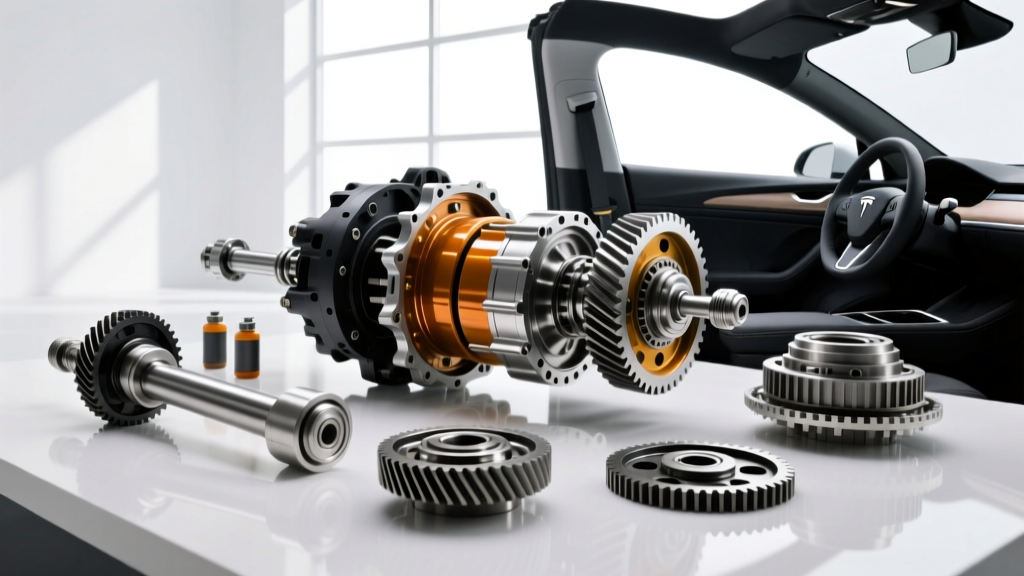
If you are transitioning from an internal combustion engine (ICE) vehicle to an electric vehicle (EV), you might find yourself asking: do electric cars have transmission systems? The short answer is yes, but they are fundamentally different from the complex, multi-gear automatic or manual transmissions you are used to. Instead of a 6-speed, 8-speed, or 10-speed gearbox, the vast majority of EVs utilize a single-speed reduction gear.
To understand why, we have to look at how power is delivered. A traditional gas engine produces usable power and torque only within a narrow RPM band (usually between 1,500 and 6,000 RPM). To keep the engine in that sweet spot while accelerating from 0 to 100 mph, an ICE vehicle requires a complex transmission—like the ubiquitous ZF 8HP or GM 6L80—to constantly shift through multiple gear ratios. Electric motors, on the other hand, generate maximum torque at 0 RPM and can safely spin up to 20,000 RPM or more. Because of this incredibly wide power band, an EV only needs one gear to handle both city crawling and highway cruising.
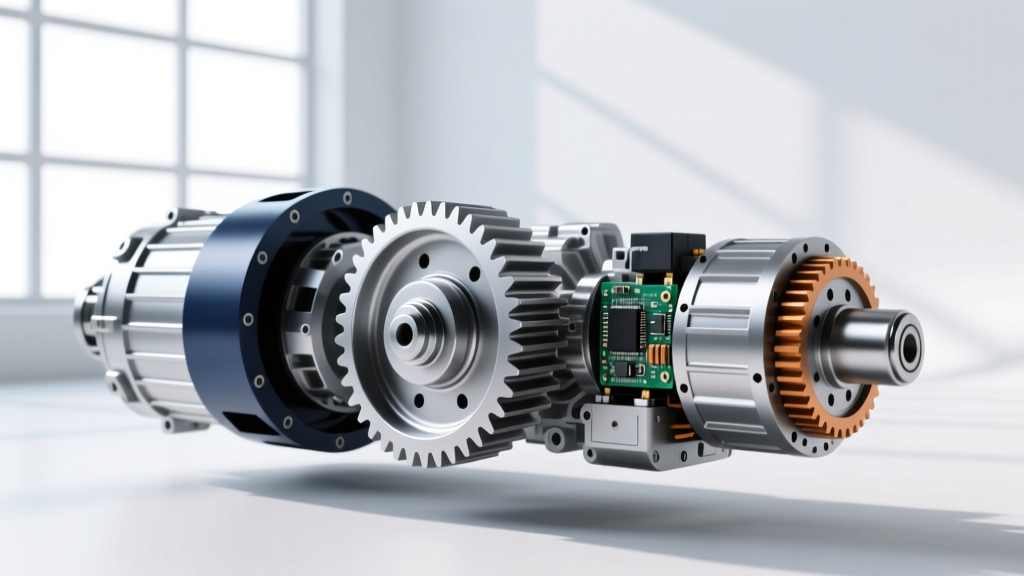
Anatomy of an EV Drivetrain: Power Flow Explained
Before we tear into the gearbox itself, it is crucial to understand the complete EV drivetrain layout. According to the U.S. Department of Energy, the electric drivetrain is remarkably streamlined compared to its ICE counterpart, eliminating the need for driveshafts, exhaust systems, and torque converters.
The Core Components
- The Traction Battery: Stores high-voltage DC electricity (typically 400V or 800V architectures).
- The Inverter: Converts DC power from the battery into AC power for the motor, while precisely controlling the frequency to dictate motor speed.
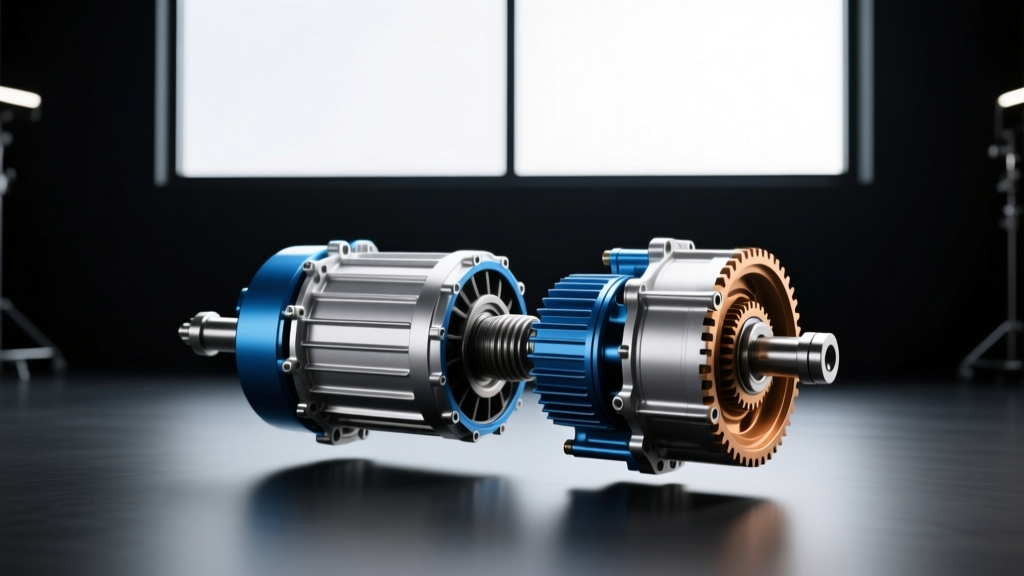
- The Traction Motor: Usually a Permanent Magnet Synchronous Motor (PMSM) or an AC Induction Motor, converting electrical energy into rotational mechanical force.
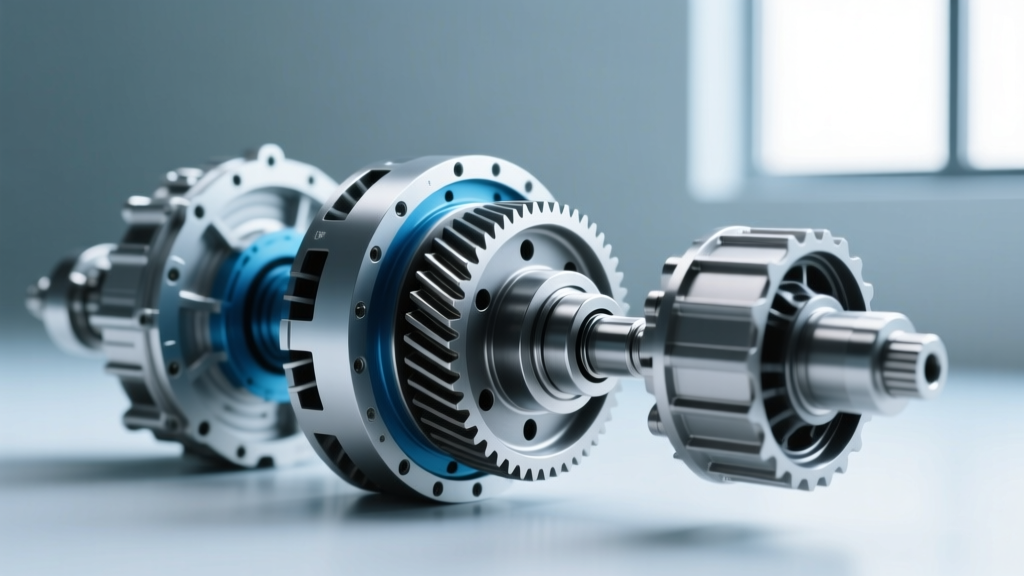
- The Reduction Gearbox: The EV equivalent of a transmission. It steps down the motor's high RPM into usable wheel torque.
- The Differential and Half-Shafts: Distributes torque to the left and right wheels while allowing them to rotate at different speeds during cornering.
Single-Speed vs. Multi-Speed: Why Most EVs Only Need One Gear
When engineers design an EV drivetrain, the reduction gear is carefully calibrated to balance blistering off-the-line acceleration with an acceptable top speed.
The Dominance of the Single-Speed Reduction Gear
Take the Tesla Model 3 Rear Drive Unit (RDU) as a prime example. It utilizes a single-speed helical gear set with a fixed reduction ratio of approximately 9.04:1. This means the motor spins roughly 9 times for every 1 rotation of the wheels. This single ratio provides enough torque multiplication to hit 0-60 mph in under 5 seconds, while still allowing the motor to spin at roughly 16,000 RPM when the car is cruising at 80 mph. Because there are no shifting components, clutch packs, or torque converters, the single-speed EV transmission is incredibly efficient, with mechanical power losses often under 2%.
The Porsche Taycan 2-Speed Exception
Are there any EVs with multi-speed transmissions? Yes, but they are rare and usually reserved for high-performance applications. The Porsche Taycan and Audi e-tron GT feature a highly engineered 2-speed transmission on the rear axle only.
As detailed in Car and Driver's engineering breakdown of the Taycan, the first gear features a massive 16:1 ratio for brutal launch control acceleration. Once the vehicle hits approximately 70 mph, an electronically actuated dog clutch shifts into the second gear, which has an 8.05:1 ratio, allowing for a top speed of 161 mph without over-revving the motor.
Under the Lift: EV Drivetrain Maintenance, Fluids, and Torque Specs
For the DIY mechanic or the service advisor, maintaining an EV reduction gear is vastly different from servicing an ICE automatic transmission. You will not be dropping a massive transmission pan, replacing a valve body, or flushing 12 quarts of fluid. However, precision is still required.
Fluid Capacities and Dielectric Requirements
While a GM 6L80 transmission requires about 11 to 12 quarts of Dexron VI ATF, a typical EV reduction gear holds only 1.5 to 2.5 liters of fluid. Furthermore, you cannot use standard ATF in most modern EVs. Because the electric motor's copper windings and stator are often bathed in or sit adjacent to the same fluid as the gears, the fluid must have specific dielectric (non-conductive) properties and low viscosity to minimize churning losses. Fluids like Castrol ON or Valvoline EV are engineered specifically for this thermal and electrical environment.
Critical Torque Specifications
When servicing the drivetrain or replacing half-shafts, adhering to exact torque specs is non-negotiable to prevent catastrophic failure or NVH (Noise, Vibration, and Harshness) issues.
- Drain/Fill Plug Torque: Typically 25 to 30 Nm (18 to 22 lb-ft). Over-torquing can crack the cast aluminum housing.
- Half-Shaft Axle Nut: Usually a massive 200 to 250 Nm (147 to 184 lb-ft), often followed by a 90-degree angle turn or requiring a new staked nut to prevent backing out under high regenerative braking loads.
- Motor-to-Gearbox Bolts: Generally 45 to 60 Nm, requiring strict cross-pattern tightening sequences to maintain housing alignment.
Comparison Chart: ICE Automatic vs. EV Reduction Gear
| Feature | Traditional ICE Automatic (e.g., ZF 8HP) | EV Single-Speed Reduction Gear |
|---|---|---|
| Number of Gears | 6 to 10 forward gears | 1 (Rarely 2) |
| Typical Gear Ratio(s) | 4.7:1 (1st) to 0.67:1 (8th) | 9.0:1 to 10.5:1 (Fixed) |
| Fluid Capacity | 9 to 12 Quarts | 1.5 to 2.5 Liters |
| Fluid Type | Standard ATF (e.g., Dexron VI, Lifeguard 8) | Low-viscosity Dielectric EV Gear Oil |
| Internal Complexity | Planetary gearsets, clutch packs, valve bodies | Helical cut pinion and ring gears, differential |
| Maintenance Interval | 60,000 - 100,000 miles (Fluid & Filter) | Often 'Lifetime' or 100,000+ miles (Fluid only) |
Real-World Failure Modes: What Breaks in an EV Drivetrain?
Because EVs lack the friction materials and clutch packs that cause traditional transmission failures, EV drivetrains are generally more reliable. However, they are not immune to mechanical wear. Here are the most common failure modes seen in the shop:
1. Bearing Whine and Seizure
The most common mechanical failure in early EV drivetrains (notably pre-2015 Tesla Model S Large Drive Units) was premature bearing wear. The immense instantaneous torque and heavy vehicle weight placed massive sheer loads on the deep-groove ball bearings supporting the output shaft. This manifested as a high-pitched 'whine' that worsened under regenerative braking. Modern units have largely solved this by upgrading to heavy-duty tapered roller bearings and improving internal fluid splash lubrication pathways.
2. Seal Leaks from High RPM
While an ICE engine might redline at 6,500 RPM, EV motors routinely spin at 18,000 RPM. This extreme rotational speed generates significant heat at the output shaft seals. If the wrong fluid is used (causing chemical degradation) or if the half-shaft splines have micro-burrs, the high-speed lip seals will quickly fail, leading to gear oil leaking onto the suspension components.
3. Gear Tooth Pitting (NVH Issues)
EVs are incredibly quiet. Without the masking noise of a combustion engine, even minor gear imperfections are transmitted directly into the cabin. If the reduction gear experiences fluid starvation due to a neglected leak, micro-pitting occurs on the helical gear teeth. This doesn't always cause a total breakdown, but it creates an unacceptable grinding or whining noise, requiring a complete drive unit replacement.
The Verdict
So, do electric cars have transmission systems? Yes, but they are elegantly simple reduction gearboxes designed to maximize the unique torque characteristics of electric motors. By eliminating the shifting mechanisms, parasitic losses, and maintenance headaches of traditional multi-speed automatics, the EV drivetrain represents one of the most significant leaps in automotive engineering efficiency over the last century. Whether you are a curious buyer or a seasoned technician, understanding the fluid dynamics, torque specs, and gear ratios of these units is essential for navigating the electric era.
For more technical deep-dives into hybrid and electric drivetrains, consult the EPA's Electric Vehicle resources and stay tuned to AutoGearNexus for ongoing service bulletins and teardown guides.