The Evolution of the E-Axle: Where Power Electronics Meet the Drivetrain
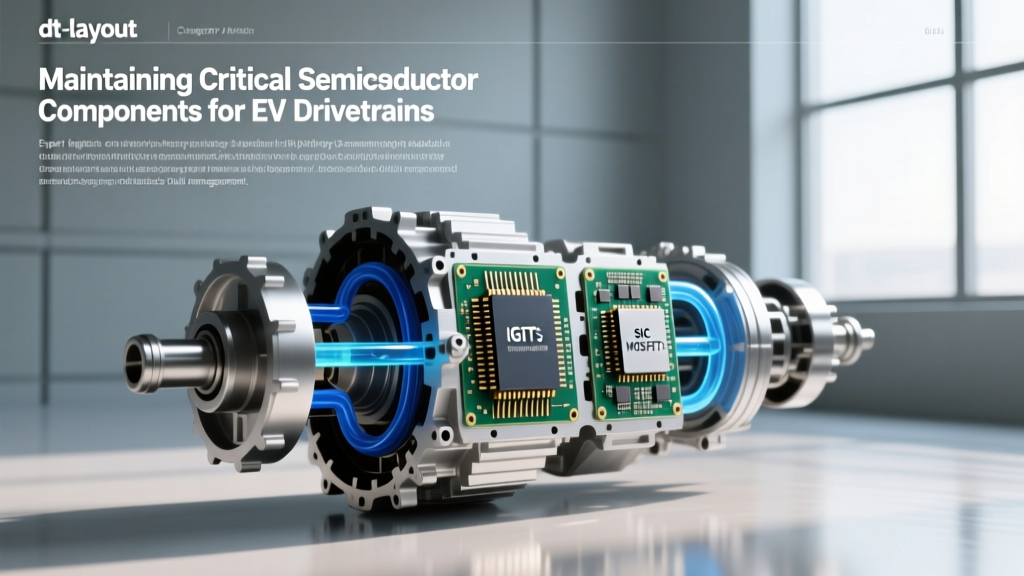
The modern electric vehicle (EV) drivetrain has fundamentally shifted from a collection of mechanical linkages to a highly integrated electro-mechanical system known as the e-axle. In 2026, with 800-volt architectures becoming the industry standard for mid-size and performance EVs, the thermal and electrical stresses placed on the inverter are higher than ever. When servicing these systems, protecting the critical semiconductor components for EV drivetrains—namely the Silicon Carbide (SiC) MOSFETs and Insulated-Gate Bipolar Transistors (IGBTs) housed within the inverter—is the paramount objective.
Unlike traditional internal combustion engine (ICE) drivetrains where maintenance revolves around gear lash and bearing preload, EV drivetrain service is an exercise in thermal management and dielectric integrity. A failure in the cooling circuit or the introduction of conductive debris doesn't just cause mechanical wear; it results in catastrophic semiconductor desaturation and immediate drive-unit failure. Below are the expert best practices for maintaining the e-axle and preserving the lifespan of its vital power electronics.
Cold Plate Integrity and Coolant Conductivity Testing
The inverter in a modern e-axle (such as the Bosch eAxle or the Tesla Model 3/Y Rear Drive Unit) relies on a liquid-cooled cold plate to dissipate the immense heat generated by high-frequency SiC switching. These semiconductors can switch at frequencies exceeding 20 kHz, generating localized thermal hotspots. The cold plate utilizes a low-conductivity glycol-water mixture to pull heat away from the Thermal Interface Material (TIM) and into the cooling loop.
The Danger of Galvanic Corrosion
Standard automotive antifreeze contains ion-heavy corrosion inhibitors that are highly conductive. If standard coolant is accidentally introduced into an EV's dedicated inverter loop, or if the coolant degrades over time and leaches ions from the aluminum cooling channels, the electrical conductivity of the fluid rises. Once conductivity exceeds 5 µS/cm (microsiemens per centimeter), the risk of galvanic corrosion and high-voltage tracking increases exponentially. This can lead to a short circuit between the 800V DC bus and the chassis, instantly destroying the SiC modules.
- Best Practice: Always test the dedicated inverter/glycol loop with a digital conductivity meter during every major service interval.
- Fluid Spec: Use only OEM-specified low-conductivity OAT coolants (e.g., VW G12evo/G13, or specific Tesla OAT formulations). Never top off with distilled water alone, as it will eventually leach ions from the aluminum block and raise conductivity.
- Flushing Protocol: If conductivity exceeds 5 µS/cm, perform a complete loop flush using deionized (DI) water (resistivity > 1 Megohm-cm) before refilling with fresh low-conductivity coolant.
Vacuum Filling: Eradicating Micro-Bubbles in the Inverter
Because SiC MOSFETs operate at much higher junction temperatures than legacy silicon IGBTs, they are incredibly sensitive to localized cooling failures. A micro-bubble trapped in the micro-channels of the inverter's cold plate acts as an insulator. This creates a thermal bottleneck, causing the specific SiC die above the bubble to overheat, delaminate from the solder substrate, and ultimately fail under load.
Gravity bleeding is entirely insufficient for modern e-axle cooling loops. According to guidelines referenced by the Alternative Fuels Data Center, EV thermal management systems require specialized vacuum filling equipment to ensure absolute fluid penetration.
Expert Torque & Vacuum Spec: When servicing the cooling loop, pull the system down to a minimum of -90 kPa (-0.9 bar) and hold for 5 minutes to verify there are no leaks in the cold plate O-rings or quick-connect fittings. Only then should the low-conductivity coolant be introduced via the vacuum differential.
Reduction Gear Fluid: Protecting the Resolver Sensor
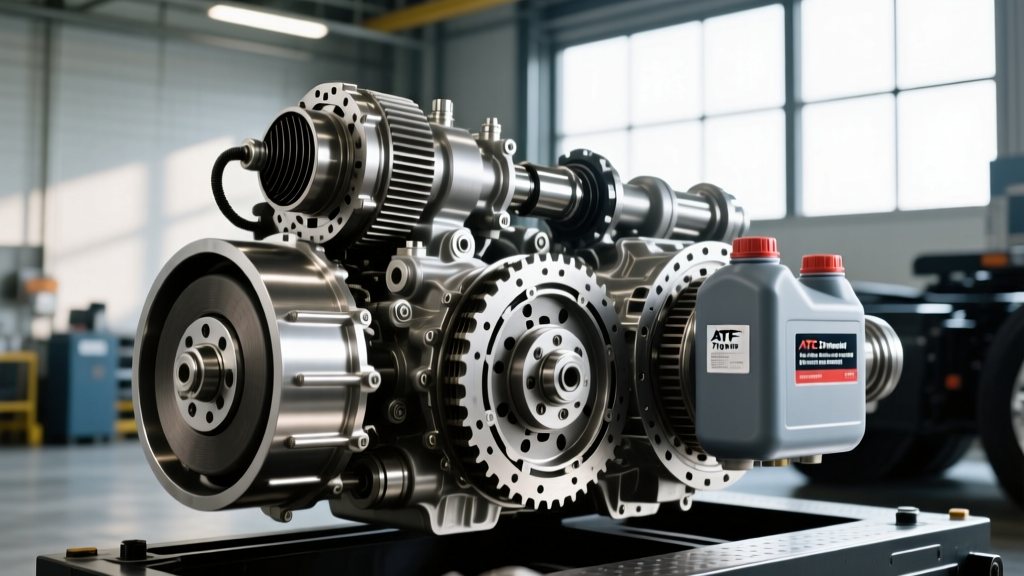
While the inverter relies on glycol, the mechanical reduction gear and the motor stator often share a separate sump bathed in dielectric transmission fluid. The health of this fluid directly impacts the critical semiconductor components for EV drivetrains through a seemingly unrelated part: the resolver sensor.
The resolver is an electromagnetic sensor that tells the inverter the exact angular position of the motor rotor. The inverter's gate drivers use this data to time the firing of the SiC MOSFETs. If the reduction gear fluid degrades, or if excessive metallic shavings from the differential bearings circulate through the sump, these ferrous particles can coat the resolver. This alters the magnetic air gap (typically a strict 0.3mm to 0.8mm tolerance), causing position feedback errors.
When the inverter receives faulty resolver data, it misfires the semiconductors. This phase mismatch causes massive current spikes, leading to instantaneous SiC wire-bond lift-off and a bricked drive unit.
| Vehicle Platform | E-Axle Architecture | Inverter Semiconductor | Gear/Stator Fluid Spec | Capacity (Approx.) | Service Interval |
|---|---|---|---|---|---|
| Tesla Model 3/Y (Rear HAU) | Integrated (Glycol Cooled Inverter) | SiC MOSFET (6-pack) | Dexron VI / Tesla ATF | 2.4 L | Inspect/Replace at 100k mi |
| Hyundai Ioniq 5 (E-GMP) | Separated Inverter & Gearbox | SiC MOSFET (800V) | Castrol ON E / Dexron ULV | 1.6 L (Gear) | Every 60k mi (Severe) |
| Porsche Taycan (Rear 2-Speed) | Integrated Oil-Cooled Stator | SiC MOSFET (800V) | Porsche E-Fluid / Fuchs | 3.8 L | Every 40k mi / 4 Years |
Note: Always consult the OEM service manual for exact part numbers and fill procedures, as capacities vary by model year and specific drive unit revision.
Dielectric Fluid Selection and Copper Compatibility
When sourcing replacement fluids for shared-sump e-axles, it is vital to use fluids specifically engineered for EV copper compatibility. Standard ATFs contain friction modifiers and sulfur-based extreme pressure (EP) additives that can corrode the copper windings of the motor stator over time. As the copper degrades, microscopic conductive particles suspend in the fluid, lowering its dielectric breakdown voltage. Specialized EV fluids, such as those detailed in Castrol's ON EV fluid lineup, utilize ashless, non-corrosive additive packages that maintain high dielectric strength while protecting the reduction gears.
High-Voltage Sealing and TIM Reapplication
If drivetrain service involves removing the inverter cover or replacing the cold plate (often necessary if a leak is detected at the casing seam), the Thermal Interface Material (TIM) must be addressed with surgical precision. The TIM bridges the microscopic air gaps between the SiC substrate and the aluminum cold plate.
- Cleanup: Never use metallic scrapers on the cold plate or inverter base. Use isopropyl alcohol (99% purity) and plastic squeegees to remove the old gap pad or liquid TIM.
- Application: If the OEM uses a liquid TIM (like Bergquist Liqui-Bond), it must be dispensed in a precise serpentine pattern to ensure 100% coverage without squeeze-out that could interfere with the casing seal.
- Torque Sequence: The M6 flange bolts securing the inverter housing or cold plate must be torqued in a multi-pass star pattern. Final torque is typically 9 to 11 Nm. Overtorquing will warp the thin aluminum cold plate, cracking the ceramic substrate of the SiC modules underneath.
Diagnostic Best Practices: Spotting Degradation Early
Proactive maintenance of the critical semiconductor components for EV drivetrains also involves reading the telemetry before a hard failure occurs. Using an advanced OEM-level scan tool, monitor the Inverter Thermal Margin and Phase Current Imbalance during a standardized road test.
If Phase A, B, and C currents deviate by more than 3-5% under steady-state highway loads, it indicates that one of the SiC gate drivers is degrading, or there is increasing resistance in the busbar connections. Additionally, perform an Insulation Resistance Test (Megger testing) on the motor phases annually. A drop in megohm readings points to dielectric fluid contamination or stator varnish breakdown, which will eventually feed back into the inverter and destroy the semiconductors.
Conclusion
Servicing the modern EV drivetrain requires a paradigm shift from mechanical wrenching to electro-thermal management. By strictly adhering to low-conductivity coolant protocols, utilizing vacuum-fill equipment, and maintaining the dielectric integrity of the reduction gear sump, technicians can ensure the longevity of the e-axle. In the 800V era, the survival of the drivetrain's critical semiconductor components for EV drivetrains relies entirely on the precision of the fluids and the purity of the cooling loops that surround them.