The Engineering Behind Modern AWD System Operation
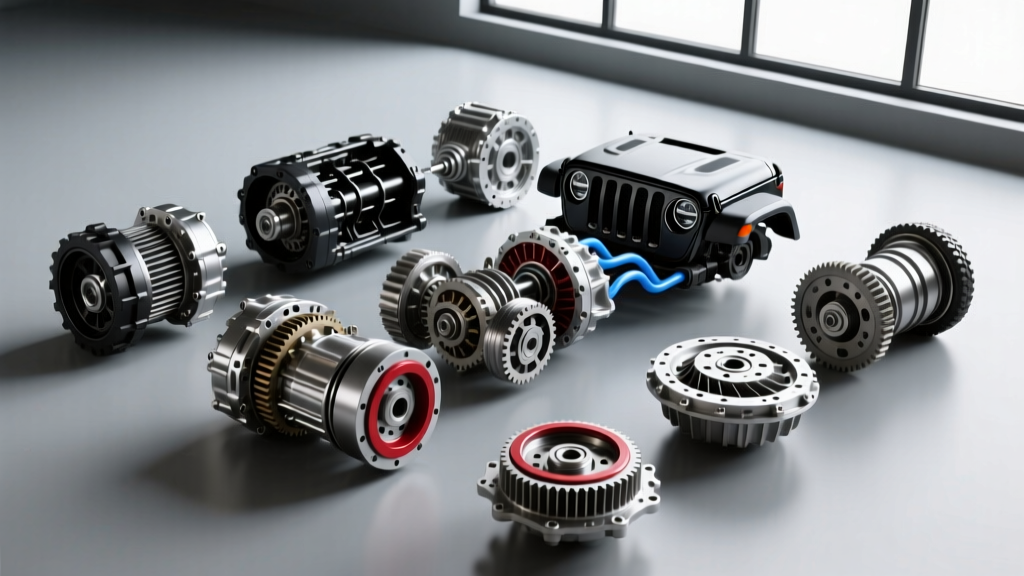
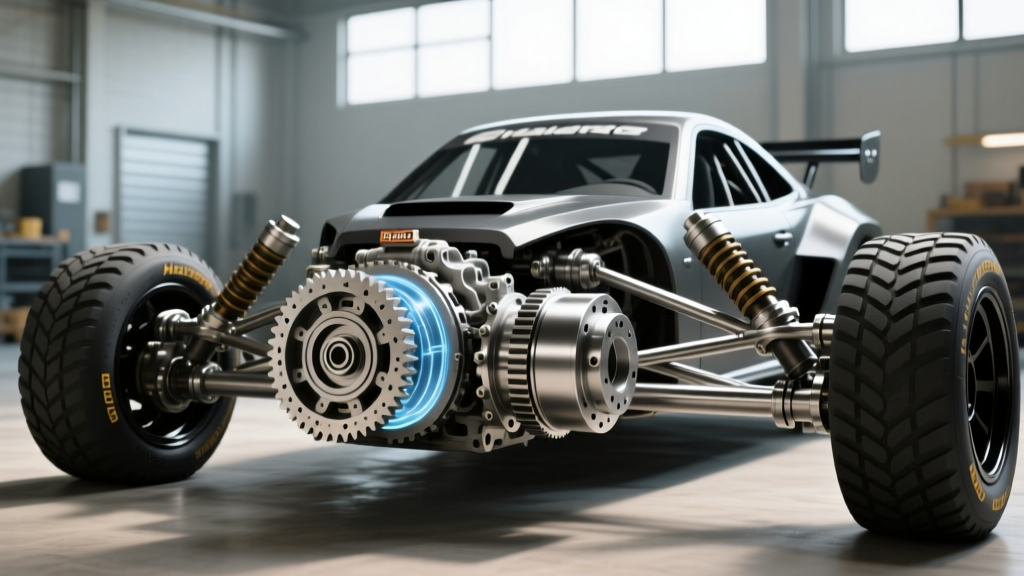
When fabricators and off-road enthusiasts engineer the custom drivetrain of Mesquite desert-racing SUVs and overland rigs, the all-wheel-drive (AWD) system is the focal point of traction management. Nestled near the harsh, unforgiving terrain of the Mojave Desert and the Valley of Fire, Mesquite, Nevada, serves as an unofficial proving ground for thermal management and torque distribution. Understanding AWD system operation requires moving beyond basic 'slip-and-grip' marketing jargon and diving into the hydro-mechanical and electro-hydraulic realities of modern transfer cases and center differentials.
In this technical deep-dive, we deconstruct the core architectures of AWD systems, examining the precise torque bias ratios, fluid dynamics, and thermal limits that dictate performance in severe-duty environments.
Core AWD Architectures: How Torque is Managed
Unlike traditional part-time 4WD systems that rely on a locked transfer case (which induces driveline binding on high-traction surfaces), AWD systems utilize a center differential or a clutch-based coupling to allow for front-to-rear axle speed differentiation. This is critical for high-speed desert running where steering input and varying slip angles require the front and rear driveshafts to rotate at slightly different speeds.
1. Electro-Hydraulic Clutch Packs (Haldex & BorgWarner TOD)
The most prevalent AWD architecture in modern transverse and longitudinal unibody platforms relies on an electronically controlled multi-plate clutch pack. Systems like the Haldex Generation 5 (used heavily in VAG platforms) and BorgWarner's Torque-On-Demand (TOD) systems utilize a wet clutch pack bathed in specialized friction fluid.
- Actuation Mechanism: Gen 5 Haldex systems abandoned the traditional accumulator and hydraulic control valve in favor of a centrifugal hydraulic pump driven by a brushless DC motor. This reduces weight and allows for infinitely variable clutch clamping force.
- Fluid Specifications: These systems require highly specific friction-modified fluids (e.g., G 060 175 A2). The total fill capacity is remarkably low, typically between 700ml and 800ml.
- Maintenance Reality: While OEMs may claim 'lifetime' fluid, severe desert operation necessitates draining the clutch housing and replacing the integrated pump screen every 20,000 miles to prevent clutch glazing and pump cavitation.
2. Helical Gear-Driven Systems (Torsen / Quaife)
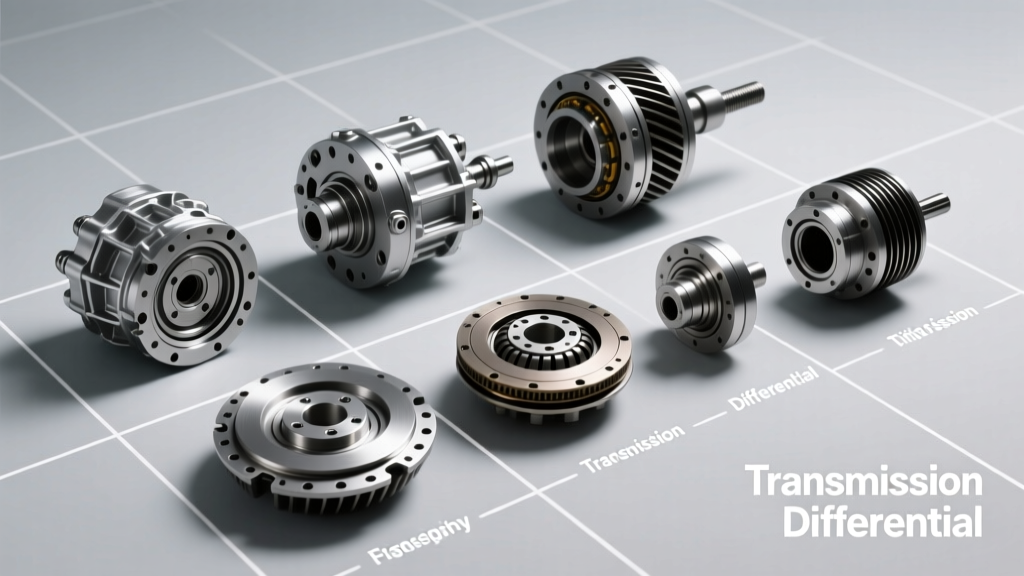
For heavy-duty longitudinal applications where instant, lag-free torque transfer is required, gear-driven torque-biasing differentials remain the gold standard. The Torsen (Torque Sensing) Type B utilizes helical gear sets and thrust washers to generate internal friction, biasing torque to the axle with the most grip without the need for electronic intervention or hydraulic pumps.
'The beauty of a helical gear-driven center diff is its mechanical immediacy. There is zero latency between slip detection and torque transfer, as the physics of the gear mesh dictate the bias instantly.' — SAE International Drivetrain Symposium Archives
The critical metric here is the Torque Bias Ratio (TBR). A typical Torsen center differential operates with a TBR of 3:1 to 4:1. This means if the front axle loses all traction (0 Nm resistance), the rear axle can only receive 3 to 4 times that amount (effectively 0 Nm) unless brake-based traction control (B-LSD) is applied to the spinning front wheels to create artificial resistance.
Comparative Analysis: Center Differential Technologies
To select the correct AWD architecture for a specific build, engineers must weigh response time, thermal capacity, and parasitic loss. Below is a technical comparison of the primary AWD center differential types utilized in modern platforms.
| System Type | Actuation Method | Response Latency | Thermal Capacity | Typical Application |
|---|---|---|---|---|
| Haldex Gen 5 | Electro-Hydraulic (Centrifugal Pump) | ~100-150ms | Moderate (Prone to fade) | Transverse AWD (Golf R, Audi S3) |
| BorgWarner TOD | Electromagnetic / Cam-Ramp | ~50-100ms | High (Large fluid volume) | Longitudinal Trucks (Ford F-150, RAM) |
| Torsen Type B | Mechanical (Helical Gears) | 0ms (Instantaneous) | Extremely High | Performance / Off-Road (Audi Quattro, Hummer) |
| Viscous Coupling | Hydro-Viscous (Silicone Fluid Shear) | Slow (Thermal Dependent) | Low (Hump phenomenon) | Legacy 90s AWD (Subaru, Toyota) |
Thermal Management in Severe Desert Environments
When pushing an AWD system through deep sand or high-speed whoops, the slip across the center differential generates immense kinetic energy, which is converted directly into heat. In the drivetrain of Mesquite desert racers, ambient temperatures routinely exceed 110°F (43°C), pushing transfer case fluid temperatures past the 250°F (121°C) threshold.
Fluid Degradation and Shear Stability
Standard 75W-90 GL-5 gear oils will rapidly shear out of grade when subjected to the extreme pressures of a multi-plate clutch pack. For active AWD transfer cases like the ZF DT10 or BorgWarner 4406, utilizing the OEM-specified transfer case fluid (often a specialized ATF or synthetic hydrocarbon blend) is non-negotiable. These fluids contain specific friction modifiers that prevent 'stick-slip' chatter during low-speed clutch engagement.
Critical Spec: If upgrading to an aftermarket heavy-duty transfer case cooler, ensure the cooler's internal volume does not exceed the transfer case pump's scavenging capability, typically rated for an additional 0.5 to 1.0 liters of system volume. Over-sizing the cooler leads to pump cavitation and immediate clutch failure.
Driveline Integration: Torque Specs and Flange Alignment
An AWD system is only as robust as its physical connections. The transfer case output flanges and rear differential input flanges endure cyclical torsional shock loads that can easily stretch hardware. During reassembly of the drivetrain, precision torque procedures must be followed to prevent harmonic vibrations and spline wear.
Standard Output Flange Torque Specifications
- M10 x 1.5 Flange Bolts (Standard SUV): 45 Nm + 90-degree turn (Torque-to-Yield).
- M12 x 1.5 Flange Bolts (Heavy-Duty / 3/4 Ton): 85 Nm + 45-degree turn.
- Companion Flange Nut (Pinion/Output Shaft): Typically 210 - 280 Nm depending on the crush sleeve or solid spacer preload. Never reuse a crush sleeve; always measure rotational drag (typically 15-25 in-lbs) when setting pinion preload.
According to ZF Friedrichshafen's technical service bulletins, improper flange bolt torque leads to micro-movements that gall the mating surfaces, ultimately resulting in catastrophic output shaft failure under high-torque AWD load scenarios.
The 2026 Horizon: Active Torque Vectoring and Predictive AWD
Looking at the 2026 landscape of drivetrain engineering, the industry is shifting toward predictive AWD systems. By integrating LiDAR, GPS topographical mapping, and steering angle sensors, modern AWD control modules (such as those developed by BorgWarner and Magna) can pre-load the center clutch pack milliseconds before the front tires lose traction. This eliminates the traditional reactive lag, effectively providing the instantaneous response of a mechanical Torsen differential while maintaining the fuel-efficiency benefits of a decoupled electro-hydraulic system.
Summary: Maintaining the AWD Advantage
Whether you are navigating the rocky washes outside of Mesquite or commuting in variable weather, AWD system operation relies on a delicate balance of hydraulic pressure, mechanical friction, and thermal stability. To maintain peak performance:
- Adhere to severe-duty fluid intervals (halve the OEM recommendation for off-road use).
- Verify clutch pack clearance and pump screen integrity during service.
- Use a calibrated torque wrench and new TTY hardware for all driveline flange connections.
By respecting the engineering limits and maintenance requirements of your center differential and transfer case, you ensure that power is consistently and reliably delivered to the tarmac—or the dirt—exactly when you need it most.