The Hidden MPG Tax: Understanding Drivetrain Parasitic Loss
When discussing vehicle fuel economy, most beginners focus on engine displacement, aerodynamics, or tire pressure. However, the path from the engine's crankshaft to the contact patch of the tires is fraught with mechanical resistance. This resistance is known as parasitic loss. For any ATC drivetrain North American truck and SUV owners rely on for daily driving and towing, understanding this loss is the key to unlocking hidden fuel efficiency.
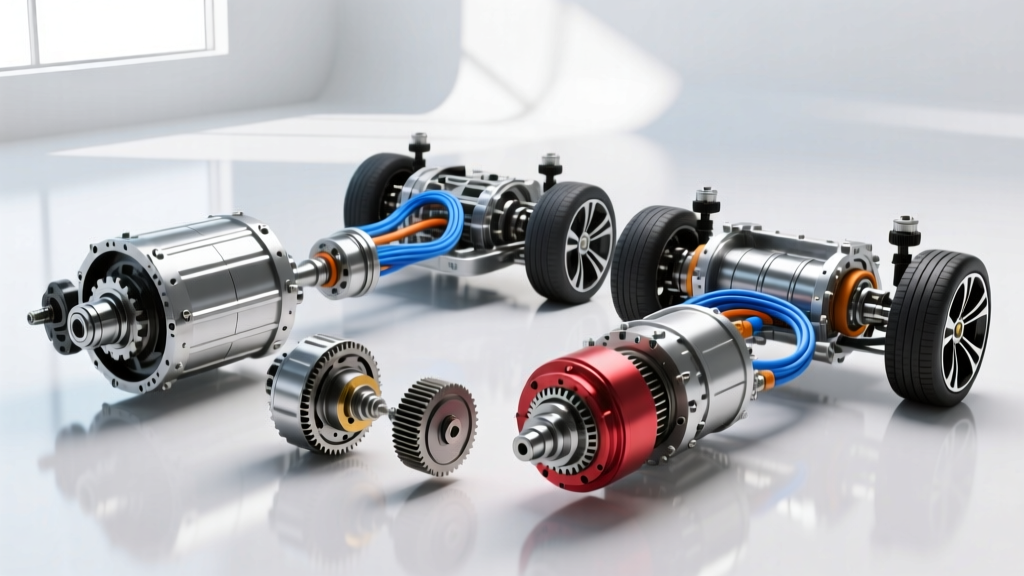
An Automatic Transfer Case (ATC) is the heart of modern four-wheel-drive and all-wheel-drive systems. Unlike older, manual-shift transfer cases that relied on rigid gear engagement, an ATC uses computer-controlled clutch packs, Morse chains, and planetary gearsets to distribute torque dynamically. While this provides immense traction benefits, it also introduces significant rotational mass and viscous drag. According to EPA Drivetrain Technology data, a typical AWD/4WD system can sap between 12 to 20 horsepower purely from internal drivetrain friction, translating directly to a 2 to 5 MPG penalty compared to a two-wheel-drive equivalent.
Chain-Driven vs. Gear-Driven ATCs
Most modern light-duty ATCs, such as the BorgWarner 44-94 found in the Ford F-150 or the NVG 246 (AutoTrak) in GM Silverados, utilize chain-driven designs. Chains are quieter and lighter than gear-driven setups, but they require constant lubrication. When transfer case fluid degrades, its viscosity breaks down, leading to increased friction between the chain and the sprockets. This microscopic slipping and dragging forces the engine to work harder, subtly destroying your fuel economy over thousands of miles.
Drivetrain Layout Efficiency Comparison
To understand where your vehicle stands, it is crucial to compare the inherent parasitic losses of different drivetrain configurations commonly found in the North American market.
| Drivetrain Layout | Typical Parasitic Loss | Average MPG Penalty (vs 2WD) | Common ATC / Component |
|---|---|---|---|
| FWD (Front-Wheel Drive) | 5% - 8% | Baseline | Transaxle (No Transfer Case) |
| RWD (Rear-Wheel Drive) | 10% - 12% | 1 - 2 MPG | Longitudinal Transmission + Driveshaft |
| Part-Time 4WD (2WD Mode) | 12% - 15% | 2 - 3 MPG | NVG 241C / BorgWarner 44-93 |
| Full-Time AWD / Auto 4WD | 16% - 22% | 3 - 5 MPG | NVG 246 / BorgWarner 44-94 / VF4B |
The Magic of the Front-Axle Disconnect (FAD)
One of the most significant advancements in ATC drivetrain efficiency is the Front-Axle Disconnect (FAD) system. In older part-time 4WD systems, shifting into 2WD stopped the transfer case from sending power to the front driveshaft, but the front wheels still turned the front CV axles, the front differential ring and pinion, and the disconnected front driveshaft. This 'dead weight' rotation caused massive parasitic drag.
Modern FAD systems use a thermal or vacuum-actuated collar inside the front differential (or on the passenger-side CV axle) to physically disconnect the wheels from the ring gear. When you select '2WD' or 'Auto' on your ATC dial, the FAD disengages, allowing the front driveline components to rest. This single mechanism can reclaim 1.5 to 2.5 MPG in highway driving. If your fuel economy has suddenly dropped, a failed FAD actuator solenoid (often a $40-$60 part) might be forcing your front driveline to spin continuously.
Reclaiming Your MPG: Critical ATC Maintenance Specs
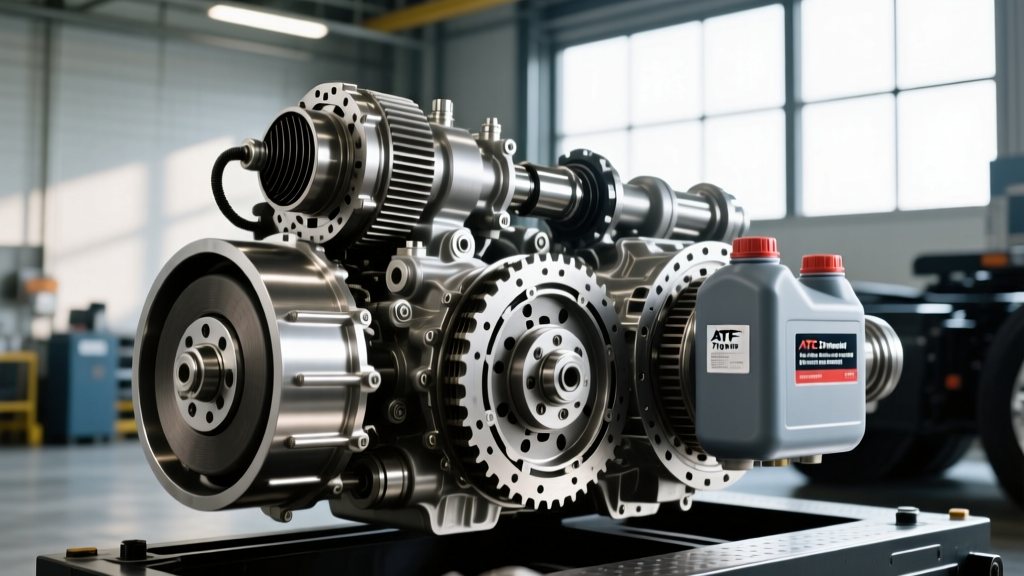
Using the incorrect fluid in an active transfer case is a guaranteed way to ruin both the clutch packs and your fuel economy. Active ATCs require specialized friction modifiers that allow the clutch packs to slip smoothly without binding. Binding clutch packs create immense rotational drag, acting like a subtle, constant brake on your driveline.
Below are the exact specifications for the most common North American ATC units. Adhering to these specs is non-negotiable for maintaining peak efficiency.
GM NVG 246 (AutoTrak)
- Application: 1999-2010 GM Silverado/Sierra/Tahoe/Yukon 1500 Series
- Required Fluid: GM Auto-Trak II (Part #88900402). Never use standard Dexron VI.
- Capacity: 2.0 Quarts (1.9 Liters)
- Drain/Fill Plug Torque: 18 lb-ft (24 Nm)
- Service Interval: Every 50,000 miles for optimal clutch modulation and MPG retention.
Ford BorgWarner 44-94 / 44-93
- Application: 2004-2020 Ford F-150 / Expedition
- Required Fluid: Motorcraft Mercon V or XL-12 (depending on exact year and clutch pack revision)
- Capacity: 2.0 Quarts
- Drain/Fill Plug Torque: 15 - 20 lb-ft
- Service Interval: Every 60,000 miles. Inspect the internal Morse chain for stretch, as a loose chain whips the fluid, creating aeration and viscous drag.
Toyota VF4B / VF5B (Tundra/Sequoia/Tacoma)
- Application: Modern Toyota Trucks with Crawl Control / Multi-Terrain Select
- Required Fluid: Toyota WS ATF (World Standard)
- Capacity: 1.4 to 1.6 Quarts (model dependent)
- Drain/Fill Plug Torque: 27 lb-ft (37 Nm)
The Oversized Tire Penalty on ATC Systems
Beginners often overlook how aftermarket modifications interact with drivetrain physics. Installing oversized tires (e.g., moving from a 31-inch to a 35-inch diameter) effectively changes your vehicle's final drive ratio. This forces the engine to operate outside its optimal BSFC (Brake Specific Fuel Consumption) map.
More importantly for the ATC, larger, heavier tires increase the rotational inertia required to turn the wheels. In 'Auto' or 'AWD' modes, the ATC's internal clutch pack must constantly modulate to manage the speed differential between the front and rear axles during cornering. Heavier tires exaggerate this speed differential and the resulting binding force. The ATC's electric motor must work overtime to apply the clutch pack, and the internal chain experiences higher peak tension loads. If you run oversized tires, you must regear your differentials (e.g., moving from 3.73 to 4.56 ring and pinion sets) to restore the mechanical leverage required to keep the ATC operating efficiently.
Beginner Action Plan for Maximum Drivetrain Efficiency
To ensure your drivetrain is not silently stealing your fuel economy, follow this actionable maintenance checklist:
- Verify FAD Operation: With the vehicle in 2WD on a lift, spin a front wheel by hand. The front driveshaft should not spin. If it does, your Front-Axle Disconnect is stuck engaged.
- Audit Your Fluids: Drain a small sample of your ATC fluid. If it smells burnt or contains metallic glitter, the clutch packs are slipping and generating massive heat and drag. Perform a full flush immediately.
- Check U-Joint and CV Binding: A dry, binding U-joint on the rear driveshaft or a torn CV boot on the front axle can add up to 3-4 horsepower of rotational drag per corner. Replace binding joints with high-quality, low-friction greasable alternatives (e.g., Spicer Life Series).
- Monitor Transfer Case Temperatures: If your vehicle is equipped with a transmission/transfer case temperature gauge, monitor it during highway driving. A creeping temperature indicates internal fluid shear and clutch drag, both of which are severe MPG killers.
By understanding the mechanical realities of your vehicle's layout and adhering to strict, manufacturer-specific maintenance protocols, you can minimize parasitic loss. For deeper engineering insights into torque distribution and friction management, review the technical whitepapers available via BorgWarner Transfer Case Technologies. Mastering your ATC is not just about preserving traction; it is about respecting the physics of rotational mass and fluid dynamics to keep your hard-earned money at the pump.