The Shift to the 1x Drivetrain in Heavy-Duty Applications
As the automotive landscape evolves in 2026, the term 1x drivetrain has become a critical classification in the electric truck and SUV segment. Unlike traditional internal combustion engine (ICE) trucks that rely on complex multi-speed transmissions like the Ford 10R80 or the ZF 8HP75, modern single-motor electric trucks utilize a 1x drivetrain architecture. This layout consists of a single electric motor paired with a single-speed reduction gearbox and a single driven axle (typically rear-wheel drive or a dedicated front e-Axle setup).
While the 1x drivetrain eliminates the need for shift solenoids, torque converters, and clutch packs, it places immense, instantaneous torque directly onto the reduction gears, differential, and half-shafts. For automotive technicians and fleet managers, understanding the specific components, fluid requirements, and failure points of these 1x systems is essential for maintaining towing capacity and longevity.
Core Components of the Single-Motor 1x Architecture
The Single-Speed Reduction Gearbox
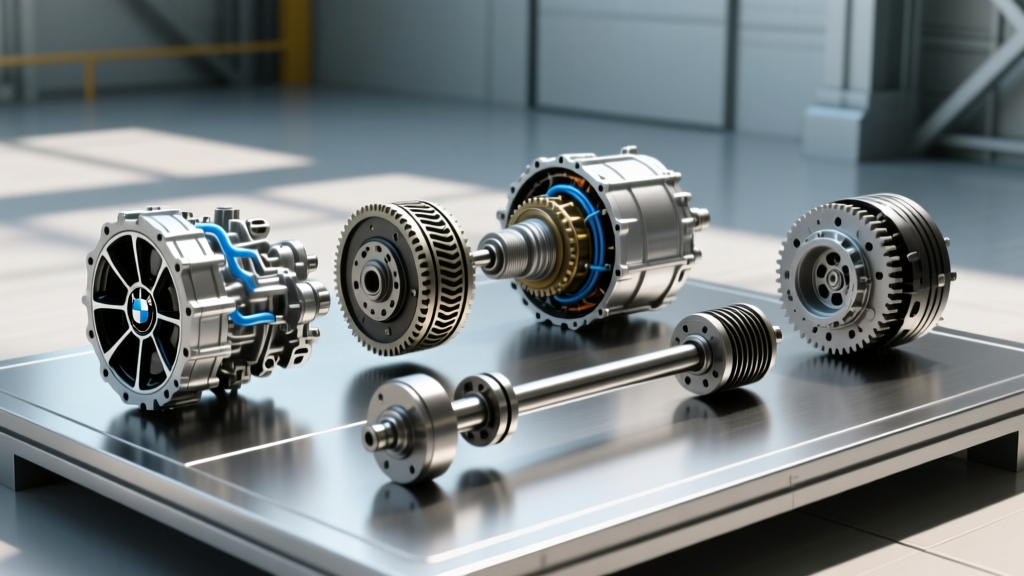
The heart of the 1x drivetrain is the reduction gearbox, often referred to as an e-Axle or transaxle. Because electric motors produce peak torque at 0 RPM but lose efficiency at high RPMs, the reduction gear multiplies the motor's torque while keeping it within its optimal power band. Most heavy-duty EV trucks utilize a helical gear set with a reduction ratio between 9.0:1 and 10.5:1.
- Gear Ratios: The Ford F-150 Lightning (Single Motor) utilizes a 9.05:1 ratio, while the Rivian R1T base single-motor setup leverages a 9.58:1 ratio.
- Housing Materials: Cast aluminum alloys (e.g., A356-T6) are used to dissipate heat and reduce unsprung weight, but they require precise torque specifications to avoid stripping threads during maintenance.
- Bearings: Tapered roller bearings and deep-groove ball bearings are pre-loaded to handle the severe axial loads generated during heavy towing (up to 10,000 lbs in some configurations).
High-Torque Half-Shafts and CV Joints
In a 1x drivetrain, 100% of the motor's output is routed through two half-shafts. Instantaneous electric torque (often exceeding 400 lb-ft at the motor, multiplied by the 9:1 gear ratio to over 3,600 lb-ft at the wheels) creates massive stress on Constant Velocity (CV) joints.
OEMs use heavy-duty outer Rzeppa joints and inner tripod (tulip) joints. For example, the Ford part number ML3Z-3B437-A represents a reinforced rear axle shaft assembly designed specifically for the Lightning's instant torque delivery. The boots on these axles are increasingly made from Thermoplastic Elastomer (TPE) rather than traditional neoprene, offering better resistance to ozone, UV degradation, and the high operating temperatures generated by adjacent battery cooling lines.
2026 OEM 1x Drivetrain Specifications Comparison
When servicing or upgrading a 1x drivetrain, referencing the exact OEM specifications is non-negotiable. Below is a comparison of the most prominent single-motor truck and SUV drivetrain layouts on the market today.
| Vehicle Platform | Reduction Ratio | Fluid Capacity | OEM Fluid Spec | Max Tow Rating (1x) |
|---|---|---|---|---|
| Ford F-150 Lightning (Single Motor) | 9.05:1 | 1.8 Liters | Motorcraft MERCON ULV / EV Specific | 7,700 lbs |
| Rivian R1T (Single Motor Base) | 9.58:1 | 2.1 Liters | Castrol ON Vibe | 7,700 lbs |
| Chevy Silverado EV (Fleet 1x) | 10.2:1 | 2.4 Liters | ACDelco Dexron EV | 8,000 lbs |
Note: Always verify fluid specifications via the manufacturer's 2026 service portal, as EV reducer formulations are updated frequently to improve copper-wire corrosion protection.
Expert Maintenance: Fluids, Torque Specs, and Intervals
A common misconception is that 1x drivetrains are "fill-for-life." In reality, the shear forces on the reduction gears and the thermal load from the adjacent electric motor stator degrade the fluid's dielectric properties over time. According to SAE International standards for EV lubricants (such as J3168), maintaining the fluid's electrical insulation is just as critical as its mechanical lubricity.
Reducer Fluid Service Best Practices
- Interval: Perform the first fluid exchange at 30,000 miles to remove manufacturing metal shavings from the helical gears, then every 60,000 miles thereafter.
- Fluid Selection: Never use standard GL-5 gear oil. The sulfur-phosphorus additives in GL-5 will corrode the copper windings of the electric motor if the internal seals weep. Use dedicated EV fluids like Castrol ON or OEM-equivalent low-viscosity synthetics.
- Torque Specifications: The aluminum housings are fragile. The drain and fill plugs on most Ford and GM e-Axles require exactly 35 Nm (26 lb-ft). Over-torquing will crack the casing, leading to a $3,500+ replacement bill.
- Level Check: EV reducers do not have dipsticks. The vehicle must be perfectly level on a hoist. Fill until the fluid weeps out of the fill hole, then install the plug immediately to prevent air-locking.
Upgrading for Towing: Axles and Cooling
If you are using a single-motor EV truck for commercial towing, the 1x drivetrain's weak link is often thermal management and CV joint wear. When towing near the maximum Gross Combined Weight Rating (GCWR), the reduction gearbox temperatures can exceed 180°F (82°C), thinning the fluid and accelerating bearing wear.
- Aftermarket CV Axles: Companies like RCV Performance offer chromoly half-shafts with upgraded 300M inner tulips. These eliminate the wheel hop and axle-wrap failures common when launching heavy trailers from a standstill.
- Differential Cooling: Some fleet operators are retrofitting external PTO-driven fluid pumps to route reducer fluid to a secondary heat exchanger mounted behind the front bumper, dropping operating temperatures by up to 35°F during mountain-pass towing.
- Grease Upgrades: When rebuilding CV joints, use a high-molybdenum disulfide (Moly) grease specifically rated for EV applications, such as Motorcraft XG-12-E, to handle the high-frequency torsional vibrations unique to electric motors.
Diagnosing 1x Drivetrain NVH (Noise, Vibration, Harshness)
Troubleshooting a 1x drivetrain requires a different approach than ICE vehicles. Without engine noise to mask it, gear whine and bearing hum are easily transmitted into the cabin. Here is a diagnostic framework for common 1x drivetrain complaints:
1. High-Frequency Whine Under Load
Cause: Helical gear misalignment or fluid cavitation. If the fluid level is low, or if the wrong viscosity fluid was used, the oil film between the gears breaks down under the immense torque of towing.
Fix: Drain and refill with the exact OEM-specified dielectric fluid. Inspect the drained fluid for glitter (indicative of bearing wear).
2. Clunking on Torque Reversal (Regen to Acceleration)
Cause: Excessive backlash in the differential or worn inner tripod CV joints. In a 1x drivetrain, regenerative braking applies reverse torque through the axles. Worn splines on the half-shaft will cause a distinct metallic "clunk" when transitioning from coasting to accelerating.
Fix: Check half-shaft spline engagement. Replace the axle assembly if spline wear exceeds 0.5mm of rotational play.
3. High-Speed Vibration (65+ MPH)
Cause: Out-of-balance driveshaft (if equipped with a front-disconnect 1x layout) or a failing outer Rzeppa CV joint. Unlike ICE trucks, EV trucks lack a multi-piece driveshaft with U-joints in the rear; the vibration is almost always isolated to the half-shafts or the motor-to-reducer coupler.
Fix: Inspect the motor coupler (often a rubber or polyurethane flex disc) for tearing. Replace TPE CV boots if they have split, as loss of grease will rapidly destroy the joint at highway speeds.
Conclusion
The 1x drivetrain represents a paradigm shift in truck and SUV engineering. By eliminating the multi-speed transmission, manufacturers have reduced weight and mechanical complexity, but they have simultaneously concentrated immense stress onto the reduction gearbox and half-shafts. As we move through 2026, mastering the specific fluid dynamics, torque specifications, and thermal management of these single-motor systems is what separates average mechanics from true drivetrain experts. Whether you are maintaining a fleet of single-motor work trucks or upgrading your personal EV SUV for overland towing, respecting the unique physics of the 1x layout is the key to long-term reliability.