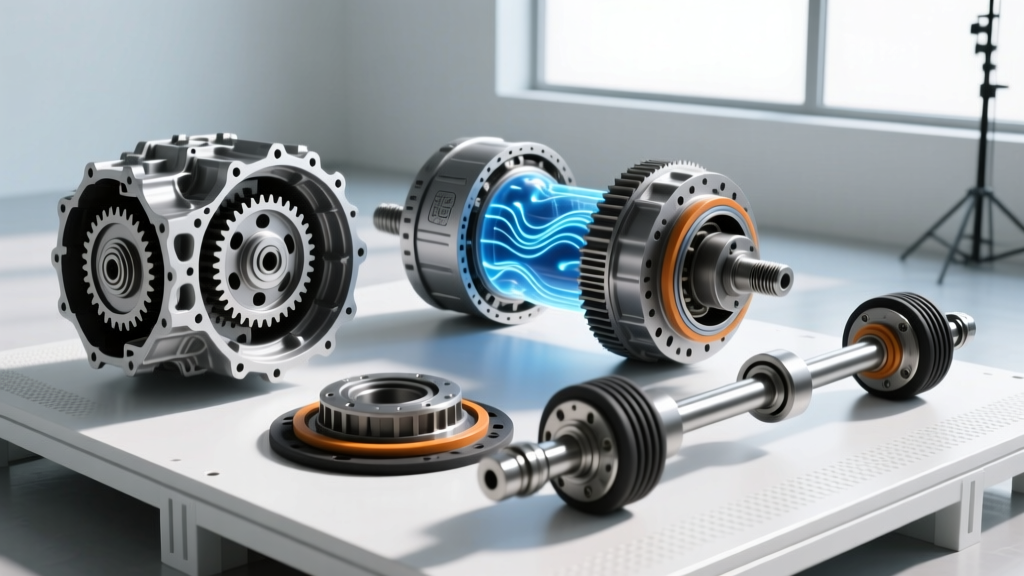
The EV Drivetrain Malfunction Paradigm
When an internal combustion BMW throws a "Drivetrain Malfunction" warning, veteran mechanics immediately suspect a failing high-pressure fuel pump, clogged VANOS solenoids, or a degraded ignition coil on an N55 or B58 engine. However, diagnosing an electric vehicle drivetrain malfunction requires an entirely different paradigm. In modern EVs, the drivetrain encompasses the high-voltage (HV) battery architecture, the silicon carbide (SiC) inverter, the electric motor (e-motor), and the reduction gear assembly. A fault in this ecosystem doesn't just mean a loss of power; it frequently indicates a critical high-voltage isolation breach, thermal throttling, or mechanical shearing under high-torque loads.
For performance builders and tuners pushing beyond OEM software limits via unlocked inverters or custom torque maps, understanding these fault triggers is mandatory. The factory software is designed to protect the drivetrain hardware by aggressively cutting power when anomalies are detected. This guide breaks down platform-specific EV drivetrain malfunctions and outlines the mechanical upgrades required to safely handle 600+ wheel-horsepower.
Platform-Specific Diagnosis: BMW, Tesla, and Porsche
BMW i4 and iX (Gen5 eDrive) Isolation & HVIL Faults
BMW’s Gen5 electrically excited synchronous motor (EESM) is an engineering marvel that eliminates the need for rare-earth magnets by using a rotor excitation current. However, this complexity introduces unique failure points. A "Drivetrain Malfunction" in an iX M60 or i4 M50 is most commonly tied to the High Voltage Interlock Loop (HVIL) or an isolation fault within the Power Distribution Unit (PDU).
The HVIL is a safety circuit that monitors the integrity of all high-voltage connections. If a connector is slightly loose, or if the PDU experiences micro-vibrations that degrade the interlock pins, the SME (Synchronous Motor Excitation) control unit instantly disables the inverter to prevent arcing. Diagnosis requires BMW ISTA+ to read the HV isolation resistance values. According to the SAE J2929 Safety Standard for Electric and Hybrid Vehicle Propulsion Systems, isolation resistance must remain above 100 ohms per volt of the battery's nominal voltage. If your diagnostic tool shows isolation dropping below this threshold under hard cornering, you likely have a chafed HV cable or a failing inverter capacitor bank.
Tesla Model 3 Performance Drive Unit & Half-Shaft Shearing
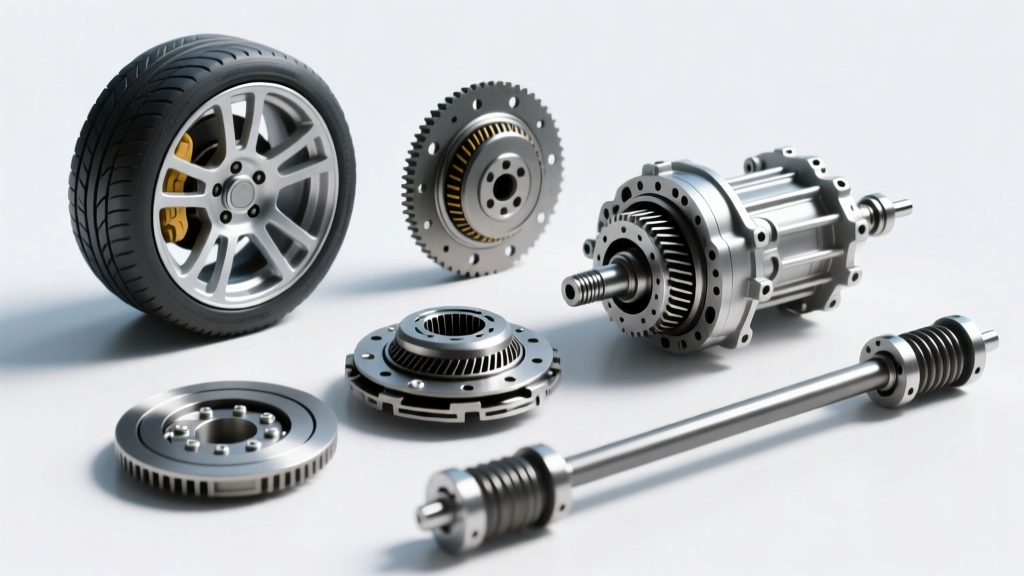
The Tesla Model 3 Performance rear drive unit (DU) is notorious for two distinct mechanical failures when subjected to repeated hard launches or aftermarket software tunes that remove the OEM torque limiter. The first is the shearing of the OEM half-shafts. The factory CV joints and shafts are cast and machined for efficiency and NVH (Noise, Vibration, and Harshness), not for the instantaneous 500+ lb-ft of torque delivered at zero RPM.
The second failure involves the internal ball bearings of the rear drive unit. When the bearing cage degrades, metallic particulate circulates through the reduction gear, eventually shorting the resolver sensor. The vehicle will throw a "Drive Unit Disabled" or "Car Will Not Drive" error, limiting output to a 40kW limp mode. As detailed in the official Tesla Model 3 Owner's Manual, any drive unit warning requires immediate cessation of high-load driving to prevent catastrophic rotor-stator contact.
Porsche Taycan Two-Speed e-Axle Actuator Failures
The Porsche Taycan utilizes a highly complex ZF-designed two-speed reduction gear on the rear axle to balance blistering acceleration with high-speed efficiency. The first gear (ratio 16:1) handles launches, while the second gear (ratio 8:1) engages around 45 mph. A drivetrain malfunction here usually presents as a harsh clunk followed by a "Transmission Fault" warning, locking the car into first gear.
This is rarely a gear-tooth failure; it is almost always a failure of the electromechanical shift actuator or a degradation of the specific transmission fluid. The actuator motor relies on precise hydraulic pressure to engage the dog clutch. If the fluid degrades due to extreme thermal cycling during track use, shift times increase, triggering a fault code in the e-Axle control module.
Performance Upgrades: Fortifying the Electric Vehicle Drivetrain
If you are extracting more power from your EV via inverter firmware modifications (such as unlocking the Tesla Model 3 Performance or tweaking the Taycan's boost controllers), the OEM drivetrain hardware becomes the primary bottleneck. Upgrading the physical linkages and cooling systems is essential to prevent recurring drivetrain malfunctions.
| Component | OEM Limit / Spec | Performance Upgrade | Est. Cost (2026) |
|---|---|---|---|
| Half-Shafts (Tesla Model 3/Y) | OEM CV Joints (Fail ~500whp) | 300M Chromoly Billet Shafts | $1,800 - $2,400 |
| Inverter Cooling (BMW i4 M50) | Shared Cabin/Coolant Loop | Dedicated Pierburg Aux Pump Loop | $1,200 - $1,500 |
| Rear e-Axle Fluid (Taycan) | Pentosin FFL-4 (Standard) | High-Shear EV Track Fluid | $150 - $250 |
| Motor Mounts (Various EVs) | Soft Rubber (NVH Focus) | Polyurethane / Billet Aluminum | $400 - $800 |
Builder's Note: When upgrading to 300M chromoly half-shafts, you eliminate the weak link of the CV joint, but you transfer the shock load directly to the differential pins inside the reduction gear. Ensure your e-axle's internal spider gears are cryogenically treated or upgraded if you plan on running sticky drag radials and high-amp inverter tunes.
Essential Torque Specs and Fluid Capacities
Proper reassembly is critical when diagnosing and repairing EV drivetrains. Incorrect torque on high-voltage busbars or axle nuts will result in immediate isolation faults or mechanical separation. Below are critical specifications for common performance platforms:
- Tesla Model 3 / Y Rear Axle Nut: 340 Nm (251 lb-ft). Note: Always use a new OEM prevailing torque nut. Reusing stretched nuts leads to hub bearing failure under high regenerative braking loads.
- Tesla Rear Drive Unit Fluid: Capacity is approximately 2.3 Liters. Use Pentosin ATF 9 or the latest OEM-specified EV reduction gear fluid. Do not use standard GL-5 gear oil, as the sulfur additives will corrode the copper windings of the e-motor.
- Porsche Taycan Rear 2-Speed e-Axle: Capacity is 3.2 Liters. Requires Pentosin FFL-4. The drain and fill plugs require a 10mm hex bit, torqued to 25 Nm with a new crush washer.
- BMW iX / i4 HV Busbar Connections: Typically 8mm or 10mm bolts, torqued to exactly 10 Nm. Over-torquing will crack the ceramic isolation washers, triggering an immediate HVIL fault upon startup.
Diagnostic Tooling for the EV Performance Builder
Standard OBD2 scanners are largely useless for deep electric vehicle drivetrain diagnostics. To properly isolate inverter faults, resolver sensor misalignments, or HVIL breaches, you need specialized tooling. A high-quality insulation multimeter, such as the Fluke 1587 FC, is mandatory for testing the dielectric integrity of the high-voltage cables and motor windings. You must always wear ASTM D120-rated Class 0 high-voltage gloves when performing these tests.
On the software side, CAN bus sniffers combined with platform-specific software (like BMW ISTA+ or Tesla Toolbox via a third-party CAN bridge) allow you to log inverter IGBT temperatures and stator current limits in real-time. By monitoring the thermal delta between the front and rear inverters during a 1/8th mile pull, you can proactively identify cooling loop restrictions before the ECU triggers a thermal drivetrain malfunction and cuts your boost.
As EV architectures continue to evolve, suppliers like GKN Automotive are developing next-generation eAxles with integrated, oil-cooled inverters and higher torque densities. Understanding the mechanical and electrical limits of today's systems is the key to safely extracting tomorrow's performance.