The Anatomy of Rear-Wheel Drive Operation
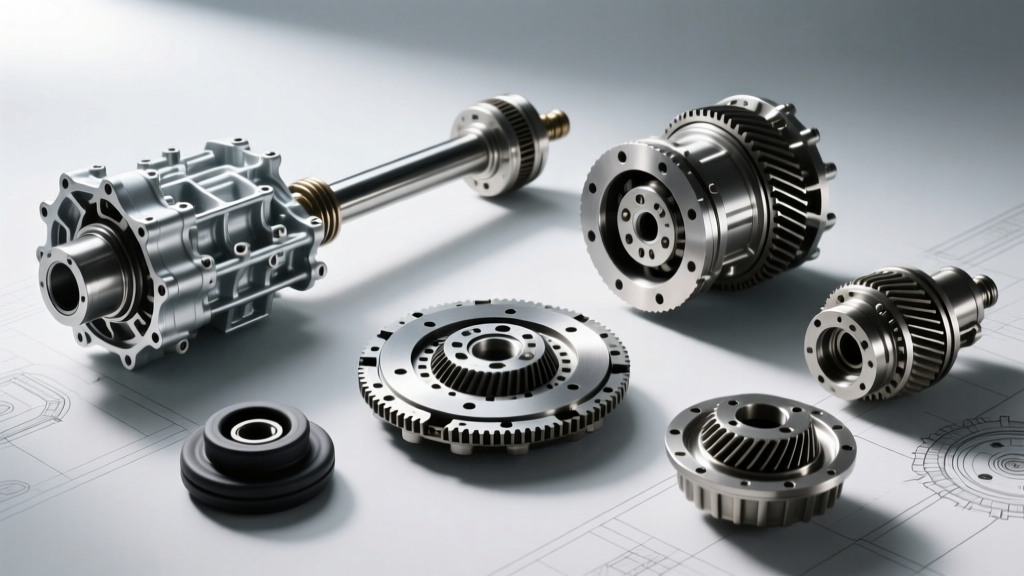
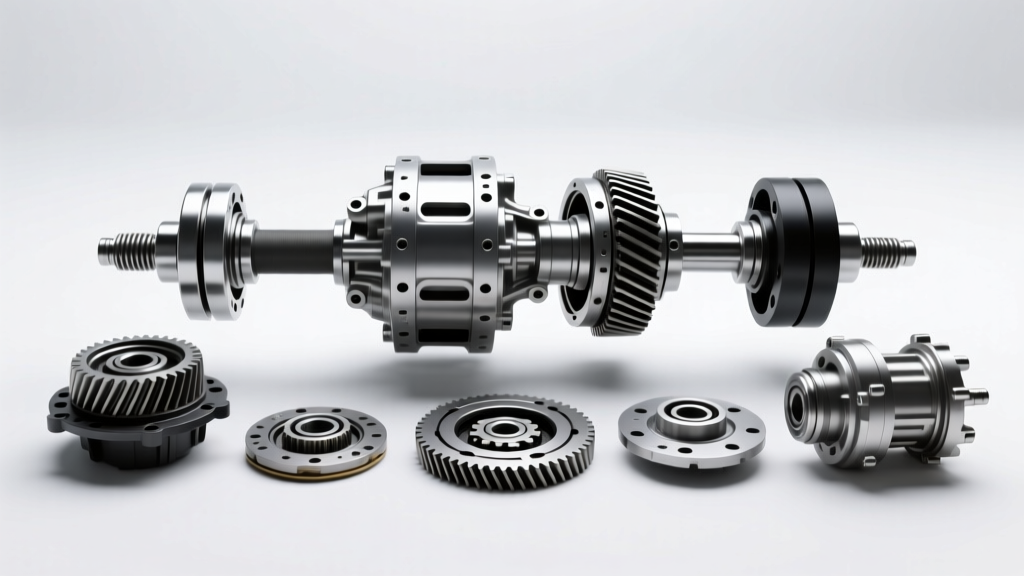
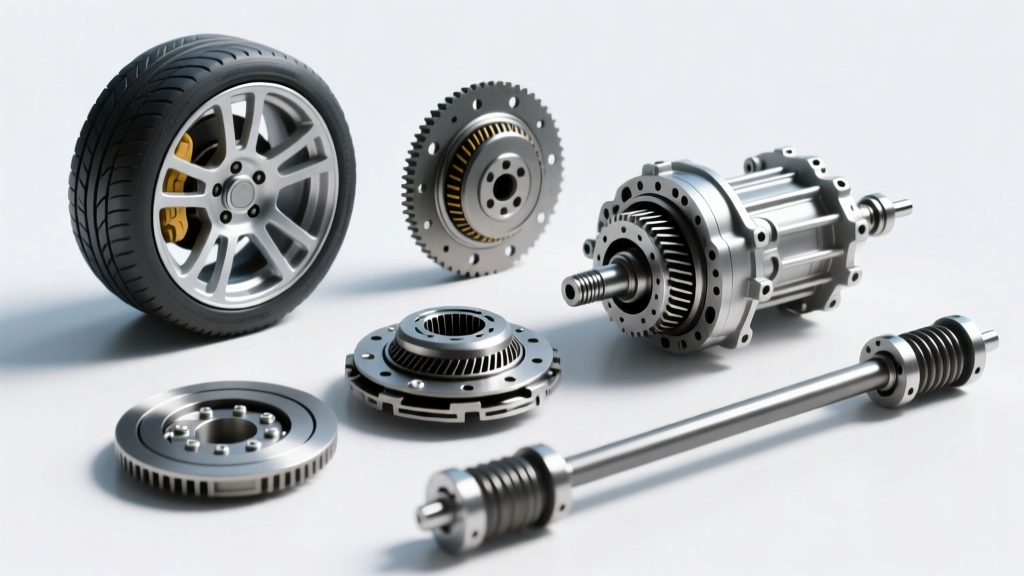
To accurately evaluate the financial and mechanical merits of upgrading your drivetrain, we must first understand the fundamental operation of a rear-wheel drive (RWD) system. In a traditional longitudinal RWD layout—found in platforms ranging from the Tremec T56-equipped Chevrolet Camaro to the ZF 8HP-equipped Ford F-150—power flows from the transmission output shaft through a tubular driveshaft. This rotational energy is transferred via universal joints (U-joints) or constant velocity (CV) joints to the rear differential's pinion gear.
The pinion gear meshes with the ring gear, multiplying torque based on the final drive ratio (e.g., 3.73:1 or 4.10:1). The ring gear is bolted to the differential carrier, which houses the spider gears and side gears. In a standard open differential, the spider gears allow the outer wheel to rotate faster than the inner wheel during cornering. However, this operational elegance becomes a critical flaw when traction is compromised, leading directly to the debate of locking differential vs 4x4 systems when seeking off-road or low-traction capability.
The Physics of Traction Loss in Open RWD Systems
An open RWD differential operates on the principle of equal torque distribution, not equal speed. Torque always follows the path of least resistance. If the left rear tire encounters ice or mud and loses traction, its resistance drops to near zero. Consequently, the right tire (which may have solid grip) receives zero torque, and the vehicle becomes immobilized. The spinning wheel effectively rotates at twice the speed it would under normal conditions, while the drivetrain's kinetic energy is entirely wasted as heat and tire smoke.
Modern 2026 RWD vehicles rely heavily on electronic traction control (ETC), which uses the ABS module to apply brake caliper pressure to the spinning wheel, artificially creating resistance and forcing torque to the wheel with grip. While effective for light snow or gravel, ETC cannot overcome severe off-road obstacles and will rapidly overheat brake components and clutch packs in the transmission under sustained heavy loads.
Locking Differential vs 4x4: 2026 Cost Breakdown
When RWD traction limits are reached, enthusiasts and fleet managers face a critical decision: optimize the existing rear-wheel drive system operation with a locking differential, or undertake a massive 4x4 drivetrain conversion. From a pure cost-analysis perspective, the disparity is staggering.
RWD Locking Differential Upgrade Costs
Upgrading an existing RWD solid axle (such as the ubiquitous Ford 8.8, GM 10-bolt, or Dana 44) involves replacing the open carrier with a mechanical, pneumatic, or electric locking unit. Below is a 2026 market breakdown for popular locking differentials, including specific part numbers and estimated installation costs.
| Locker Type | Brand / Part Number (Dana 44, 30-Spline) | Hardware Cost (2026) | Install Labor & Setup | Total Estimated Cost |
|---|---|---|---|---|
| Automatic Mechanical | Eaton Detroit Locker (225SL187A) | $680 | $750 (4.5 hrs + setup kit) | $1,430 |
| Selectable Pneumatic | ARB Air Locker (RD116) + CKMA12 Compressor | $1,450 | $1,100 (7 hrs + air routing) | $2,550 |
| Selectable Electric | Eaton E-Locker (19908-01) | $1,350 | $900 (6 hrs + wiring) | $2,250 |
| Full Spool (Race/Heavy Duty) | Richmond Gear Full Spool | $220 | $650 (4 hrs + setup kit) | $870 |
Note: Labor rates calculated at an average 2026 specialist rate of $165/hour. Setup kits (carrier bearings, shims, ring gear bolts) typically add $120-$150 to the parts cost.
The Financial Reality of 4x4 Conversions
Converting a dedicated RWD platform to a 4x4 system is rarely a financially sound decision unless building a dedicated rock crawler from a bare chassis. A proper 4x4 conversion requires not only the rear locking differential but also a front driving axle, a transfer case, a modified transmission output housing, front driveshafts, and extensive suspension modifications to accommodate the front differential and steering linkage.
- Transfer Case (e.g., Advance Adapters Atlas II or used NP205): $1,200 - $3,500
- Front Axle Assembly (e.g., Dana 60 with locking hubs): $2,500 - $5,000
- Custom Front & Modified Rear Driveshafts: $1,200 - $1,800
- Suspension, Steering Linkage, and Brackets: $2,500+
- Fabrication and Labor (60+ hours): $9,900+
Total 4x4 Conversion Cost: $17,300 to $25,000+. For 90% of overland and off-road RWD applications, a high-quality selectable rear locker combined with proper tire selection yields a superior return on investment.
Precision Installation: Torque Specs and Gear Setup
Whether you are installing an Eaton Detroit Locker or an ARB Air Locker, the rear-wheel drive system operation will be severely compromised if the differential is not set up to exact engineering tolerances. Improper gear mesh leads to catastrophic ring and pinion failure, often within the first 500 miles.
When performing a locker installation on a standard Dana 44 or Ford 8.8 RWD axle, adhere strictly to these specifications:
- Ring Gear Bolts: Always use new Grade 8 or OEM-equivalent hardware. Apply Red Loctite 271 to the threads. Torque to 70-85 lb-ft in a crisscross pattern. For 7/16"-20 threads, target 85 lb-ft.
- Carrier Bearing Cap Bolts: Torque to 70-90 lb-ft. Ensure bearing caps are installed in their original orientation (machined match marks must align) to prevent housing distortion.
- Pinion Nut Torque: This is not a fixed torque spec but a preload spec. The pinion nut must be tightened until the rotational preload (measured with an inch-pound torque wrench at the pinion yoke) reaches 15-25 in-lbs for used bearings, or 25-35 in-lbs for new bearings.
- Backlash: Measured at the ring gear edge using a dial indicator. Target 0.006" to 0.010" (consult specific OEM service manuals, as GM 10-bolts prefer 0.008"-0.012").
For selectable lockers like the ARB or Eaton E-Locker, ensure the internal wiring or air lines are routed through the axle housing using the provided sealed grommets to prevent fluid leaks and line chafing against the rotating carrier.
Long-Term Drivetrain Maintenance & ROI
Evaluating the locking differential vs 4x4 debate also requires analyzing long-term maintenance. A 4x4 system introduces dozens of new wear points: front U-joints, front wheel hub assemblies, transfer case chain stretch, and front axle differential fluid. Routine maintenance on a 4x4 system requires an additional 4-6 quarts of synthetic gear oil (e.g., Amsoil Severe Gear 75W-90) and regular greasing of front driveshaft slip yokes and steering knuckles.
Conversely, an optimized RWD system with a locking differential maintains the simplicity of a single driven axle. Maintenance involves draining and refilling the rear differential with 2.5 to 3 quarts of 75W-140 synthetic gear oil every 50,000 miles. Crucial Note: If using a clutch-type limited-slip differential (LSD) instead of a full locker, a friction modifier (e.g., Motorcraft XL-3) is mandatory to prevent chatter. However, mechanical lockers like the Detroit Locker and pneumatic ARB lockers do not require friction modifiers, simplifying fluid selection and reducing the risk of clutch-pack degradation over time.
Final Verdict for RWD Platforms
Understanding rear-wheel drive system operation reveals that the open differential is the sole bottleneck in an otherwise highly efficient, robust drivetrain layout. When comparing the cost, weight, and mechanical complexity of a 4x4 conversion against a targeted RWD locker upgrade, the financial data overwhelmingly favors the latter.
By investing $1,500 to $2,500 into a high-quality locking differential, precision setup, and aggressive all-terrain tires, RWD trucks and SUVs can achieve 85% of the off-road capability of a 4x4 system at a fraction of the cost, weight penalty, and long-term maintenance burden. For dedicated rock crawling or deep snow operations, 4x4 remains necessary; but for overlanding, trail riding, and rural traction, maximizing your RWD system with a locker is the undisputed champion of cost-effective drivetrain engineering.
Authoritative Sources & Technical References
- Eaton Performance Differentials & Lockers - Technical specifications for Detroit and E-Locker units.
- ARB 4x4 Accessories Air Lockers - Installation guides and part number cross-references for RD116 and pneumatic systems.
- Dana Automotive Drivetrain Systems - OEM torque specifications and gear setup tolerances for Spicer and Dana 44/60 axles.