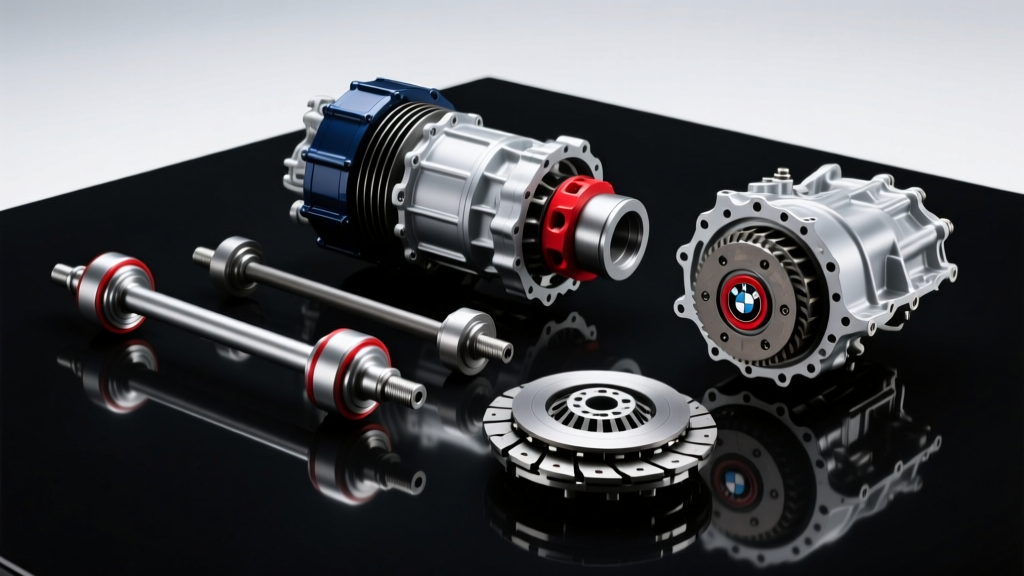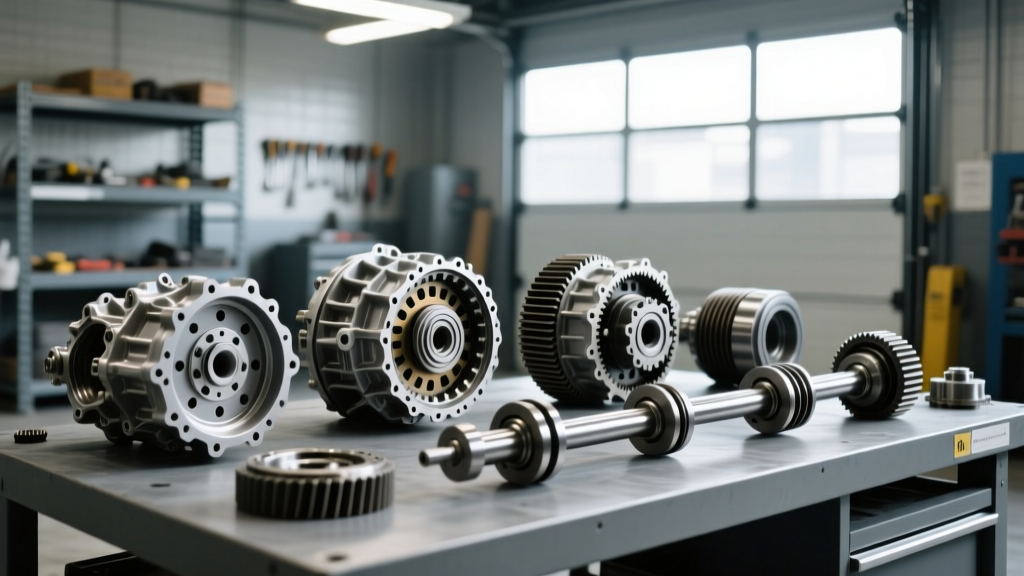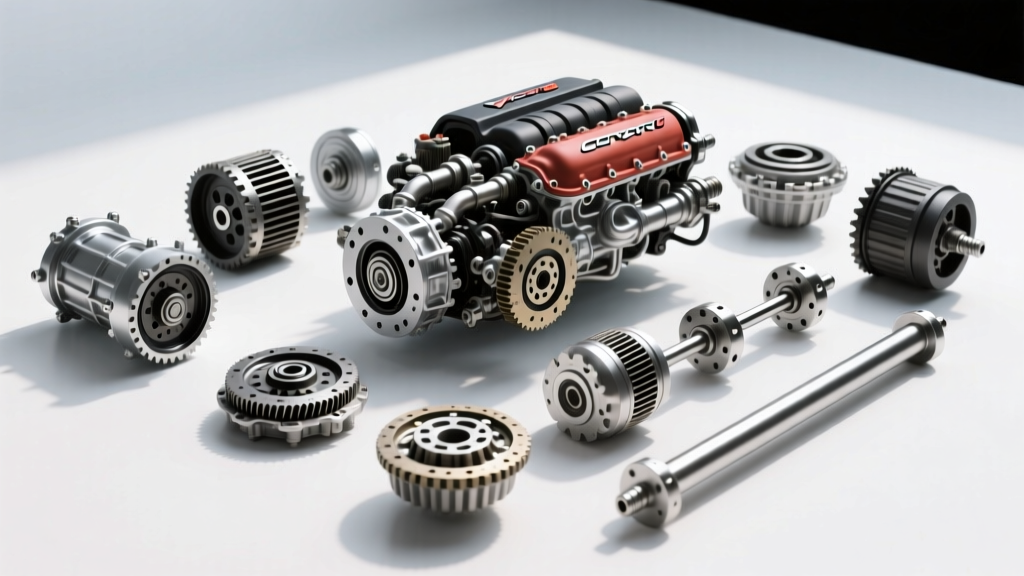
The Evolution of the Corvette Drivetrain: From Transaxles to Mid-Engine DCTs
When enthusiasts discuss the corvette drivetrain, they are referring to one of the most unique and heavily engineered power delivery systems in the automotive world. Unlike traditional front-engine, rear-wheel-drive muscle cars that rely on a long, heavy driveshaft to connect the transmission to the rear axle, the Corvette has historically utilized a rear-mounted transaxle layout. This design optimizes weight distribution, but it introduces distinct mechanical challenges when horsepower and torque figures exceed factory limits.
As we navigate the 2026 performance landscape, aftermarket support for the Corvette platform has never been more robust. Whether you are pushing a C5 Z06 on drag radials, tuning a C7 Z06 for track days, or extracting 1,000+ wheel-horsepower from a C8 Stingray or ZR1, understanding the mechanical thresholds of your specific generation is critical. This guide breaks down the exact failure points, proven upgrade paths, and precise torque specifications required to keep your V8's power planted to the pavement.
Generation C5 & C6 (1997–2013): Torque Tubes and T56 Transaxles
The C5 and C6 generations rely on a physical torque tube to enclose the driveshaft, connecting the front-mounted engine to the rear-mounted transaxle. The manual cars utilize the legendary Tremec T56 (and later the TR-6060 in the C6 ZR1), while the automatics use the 4L60E and, subsequently, the 6L80.
The Torque Tube Vulnerability
The factory torque tube is constructed from stamped steel and utilizes plastic bushings and rubber isolators to dampen NVH (Noise, Vibration, and Harshness). Under the stress of aggressive launches or supercharger installations pushing past 550 lb-ft of torque, the factory tube can twist. This misalignment destroys the internal torque tube bearings and places catastrophic side-loading on the transmission output shaft and differential input bearings.
- The Fix: Upgrade to a billet aluminum torque tube. The DTE Level 2 Billet Torque Tube (approx. $950) eliminates flex, utilizes heavy-duty SKF bearings, and ensures perfect concentric alignment between the crankshaft and the transaxle.
- Driveshaft Upgrades: For cars pushing 800+ WHP, replace the factory two-piece steel driveshaft with a one-piece carbon fiber or 6061-T6 aluminum shaft to reduce rotational mass and eliminate the weak factory U-joints.
Half-Shafts and CV Joints
The C5 and C6 half-shafts are notorious for snapping under the grip of modern sticky tires. The inner CV joints, in particular, suffer from cage shattering during hard 1-2 shifts. Upgrading to 300M chromoly alloy steel axle shafts with high-angle, track-proven CV joints is mandatory for any forced-induction C5/C6 build.
Generation C7 (2014–2019): The 8L90 and Z06 Axle Dilemma
The C7 generation introduced the 7-speed manual (later revised) and the Tremec TR-6060 in the Z06, alongside the GM 8L90 8-speed automatic. While the chassis rigidity improved dramatically, the C7 Z06’s LT4 engine—producing 650 hp and 650 lb-ft of torque—quickly exposed the limits of the factory drivetrain hardware.
C7 Z06 Half-Shaft Failures
On the drag strip, the C7 Z06 is infamous for snapping stock half-shafts. The factory axles simply cannot handle the instantaneous torque multiplication when paired with Mickey Thompson ET Street R or similar drag radials. The inner CV joint cups on the differential side are the primary failure point.
Upgrade Path: The Driveshaft Shop (DSS) Level 5R Axles (approx. $2,400/pair) are the industry standard. These feature 108mm 300M steel inner CV joints and aerospace-grade chromoly shafts, rated for over 1,200 WHP. When installing these, it is crucial to inspect the differential output splines for wear, as the softer factory splines can gall against the harder aftermarket CV joints.
8L90 Automatic Transmission Cooling
The 8L90 is a marvel of shift speed, but it generates immense internal heat, leading to Torque Converter Clutch (TCC) shudder and fluid degradation during track use. The factory transmission pan is plastic and holds a limited volume of fluid.
- Deep Pan Upgrade: Install a PPE cast aluminum deep transmission pan (approx. $350). This increases fluid capacity by nearly two quarts and acts as a massive heat sink.
- Cooling: Reroute the factory cooling lines to a dedicated, high-capacity front-mount transmission cooler. Use GM's recommended Dexron ULV (Ultra Low Viscosity) fluid to ensure proper valve body operation and clutch engagement.
Generation C8 (2020–2026): Mid-Engine DCT Mastery
The C8 Corvette completely rewrites the corvette drivetrain playbook. By moving the engine behind the driver, Chevrolet eliminated the torque tube and driveshaft entirely. Power is delivered through the rear-mounted Tremec M90 8-Speed Dual-Clutch Transmission (DCT). While the packaging is brilliant, the thermal and mechanical demands on the C8 transaxle are unprecedented.
C8 DCT Thermal Management and Fluid Specs
The Tremec M90 DCT utilizes a complex network of internal pumps and clutch packs. Repeated use of the factory Launch Control system on the track generates immense heat in the dual-clutch modules. If the fluid overheats, the ECU will aggressively pull timing and limit clutch engagement to prevent glazing.
Expert Note: The C8 DCT requires highly specific fluid. Do not use standard ATF. The factory fill is Castrol Transmax DCT or the GM-recommended ACDelco DCT Fluid (Part # 19434551). The total dry fill capacity is 7.4 liters (7.8 quarts), but a standard drain and fill will only yield about 4.5 liters. Always verify the fluid level using the factory scan tool's temperature-dependent level-check procedure.
E-Diff Tuning and Half-Shaft Upgrades for the C8 Z06/ZR1
The C8 utilizes a GKN electronic Limited-Slip Differential (eLSD) integrated directly into the rear transaxle housing. While the mechanical grip is superb, the factory eLSD tuning can be overly conservative, leading to inside-tire spin during high-speed corner exits. Using platforms like HP Tuners, calibrators can adjust the eLSD lock torque maps, increasing lock-up under acceleration and trail-braking to maximize forward bite.
For the C8 Z06 (670 hp) and the twin-turbo C8 ZR1, the factory half-shafts remain a bottleneck on prepped surfaces. Upgrading to DSS 1400HP-rated C8 axles ensures that the flat-plane crank's violent torque delivery doesn't result on a trailered car. Furthermore, upgrading the rear differential and transaxle cooling loops with aftermarket fluid reservoirs and auxiliary pumps is a mandatory 2026 track-day preparation step.
Generational Drivetrain Comparison & Upgrade Matrix
Use the table below to identify your generation's primary bottleneck and the corresponding aftermarket solution.
| Generation | Transmission | Primary Weak Point | Recommended Upgrade | Est. Cost (2026) |
|---|---|---|---|---|
| C5 / C6 | T56 / 6L80 | Torque Tube Flex & Bearing Failure | DTE Billet Torque Tube | $950 |
| C7 Base | 8L90 Auto | Fluid Overheating & TCC Shudder | PPE Deep Pan + Aux Cooler | $650 |
| C7 Z06 | TR-6060 Manual | Inner CV Joint Cage Shattering | DSS Level 5R 300M Axles | $2,400 |
| C8 Stingray | Tremec M90 DCT | DCT Clutch Pack Thermal Glazing | Auxiliary DCT Fluid Cooler | $1,200 |
| C8 Z06 / ZR1 | Tremec M90 DCT | Half-Shaft Torsional Failure | DSS 1400HP Rated C8 Axles | $2,800 |
Critical Torque Specifications for DIY Builders
When upgrading your Corvette's drivetrain, adhering to factory torque specifications is non-negotiable. Over-tightening can strip aluminum transaxle cases, while under-tightening leads to catastrophic separation under load. Always use a calibrated torque wrench.
- C5/C6 Differential Fill/Drain Plugs: 25 lb-ft (34 Nm). Ensure the copper crush washer is replaced on every fluid change.
- C7 Z06 Rear Axle Nut: 258 lb-ft (350 Nm). This is a massive torque spec. Use a heavy-duty 36mm socket and a breaker bar with a cheater pipe or a 1/2-inch drive torque multiplier. Never use an impact gun to final-torque the axle nut.
- C7 8L90 Transmission Pan Bolts: 89 lb-in (10 Nm). Do not confuse inch-pounds with foot-pounds; snapping these small bolts inside the bellhousing area is a nightmare to extract.
- C8 DCT Transaxle Pan Bolts: 89 lb-in (10 Nm). The C8 pan is structural and sealed with a specific RTV. Clean the mating surface with brake cleaner and apply a 2mm bead of GM-approved sealant before reinstalling.
Final Thoughts on Drivetrain Longevity
Upgrading the corvette drivetrain is an exercise in managing the chain of mechanical strength. Upgrading to sticky tires without upgrading the axles will result in snapped shafts. Upgrading the axles without reinforcing the differential or torque tube will simply move the failure point upstream. By addressing the specific vulnerabilities of your Corvette's generation—whether it's the C6 torque tube, the C7 Z06 axles, or the C8 DCT cooling system—you can reliably translate the LT small-block's massive torque output into forward momentum. For ongoing technical discussions and real-world build logs, the CorvetteForum community remains an invaluable resource for the modern V8 enthusiast.