The Great Debate: Powertrain vs. Drivetrain Explained
For beginners and seasoned enthusiasts alike, automotive terminology can feel like a foreign language. Two of the most frequently confused terms in the automotive world are powertrain and drivetrain. While often used interchangeably by casual drivers and even some dealership service advisors, they represent distinctly different mechanical systems. Understanding the difference is not just academic; it is critical when diagnosing failures, understanding warranty coverage, and avoiding massive repair bills.
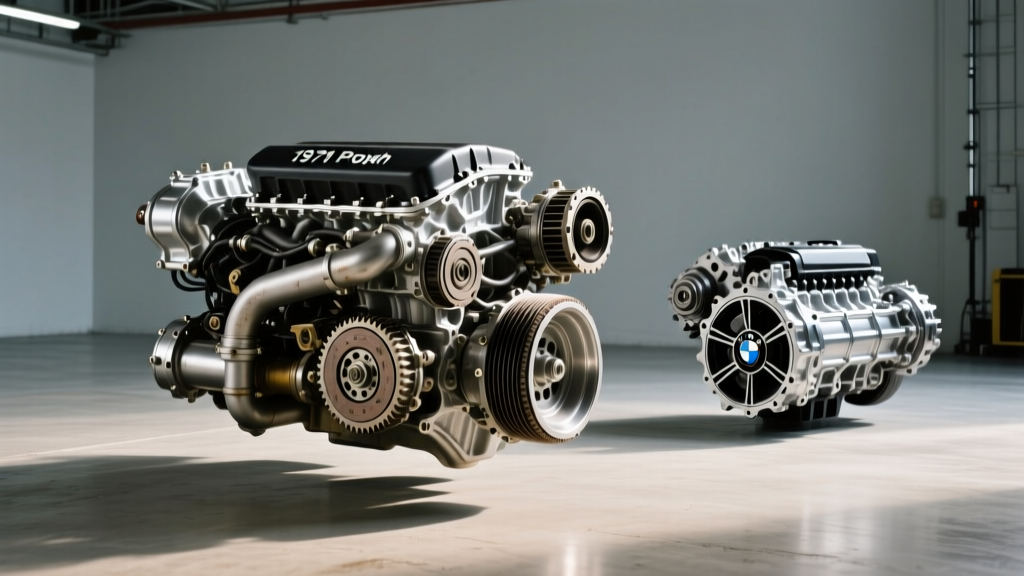
In the simplest terms, the powertrain encompasses every component that generates power and delivers it to the road. This includes the engine (or electric motor), the transmission, the driveshaft, the axles, and the wheels. The drivetrain, on the other hand, is a subset of the powertrain. It includes only the components responsible for transferring power from the engine to the wheels—namely the transmission, driveshaft, differentials, CV joints, and axles. The engine is explicitly excluded from the drivetrain.
The Infamous 'BMW Drivetrain Malfunction Message'
Nowhere is the confusion between these two systems more apparent—and more panic-inducing—than when a driver is greeted by the dreaded BMW drivetrain malfunction message on their iDrive infotainment screen. This yellow or red warning text, often accompanied by a loss of power, has become one of the most searched automotive error messages on the internet.
Why BMW's Terminology Confuses Beginners
When a BMW owner sees the 'drivetrain malfunction' warning, their immediate assumption is that a physical drivetrain component—like the ZF 8HP automatic transmission, the driveshaft, or the rear differential—has catastrophically failed. However, in BMW's engineering nomenclature, the word 'drivetrain' is actually used as a catch-all translation for the entire powertrain.
This stems from a linguistic quirk in BMW's native German engineering documentation. The German word Antriebsstrang translates roughly to 'drive strand' or 'powertrain.' When localized for English-speaking markets, BMW's software teams historically translated Antrieb simply as 'drivetrain.' Consequently, the BMW drivetrain malfunction message can be triggered by a failing engine component (like a VANOS solenoid, a faulty ignition coil, or a turbocharger wastegate actuator) just as easily as it can be triggered by an actual drivetrain failure (like a slipping transmission clutch pack or a seized transfer case). You are seeing a 'powertrain' warning disguised as a 'drivetrain' warning.
Component Breakdown: What Actually Failed?
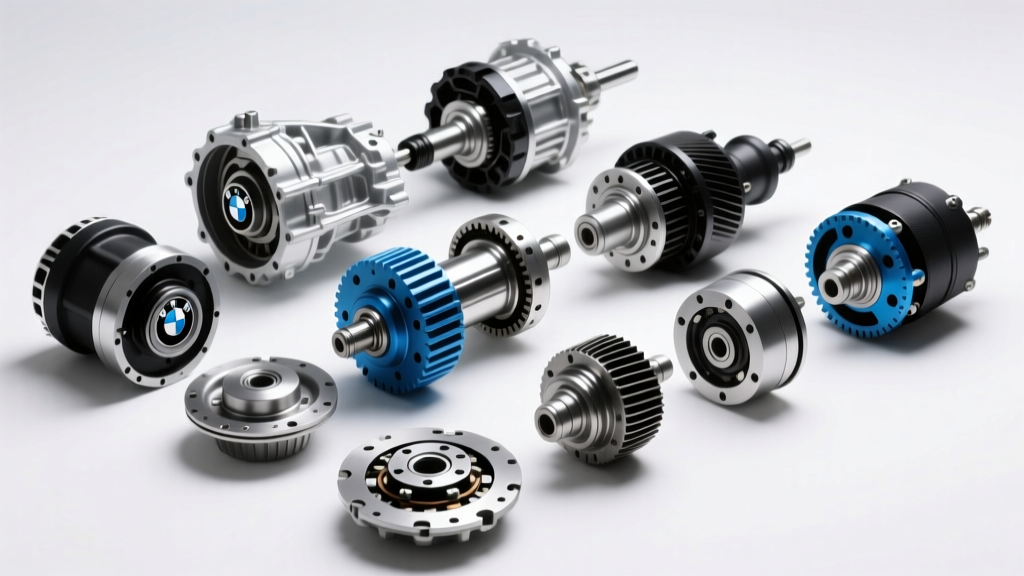
Because the message is so broad, pinpointing the exact failure requires looking at the specific sub-systems. Below is a breakdown of what components belong to which category, along with real-world failure points and estimated replacement costs for common rear-wheel-drive and xDrive BMW platforms (such as the F30 3-Series or G20 3-Series).
| System Category | Component | Common Failure Mode | Estimated Repair Cost (Parts & Labor) |
|---|---|---|---|
| Powertrain (Engine) | Valvetronic Eccentric Shaft Sensor | Internal wear causing rough idle and limp mode. | $800 - $1,200 |
| Powertrain (Engine) | Turbocharger Wastegate Actuator | Electronic actuator failure (common in B48/B58 engines). | $1,500 - $2,500 |
| Drivetrain (Transmission) | ZF 8HP Mechatronic Unit | Solenoid wear or valve body cracking causing harsh shifts. | $3,500 - $5,500 |
| Drivetrain (xDrive) | Transfer Case Actuator Motor | Plastic internal gear strips, causing xDrive failure. | $400 - $900 |
| Drivetrain (Axle) | Flex Disc (Guibo) | Rubber degradation causing severe driveline vibration. | $350 - $600 |
Real-World Diagnostics: What to Do When the Message Hits
If your BMW throws a drivetrain malfunction message, do not immediately assume you need a $6,000 transmission rebuild. Follow these beginner-friendly, yet professionally grounded, diagnostic steps to isolate the issue.
Step 1: Assess the Vehicle's Behavior (Limp Mode)
When the message appears, the car's ECU (DME/DDE) will often initiate 'Limp Home Mode.' This restricts engine RPM (usually below 3,000 RPM), disables turbo boost, and locks the ZF transmission into a single gear (often 3rd or 4th) to protect the mechanical components. If the car is vibrating violently while in limp mode, suspect a physical drivetrain issue like a shattered flex disc (Part No. 26117511454 on many F-chassis models) or a failing center support bearing. If the car simply feels sluggish but drives smoothly, the issue is almost certainly engine-related (powertrain), such as a misfire or boost leak.
Step 2: Read the Codes (Beyond Generic OBD2)
A standard $20 OBD2 scanner from an auto parts store will only read generic EPA-mandated emissions codes (P-codes). To decode a BMW drivetrain malfunction message, you need a BMW-specific scanner capable of reading proprietary hex codes from the DME, EGS (Transmission Control Module), and VTG (Transfer Case Module). Tools like BimmerLink, Carly, or professional shop tools like BMW's ISTA (Integrated Service Technical Application) are mandatory.
- Engine Codes (Powertrain): Codes like 20A101 (Combustion misfires) or 120408 (Boost pressure control) confirm the engine is the culprit, not the drivetrain.
- Transmission Codes (Drivetrain): Codes like 480208 (Gear ratio monitoring) or 510E01 (Shift solenoid malfunction) point directly to the ZF 8HP transmission. For context, the ZF 8HP45 and 8HP50 transmissions hold roughly 8.5 to 9.5 liters of ZF LifeguardFluid 8. If fluid is low due to a leaking mechatronic sealing sleeve, it will trigger these exact codes.
- Transfer Case Codes (Drivetrain): Codes like 54C6 (Transfer case internal fault) usually indicate the ATC35L or ATC45L transfer case actuator gear has stripped—a very common and relatively cheap fix compared to an engine rebuild.
Mechanical Deep Dive: Torque Specs and Fluids
For the DIY beginner looking to tackle actual drivetrain maintenance to prevent these messages, precision is key. If you are replacing the driveshaft flex disc (Guibo) to eliminate driveline shudder that might confuse your traction control sensors, you must follow exact torque specifications. The M12 flex disc bolts on a typical BMW F30 335i must be torqued to 100 Nm plus an additional 90 degrees of rotation. Furthermore, these are torque-to-yield bolts and must be replaced, never reused.
If you are servicing the xDrive transfer case to prevent actuator bind and subsequent drivetrain warnings, note that the ATC35L transfer case requires exactly 0.6 liters of specific TF 0870 fluid. Using standard ATF or the wrong ZF fluid will cause clutch pack chatter, leading the VTG module to throw a drivetrain malfunction code within a few hundred miles.
Warranty Coverage: Powertrain vs. Drivetrain
Understanding the difference between these systems is vital when reviewing your vehicle's warranty. According to the official BMW USA warranty guidelines, the standard 'Powertrain Limited Warranty' covers the engine, transmission, and drivetrain components for 4 years or 50,000 miles. Because BMW groups the engine and transmission under their internal 'drivetrain' translation, a mechanical failure in the engine block or the ZF transmission mechatronic unit will be covered under this powertrain warranty.
However, wear-and-tear items, sensors, and electronic actuators (like the transfer case servo motor or engine ignition coils) are typically excluded from powertrain warranty coverage, falling instead under the general 4-year/50,000-mile bumper-to-bumper New Vehicle Limited Warranty. Once the bumper-to-bumper expires, you are responsible for electronic 'drivetrain' warnings, even if the mechanical gears inside the transmission are perfectly fine. For deeper technical specifications on the ZF 8-speed transmissions that power the majority of modern BMWs, you can reference the ZF official transmission documentation.
Final Thoughts
The 'BMW drivetrain malfunction message' is a prime example of how lost-in-translation software engineering can cause unnecessary panic. By understanding that BMW uses 'drivetrain' to mean the entire 'powertrain,' you can approach the diagnosis logically. Always start with a BMW-specific OBD2 scan to separate engine faults from physical transmission or xDrive faults. Whether you are dealing with a simple $150 transfer case actuator gear or a more complex ZF valve body issue, knowing the exact difference between your powertrain and drivetrain will save you time, money, and a lot of stress at the dealership.