The Intersection of Performance Drivetrains and Clutch Chatter
In the realm of high-horsepower builds and modern track cars, the manual transmission has evolved. Whether you are running a factory Dual-Clutch Transmission (DCT) like the Getrag 7DCT300, a BMW SMG automated manual, or a custom paddle-shift conversion on a Tremec T56 Magnum F utilizing an electronic clutch actuator (ECA), the engagement of the clutch is no longer purely analog. When a performance vehicle exhibits severe clutch chatter—a violent 15 to 30 Hz vibration during the friction bite point—many builders immediately blame the aftermarket twin-disc clutch or a warped flywheel. However, in modern automated and electro-hydraulic setups, the root cause is frequently a miscalibrated, degraded, or under-specced electronic clutch actuator.
Diagnosing ECA-induced chatter requires a fundamental shift from mechanical troubleshooting to electro-mechanical and software-based diagnostics. This guide explores how to isolate electronic clutch actuator faults, interpret sensor data, and implement performance upgrades to eliminate chatter while handling 600+ lb-ft of torque.
Mechanical vs. Actuator-Induced Chatter: A Diagnostic Matrix
Before tearing into the bellhousing or flashing the Transmission Control Module (TCM), you must definitively categorize the chatter. Mechanical chatter stems from physical friction inconsistencies, while ECA chatter is a closed-loop control oscillation. Use the following matrix to guide your initial road-test diagnosis.
| Diagnostic Variable | Mechanical Chatter (Flywheel/Disc) | ECA Control Chatter (Actuator/Software) |
|---|---|---|
| Thermal Dependence | Worsens as clutch heats up (glazing/hot spots) | Consistent cold or hot; may worsen if ECA fluid overheats |
| RPM Sensitivity | Highly dependent on engine RPM and load | Occurs at specific actuator stroke positions regardless of RPM |
| Vibration Frequency | Low frequency, heavy chassis shake (5-15 Hz) | High frequency, rapid pedal/TCM oscillation (15-30 Hz) |
| Engagement Ramp | Chatter persists through entire engagement zone | Chatter spikes exactly at the calibrated 'bite point' |
Deep Dive: Why Electronic Clutch Actuators Cause Chatter
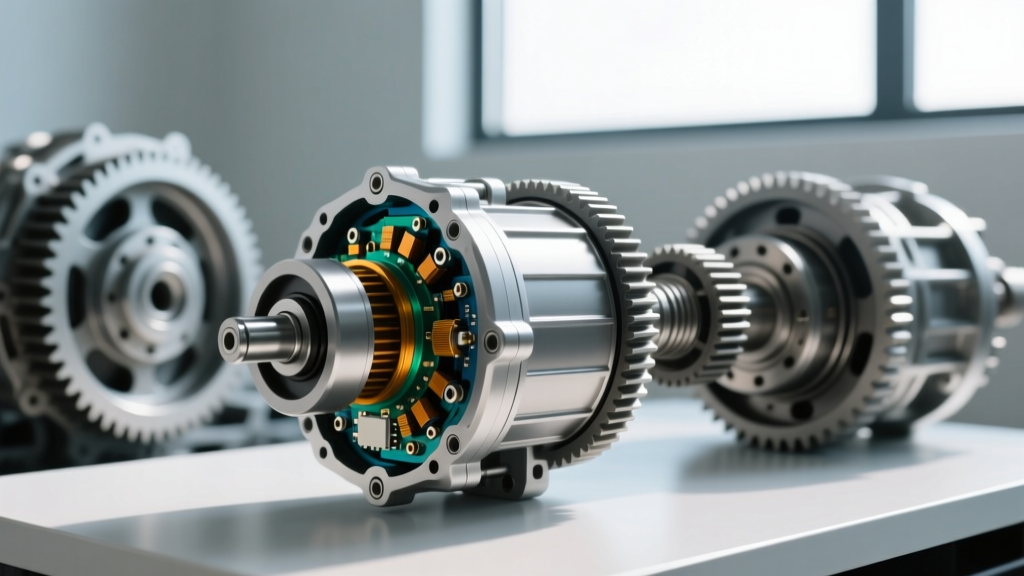
An electronic clutch actuator relies on a PID (Proportional-Integral-Derivative) control loop. The TCM commands a specific clutch torque capacity, and the ECA uses a brushless DC motor or a high-pressure electro-hydraulic solenoid to move the concentric slave cylinder (CSC). A Hall-effect position sensor provides real-time feedback to the TCM.
1. Sensor Drift and Hall-Effect Degradation
In high-heat environments (common in track cars generating 800+ whp), the magnetic ring on the ECA shaft can suffer thermal demagnetization, or the Hall-effect sensor can experience voltage drift. If the TCM reads a position of 12.4mm when the physical stroke is actually 12.1mm, the PID loop will rapidly over-correct and under-correct to find the target bite point. This micro-oscillation translates directly into severe drivetrain chatter.
2. Electro-Hydraulic Fluid Cavitation
For setups utilizing electro-hydraulic ECAs (such as those found in heavy-duty automated manuals or custom EV swaps), fluid degradation is a primary culprit. If the hydraulic fluid absorbs moisture or the accumulator loses pre-charge pressure, the solenoid valve will pulse rapidly to maintain hydraulic pressure at the CSC, resulting in a chattering engagement.
Step-by-Step ECA Diagnostic Protocol
To confirm an ECA fault, bypass mechanical assumptions and interface directly with the actuator's data stream. You will need a bidirectional OBD2 scan tool capable of reading raw TCM PID data, or an oscilloscope for circuit-level testing.
Step 1: Bidirectional Stroke and Pressure Testing
Using a tool like HP Tuners VCM Suite or OEM-specific software (e.g., BMW INPA for SMG/DCT), command the ECA through its full stroke range with the engine off and transmission in neutral. Monitor the 'Clutch Position Sensor' PID.
- Expected Behavior: A smooth, linear voltage change from 0.5V (fully engaged) to 4.5V (fully disengaged) over an 18mm to 24mm physical stroke.
- Fault Indicator: If the voltage graph shows 'stair-step' anomalies or micro-drops at the 8mm–12mm mark (the typical friction zone), the internal potentiometer or magnetic sensor is failing.
Step 2: Oscilloscope Waveform Analysis
For intermittent chatter that only occurs under load, back-probe the ECA position sensor signal wire and the motor PWM (Pulse Width Modulation) control wire. According to research published by SAE International on automated manual transmission dynamics, a healthy ECA will show a clean, consistent PWM duty cycle increase as it pushes through the friction zone. If the oscilloscope reveals rapid, erratic spikes in the PWM signal correlating exactly with the physical vibration felt in the chassis, the TCM is fighting mechanical binding inside the actuator or CSC, confirming an electro-mechanical fault.
Performance Upgrades: Hardware and Software Solutions
Once ECA-induced chatter is confirmed, the goal in a performance build is not just to replace the unit, but to upgrade it to handle increased clamp loads and aggressive engagement maps.
Hardware: High-Flow Solenoids and Braided Lines
If your setup uses an electro-hydraulic ECA, the factory solenoid valves are often tuned for comfort, prioritizing smooth, slow engagements. For a track car running a 3,200 lb clutch pressure plate, this slow ramp rate causes the disc to slip excessively, generating heat and chatter.
- Upgrade Path: Install a high-flow aftermarket solenoid valve (typically $120–$180). This increases hydraulic volume to the CSC, allowing the TCM to command faster, more decisive clutch engagements without the 'hunting' that causes chatter.
- Hydraulic Lines: Replace factory rubber hydraulic lines with stainless steel braided lines. Rubber lines expand under the 60+ bar of pressure generated by performance ECAs, creating a spongy feedback loop that confuses the PID controller.
Software: PID Loop Tuning and Engagement Maps
When upgrading to an aftermarket performance clutch (e.g., a carbon-on-carbon twin-disc), the factory ECA calibration will almost certainly cause chatter because the friction coefficient of carbon is vastly different from organic or cerametallic materials. Using tuning software, you must alter the 'Clutch Torque Capacity' map.
Pro Tuning Tip: When mapping a new clutch, increase the 'Integral' (I) gain in the ECA PID loop by 10-15%. This forces the actuator to eliminate steady-state error faster during the bite point, snapping the clutch into engagement rather than feathering it, which is the primary software cause of carbon-clutch chatter.
Critical Torque Specs, Fluids, and Pricing
When servicing or upgrading the electronic clutch actuator, precision is mandatory. Improper mounting or fluid selection will instantly ruin the calibration. Below are standard specifications for common performance applications (always verify with your specific OEM or aftermarket manual, such as those provided by Tremec for their automated swap kits).
Installation Torque Specifications
- ECA to Bellhousing Mounting Bolts (M8): 22 Nm (16 lb-ft). Over-torquing can warp the aluminum ECA housing, binding the internal stepper motor shaft.
- CSC Hydraulic Line Banjo Bolts: 15 Nm (11 lb-ft). Use new copper crush washers every time.
- Clutch Fork Pivot Ball (if applicable to ECA pushrod setups): 35 Nm (26 lb-ft), secured with high-temperature threadlocker.
Fluid Capacities and Selection
Never mix fluid types in electro-hydraulic ECAs. The wrong fluid will destroy the internal seals and alter the hydraulic modulus, leading to immediate chatter.
- Getrag DCTs (e.g., 7DCT300): Requires Pentosin FFL-4 or OEM-equivalent DCT fluid. Capacity varies, but the ECA hydraulic circuit typically holds 0.2L to 0.4L of the total system volume.
- Automated Manual Swaps (Electro-Hydraulic): Typically require high-temp DOT 4 or DOT 5.1 synthetic brake fluid (e.g., Motul RBF 660) to withstand the boiling points generated near the exhaust and bellhousing.
Cost Breakdown for ECA Upgrades
- OEM Replacement ECA: $450 – $850 (Part numbers vary, e.g., FTE Automotive KN-series or LuK RepSet components).
- Aftermarket High-Flow Solenoid Upgrade: $120 – $180.
- Stainless Braided Hydraulic Line Kit: $80 – $140.
- Professional TCM/PID Calibration: $300 – $600 (Dyno time and software licensing).
Conclusion
Clutch chatter in a modern performance vehicle is rarely just a 'bad clutch.' When your drivetrain relies on an electronic clutch actuator, the engagement is a complex symphony of software logic, magnetic sensors, and hydraulic pressure. By utilizing bidirectional scan tools, analyzing oscilloscope waveforms, and understanding the difference between mechanical friction and PID loop oscillation, you can accurately diagnose the root cause of the vibration. Upgrading to high-flow solenoids, braided lines, and custom-tuned engagement maps will not only eliminate the chatter but will transform your automated manual or DCT into a precise, lightning-fast weapon on the track.