The Core Question: Does an Electric Car Have a Gearbox?
When transitioning from internal combustion engines (ICE) to battery electric vehicles (BEVs), one of the most common questions asked by enthusiasts and technicians alike is: does an electric car have a gearbox? The short answer is yes, but it is fundamentally different from the multi-speed automatic or manual transmissions found in traditional vehicles. In the EV world, this component is typically referred to as a reduction gear, e-axle, or e-drive unit.
Unlike an ICE vehicle that requires 8, 9, or even 10 forward gears to keep a narrow engine RPM band within its optimal power range, electric motors deliver maximum torque from zero RPM and can rev safely up to 20,000 RPM or more. Therefore, the vast majority of EVs utilize a single-speed reduction gearbox. However, as we will explore in this expert guide, the engineering, metallurgy, and fluid dynamics required to manage instant, massive torque loads make the EV gearbox a marvel of modern automotive drivetrain technology.
Anatomy of an EV Reduction Gear (e-Drive)
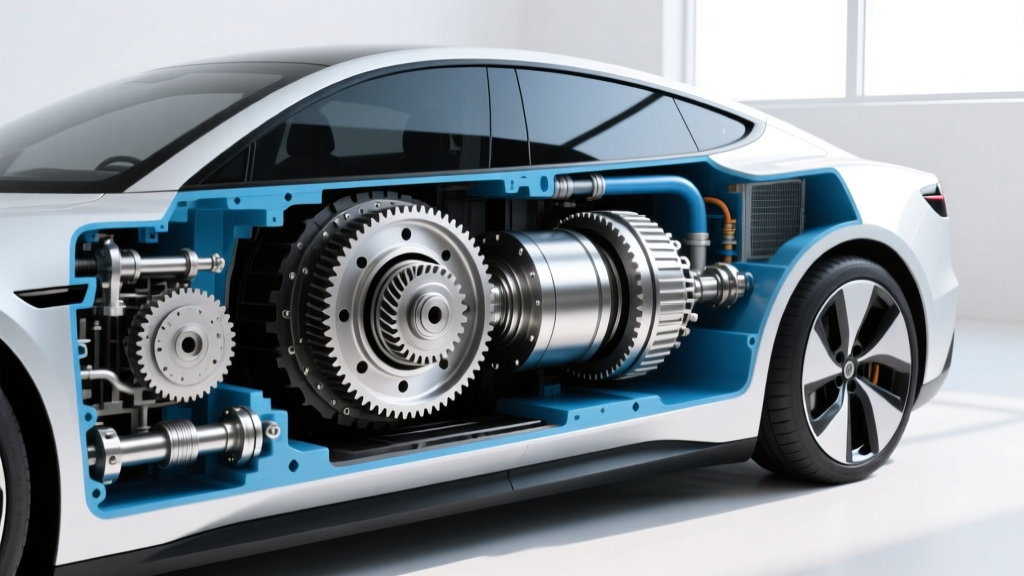
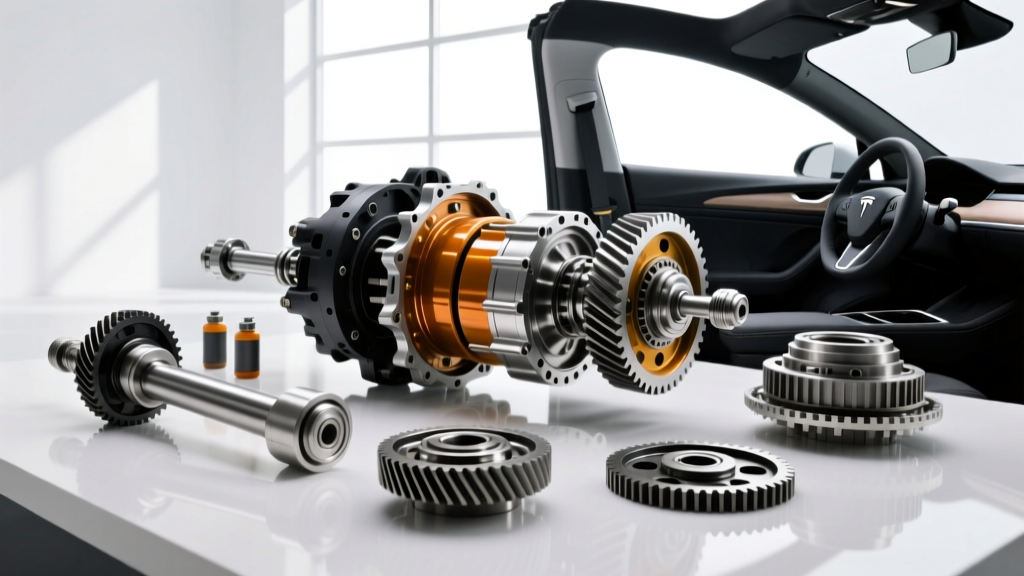
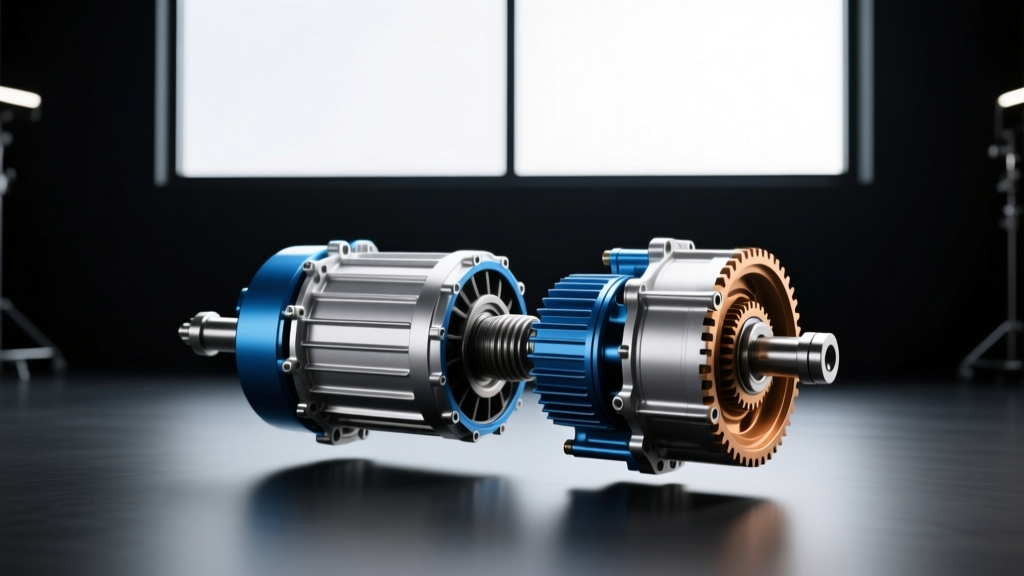
To understand the electric vehicle drivetrain explained through a mechanical lens, we must look inside the e-axle housing. A modern integrated e-drive typically houses three main components in a single cast-aluminum enclosure: the traction motor, the power inverter, and the reduction gearset.
Gear Metallurgy and NVH Engineering
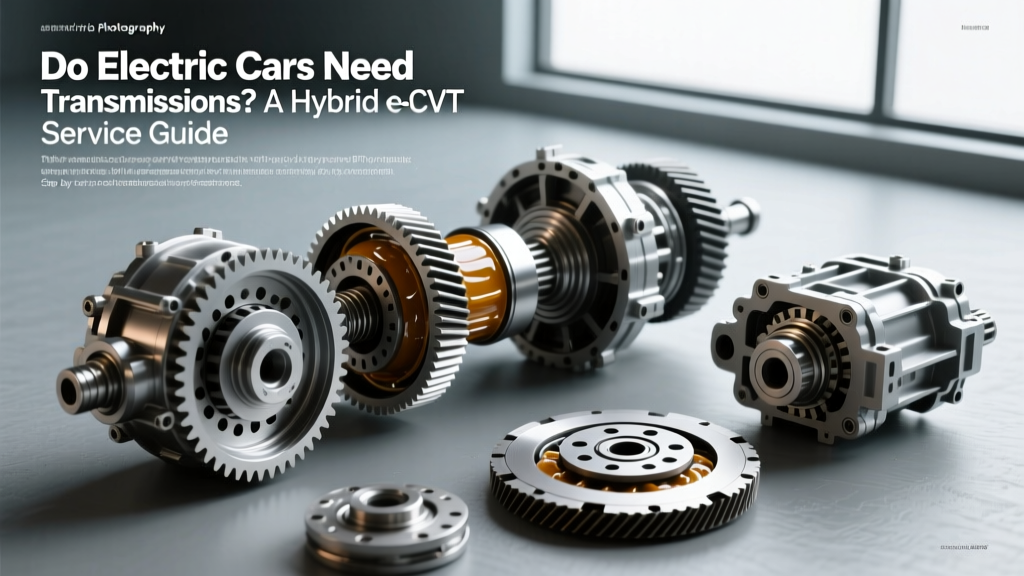
Because electric motors lack the inherent noise and vibration of a gas engine, any mechanical whine from the gearbox is immediately noticeable to the cabin. To combat this, EV reduction gears utilize precision-machined helical-cut gears. Unlike straight-cut gears, helical teeth engage gradually, drastically reducing Noise, Vibration, and Harshness (NVH). Furthermore, these gears undergo advanced micro-geometry crowning and specialized case-hardening processes to withstand instant torque spikes that can exceed 6,000 Nm at the wheels without suffering from micro-pitting or tooth shearing.
High-RPM Bearing Preloads
With motors like the Tesla Model S Plaid or Lucid Air spinning at up to 20,000 RPM, standard steel bearings would suffer from cage disintegration and thermal runaway. Expert drivetrain engineers utilize ceramic hybrid ball bearings (silicon nitride balls with steel races) paired with specialized low-drag preloads. This minimizes friction while maintaining the exact gear mesh alignment required under heavy regenerative braking loads.
Single-Speed vs. Multi-Speed EV Transmissions
While 95% of EVs on the road use a single-speed reduction gear, a select few high-performance platforms utilize multi-speed gearboxes to optimize both blistering acceleration and high-speed top-end efficiency.
| Transmission Type | Example Vehicles | Gear Ratios | Primary Engineering Benefit |
|---|---|---|---|
| Single-Speed Reduction | Tesla Model 3/Y, Rivian R1T, Ford F-150 Lightning | ~9.0:1 to 10.5:1 | Simplicity, lower weight, reduced parasitic loss, seamless torque delivery. |
| 2-Speed Rear Axle | Porsche Taycan, Audi e-tron GT | 1st: ~15.8:1 | 2nd: ~8.1:1 | Optimizes 0-60 mph launches while lowering motor RPM for high-speed Autobahn cruising. |
| Multi-Speed (Concept/Rare) | Early Tesla Roadster (2008) | 2-Speed Manual/Auto | Early motors lacked the RPM range; required 2 gears to achieve both acceleration and top speed. |
The Porsche Taycan's 2-speed transmission on the rear axle is a masterclass in EV drivetrain engineering. It uses a lightning-fast electro-mechanical dog clutch to shift from a short 15.8:1 ratio for brutal launch control to a taller 8.1:1 ratio for high-speed efficiency, proving that multi-speed gearboxes still have a place in hyper-performance EVs.
Fluid Dynamics: Why Traditional ATF Fails in EVs
One of the most critical expert tips for EV drivetrain maintenance involves the lubricant. You cannot simply dump standard Dexron VI or Mercon LV Automatic Transmission Fluid (ATF) into an EV reduction gear. In many modern e-axles, the gearbox shares a fluid bath with the motor's stator and copper hairpin windings. Therefore, the fluid must possess specific dielectric properties.
Dielectric Strength and Thermal Conductivity
EV-specific fluids, such as Castrol ON or Pentosin FFL-8, are engineered with high dielectric breakdown voltage to prevent electrical arcing and short circuits within the motor windings. Simultaneously, they feature advanced thermal conductivity to pull intense heat away from the copper coils and transfer it to the aluminum e-axle housing's cooling jackets. Using standard ATF can lead to electrical tracking, insulation degradation, and catastrophic motor failure.
Expert Maintenance: Torque Specs and Service Intervals
Many manufacturers label their EV reduction gear fluid as a "lifetime" fill. However, as automotive transmission experts know, "lifetime" usually means the duration of the warranty period. For vehicles subjected to heavy regenerative braking, track use, or frequent DC fast charging (which induces thermal cycling), a preventative fluid service is highly recommended between 60,000 and 80,000 miles.
Drain and Fill Plug Specifications
When servicing an e-axle, precision is paramount. Stripping the casing threads on an expensive integrated drive unit is a costly mistake. Below are general expert guidelines for common EV reduction gear services (always verify with factory service manuals):
- Plug Size: Typically 14mm or 17mm hex/Allen head.
- Drain Plug Torque: 35 Nm to 45 Nm (25-33 lb-ft).
- Fill Plug Torque: 35 Nm to 45 Nm (25-33 lb-ft).
- Crush Washers: Always replace the aluminum or copper crush washers on both plugs to prevent seepage. Part numbers vary, but standard 14mm ID aluminum crush washers are widely used.
- Fluid Capacity: Most passenger EV reduction gears hold between 1.2 Liters and 2.5 Liters. (e.g., Tesla Model 3 Rear Drive Unit holds approximately 1.6L).
Expert Tip: Always remove the fill plug first before removing the drain plug. If the fill plug is seized or stripped, you do not want to be left with an empty gearbox and no way to refill it.
Troubleshooting NVH and Drivetrain Clunk
Even with precision helical gears, EV owners and technicians frequently encounter mechanical noises. Diagnosing these requires an understanding of the unique forces at play in an electric drivetrain.
Half-Shaft Spline Wear and Anti-Clunk Grease
The most common complaint in high-torque EVs (like the Tesla Model S or GMC Hummer EV) is a metallic "clunk" when shifting from Drive to Reverse or during the initial engagement of regenerative braking. This is rarely an issue inside the gearbox itself; rather, it is caused by half-shaft spline wear where the axle shaft mates with the differential side gears.
Because EVs instantly apply torque in both directions without the cushioning of a torque converter, the splines can develop micro-slop. The industry-standard best practice for resolving this is to clean the splines thoroughly and apply a high-molybdenum disulfide (MoS2) grease, such as Honda Moly 60 or a dedicated EV spline paste, during reassembly. This dampens the metal-on-metal impact and eliminates the drivetrain clunk.
Bearing Whine vs. Gear Whine
If a high-pitched whine changes pitch strictly in correlation with vehicle speed (not motor load), suspect a failing e-axle support bearing or wheel bearing. Because EVs are exceptionally quiet, a bearing defect that would go unnoticed in a V8 muscle car becomes glaringly obvious at 40 mph in an EV. Diagnosing this requires a chassis ear or a lift-run test using a stethoscope on the e-axle bearing caps while the wheels are spun under motor power.
Maximizing e-Axle Lifespan: Best Practices
To ensure the longevity of an EV reduction gearbox, follow these expert operational and maintenance guidelines:
- Avoid Repeated Launch Control Abuse: While EVs are designed for hard launches, repetitive use of launch control generates immense shock loads on the reduction gear pinion teeth and differential pins, accelerating metal fatigue.
- Monitor for Seal Leaks: The high-RPM input shaft seal (where the motor shaft enters the gear housing) is a common failure point. Inspect the weep hole on the e-axle housing during every tire rotation.
- Use Only OEM-Spec EV Fluid: Never substitute with ICE engine oil or traditional ATF. The SAE International standards for EV thermal fluids are strict; using the wrong viscosity will lead to inadequate splash lubrication at high RPMs and excessive drag at low temperatures.
Understanding the nuances of the electric vehicle drivetrain is essential for modern automotive technicians and EV owners. While the days of rebuilding complex 8-speed automatic valve bodies may be fading, the precision engineering of EV reduction gears, dielectric fluids, and high-RPM bearings demands an entirely new level of expertise and respect for the electric powertrain.