The Evolution of Heavy-Duty Clutch Diagnostics in Class 8 Trucks
In the demanding world of commercial trucking, the drivetrain is subjected to immense torsional stress. As of 2026, with modern downsped powertrains like the Cummins X15 and Detroit DD15 generating upwards of 2,050 lb-ft of torque at incredibly low RPMs, traditional multi-plate clutches are increasingly prone to premature failure, chatter, and release bearing wear. For fleet managers and owner-operators running Eaton Fuller manual transmissions (such as the legendary RTLO-18918B or FRO-16210C), the Eaton Easy Pedal clutch—specifically the Solo and Solo Advantage series—remains the gold standard for durability, pedal feel, and diagnostic clarity.
Unlike passenger vehicles, heavy-duty clutch problems rarely manifest as simple friction material wear. Instead, symptoms often point to complex systemic issues involving the clutch brake, bell housing runout, cross-shaft bushings, and torsional damper fatigue. This guide provides a comprehensive diagnostic framework for heavy-duty clutch systems and outlines the performance benefits of upgrading to the Eaton Easy Pedal architecture.
Common Heavy-Duty Clutch Failure Modes and Symptoms
Before tearing down a transmission, it is critical to accurately diagnose the root cause of the driveline complaint. Misdiagnosing a clutch brake issue as a dragging clutch can lead to thousands of dollars in unnecessary parts and labor.
- Hard Shifting into First or Reverse: Often misdiagnosed as a dragging friction disc. In heavy-duty manuals, this is usually a failure of the clutch brake squeeze. If the pedal does not provide the required 0.50 to 0.75 inches of 'squeeze' at the floor, the input shaft will not stop spinning, causing gear clash.
- Pedal Free Travel Loss: The Eaton Easy Pedal system requires 1.5 to 2.0 inches of free travel. If free travel disappears, the release bearing remains in constant contact with the clutch brake and pressure plate fingers, leading to catastrophic bearing failure and cover plate scoring.
- Torsional Vibration and Chatter: Aggressive engine downspeeding creates severe torsional vibrations. If a standard rigid clutch disc is used, these vibrations transfer directly into the transmission, causing gear rattle and mainshaft wear. Upgrading to a clutch with a VCT (Viscous Cam Torsional) damper is essential.
- Intermediate Plate Binding: In 15.5-inch two-plate setups, if the flywheel step height is not perfectly maintained during resurfacing, the intermediate plate will bind against the flywheel lugs, causing severe clutch drag and inability to shift.
Why Upgrade to the Eaton Easy Pedal (Solo) Series?
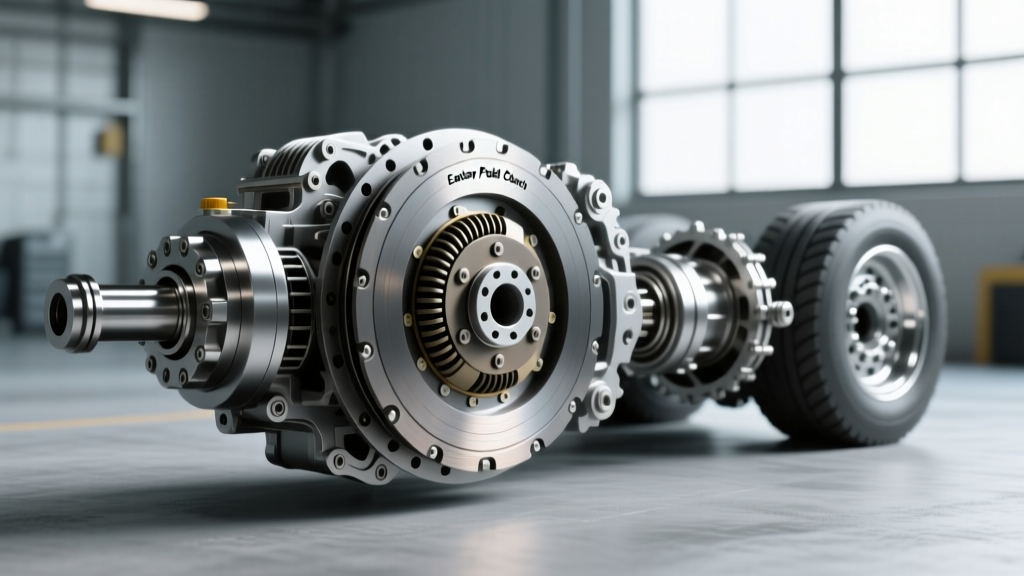
The Eaton Easy Pedal clutch utilizes a unique diaphragm spring and internal wear indicator design that drastically reduces pedal effort while maintaining high clamp loads. According to Eaton Roadranger service documentation, the Solo series eliminates the need for complex manual linkage adjustments found in older heavy-duty setups.
Key Upgrade Benefits for High-Torque Applications
- Internal Wear Indicator: The Solo clutch features a visual and tactile wear indicator. When the strap bolts bottom out, the clutch is worn out. This eliminates the guesswork of measuring friction disc thickness through the inspection cover.
- Reduced Pedal Effort: Through optimized leverage ratios in the diaphragm spring, the Easy Pedal reduces driver fatigue, a critical factor for OTR (Over-The-Road) drivers navigating stop-and-go urban logistics hubs.
- Superior Torsional Damping: The Solo Advantage series incorporates advanced polyurethane and spring damper configurations that absorb the low-frequency torsional spikes inherent in modern high-efficiency diesel engines.
Eaton Easy Pedal Clutch Specifications and Torque Data
Precision is non-negotiable when servicing Class 8 drivetrains. Below is the critical specification chart for the Eaton Solo Easy Pedal 15.5-inch two-plate clutch (Common Part # 108939-6 series) paired with heavy-duty Cummins and Detroit powerplants.
| Parameter | Eaton Solo Easy Pedal Spec | Traditional Multi-Plate Spec |
|---|---|---|
| Pedal Free Travel | 1.5" - 2.0" (38 - 51 mm) | 1.5" - 2.0" (38 - 51 mm) |
| Clutch Brake Squeeze | 0.50" - 0.75" (13 - 19 mm) | 0.50" - 0.75" (13 - 19 mm) |
| Clutch Cover to Flywheel Torque | 65 lb-ft (88 Nm) Star Pattern | 45 - 55 lb-ft (61 - 74 Nm) |
| Release Bearing Travel | 0.50" Max (12.7 mm) | 0.50" Max (12.7 mm) |
| Bell Housing Runout Limit | 0.006" Max (0.15 mm) | 0.008" Max (0.20 mm) |
| Flywheel Step Height (2-Plate) | OEM Specific (e.g., 0.530" +/- 0.010") | OEM Specific |
Note: Always verify specific flywheel step heights and crankshaft bolt torque sequences with the respective engine OEM, as Cummins X15 and Detroit DD15 specifications vary by model year.
Step-by-Step Diagnostic and Installation Best Practices
Upgrading to an Eaton Easy Pedal clutch requires meticulous attention to the surrounding hardware. A new clutch installed in a compromised bell housing will fail within 50,000 miles.
1. Bell Housing and Flywheel Runout Verification
Before removing the old clutch, mount a dial indicator on the engine block and measure the bell housing bore runout. The Eaton commercial clutch catalog mandates a maximum runout of 0.006 inches. Excessive runout forces the release bearing to orbit the transmission input shaft, destroying the bearing and scoring the transmission front bearing retainer collar. If runout exceeds specs, the bell housing must be replaced or the engine dowel pins must be offset-corrected.
2. Flywheel Resurfacing and Step Height
Never install a new Eaton Solo clutch on a glazed or uneven flywheel. For 15.5-inch two-plate setups, the flywheel step height (the distance between the friction surface and the intermediate plate landing) is critical. If the machine shop removes too much material from the friction surface without equally machining the intermediate plate step, the intermediate plate will bind against the flywheel lugs. This results in a clutch that will not release, mimicking a failed pressure plate.
3. Cross-Shaft and Release Yoke Service
One of the most overlooked aspects of heavy-duty clutch service is the cross-shaft. The release yoke pivots on cross-shaft bushings. If these bronze or needle bearings are worn, the release bearing will approach the clutch fingers at an angle. This uneven loading will snap the diaphragm spring fingers and destroy the Easy Pedal mechanism. Rule of thumb: Always replace the cross-shaft bushings and inspect the release yoke wear pads every time the transmission is dropped.
4. Clutch Brake Alignment
The Eaton clutch brake (Part # 108083-2) must be perfectly aligned with the release bearing face. Use the Eaton-provided alignment tool during installation to ensure the bearing face is perfectly parallel to the transmission front bearing retainer. Misalignment here is the primary cause of premature clutch brake disintegration and subsequent loss of clutch brake squeeze.
Cost Analysis: OEM vs. Aftermarket Heavy-Duty Clutches
When planning a heavy-duty clutch overhaul in 2026, understanding the cost-to-longevity ratio is vital for fleet budgeting. While aftermarket alternatives exist, the proprietary damping technology of the Eaton Solo Advantage often justifies the premium for high-torque, long-haul applications.
- Eaton Solo Easy Pedal Clutch Kit (15.5" 2-Plate): $1,900 - $2,500
- Heavy-Duty Release Bearing (e.g., 107183-2): $350 - $450
- Clutch Brake & Hardware Kit: $150 - $220
- Flywheel Resurfacing (Machine Shop): $300 - $600
- Professional Labor (8-12 Hours @ $150/hr): $1,200 - $1,800
Total Estimated Investment: $3,900 - $5,570. While this represents a significant capital expenditure, the Eaton Easy Pedal system routinely achieves 750,000 to 1,000,000 miles in line-haul service when properly maintained, yielding a cost-per-mile that drastically undercuts cheaper, rigid aftermarket alternatives that may require replacement at 350,000 miles.
Conclusion: Securing Driveline Longevity
Diagnosing clutch problems in heavy-duty and commercial vehicles requires looking beyond the friction disc. By understanding the intricate relationship between pedal free travel, clutch brake squeeze, and torsional damping, technicians can accurately pinpoint failures before they cascade into the transmission. Upgrading to the Eaton Easy Pedal clutch not only resolves chronic shifting complaints but also provides the robust torsional protection required by modern, high-output diesel engines. Always adhere strictly to Eaton Roadranger torque specifications and runout tolerances to ensure your heavy-duty drivetrain delivers maximum uptime.