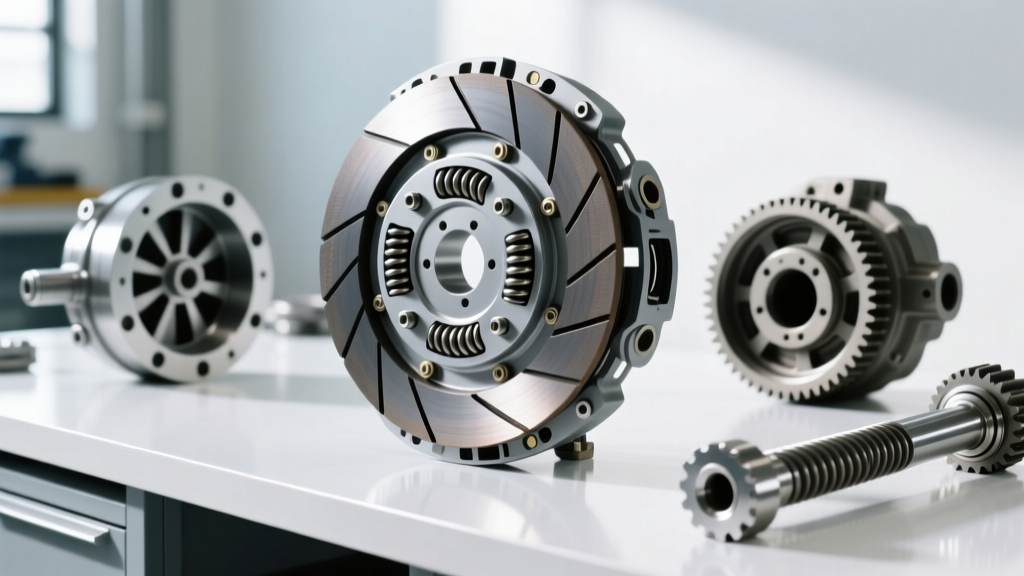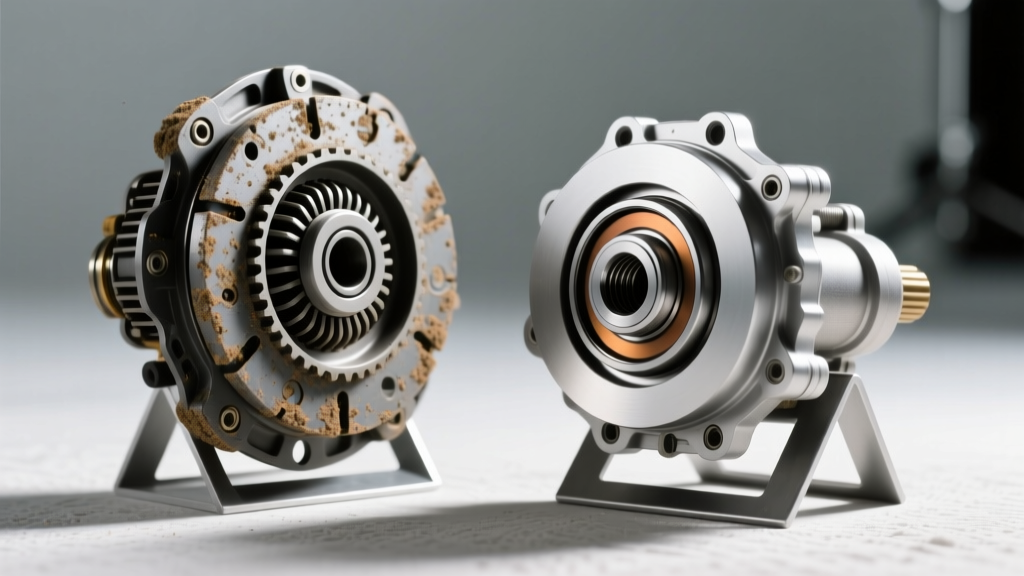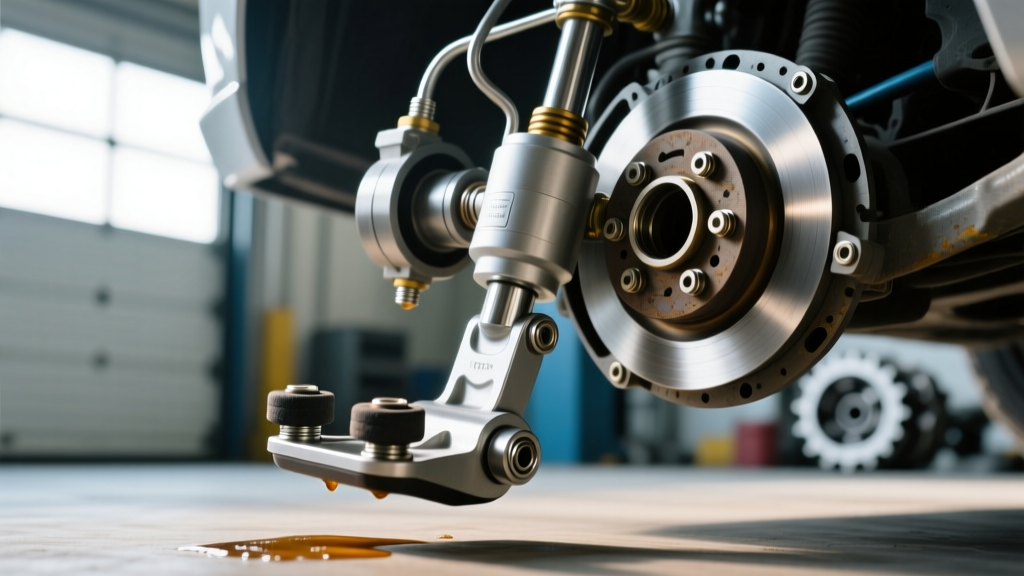
In 2026, the boundary between high-fidelity sim racing and real-world track preparation has completely dissolved. Enthusiasts and professionals alike use advanced hardware like the Moza SR-P Lite clutch pedal to build muscle memory, relying on its load cell and hydraulic damper to simulate the exact resistance of a real automotive clutch master cylinder. However, when you transition from the sim rig to the garage, real-world manual transmissions often present a frustrating anomaly: intermittent clutch engagement. Unlike a perfectly calibrated load cell that delivers consistent telemetry, a real car's hydraulic and mechanical clutch system can degrade unpredictably.
The Diagnostic Baseline: If your real vehicle's clutch pedal sinks at stoplights, engages at different heights depending on engine temperature, or exhibits sudden chatter, you are experiencing an intermittent fault. By comparing these real-world symptoms against the consistent baseline of a high-end sim pedal, we can isolate whether the fault lies in hydraulic cavitation, internal seal bypass, or mechanical bind.
Understanding Intermittent Hydraulic Bypass
The most common cause of an intermittent 'ghost pedal'—where the clutch disengages normally but slowly sinks to the floor while holding the car in gear at a red light—is internal bypass within the Clutch Master Cylinder (CMC). Unlike external leaks, which leave visible puddles of DOT 4 or DOT 5.1 fluid on the firewall or pedal box, internal bypass is invisible.
The Physics of the Primary Cup Seal
Inside the CMC, a primary rubber cup seal pushes fluid toward the slave cylinder. When you hold the pedal depressed, hydraulic pressure is static. If the cylinder bore is scored, or if the seal has hardened due to heat cycling and moisture contamination, fluid slowly bypasses the seal and returns to the reservoir. This causes the pedal to sink, and the clutch to intermittently re-engage while your foot is still on the floor.
- Common Offender: FTE Automotive CMC (Part No. KG15013.0.1), widely used in GM Tremec T56 and TR-6060 applications.
- Diagnostic Test: Pump the pedal three times rapidly, then hold steady pressure. If the pedal creeps toward the floor over 15 seconds, the internal seal is compromised.
- Fluid Degradation: Standard DOT 4 fluid (like ATE SL.6) is hygroscopic. If moisture content exceeds 3%, the boiling point drops from 265°C to under 165°C, causing micro-cavitation under heavy track use that mimics internal bypass.
Telemetry vs. Reality: Diagnostic Comparison Chart
When troubleshooting, it is vital to distinguish between sim-hardware faults and real-vehicle mechanical failures. The table below contrasts the two environments.
| Symptom Manifestation | Real-World Automotive Cause | Moza SR-P Lite Sim Equivalent | Diagnostic Action |
|---|---|---|---|
| Pedal sinks slowly under constant pressure | Internal CMC seal bypass or worn slave cylinder piston | Hydraulic damper micro-leak or air in sim damper bladder | Real: Replace CMC. Sim: Re-bleed damper via Moza bleeder valve. |
| Inconsistent engagement point (high vs. low) | Temperature-dependent fluid viscosity or air ingress | Load cell calibration drift or USB polling rate drops | Real: Reverse-bleed system. Sim: Recalibrate via Moza Pit House software. |
| Sudden chatter or vibration upon release | Dual-Mass Flywheel (DMF) grease degradation or warped pressure plate | Excessive elastomer stiffness or physical pedal binding | Real: Inspect DMF and throw-out bearing. Sim: Adjust physical damping knobs. |
Mechanical Intermittency: The Clutch Fork and Pivot Ball
If the hydraulic system checks out, the intermittency is likely mechanical. The clutch fork rides on a pivot ball inside the bellhousing. Over tens of thousands of miles, the spherical contact point on the fork wears down, creating a divot.
When the engine torques under load, the transmission shifts slightly on its mounts. This movement causes the worn fork to momentarily slip out of the divot, altering the geometry of the throw-out bearing against the pressure plate fingers. The result? An intermittent failure to fully disengage the clutch, resulting in grinding when shifting into first or reverse, but only when the engine is under specific harmonic vibrations.
Inspection and Torque Specifications
Diagnosing this requires dropping the transmission. When reinstalling, adhering to exact torque specifications is non-negotiable to prevent bellhousing misalignment, which exacerbates fork wear.
- CMC to Firewall Nuts: 18 Nm (13 lb-ft)
- Slave Cylinder Line Fitting: 15 Nm (11 lb-ft) - Use a line wrench to avoid rounding the soft aluminum bleeder valve.
- Bellhousing to Engine Block (M12 Bolts): 50 Nm (37 lb-ft)
- Flywheel to Crankshaft (ARP or OEM): Typically 74 lb-ft followed by an additional 90-degree turn (yield bolts). Always verify with the specific manufacturer, such as the Tremec installation guidelines for your specific gearbox.
The Dual-Mass Flywheel (DMF) Variable
Modern manual transmissions rely heavily on Dual-Mass Flywheels to absorb torsional vibrations from the crankshaft. A DMF contains internal springs and a specialized high-temperature grease. When this grease degrades or leaks out past the sealing plate, the internal springs begin to bind intermittently.
You will feel this as a rhythmic 'chatter' or vibration that only occurs at a specific RPM window (usually between 1,800 and 2,200 RPM) during clutch engagement. Unlike the consistent, predictable resistance curve you experience when pressing the Moza SR-P Lite clutch pedal, a failing DMF introduces a violent, mechanical oscillation that no hydraulic damper can mask.
Testing DMF Free-Play
Before tearing down the transmission, you can check DMF health through the inspection cover. Using a specialized flywheel holding tool, measure the rotational free-play of the secondary mass relative to the primary mass. For most ZF Sachs DMFs (e.g., Part No. 2290 601 033), the maximum allowable rotational free-play is 1.5 teeth (approximately 12-15 degrees). If the play exceeds this, or if you hear a metallic clunk when the engine is shut off, the DMF must be replaced.
Advanced Troubleshooting: The Reverse Bleed Technique
When intermittent clutch problems stem from trapped air in the hydraulic line—often hiding in the high loops of the hardline routing—traditional top-down bleeding fails. Air naturally rises, and pushing fluid from the master cylinder down often just pushes the air bubbles into dead-ends in the slave cylinder.
The Solution: Use a reverse pressure bleeder. By forcing fluid upward from the slave cylinder bleeder valve toward the master cylinder reservoir, you work with gravity.
- Attach the reverse bleeder hose to the slave cylinder bleeder screw.
- Open the bleeder screw (typically an 8mm or 10mm hex, torqued to 8-10 Nm when closed).
- Slowly pump fresh, unopened DOT 4 or DOT 5.1 fluid into the system at low pressure (under 15 PSI to prevent blowing out the CMC internal seals).
- Watch the master cylinder reservoir. Once a steady stream of fluid free of micro-bubbles rises to the top, close the bleeder valve immediately.
Final Thoughts on Consistency
Whether you are analyzing telemetry logs from your sim rig or turning wrenches on a project car, consistency is the ultimate metric of a healthy clutch system. The Moza SR-P Lite clutch pedal provides a flawless, repeatable baseline of hydraulic resistance. When your real-world vehicle deviates from that baseline through sinking, chatter, or variable engagement, use the diagnostic frameworks above to isolate the fault. Do not ignore intermittent symptoms; in a high-load driving environment, a momentary failure to disengage can mean a missed shift, a bent valve, or a ruined transmission.