Defining the Drivetrain: What Is a Dual Mass Clutch?
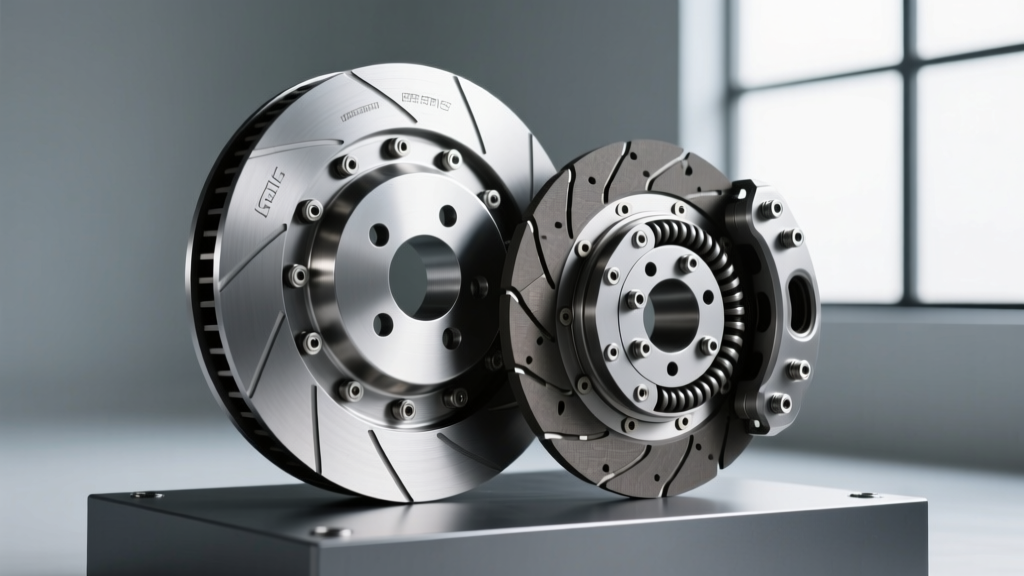
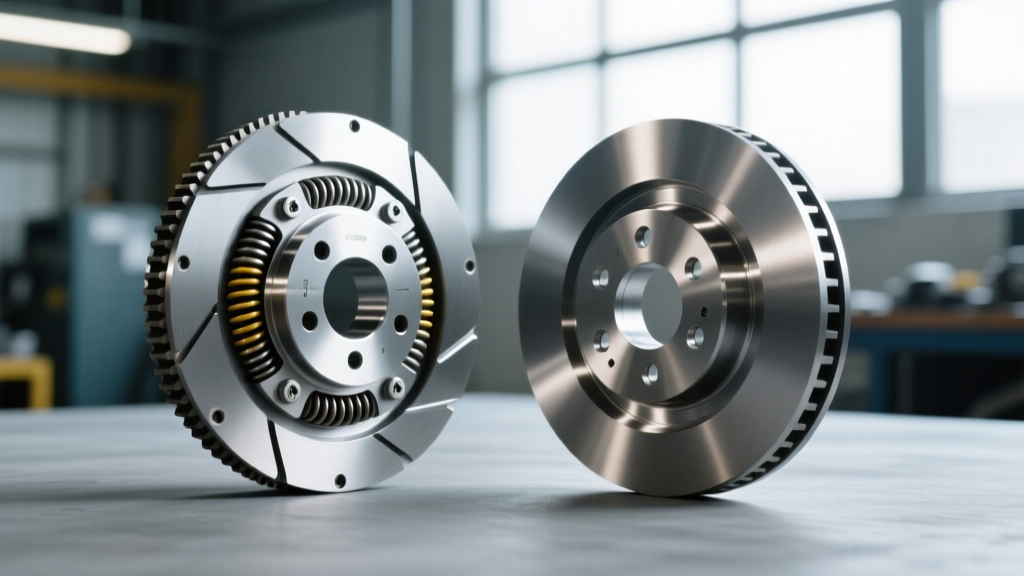
When enthusiasts and technicians ask, "what is a dual mass clutch," they are typically referring to the pairing of a traditional clutch friction disc with a Dual Mass Flywheel (DMF). Technically, the clutch itself is not "dual mass"; rather, the flywheel it mounts to is engineered with two distinct mass plates. The primary mass bolts directly to the engine crankshaft, while the secondary mass interfaces with the clutch pressure plate. Between these two masses lies a complex system of arc springs, friction control rings, and sometimes planetary gear sets.
This design isolates the transmission from the severe torsional vibrations generated by modern high-compression diesel engines and low-RPM turbocharged gasoline engines. However, because the DMF is a wear item with internal moving parts, inspecting it during a clutch replacement is mandatory. Reusing a fatigued DMF with a brand-new clutch kit will result in immediate drivetrain shudder, premature release bearing failure, and transmission input shaft damage. This step-by-step guide details the exact inspection protocols required to evaluate a DMF in the field.
Pre-Inspection Protocol: Tools and Safety
Before evaluating the flywheel, ensure the transmission is safely removed and the clutch assembly has been unbolted. You cannot accurately test a DMF with the clutch pressure plate still clamping the secondary mass. Gather the following precision tools:
- Dial Indicator with Magnetic Base: Resolution of 0.01mm (0.0005 inches) is required for runout testing.
- Feeler Gauge Set: Metric and imperial blades for checking clearance gaps.
- Precision Straight Edge: Hardened steel, minimum 12 inches in length.
- Pry Bar (Small): For applying controlled leverage to the secondary mass.
- Torque Wrench: Capable of measuring flywheel-to-crankshaft torque specifications (often exceeding 100 Nm).
Step 1: Visual and Thermal Damage Assessment
The first phase of inspection relies on visual cues that indicate internal damper failure or severe clutch slip. Inspect the friction surface of the secondary mass for the following anomalies:
Identifying Heat Checking and Bluing
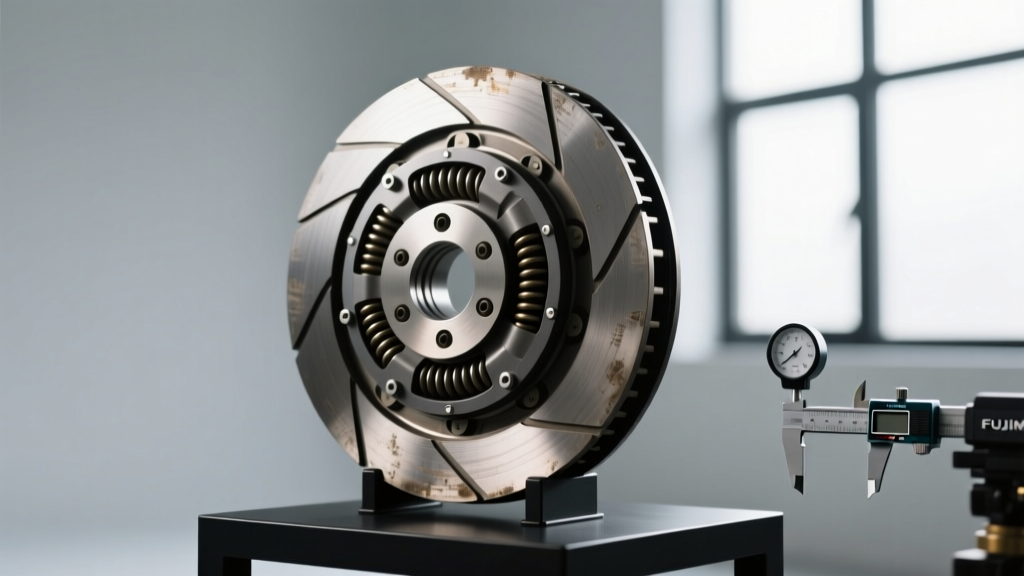
If the friction surface exhibits deep radial cracks (heat checking) or a distinct blue/purple discoloration, the DMF has experienced extreme thermal overload. When a clutch slips excessively, temperatures can exceed 600°C (1112°F). This heat transfers through the secondary mass and bakes the internal molybdenum-based grease that lubricates the arc springs. Once this grease carbonizes, the internal friction rings seize, and the torsional dampening effect is lost. A blued DMF must be replaced immediately.
Checking for Grease Weeping
Look closely at the seam where the primary and secondary masses meet, as well as the center hub near the pilot bearing bore. Any sign of black, sticky grease weeping outward indicates that the internal seals have failed. Without proper lubrication, the internal arc springs will gall and snap under load, leading to catastrophic flywheel separation at high RPM.
Step 2: Quantifying Axial and Radial Play
The most critical diagnostic test for answering the question of what is a dual mass clutch's health status involves measuring the mechanical slop between the two masses. Unlike a Single Mass Flywheel (SMF), a DMF is designed to move. However, this movement must remain within strict factory tolerances.
Testing Axial Play (Push/Pull)
Place your hands on opposite sides of the secondary mass and push inward, then pull outward. You are measuring the deflection of the internal thrust washers and spring seats. Use a feeler gauge or a dial indicator pressed against the side of the secondary mass while prying gently with a small bar to get an exact measurement. If the axial play exceeds the manufacturer's maximum limit, the internal thrust bearings are worn through, and the flywheel will cause severe clutch pedal pulsation.
Testing Radial Play (Rotational Backlash)
Hold the primary mass completely stationary (or rely on the engine's compression if the crankshaft is locked). Attempt to rotate the secondary mass clockwise and counter-clockwise. The rotational free-play before you feel the heavy resistance of the arc springs is the radial backlash. Excessive radial play indicates that the internal spring seats are deformed or the internal planetary gears (found in advanced LuK DMFs) are stripped.
DMF Tolerance Specification Table
While exact specifications vary by OEM and engine torque output, the following table represents the industry-standard tolerances established by major manufacturers like Sachs and Schaeffler (LuK) for passenger and light-duty commercial vehicles.
| Measurement Parameter | Optimal Specification | Maximum Wear Limit (Replace) | Failure Symptom if Exceeded |
|---|---|---|---|
| Axial Play (Side-to-Side) | 0.5mm - 1.0mm | 1.5mm (0.059 in) | Clutch pedal pulsation, release bearing wear |
| Radial Play (Rotational Backlash) | 0.1mm - 0.2mm | 0.25mm (0.010 in) | Harsh engagement, drivetrain clunk, gear rattle |
| Friction Surface Runout | 0.05mm | 0.10mm (0.004 in) | Chatter during takeoff, uneven disc wear |
| Ring Gear Runout | 0.10mm | 0.20mm (0.008 in) | Starter motor grinding, engagement failure |
Step 3: Measuring Lateral Runout
Even if the internal springs are within spec, the physical mating surfaces must be perfectly true. Mount a magnetic base dial indicator to the engine block or a rigid fixture. Position the indicator tip perpendicular to the friction surface of the secondary mass, approximately 10mm from the outer edge.
Rotate the flywheel a full 360 degrees. The total indicator reading (TIR) must not exceed 0.10mm. If runout is excessive, the secondary mass is warped. Attempting to mate a new clutch pressure plate to a warped DMF will result in uneven clamping force, causing the clutch disc to drag when disengaged, which makes shifting gears nearly impossible without grinding.
Step 4: The Resurface vs. Replace Dilemma
A common mistake among general repair shops is attempting to machine or resurface a DMF on a brake lathe or flywheel grinder, treating it like a traditional SMF. Never resurface a Dual Mass Flywheel.
Machining a DMF removes material from the secondary mass, which fundamentally alters the calibration of the internal arc springs. It also reduces the thickness of the friction plate, pushing the pressure plate fingers out of their optimal operating range and potentially causing the release bearing to over-extend. Furthermore, the heat and vibration from machining can destroy the delicate internal balance of the flywheel. According to ZF Sachs engineering guidelines, DMFs are strictly non-serviceable wear components and must be replaced as a complete assembly when friction limits are reached.
Cost Analysis: OEM DMF vs. SMF Conversion
When a DMF fails, owners often ask about converting to a Single Mass Flywheel (SMF) to save money and eliminate future internal spring failures. While SMF conversions exist, they transfer all torsional vibration directly into the transmission, which can destroy synchronizers and input shaft bearings in modern manual gearboxes over time.
| Replacement Strategy | Estimated Parts Cost (2026) | Labor Time | Long-Term Drivetrain Impact |
|---|---|---|---|
| OEM DMF Replacement | $600 - $1,200 | 4.5 - 7.0 Hours | Preserves factory NVH and transmission life |
| Aftermarket SMF Conversion Kit | $350 - $550 | 4.5 - 7.0 Hours | Increased gear rattle, risk of syncro damage |
Step 5: Installation and Torque Sequencing
If the inspection dictates replacement, proper installation is just as critical as the diagnostic phase. The crankshaft mounting flange must be cleaned with a non-residue solvent to ensure perfect mating. Any debris left between the primary mass and the crankshaft will induce severe runout.
Flywheel bolts are almost universally Torque-To-Yield (TTY) and must never be reused. Always follow the OEM-specific torque sequence. For example, on GM LS-based V8 engines utilizing an aftermarket DMF or SMF conversion, the standard specification is typically 74 lb-ft (100 Nm) plus an additional 90-degree turn. On BMW applications (such as the B58 inline-six), the dual mass flywheel bolts are often torqued to 105 Nm in a specific star pattern. Consult the factory service manual for your exact application.
Expert Diagnostics: Real-World Edge Cases
Certain platforms are notorious for DMF quirks that require specialized attention during inspection:
- VW/Audi 2.0 TDI (EA189 & EA288): These engines produce massive low-end torque that rapidly fatigues the internal arc springs. A slight "clunk" on engine shutdown is normal, but a metallic rattle at idle that disappears when the clutch pedal is depressed indicates collapsed internal dampers.
- Ford 6.7L Powerstroke (Manual Applications): The DMF on these heavy-duty trucks is massive and expensive. Inspect the pilot bearing bore carefully; if the pilot bearing seizes, it can overheat and weld the primary and secondary masses together, causing catastrophic failure upon clutch disengagement.
- Hybrid & PHEV Drivetrains: As we move further into the 2026 automotive landscape, many mild-hybrids utilize specialized DMFs with integrated starter-generator (ISG) tone rings. Inspecting these requires verifying that the magnetic tone ring on the primary mass has not been cracked or contaminated with metallic clutch dust, which will cause engine management timing codes.
Pro-Tip: Always replace the clutch alignment tool, pilot bearing, and release bearing when servicing a DMF. The cost of these peripheral components is negligible compared to the labor required to pull the transmission a second time due to a squealing pilot bearing or a misaligned disc.
Summary and Authoritative Resources
Understanding what a dual mass clutch flywheel is and how to properly inspect it separates amateur mechanics from professional drivetrain technicians. By rigorously testing axial play, radial backlash, and lateral runout, you can confidently determine whether a DMF is fit for continued service or requires replacement. For further technical reading and OEM tolerances, consult the engineering documentation provided by Schaeffler Group (LuK) and ZF Sachs. Proper inspection ensures smooth power delivery, protects the transmission, and guarantees customer satisfaction long after the vehicle leaves the bay.