The Great Debate: Drivetrain vs. Powertrain Explained
Walk into any dealership or scroll through automotive forums in 2026, and you will inevitably encounter a confusing overlap in terminology: the debate between a vehicle's drivetrain and its powertrain. Are they the same thing? Do they cover the same components under warranty? For beginners, the jargon can be impenetrable. However, understanding the distinction is critical for diagnosing mechanical failures, understanding your vehicle's warranty coverage, and communicating effectively with mechanics.
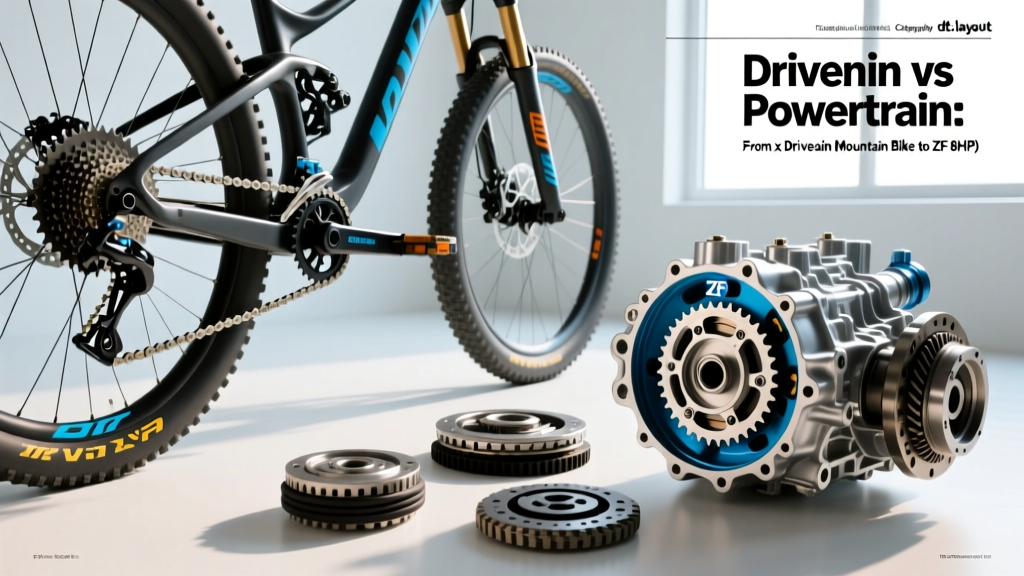
To demystify these automotive concepts, we are going to start with an analogy that is surprisingly perfect for explaining mechanical power delivery: the modern bicycle. By examining the engineering of a 1x drivetrain mountain bike, we can build a foundational understanding that translates directly to complex automotive systems like the GM 6L80 or the ubiquitous ZF 8HP automatic transmission.
The Beginner Analogy: Your 1x Drivetrain Mountain Bike
Imagine you are climbing a steep, rocky trail on a modern trail bike. You are the power source. Your cardiovascular system and leg muscles generate the raw energy (horsepower and torque). In automotive terms, you are the engine. But your legs cannot directly turn the rear wheel without a system to transfer, multiply, and direct that energy. This is where the bicycle's mechanical components come into play.
When you look at a modern 1x drivetrain mountain bike setup—meaning a single chainring in the front and a massive cassette in the rear—you are looking strictly at the drivetrain. The drivetrain's only job is to take the power you generate and deliver it to the contact patch of the rear tire. When you combine the power source (you, the engine) with the power delivery system (the 1x drivetrain mountain bike components), you get the complete powertrain.
Breaking Down the Bicycle Components
Let us look at a real-world example: the SRAM GX Eagle 1x12 groupset (Part # 00.6118.032.000, retailing around $600). Here is how the drivetrain functions independently of the 'engine':
- The Crankset & Chainring: Receives raw torque from the rider. (Automotive equivalent: Engine flywheel/flexplate).
- The Chain: Transfers rotational force rearward. (Automotive equivalent: Driveshaft or timing chain).
- The Cassette & Derailleur: Multiplies torque via gear ratios and manages chain tension. (Automotive equivalent: Transmission gear sets and torque converter).
- Hub & Axle: Transfers the final multiplied torque to the wheel. (Automotive equivalent: CV axles and differential).
Expert Wrenching Tip: Whether you are working on a bicycle or a car, torque specifications matter. The SRAM cassette lockring requires exactly 40 Nm of torque. Similarly, checking chain stretch on a 1x setup requires a chain checker tool; replacement is mandatory at 0.75% wear to prevent catastrophic cassette damage—a principle that mirrors checking fluid degradation in an automatic transmission.
Translating to Automotive: What is a Powertrain?
In the automotive world, the powertrain encompasses every component involved in generating power and delivering it to the road surface. It is the sum total of the engine (the power plant) and the drivetrain (the delivery network). If a component is responsible for creating combustion, managing engine timing, or physically turning the wheels, it is part of the powertrain.
Real-World Automotive Powertrain Example: The GM 6L80 and LT1 V8
Consider a Chevrolet Camaro SS equipped with the 6.2L LT1 V8 engine and the 6L80 six-speed automatic transmission (Part # 24239930). The powertrain includes the engine block, cylinder heads, fuel injectors, the transmission case, the torque converter, and the output shaft.
A common powertrain-specific issue in this setup is torque converter shudder, often felt as a rhythmic vibration between 30-50 mph under light throttle. Fixing this requires a powertrain-level intervention: dropping the transmission pan (which holds 11.2 quarts of Dexron VI fluid), inspecting the torque converter clutch (TCC) lining, and sometimes flushing the entire system to remove friction material debris. Because the engine and transmission work in tandem to create and manage motive force, they are inextricably linked under the 'powertrain' umbrella.
Translating to Automotive: What is a Drivetrain?
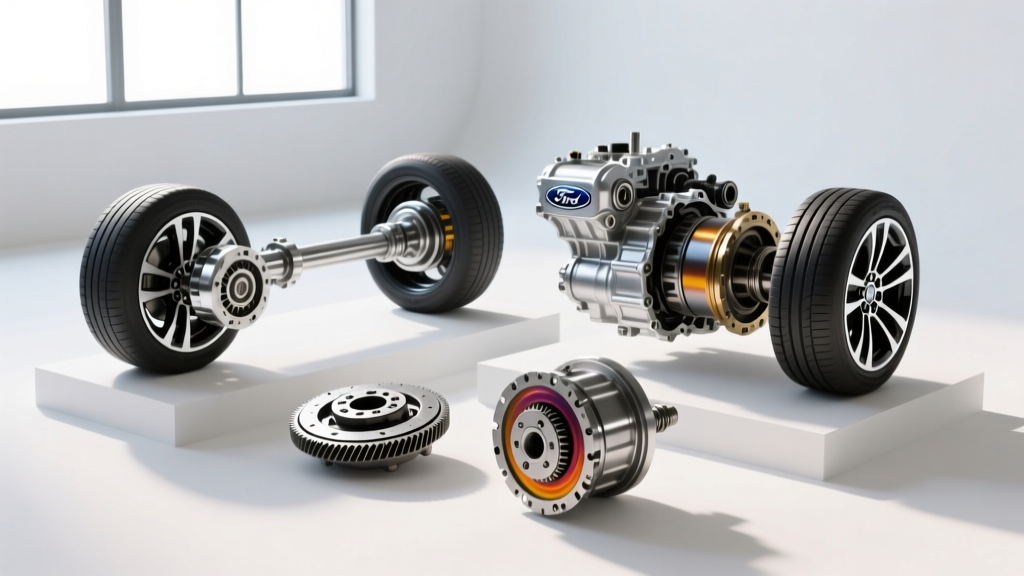
The drivetrain is a subset of the powertrain. It consists exclusively of the components that transfer power from the engine's output shaft to the drive wheels. The engine is entirely excluded from the drivetrain. If you remove the engine from the vehicle, everything left behind that still connects the transmission to the tires is the drivetrain.
Key drivetrain components include:
- Transmission (Manual, Automatic, CVT, or DCT)
- Driveshaft and U-joints (in RWD, 4WD, and AWD layouts)
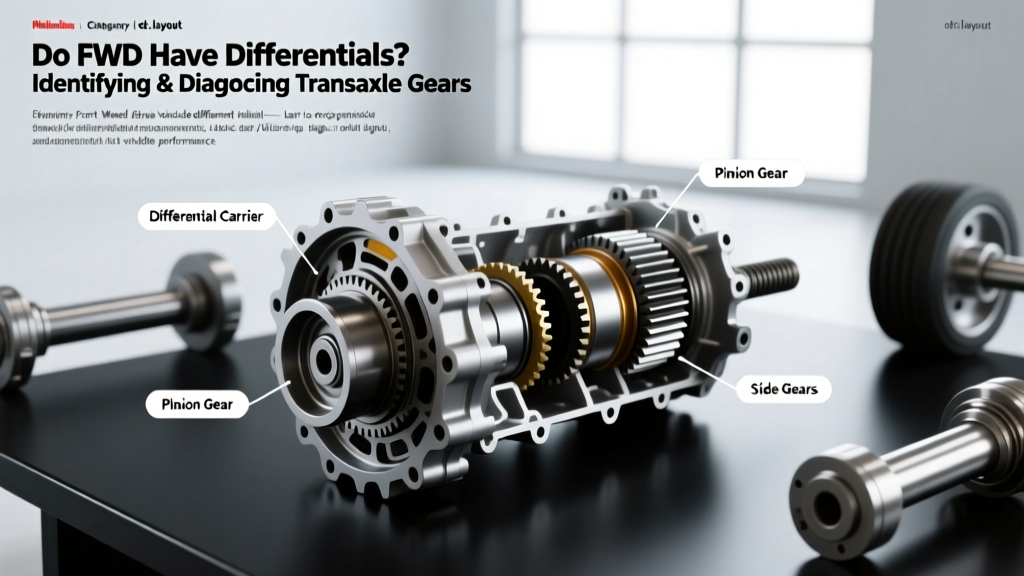
- Differential (Open, Limited-Slip, or Locking)
- CV Axles and Half-shafts (in FWD and independent rear suspensions)
- Transfer Case (in 4WD and AWD systems)
Deep Dive: ZF 8HP Drivetrain Specifications
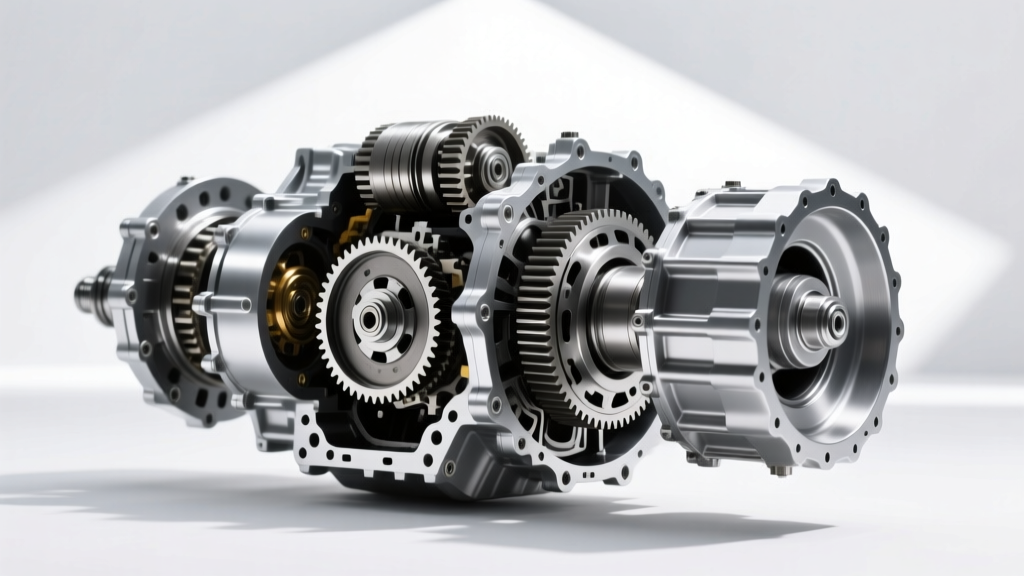
The ZF 8HP automatic transmission is the gold standard of modern automotive drivetrains, found in everything from the BMW M3 to the Dodge Charger Hellcat and the Land Rover Defender. Because it is a drivetrain component, it does not generate power; it manages it.
| ZF 8HP Variant | Max Torque Capacity | Fluid Capacity (Approx) | Common Applications |
|---|---|---|---|
| 8HP45 | 450 Nm (332 lb-ft) | 9.0 Liters | BMW 328i, Audi A4 (2.0T) |
| 8HP70 | 700 Nm (516 lb-ft) | 9.5 Liters | Jepe Grand Cherokee 5.7L, BMW M240i |
| 8HP90 | 900 Nm (664 lb-ft) | 10.5 Liters | Dodge Hellcat, BMW M5, Range Rover V8 |
Expert Insight: The ZF 8HP relies on a complex mechatronic unit (the valve body and TCM combined). A frequent drivetrain-specific failure in high-mileage 8HP units is the degradation of the mechatronic sealing sleeve, leading to cross-leaking fluid and harsh 2-3 or 3-4 shifts. Servicing this requires dropping the transmission pan, unbolting the mechatronic unit (torque spec: 10 Nm for the valve body bolts), and replacing the sleeve. This is a pure drivetrain repair; the engine is never touched.
Why the Distinction Matters for Warranties and Repairs
As we navigate the 2026 automotive landscape, understanding the boundary between these two systems is a financial necessity. Automakers structure their warranties around these exact definitions.
The Powertrain Warranty
A standard 5-year/60,000-mile powertrain warranty covers the most expensive components to replace: the engine block, internal engine lubrication systems, and the transmission case. If your LT1 V8 throws a rod, or your ZF 8HP shatters its planetary gearset, the powertrain warranty covers the $6,000 to $12,000 replacement cost.
The Drivetrain / Bumper-to-Bumper Warranty
Conversely, wear items and external drivetrain components are often excluded from long-term powertrain coverage and fall under the shorter 3-year/36,000-mile bumper-to-bumper warranty. For example:
- Driveshaft U-Joints: If a U-joint strap bolt (torqued to 25 Nm) fails and the driveshaft drops onto the pavement, this is a drivetrain failure, not a powertrain failure.
- CV Axle Boots: A torn CV boot leaking grease is a drivetrain issue. If ignored, it destroys the CV joint, requiring a $600 axle replacement out-of-pocket if the basic warranty has expired.
- Wheel Hubs & Bearings: These support the drivetrain but are classified as suspension/wear items.
According to Car and Driver, consumers frequently attempt to claim warranty repairs on failed differentials or transfer cases, only to realize their specific manufacturer categorizes those external bolt-on components outside the core 'powertrain' definition, leading to denied claims and expensive out-of-pocket repair bills.
Summary Checklist: Component Mapping
Use this quick reference guide the next time you are reviewing a repair estimate or reading a vehicle specification sheet.
| Component | Drivetrain? | Powertrain? | Bicycle Analogy (1x Setup) |
|---|---|---|---|
| Engine Block & Internals | No | Yes | Rider's Legs & Lungs |
| Transmission / Gearbox | Yes | Yes | Cassette & Derailleur |
| Driveshaft / CV Axles | Yes | Yes | Chain |
| Differential | Yes | Yes | Rear Hub |
| Engine Mounts | No | Yes (Usually) | Frame & Bottom Bracket |
| Wheel Bearings | No | No | Wheel Bearings |
Final Thoughts
Whether you are tuning the chainline on your 1x drivetrain mountain bike or diagnosing a harsh downshift in a ZF 8HP90, the physics of power delivery remain identical. The powertrain is the complete ecosystem of motion; the drivetrain is the vital highway that motion travels upon. By mastering this terminology, you elevate yourself from a passive driver to an informed enthusiast, ready to tackle 2026's most complex mechanical layouts with confidence and precision.