Introduction to the Voltec Powertrain
As we evaluate the hybrid and plug-in hybrid (PHEV) landscape in 2026, the Chevrolet Volt remains a masterclass in drivetrain packaging and efficiency. Unlike traditional hybrids that simply assist a gas engine, or fully electric vehicles that rely solely on battery capacity, the Volt utilizes a highly sophisticated extended-range electric powertrain known as the Voltec system. For beginners and automotive enthusiasts alike, understanding the Chevrolet Volt drivetrain is essential to grasping how modern vehicles achieve upwards of 100 MPGe (Miles Per Gallon Equivalent) in electric mode and over 40 MPG in hybrid mode.
The secret to the Volt's exceptional fuel economy does not lie in a standard automatic transmission or a conventional belt-driven CVT. Instead, it relies on a purpose-built transaxle that seamlessly blends electric torque with internal combustion power. In this guide, we will break down the engineering magic behind the Chevrolet Volt drivetrain efficiency, compare its two primary generations, and provide actionable maintenance data to keep your system operating at peak performance.
The Magic Behind the Chevrolet Volt Drivetrain Efficiency
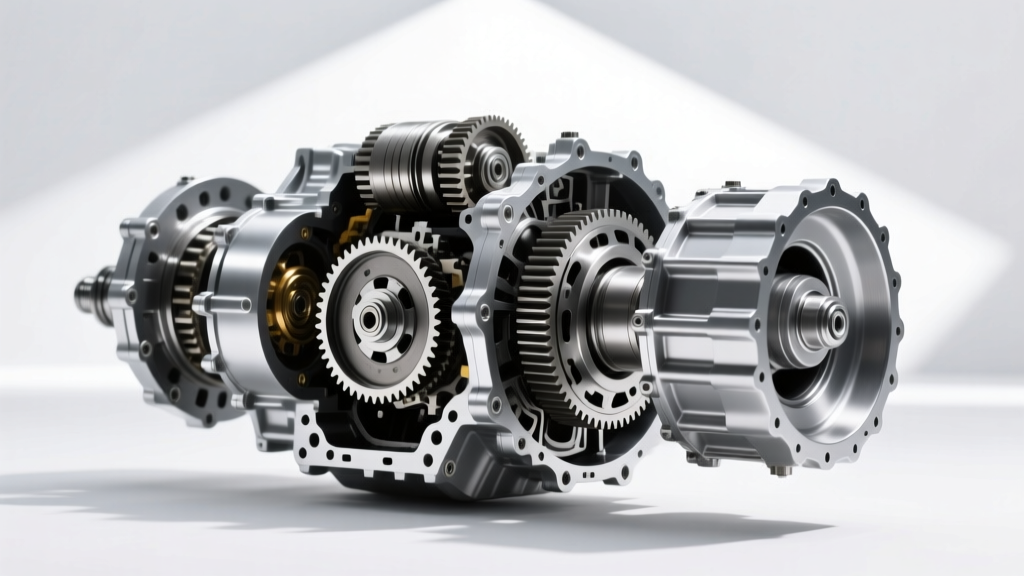
To understand why the Volt achieves such remarkable fuel economy, we must look at the transaxle—the component that houses the electric motors, planetary gearsets, and clutch packs. General Motors produced two distinct generations of the Volt, each with a uniquely engineered transaxle designed to minimize parasitic loss and maximize power delivery.
Gen 1 (4ET50) vs. Gen 2 (5ET50) Transaxle Architecture
The first-generation Volt (2011–2015) utilized the 4ET50 transaxle. This unit was groundbreaking for its time, featuring three planetary gearsets and two motor/generators. While highly effective, it was heavy and contained more moving parts than strictly necessary, leading to minor internal friction losses.
For the second generation (2016–2019), GM engineers completely redesigned the system, introducing the 5ET50 transaxle. By reducing the number of planetary gearsets from three to two, GM shaved nearly 60 pounds off the transaxle weight. Fewer moving parts mean less rotational mass, less churning loss in the transmission fluid, and a direct increase in overall drivetrain efficiency. According to technical papers published by SAE International, the Gen 2 system improved overall powertrain efficiency by reducing electrical and mechanical losses by up to 15% compared to Gen 1.
| Feature | Gen 1 (4ET50 Transaxle) | Gen 2 (5ET50 Transaxle) |
|---|---|---|
| Production Years | 2011–2015 | 2016–2019 |
| Planetary Gearsets | 3 | 2 |
| Motor/Generators | 2 (111kW / 55kW) | 2 (114kW / 48kW) |
| Transaxle Weight | ~375 lbs (170 kg) | ~315 lbs (143 kg) |
| Fluid Capacity | ~8.5 Quarts (8.0 Liters) | ~6.3 Quarts (6.0 Liters) |
| EPA Combined Hybrid MPG | 37 MPG | 42 MPG |
How Planetary Gearsets and Clutches Optimize Fuel Economy
Many beginners confuse the Volt's drivetrain with the power-split eCVT found in the Toyota Prius. While both use planetary gearsets, their operational philosophies are vastly different, and this difference is the primary driver of the Volt's superior highway fuel economy.
In a traditional power-split hybrid, the engine's power is continuously divided into a mechanical path and an electrical path. The electrical path requires the engine to spin a generator, convert mechanical energy into electricity, and then convert it back into mechanical energy via a drive motor. This double-conversion process generates heat and wastes energy, especially at sustained highway speeds.
The Chevrolet Volt drivetrain solves this using selective mechanical coupling. The 5ET50 transaxle utilizes specific clutch packs (commonly designated as C1, C2, and C3) to physically lock or unlock components of the planetary gearsets. This allows the Volt to operate in five distinct modes:
- Pure EV Mode: The engine is completely decoupled. The primary traction motor drives the wheels using battery power alone.
- Series Hybrid Mode (Low Speed): The battery is depleted. The gas engine turns on, but it does not drive the wheels. It acts solely as a generator to feed electricity to the drive motor.
- Parallel Hybrid Mode (Highway Cruising): This is the efficiency sweet spot. At speeds above 45-50 MPH, the transaxle engages a clutch to lock the ring gear. This creates a direct, fixed-ratio mechanical link between the gas engine and the wheels, entirely bypassing the electrical conversion loss.
- Blended Mode (Heavy Acceleration): Both the gas engine and the electric motors work in tandem, combining mechanical and electrical torque for maximum passing power.
- Regenerative Braking Mode: The traction motor reverses its function, acting as a generator to slow the vehicle and recapture kinetic energy back into the 18.4 kWh (Gen 2) battery pack.
By mechanically locking the drivetrain into a fixed gear ratio during highway cruising, the Volt avoids the 'rubber-band' effect and electrical conversion losses inherent to standard eCVTs, resulting in a highly respectable 42 MPG combined rating as verified by the U.S. Department of Energy's PHEV guidelines.
Maintaining Drivetrain Efficiency: Fluids, Torques, and Costs
Even the most brilliantly engineered drivetrain will suffer from degraded fuel economy and reduced EV range if not properly maintained. The clutch packs inside the 4ET50 and 5ET50 transaxles are incredibly sensitive to fluid degradation. As the friction material from the clutches wears microscopically over time, it contaminates the fluid, increasing viscosity and causing the electric motors to work harder to overcome internal fluid drag.
Gen 2 (5ET50) Fluid Specifications and Service Data
If you own a 2016–2019 Volt, your transaxle requires a highly specialized low-viscosity fluid designed specifically for high-voltage EV environments. Using standard automatic transmission fluid will destroy the insulation on the electric motor windings and cause catastrophic failure.
Expert Warning: Never use standard Dexron VI in a Gen 2 Volt transaxle. The Gen 2 system requires Dexron HP, which features a specific dielectric property profile to prevent electrical arcing inside the motor/generator housing.
Here are the exact specifications for a Gen 2 Volt transaxle fluid service:
- Required Fluid: ACDelco Dexron HP Automatic Transmission Fluid (Part # 19355656 or 10-9395).
- Capacity: 6.3 Quarts (6.0 Liters) for a standard drain and fill.
- Drain Plug Torque Spec: 35 Nm (26 lb-ft).
- Fill/Level Plug Torque Spec: 35 Nm (26 lb-ft).
- Estimated DIY Cost: $65 - $85 for fluid.
- Estimated Dealer Cost: $160 - $240 depending on regional labor rates.
GM technically classifies the transaxle fluid as 'lifetime' under normal driving conditions. However, for owners looking to maximize long-term drivetrain efficiency and protect their investment in the used market, draining and refilling the fluid every 60,000 to 80,000 miles is highly recommended by independent EV technicians.
The Hidden Efficiency Factor: Thermal Management
Drivetrain efficiency in the Chevrolet Volt is not just about gears and motors; it is heavily dependent on thermal management. The Voltec system utilizes a complex liquid cooling loop that services the power electronics, the battery pack, and the transaxle cooler.
If the thermal management system fails to keep the transaxle within its optimal operating window (typically between 140°F and 185°F), the vehicle's control module will artificially limit torque output to prevent damage. This 'limp mode' or power-reduction state drastically reduces your MPGe and makes the vehicle feel sluggish. To maintain peak efficiency, ensure your cooling system is flushed every 5 years or 150,000 miles using ACDelco Dex-Cool (Part # 10-5027). Furthermore, keep an ear out for the high-voltage coolant pumps (Part # 24285982); a failing pump will whine loudly and immediately degrade your fuel economy by forcing the system into a protective thermal state.
Summary
The Chevrolet Volt drivetrain remains a benchmark for PHEV efficiency. By utilizing a sophisticated arrangement of planetary gearsets and selective mechanical clutches, the Voltec system successfully bridges the gap between pure electric driving and long-distance highway cruising without the parasitic losses of traditional eCVTs. Whether you are driving the 3-planetary 4ET50 or the lighter, faster 2-planetary 5ET50, adhering to strict fluid specifications—specifically the dielectric requirements of Dexron HP—and maintaining the thermal cooling loops will ensure your Volt continues to deliver class-leading fuel economy for years to come. For more deep dives into hybrid and EV drivetrain layouts, explore our comprehensive archived testing and reviews on modern PHEV architectures.