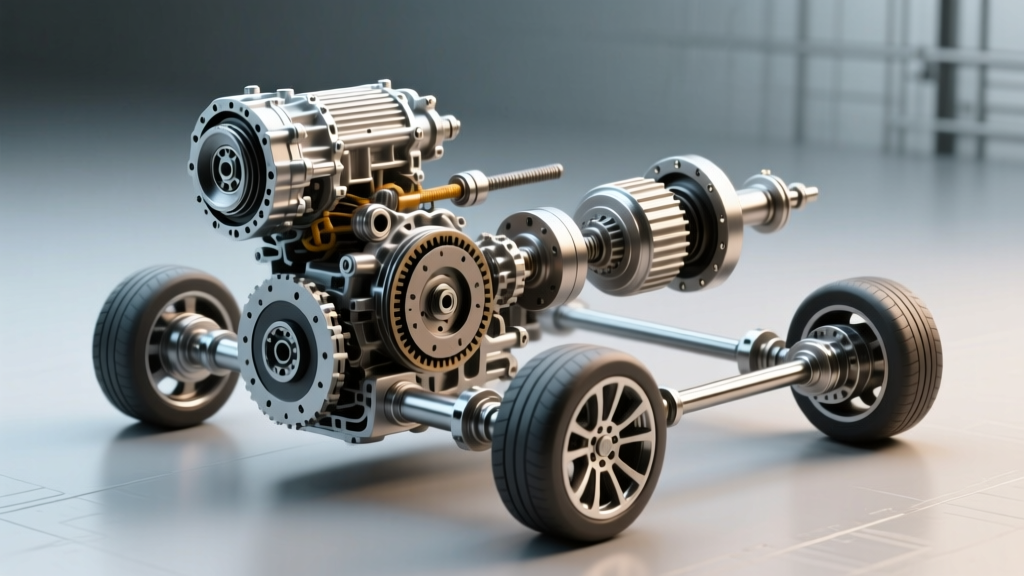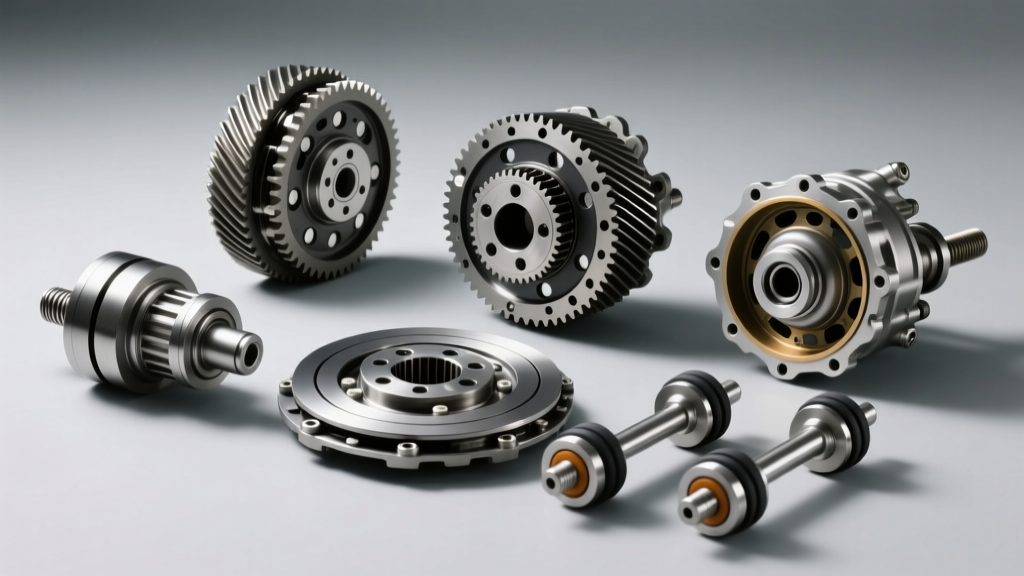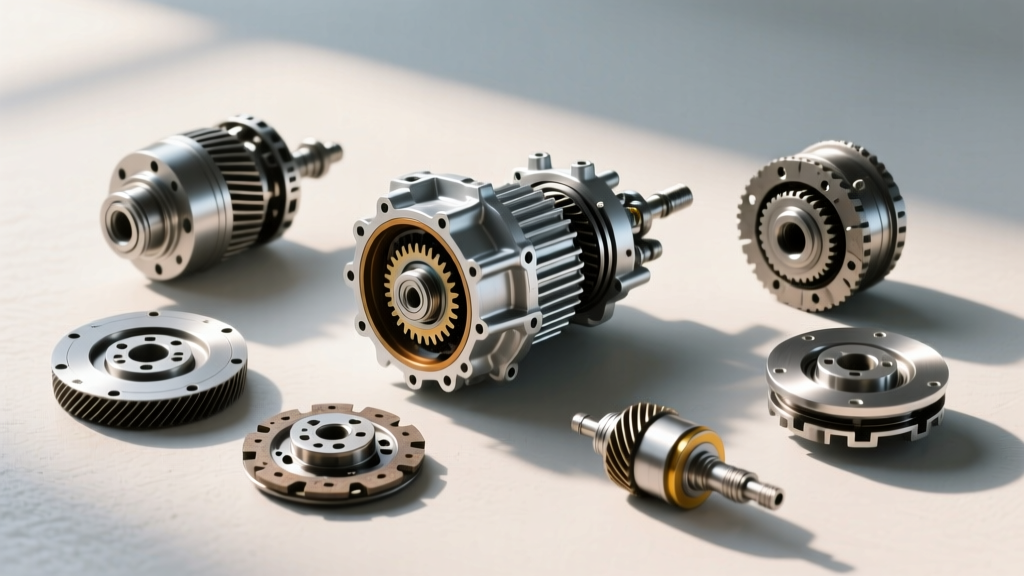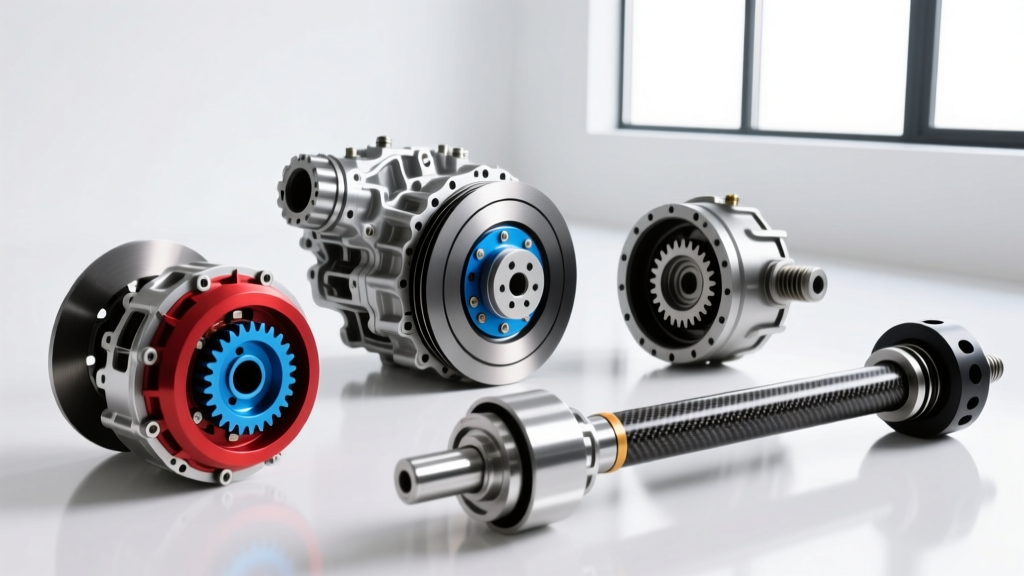
When factory horsepower limits are shattered through forced induction, nitrous, or aggressive engine tuning, the drivetrain inevitably becomes the ultimate bottleneck. The term drivetrain specialties refers to the highly specialized, niche modifications required to route 800+ wheel horsepower to the pavement without snapping axles, grenadeing differentials, or twisting driveshafts into metal pretzels. Upgrading your powertrain is only half the battle; if the rotational mass and structural integrity of your driveline cannot handle the torque multiplication, your build will fail at the worst possible moment.
Identifying the Weak Links in High-Horsepower Builds
Every drivetrain has a designed torque threshold. For example, the popular GM 6L80E transmission and its paired GM 8.8 or 9.5-inch rear ends were engineered for 400-500 lb-ft of crank torque. When you push a supercharged LT1 or Coyote-swapped platform past 700 wheel horsepower, the shock loads generated during hard launches or aggressive 1-2 shifts exceed the yield strength of OEM components. Drivetrain specialties focus on identifying these shear points—specifically the transmission output shaft, the driveshaft U-joints, the ring and pinion gear teeth, and the axle shaft splines—and replacing them with metallurgically superior alternatives.
Axle Shafts and Differential Specialties
The axle shafts and the differential carrier are the final gatekeepers of power delivery. Upgrading these components requires understanding both spline count and metallurgy.
31-Spline vs. 35-Spline Axle Upgrades
Standard OEM axle shafts are typically manufactured from 1040 or 1541H carbon steel, which offers adequate tensile strength for daily driving but becomes brittle under extreme shock loads. For performance applications, upgrading to 4340 chromoly steel is mandatory. A 31-spline 1541H axle will typically twist or snap around 600 lb-ft of torque. By upgrading to a 35-spline 4340 chromoly axle shaft (such as those offered by Strange Engineering or Moser Engineering), you increase the cross-sectional area and torsional yield strength by over 40%, safely handling 1,000+ lb-ft of torque. Expect to invest between $600 and $950 for a pair of premium 35-spline alloy axles with upgraded heavy-duty wheel studs.
Helical vs. Clutch-Type Limited Slips
Open differentials are useless in performance scenarios, but choosing the right limited-slip differential (LSD) is a core drivetrain specialty. Clutch-type LSDs (like the Eaton Posi) rely on friction plates and require specific limited-slip friction modifiers in the gear oil to prevent chatter. They are excellent for drag racing where straight-line lockup is prioritized. However, for road course, drift, or aggressive street builds, a helical gear LSD like the Yukon Gear & Axle Dura Grip or the Eaton Detroit Truetrac is vastly superior. Helical units use gear binding torque to transfer power, require no special friction modifiers, and operate smoothly without the abrupt locking characteristics that can upset chassis balance mid-corner.
Driveshaft Dynamics and U-Joint Scaling
As horsepower increases, so does the rotational speed and torque applied to the driveshaft. The universal joint (U-joint) is often the most overlooked failure point in modified vehicles. Scaling your U-joints correctly is a fundamental drivetrain specialty. Below is a comparison of the most common performance U-joint series.
| U-Joint Series | Cap-to-Cap Dimension | Typical Torque Rating | Best Application |
|---|---|---|---|
| 1310 | 3.219 inches | ~800 lb-ft | OEM / Mild Street (Under 400 HP) |
| 1350 | 3.622 inches | ~1,200 lb-ft | Pro-Street / Towing (400-800 HP) |
| 1480 | 4.187 inches | ~1,800+ lb-ft | Drag Racing / Heavy Off-Road (800+ HP) |
Upgrading to a 1350 series U-joint (such as the Spicer 5-1350X strap kit) provides a massive bump in durability. However, pairing a 1350 U-joint with an OEM thin-wall steel driveshaft is a recipe for disaster. The shaft itself will twist before the U-joint fails. For builds exceeding 600 HP, transitioning to a 3.5-inch 6061-T6 seamless aluminum DOM tube or a carbon fiber composite shaft is necessary. Carbon fiber driveshafts, while expensive ($1,200 to $1,800), offer superior NVH dampening and eliminate the need for a two-piece shaft and carrier bearing in extended wheelbase vehicles, thereby reducing parasitic drivetrain loss and raising the critical speed threshold.
Transmission Output and Transfer Case Reinforcement
The output shaft of the transmission is a notorious shear point in modern automatic swaps. The GM 6L80E and 6L90E transmissions, while robust internally, feature OEM output shafts that are prone to snapping at the snap-ring groove when subjected to the violent torque spikes of a 3,000+ RPM stall converter launch. Upgrading to a billet 300M steel output shaft from specialty manufacturers resolves this flex and shear issue. Similarly, in 4WD applications like the Duramax/Allison platforms, the transfer case planetary gears and pump housings require billeting. Upgrading the transfer case pump housing to a billet aluminum unit prevents the housing from cracking under high-line-pressure tuning scenarios, a common failure mode when pushing 4L80E or Allison 1000 units past 800 HP.
Critical Torque Specifications and Assembly Practices
The most expensive drivetrain specialties will fail prematurely if assembled with improper torque procedures. Drivetrain components are subjected to immense rotational stress and thermal expansion. Relying on 'feel' or impact wrenches will result in catastrophic failure.
- Ring Gear Bolts (Ford 8.8 / GM 12-Bolt): Torque to 85-95 lb-ft using Red Loctite 271. Never reuse stretched OEM bolts, as they will back out under reverse-torque loading, stripping the carrier threads and destroying the gear set.
- Spicer 1350 U-Bolt Nuts: Torque to exactly 35-45 lb-ft. Over-torquing these nuts distorts the bearing caps, causing the needle bearings to bind and the U-joint to overheat and seize at highway speeds.
- Pinion Nut (Solid Spacer Conversion): When eliminating the OEM crush sleeve in favor of a solid pinion spacer, torque the pinion nut to yield (often 200-250 lb-ft) while continuously measuring rotational preload with an inch-pound torque wrench. Target 15-25 in-lbs of rotational drag for used bearings, and 25-35 in-lbs for new bearings.
- CV Axle Nuts (FWD/AWD Hubs): Typically 150-200 lb-ft depending on the chassis. Always use a new staked OEM-spec nut to prevent hub bearing play and spline walking under heavy acceleration.
Pro-Tip: When upgrading to larger 1350 or 1480 U-joints, ensure your transmission yoke and differential pinion yoke are also swapped to match. Using conversion U-joints (e.g., 1310 to 1350) creates an asymmetrical weak point that defeats the purpose of the upgrade and introduces harmonic vibrations at high RPM.
Mastering drivetrain specialties is about creating a balanced, unbroken chain of power delivery from the flywheel to the contact patch. By investing in 4340 chromoly axles, helical limited-slip differentials, properly scaled Spicer U-joints, and adhering to strict inch-pound preload specifications, you ensure that your high-horsepower build survives the rigors of the street and the strip.