Decoding the Car Drivetrain Diagram: A Model-Specific Approach
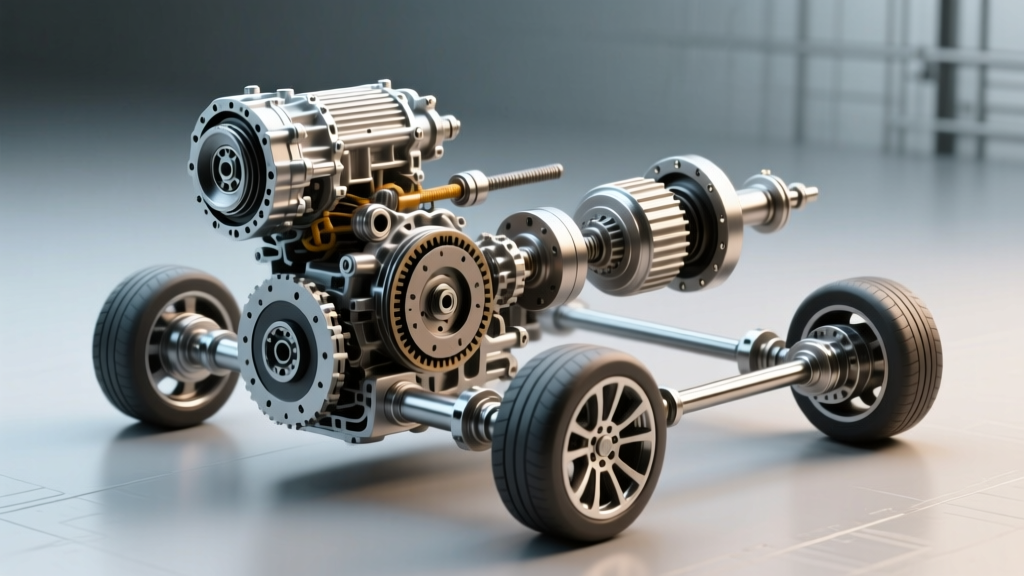
When diagnosing power delivery issues, vibration, or binding, a generic overview of automotive layouts is rarely enough. To perform accurate, cost-effective repairs, technicians and advanced DIYers must consult a specific car drivetrain diagram tailored to the exact make and model in question. While the fundamental physics of Front-Wheel Drive (FWD), Rear-Wheel Drive (RWD), All-Wheel Drive (AWD), and Four-Wheel Drive (4WD) remain constant, the component architecture, failure modes, and torque specifications vary wildly between manufacturers.
In this comprehensive model-specific repair guide, we break down the four primary drivetrain configurations using four iconic benchmark vehicles: the Honda Civic (FWD), Ford Mustang (RWD), Subaru Outback (AWD), and Jeep Wrangler (4WD). By analyzing the car drivetrain diagram for each, we will highlight exact part numbers, common failure points, and critical torque specifications required for 2026-era repair standards.
According to engineering data published by SAE International, drivetrain parasitic loss and component stress mapping are highly dependent on the specific chassis integration. A mismatched replacement part or improper torque sequence can reduce driveline efficiency by up to 4% and cause catastrophic bearing failure within 5,000 miles.
FWD Layout: Honda Civic Transaxle & CV Axle Architecture
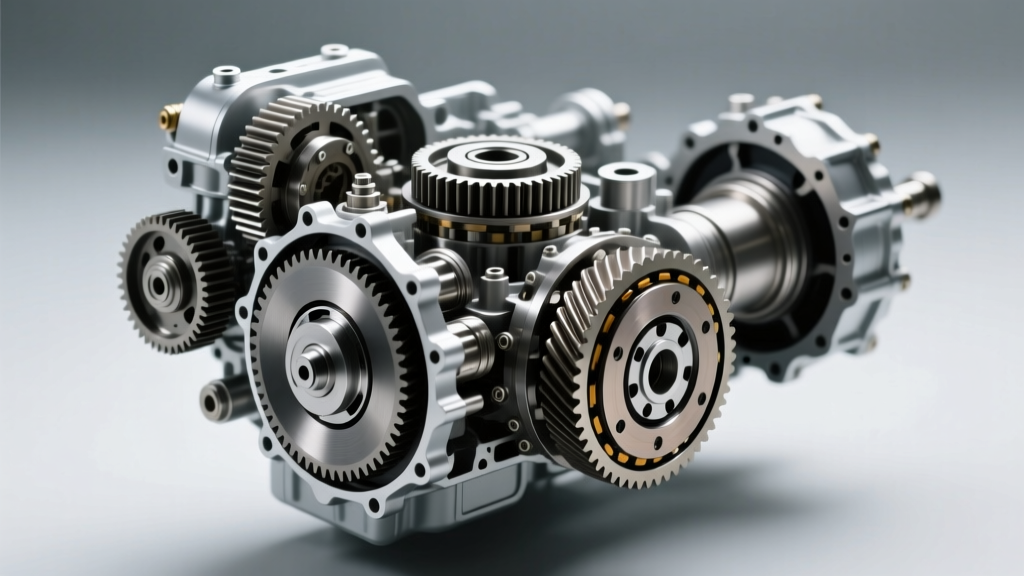
The Front-Wheel Drive layout consolidates the transmission and differential into a single transaxle unit, routing power directly to the front wheels via Constant Velocity (CV) axles. In the widely serviced 10th and 11th generation Honda Civic (1.5L Turbo and 2.0L NA), the car drivetrain diagram reveals a transverse-mounted powertrain with unequal or equal-length half-shafts depending on the exact trim and transmission (CVT vs. 6-speed manual).
Diagram Components & Common Failure Points
- Transaxle Assembly: Houses the CVT belt/pulley system or manual gearsets. A common failure in early CVT models is the input shaft bearing whine, requiring a full teardown.
- Right-Side Intermediate Shaft: Many FWD drivetrains use an intermediate shaft on the passenger side to equalize axle lengths and prevent torque steer. The support bracket bearing on this shaft is prone to drying out and causing a rhythmic clicking noise during acceleration.
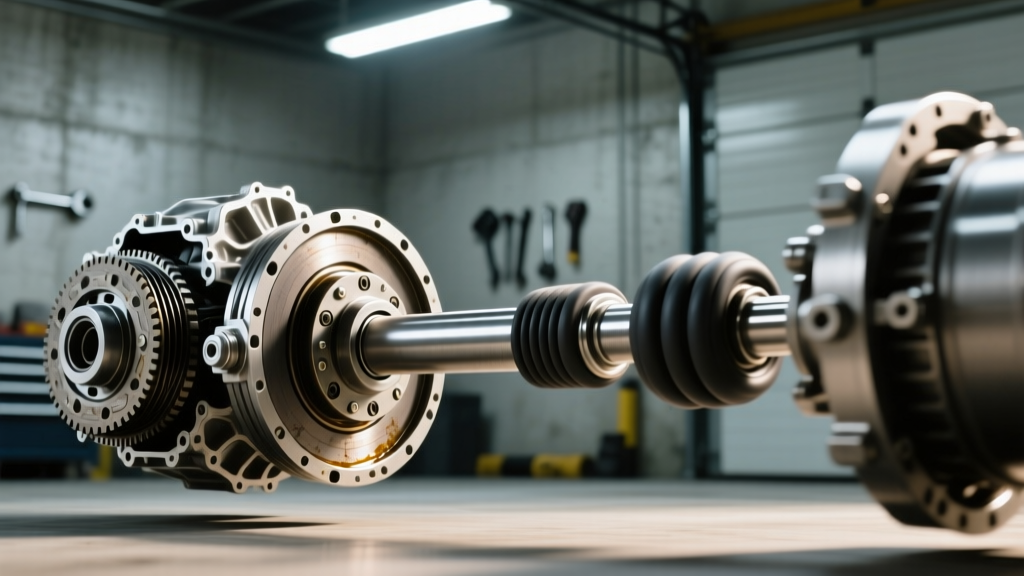
- CV Axle Boots & Joints: The outer CV joint boots tear from steering articulation, leading to grease loss and joint destruction. OEM Honda CV Axle (Part No. 44301-TBA-A00 for left side) is highly recommended over aftermarket remanufactured units to avoid high-speed vibration.
Model-Specific Repair Specs
When replacing a CV axle on the Civic, the spindle nut is a one-time-use stretch nut. It must be torqued to exactly 180 lb-ft (244 Nm). The wheel bearing hub assembly bolts, if removed during the axle extraction process, require 80 lb-ft (108 Nm). Always use a calibrated torque wrench; impact guns will easily over-stretch the 22mm axle nut, leading to wheel bearing preload loss and premature hub failure.
RWD Layout: Ford Mustang IRS & Driveshaft Dynamics
Rear-Wheel Drive vehicles separate the transmission from the differential, linking them via a longitudinal driveshaft. For the S550 and S650 Ford Mustang, the car drivetrain diagram showcases a modern Independent Rear Suspension (IRS) setup utilizing an 8.8-inch or 10.5-inch rear differential, replacing the solid live axle of previous generations.
Diagram Components & Common Failure Points
- Two-Piece Aluminum Driveshaft: Supported by a Center Support Bearing (CSB). The rubber isolator in the CSB degrades under high heat and torque, causing a severe driveline shudder between 45 and 55 mph.
- IRS Differential & Half-Shafts: The 8.8-inch IRS uses internal CV joints on the half-shafts. Under heavy launch loads (especially on modified 5.0L Coyote V8s), the inner stub shafts can snap at the circlip groove.
- Pinion Seal & Flange: High-speed highway driving generates significant differential heat. If the 75W-85 synthetic gear fluid degrades, the pinion bearing can score, leading to pinion seal leaks at the driveshaft mating flange.
Model-Specific Repair Specs
Replacing the driveshaft center support bearing requires supporting the exhaust and dropping the crossmember. The CSB mounting bolts torque to 41 lb-ft (55 Nm), while the driveshaft-to-pinion flange bolts require 70 lb-ft (95 Nm). When servicing the 8.8-inch IRS differential cover, Ford specifies Motorcraft SAE 75W-85 Premium Synthetic Hypoid Gear Lubricant. The differential cover bolts are torqued to 25 lb-ft (33 Nm) in a crisscross pattern to prevent casing warpage. For more on Mustang drivetrain dynamics, Motor Trend How-To offers excellent visual teardowns of the S550 IRS subframe.
AWD Layout: Subaru Outback Symmetrical System
Subaru’s Symmetrical All-Wheel Drive is unique because the car drivetrain diagram shows the front and rear axles aligned directly along the vehicle's centerline, stemming from a longitudinally mounted boxer engine. This layout provides superior balance but introduces complex internal clutch packs for torque vectoring.
Diagram Components & Common Failure Points
- Transfer Clutch Duty Solenoid C: Located inside the transmission extension housing, this solenoid modulates hydraulic pressure to the AWD transfer clutch pack. If it fails or gets clogged with metallic debris from a failing clutch pack, the vehicle experiences severe 'torque bind' during tight, low-speed turns.
- Viscous Coupling / Active Torque Split: Modern Outbacks use an electronically controlled multi-plate clutch. Mismatched tire tread depths (greater than 2/32 inch difference) force the transfer clutch to remain partially engaged, generating massive heat and destroying the clutch pack.
- Rear Differential: A separate, standalone unit bolted to the rear subframe, connected via a rear propeller shaft with U-joints or CV-style joints.
Model-Specific Repair Specs
Diagnosing torque bind requires checking the AWD solenoid resistance. The Transfer Clutch Solenoid (Part No. 31942AA070) should read between 4.5 and 5.5 ohms at room temperature. If replacing the rear differential fluid, Subaru strictly requires 75W-90 GL-5 gear oil. The rear differential drain plug requires a crush washer and torques to 33 lb-ft (44 Nm), while the fill plug torques to 33 lb-ft (44 Nm). Never use friction modifier additives in the rear open differential, as it will cause gear chatter during cornering.
4WD Layout: Jeep Wrangler Solid Axles & Transfer Case
True Four-Wheel Drive systems are designed for off-road traction and feature a dedicated transfer case with a low-range gear reduction. The JL Jeep Wrangler car drivetrain diagram highlights solid front and rear axles (Dana 30 M186 front, Dana 44 M220 rear on Rubicons) and an NV241 OR (Selec-Trac) or NV271 (Rock-Trac) transfer case.
Diagram Components & Common Failure Points
- Transfer Case Shift Actuator: The electric motor on the side of the NV241 uses an internal plastic gear to engage the shift fork. This plastic gear is notorious for stripping, leaving the Jeep stuck in 2WD or 4WD High. Upgrading to an aftermarket metal-gear actuator is a standard preventative repair.
- Dana 44 Axle Shafts & U-Joints: In the front solid axle, the inner and outer axle shafts connect via a Spicer 760X U-joint (or 772X on newer models). When turning the wheels while in 4WD on high-traction surfaces, the binding forces can snap the U-joint ears, destroying the axle assembly.
- Locking Differentials: Electronic lockers use an internal electromagnetic coil and shift collar. Wiring harness chafing near the axle housing is a frequent cause of locker failure.
Model-Specific Repair Specs
When servicing the front Dana 44 axle shafts, the massive 36mm axle hub nut must be torqued to 250 lb-ft (339 Nm). This requires a heavy-duty torque wrench and a breaker bar to hold the rotor. The transfer case utilizes Mopar ATF+4 or a dedicated NVG transfer case fluid; do not use standard gear oil, as it will damage the internal pump and clutch packs. The transfer case fill and drain plugs torque to 25 lb-ft (33 Nm). For further technical insights on solid axle articulation and driveline geometry, consult the engineering archives at Car and Driver.
Comparative Drivetrain Repair Data Table
The following table summarizes the critical repair specifications and estimated 2026 market costs for the benchmark vehicles discussed above.
| Vehicle Model | Layout | Critical Component | Torque Spec | Est. Repair Cost (Parts/Labor) |
|---|---|---|---|---|
| Honda Civic (10th/11th Gen) | FWD | Front CV Axle Nut | 180 lb-ft (244 Nm) | $350 - $550 |
| Ford Mustang (S550/S650) | RWD | Driveshaft CSB Bolts | 41 lb-ft (55 Nm) | $400 - $700 |
| Subaru Outback (Gen 6) | AWD | Rear Diff Drain Plug | 33 lb-ft (44 Nm) | $150 - $250 (Fluid/Solenoid Diag) |
| Jeep Wrangler JL (Rubicon) | 4WD | Front Dana 44 Axle Nut | 250 lb-ft (339 Nm) | $600 - $900 (Actuator/U-Joint) |
Conclusion: Precision Over Guesswork
Whether you are swapping a transaxle in a front-wheel-drive commuter or rebuilding the solid axles of a 4x4 trail rig, relying on a generalized understanding of automotive mechanics is a recipe for costly comebacks. The car drivetrain diagram is your ultimate blueprint. By respecting model-specific torque sequences, utilizing OEM-specified fluids, and understanding the unique failure modes of each layout, you ensure maximum driveline longevity, optimal power transfer, and safe vehicle operation. Always cross-reference your service manual and use calibrated tooling when executing these critical drivetrain repairs.