The Brutal Reality of Hot Climate Transmission Cooling
Driving in extreme hot climates—such as the American Southwest, the Middle East, or inland Australia—pushes automatic transmissions to their absolute thermal limits. When ambient air temperatures consistently exceed 110°F (43°C), the vehicle's front-end heat exchangers are starved of a proper temperature delta. The radiator and the internal transmission oil cooler (TOC) are forced to work with inlet air that is already dangerously hot. Consequently, transmission fluid temperatures can easily spike past 230°F during sustained highway towing or stop-and-go desert traffic.
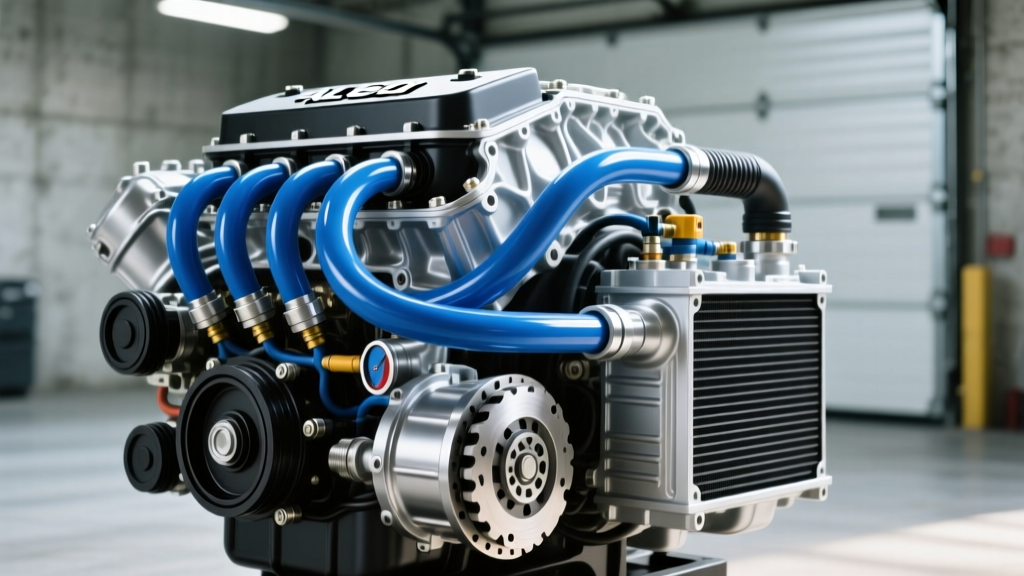
While most enthusiasts focus on upgrading to large stacked-plate auxiliary coolers to combat this heat, a critical and often overlooked weak link lies in the plumbing. Specifically, the OEM plastic push-to-connect fittings used on modern transmission cooler lines are highly susceptible to catastrophic failure under extreme thermal cycling. Understanding this failure mode and utilizing the Dorman transmission cooler line quick connector as a preventative upgrade is a mandatory best practice for any vehicle operating in high-ambient environments.
Thermal Stress and the OEM Plastic Fitting Failure Mode
Modern 6-speed, 8-speed, and 10-speed automatic transmissions—including the GM 6L80, 8L90, Ford 10R80, and ZF 8HP—rely heavily on quick-disconnect fittings to join the aluminum or steel cooler hard lines to the transmission case. From the factory, many of these fittings are constructed from POM (polyoxymethylene) plastic or feature internal plastic retaining rings and standard rubber O-rings.
In a hot climate, the transmission fluid exiting the torque converter can reach 260°F before passing through the cooler. This intense heat transfers directly into the cooler line fittings. Over time, the combination of extreme heat, high line pressures (which can exceed 180 PSI in heavy towing scenarios), and the constant expansion and contraction of the metal lines causes OEM plastic housings to become brittle. The internal O-rings flatten, lose their elasticity, and begin to bypass fluid. In the worst-case scenario, the plastic retaining collar cracks entirely, resulting in an instant and total loss of transmission fluid, leading to immediate friction material burnout and complete transmission failure.
Why the Dorman Transmission Cooler Line Quick Connector is the Hot-Climate Standard
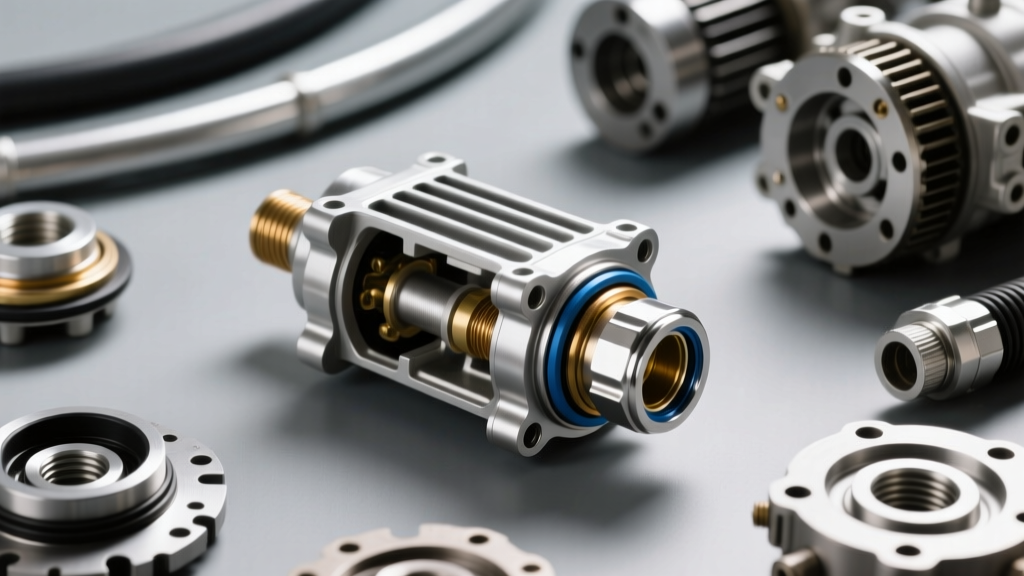
To mitigate the inherent flaws of OEM plastic fittings, aftermarket engineers have developed reinforced alternatives. The Dorman transmission cooler line quick connector series has emerged as the industry standard for hot-climate repairs and preventative maintenance. Unlike the brittle OEM plastic variants, Dorman's upgraded quick connectors (such as the highly popular 800-series) utilize machined aluminum or brass housings with heavy-duty stainless steel internal retaining clips.
Furthermore, Dorman equips these connectors with high-temperature fluorocarbon (Viton) O-rings that resist thermal degradation and fluid shear far better than standard Buna-N rubber. This ensures a positive seal even when line pressures spike and fluid temperatures hover near 240°F. Priced typically between $9 and $16 per fitting in 2026, replacing a $12 plastic fitting with a $14 Dorman metal upgrade saves owners from the $4,000+ cost of a replacement transmission.
Dorman Quick Connector Sizing and Application Chart
| Dorman Part Number | Line Size | Hose Barb / Thread | Primary Hot-Climate Applications |
|---|---|---|---|
| 800-120 | 3/8 in. | 3/8 in. Tube / 3/8 in. Hose | GM 6L80 / 8L90 Auxiliary Cooler Lines |
| 800-121 | 1/2 in. | 1/2 in. Tube / 1/2 in. Hose | Ford 10R80 Main Cooler Feed Lines |
| 800-122 | 3/8 in. x 1/2 in. | Adapter / Step-Down | Custom Auxiliary Cooler Plumbing |
| 800-124 | 5/8 in. | 5/8 in. Tube / 5/8 in. Hose | Heavy Duty Ram/Aisin High-Flow Lines |
Expert Installation Protocol for Aluminum Cases
Installing a Dorman transmission cooler line quick connector requires precision. The transmission cases on modern units are cast aluminum, which is notoriously soft and prone to cross-threading or stripping if excessive force is applied. Follow this expert protocol to ensure a leak-free, heat-resistant seal:
- Proper Disconnection: Never use brute force or pry bars to remove OEM lines. Use a dedicated line disconnect tool set (such as the Lisle 39900 or OTC 6512) to properly depress the internal retaining tabs. For GM applications, the J 46364 equivalent tool is highly recommended.
- Inspect the Mating Surface: Before installing the new Dorman fitting, inspect the steel cooler line nub for deep grooves or corrosion. If the steel line is pitted, the new Viton O-ring will not seal, regardless of the fitting quality. Replace the hard line if scoring is present.
- Lubrication is Mandatory: Coat the O-rings of the Dorman quick connector generously with fresh transmission fluid (e.g., Dexron ULV or Mercon ULV) before pushing it onto the steel line. A dry O-ring will roll and tear upon installation.
- Torque Specifications: If you are replacing the threaded adapter fitting that screws into the transmission case (which houses the quick connect), you must use a calibrated torque wrench. For the GM 6L80 and 8L90, the cooler line adapter fitting torque spec is strictly 18 lb-ft (25 Nm). Overtorquing will crack the aluminum case.
- Verify the Click: Push the Dorman connector onto the line until you hear and feel a distinct mechanical click. Follow up by pulling firmly on the line to ensure the stainless steel retaining collar has engaged the groove.
Auxiliary Cooler Integration in 110°F+ Ambient Air
Upgrading your quick connectors is only half the battle in extreme heat. When ambient temperatures exceed 105°F, the factory radiator-integrated TOC becomes virtually useless. In fact, if engine coolant temperatures reach 225°F during a steep desert grade, the TOC will actually heat the transmission fluid rather than cool it.
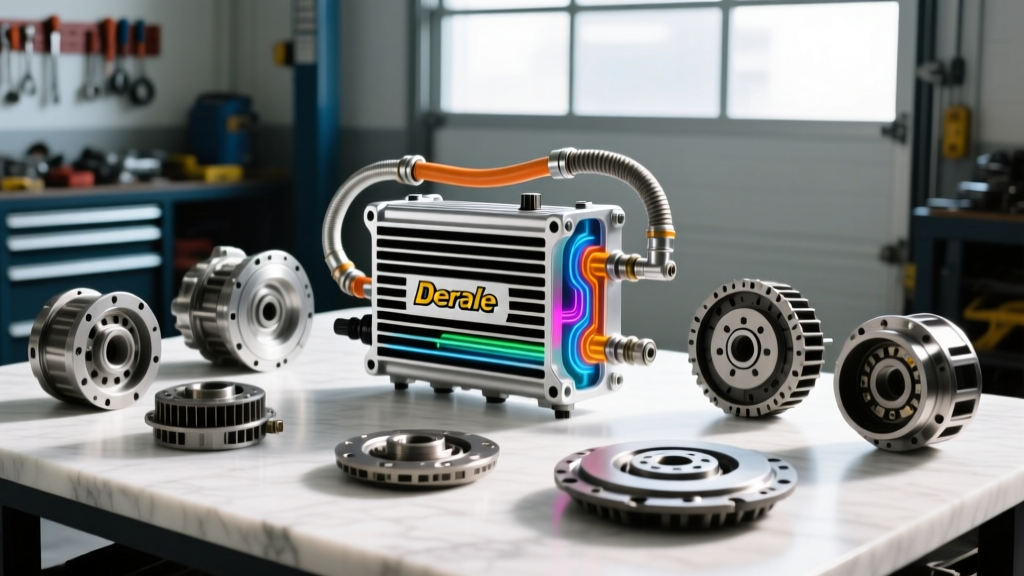
For hot climate driving, installing an auxiliary stacked-plate cooler is mandatory. Stacked-plate designs (like the Derale Hyper-Cool or Hayden Rapid-Cool series) offer a massive surface area and a significantly lower pressure drop compared to traditional tube-and-fin coolers. This lower pressure drop is critical because it reduces the strain on the transmission's internal fluid pump, which is already working overtime to maintain line pressure in thin, hot fluid.
The Thermostatic Bypass Valve Debate
A common misconception in the off-road and towing community is that deleting the factory thermal bypass valve will maximize cooling. In a hot climate, this is a dangerous mistake. The bypass valve exists to prevent torque converter shudder and gear wear during cold starts by allowing fluid to bypass the cooler until it reaches operating temperature (usually around 180°F). If you delete this valve in a climate where winter nights still drop below 50°F, you risk severe morning drivability issues. Instead of deleting it, test the bypass valve's functionality and ensure it is routing fluid to your auxiliary stacked-plate cooler correctly once the thermostat opens.
Expert Insight: "In environments where ambient air is 115°F, your auxiliary cooler can only drop the fluid temperature to within 20-30 degrees of the ambient air. You cannot cool a 240°F transmission down to 180°F in the Phoenix summer. The goal of the auxiliary cooler and the Dorman metal quick connectors is to keep the fluid under 230°F to prevent rapid viscosity shear, not to achieve impossible temperature deltas."
Fluid Viscosity and Thermal Shear in Extreme Heat
Even with perfect plumbing and massive auxiliary coolers, the fluid itself must be capable of surviving hot-climate abuse. Standard Group III synthetic blends will rapidly shear and lose their protective film strength when subjected to sustained 230°F+ temperatures. For severe hot-climate duty, experts recommend transitioning to a Group IV (PAO - Polyalphaolefin) based full synthetic fluid. PAO fluids possess inherently higher thermal stability and resist oxidation far better than hydrocracked basestocks.
Always verify that your chosen fluid meets the exact OEM friction modifier specifications (e.g., GM Dexron VI / ULV, Ford Mercon V / ULV, or ZF Lifeguard 8). Using an incompatible fluid to chase higher thermal limits will result in immediate clutch pack slippage and transmission destruction.
Final Thoughts on Hot Climate Reliability
Surviving extreme heat requires a holistic approach to transmission cooling. By recognizing the inherent weaknesses of OEM plastic fittings and proactively upgrading to the Dorman transmission cooler line quick connector, you eliminate the most common point of catastrophic failure in high-ambient environments. Pair this robust plumbing with a high-efficiency stacked-plate auxiliary cooler and a high-quality PAO synthetic fluid, and your drivetrain will confidently conquer the harshest deserts on earth. For more technical specifications on quick-connect fittings and application guides, consult the Dorman Products catalog, and for in-depth hydraulic circuit analysis, review the engineering documents available at Sonnax Tech Resources.