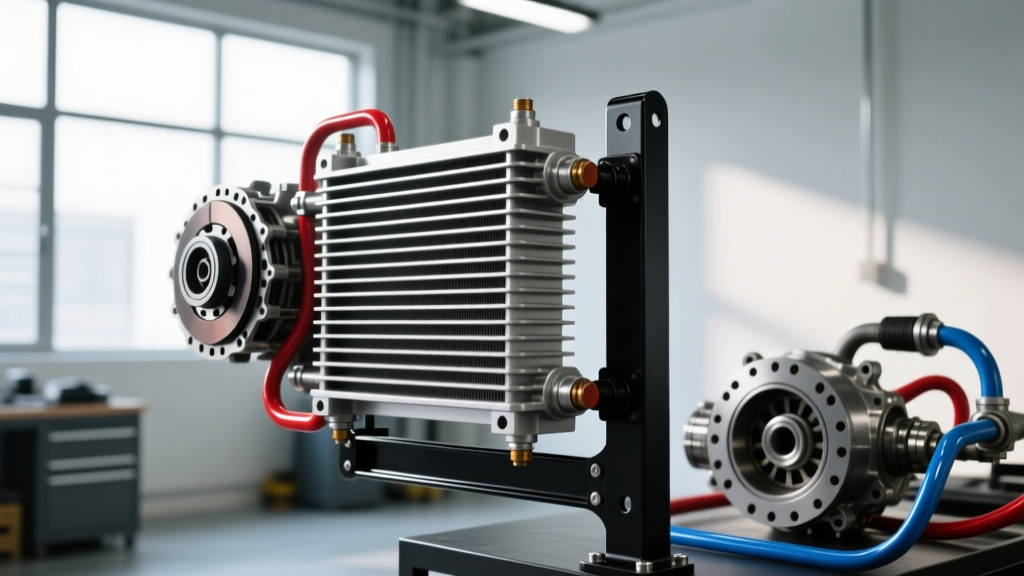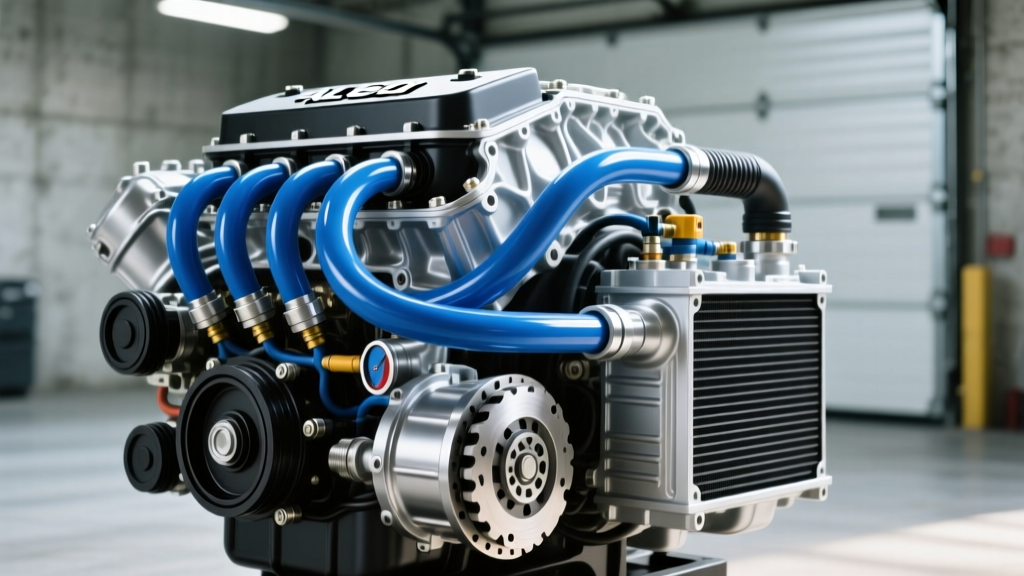
Overheating is the undisputed number one killer of the GM 4L60E transmission. Whether you are towing a 6,000-pound trailer in a Silverado or running a built 4L60E in a track car, managing thermal loads requires precise data. However, simply buying a gauge is not enough. To properly monitor temperatures and diagnose cooling inefficiencies, you must first understand the hydraulic routing of the system. Referencing a comprehensive fluid flow 4L60E transmission cooler lines diagram is the mandatory first step before tapping into the system for temperature monitoring. This guide bridges the gap between hydraulic flow theory and practical, real-world temperature monitoring setups, comparing the best solutions available for GM 4-speed automatics.
Decoding the Fluid Flow 4L60E Transmission Cooler Lines Diagram
The 4L60E utilizes a priority-lube hydraulic circuit, meaning cooler flow is directly tied to engine RPM and line pressure. Understanding the exact path of the fluid dictates where you should place aftermarket temperature sensors for the most accurate readings.
- Fluid Extraction: Fluid is drawn from the transmission pan through the filter and pressurized by the front gear pump.
- Valve Body Routing: Pressurized fluid is routed through the valve body to the clutches and torque converter. Excess fluid and converter dump fluid is directed toward the cooler circuit.
- Cooler Feed Line (OUT): Fluid exits the transmission case via the cooler feed line. On most GM trucks and SUVs, this connects to the lower radiator port, though verifying flow direction on your specific application is critical.
- Primary & Auxiliary Cooling: Fluid passes through the internal radiator cooler, then (if equipped) to an auxiliary stacked-plate or tube-and-fin cooler in the return loop.
- Cooler Return Line (IN): Cooled fluid re-enters the transmission via the return line (typically the upper radiator port), where it feeds the lube circuit and ultimately dumps back into the pan.
Expert Diagnostic Tip: Never assume radiator port routing based on internet forums. To identify your specific feed and return lines, start the cold engine, leave it in Park, and carefully feel the two metal cooler lines. The line that rapidly heats up and pressurizes within 30 seconds is your Cooler Feed (OUT) line.
The 4L60E Internal TFT Sensor vs. Inline Cooler Line Monitoring
The factory 4L60E relies on a Transmission Fluid Temperature (TFT) sensor to dictate shift firmness and torque converter clutch (TCC) lockup. This sensor is a 10k-ohm NTC (Negative Temperature Coefficient) thermistor plugged into the internal wiring harness, suspended near the valve body. While it provides the PCM with necessary data, it has severe limitations for performance and towing monitoring.
The Lag Effect
Because the internal TFT sensor measures sump and valve body gallery temperatures, it suffers from thermal lag. During a steep towing grade, the fluid exiting the torque converter and heading to the cooler can spike to 260°F, while the pan fluid (where the TFT sensor sits) may still read 190°F. By the time the internal sensor registers the dangerous spike, the fluid in the cooler lines has already suffered thermal degradation. This is why tapping the physical cooler lines using a dedicated inline sensor is vastly superior for heavy-duty applications.
Comparison Chart: 4L60E Temperature Monitoring Methods
| Monitoring Method | Accuracy & Placement | Response Time | Est. Cost (2026) | Best Application |
|---|---|---|---|---|
| OBD2 Bluetooth (TFT PID) | Internal Sump/Valve Body | Slow (30-60s lag) | $40 - $140 | Daily driving, light towing, logging shift data |
| Inline Analog/Digital Gauge | Cooler Feed or Return Line | Instantaneous | $150 - $250 | Heavy towing, track use, aux cooler tuning |
| Infrared Thermal Camera | External Pan/Line Surface | Instantaneous | $200 - $400 | Shop diagnostics, finding radiator blockages |
Buyer's Guide: Best Temp Monitoring Setups for Towing & Track
Choosing the right monitoring setup depends on your budget, your willingness to cut factory hard lines, and your need for real-time data. Here is a breakdown of the top-tier solutions for the 4L60E platform.
1. The OBD2 Telemetry Route: OBDLink MX+ with Torque Pro
For daily drivers and weekend warriors who do not want to splice into physical hydraulic lines, reading the factory TFT PID via OBD2 is the safest route. The OBDLink MX+ offers rapid polling rates (up to 4x faster than generic ELM327 clones), minimizing the data lag inherent to the CAN bus network. Paired with a tablet running Torque Pro or DashCommand, you can overlay transmission temp with engine load and RPM. Drawback: You are still limited to the internal sump temperature, which masks rapid converter dump spikes.
2. The Inline Gauge Route: AutoMeter 2941 with Custom T-Adapter
For ultimate accuracy, you must measure the fluid after it leaves the torque converter but before it hits the coolers. The AutoMeter 2941 Transmission Temperature Gauge features a 1/8" NPT electronic sender. To install this on a 4L60E, you will need to cut the 5/16" steel cooler feed line and install a 5/16" line-to-1/8" NPT inline adapter (such as the Derale 13018 or a custom AN6 braided hose setup). This provides instantaneous, real-time data of the hottest fluid in the system, allowing you to manually downshift or lock the TCC the second temps cross 225°F.
3. The Dual-Sensor Data Logging Setup
Advanced tuners and heavy-haulers often run two inline sensors: one on the Feed line (pre-cooler) and one on the Return line (post-cooler). By monitoring the delta (temperature drop) between the two, you can quantitatively measure the efficiency of your radiator and auxiliary stacked-plate coolers. A healthy 4L60E cooling system under load should show a 30°F to 50°F drop across the coolers. If the delta shrinks to 10°F, your coolers are heat-soaked or restricted.
Installation Specs, Line Sizing, and Torque Values
Modifying the cooling circuit of a 4L60E requires strict adherence to torque specifications and line sizing to prevent catastrophic fluid loss. The 4L60E operates with line pressures ranging from 100 PSI in gear to over 200 PSI during heavy throttle shifts. A loose fitting will drain the 11.2-quart system in seconds.
- Stock Line Diameter: 5/16" (0.3125") steel hard lines. (Note: Many towing packages upgrade to 3/8" or AN6 braided lines).
- Radiator Fittings (1998+ Quick Connect): Do not overtighten the retaining clips. Use a specialized 5/16" quick-connect removal tool. If swapping to threaded AN6 adapters, torque the flare nuts to 15-18 lb-ft.
- Radiator Fittings (1993-1997 Flare Nut): Torque to 15-20 lb-ft. Always use a backup wrench on the radiator neck to prevent twisting and cracking the internal radiator tank.
- 1/8" NPT Temp Sensor Adapter: Torque to 12-15 lb-ft. Always use liquid PTFE thread sealant (never standard Teflon tape, which can shred and clog the valve body lube circuit).
- Transmission Pan Bolts: If dropping the pan to route internal sensor wires, torque the M6 pan bolts to exactly 84 lb-in (7 lb-ft) in a crisscross pattern to prevent warping the stamped steel pan.
Managing 4L60E Thermal Limits and Fluid Degradation
The modern standard for the 4L60E is Dexron VI, a highly shear-stable synthetic fluid. However, even the best synthetic fluids have hard thermal limits. According to Sonnax transmission engineering data and fluid manufacturer specifications, the baseline for optimal fluid life is 175°F.
For every 20°F increase above 175°F, the oxidation rate of the fluid doubles. At 220°F, the fluid begins to lose its friction-modifier properties, leading to slipping clutches and TCC shudder. At 250°F, the fluid literally cooks, turning to varnish and destroying the 4L60E's delicate 3-4 clutch pack and sun shell. By utilizing the fluid flow diagram to place an inline sensor directly on the converter dump line, you can catch these micro-spikes before they trigger the catastrophic failure chain.
Proactive Cooling Upgrades
If your inline monitoring setup consistently shows pre-cooler temps exceeding 230°F under load, it is time to upgrade the hardware. Bypassing the restrictive internal radiator cooler and routing the 4L60E feed line directly to a high-flow auxiliary cooler (like a Mishimoto or Derale stacked-plate unit with a minimum 20,000 GVW rating) is the most effective way to drop temperatures. Just ensure you install an inline thermostat bypass or a cold-weather fluid warm-up loop, as running too cold (below 150°F) prevents moisture condensation from boiling off in the sump, leading to premature internal corrosion.