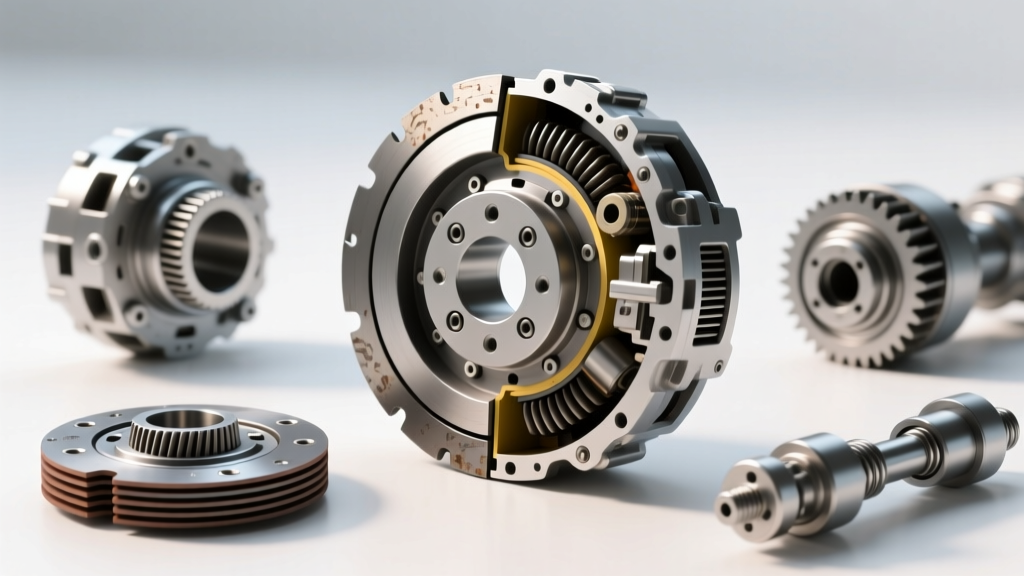
The Physics of Friction Material Degradation
Diagnosing manual transmission clutch wear requires moving beyond subjective pedal feel and into the realm of empirical measurement. Whether you are evaluating original equipment manufacturer (OEM) assemblies or sourcing high-yield aftermarket replacements through specialized distributors like the Clutch Auto Group, understanding the baseline degradation physics is critical for accurate diagnostics. The clutch disc is essentially a sacrificial friction brake, designed to slip momentarily during engagement to absorb kinetic energy. However, this controlled slip generates immense thermal loads, often pushing the friction surface temperatures past 400°F (204°C) during aggressive engagements.
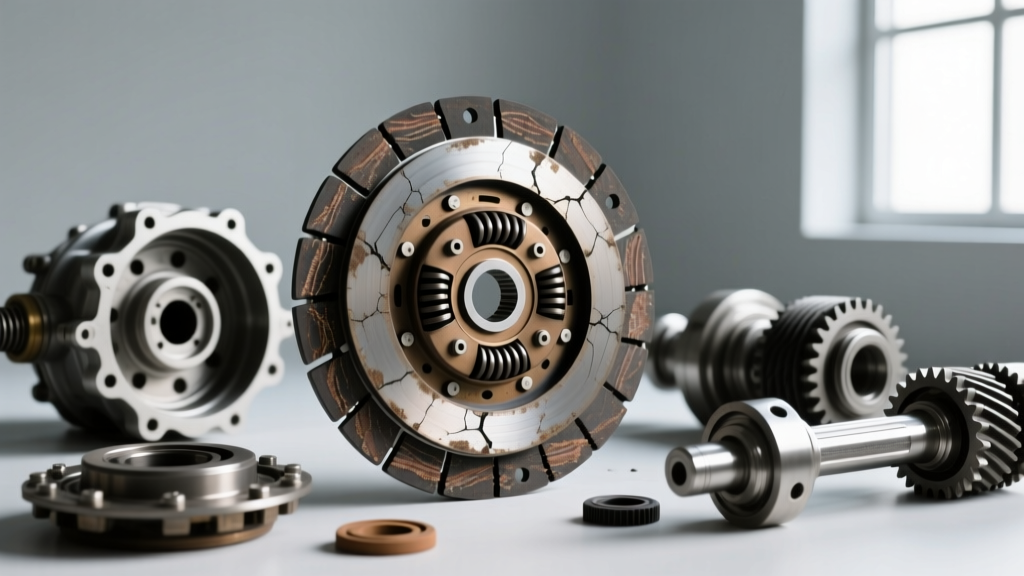
Over time, the organic resins, Kevlar fibers, or cerametallic compounds undergo thermal cycling, leading to glazing, micro-cracking, and eventual loss of the coefficient of friction (μ). In 2026, with modern manual transmissions like the Tremec T56 Magnum and Porsche G50 handling upwards of 600 lb-ft of torque, the margin for wear-induced failure is narrower than ever. Identifying the precise lifespan indicators of these components prevents catastrophic drivetrain failure and ensures optimal power transfer.
Quantifiable Wear Indicators: Moving Beyond 'Feel'
Technicians often rely on pedal resistance or engagement point height to guess clutch health. True diagnostics demand micrometers, dial indicators, and depth gauges. When inspecting a disassembled clutch system, the following measurements dictate whether a component is within service limits or requires replacement.
Flywheel Step Height and Runout
The flywheel step height is the distance between the friction surface and the pressure plate mounting surface. This dimension is critical for maintaining the correct clamping load. For example, GM LS-series engines require a positive step height of 0.020 to 0.040 inches. Ford Modular V8s often utilize a 0.000-inch flat step, depending on the specific clutch kit. If a flywheel is resurfaced beyond the maximum allowable material removal (typically 0.030 inches total from OEM spec), the diaphragm spring will over-extend, resulting in a weak clamping force and premature slip.
Bellhousing runout is equally critical. Using a magnetic base dial indicator on the crankshaft flange, measure the Total Indicator Runout (TIR) of the bellhousing bore. The absolute maximum allowable TIR is 0.005 inches. Exceeding this spec causes the transmission input shaft to bind, accelerating release bearing wear and causing severe clutch chatter.
Diaphragm Spring Finger Wear
The release bearing constantly contacts the fingers of the pressure plate's diaphragm spring. Inspect the fingers for grooving. A wear groove deeper than 0.030 inches indicates that the pressure plate has reached the end of its service life. Even if the friction disc has material left, a weakened diaphragm spring cannot provide the necessary clamp load under high boost or high-RPM shifts.
Material Science and Lifespan Matrix
Clutch lifespan is not measured strictly in mileage; it is a function of thermal cycles, torque load, and friction material composition. When selecting kits from the Clutch Auto Group or evaluating existing setups, refer to the material degradation matrix below to estimate remaining service life.
| Friction Material | Coefficient (μ) | Torque Capacity | Expected Lifespan | Primary Failure Mode |
|---|---|---|---|---|
| Organic / Kevlar Blend | 0.28 - 0.33 | 350 - 450 lb-ft | 60,000 - 90,000 miles | Thermal glazing, hub spring fatigue |
| Cerametallic (Puck) | 0.35 - 0.42 | 550 - 800 lb-ft | 30,000 - 50,000 miles | Flywheel scoring, chatter on engagement |
| Sintered Iron | 0.45 - 0.55 | 800 - 1,200+ lb-ft | 15,000 - 25,000 miles | Surface oxidation, severe drivetrain shock |
| Carbon / Carbon-Carbon | 0.25 - 0.30 (varies) | 900 - 1,500+ lb-ft | Race-dependent (Rebuildable) | Delamination, shatter under cold slip |
Symptom Diagnostics: Slip, Chatter, and Drag
Translating physical wear into drivable symptoms is the core of clutch system diagnostics. Each symptom points to a specific mechanical or hydraulic failure within the assembly.
Clutch Slip: The WOT Verification Test
Slip occurs when the friction disc cannot maintain a static lock with the flywheel under load. To diagnose, bring the vehicle to 3,000 RPM in 3rd or 4th gear and apply Wide Open Throttle (WOT). If engine RPM flares without a proportional increase in vehicle speed, the clutch is slipping. Root causes: Oil contamination (rear main seal leak), glazed organic friction material, or a fatigued diaphragm spring. Note that modern synthetic gear oils containing friction modifiers can sometimes migrate past the input shaft seal, contaminating the disc.
Clutch Chatter and Dual-Mass Flywheel (DMF) Failure
Chatter is a violent, low-frequency oscillation felt through the chassis during initial engagement. While often blamed on the friction disc, in modern vehicles, it is frequently a symptom of a failed Dual-Mass Flywheel (DMF). DMFs utilize internal arc springs to dampen torsional vibrations. According to Sachs technical documentation, a DMF must be replaced if the azimuth free-play exceeds 20 degrees, or if the radial free-play exceeds 1.5mm. Attempting to cure DMF chatter by simply replacing the clutch disc with a rigid-hub cerametallic puck will only transfer the destructive harmonic vibrations directly into the transmission input shaft, leading to premature gear tooth spalling.
Clutch Drag and Hydraulic Bypass
If the transmission grinds when shifting into reverse from a dead stop, or if shifting into first gear causes the car to lurch forward while the pedal is fully depressed, the clutch is dragging. This means the disc is not fully releasing from the flywheel. While a warped disc or incorrect flywheel step can cause this, the most common culprit in 2026 vehicles is hydraulic failure. Concentric Slave Cylinders (CSC) are prone to internal seal bypassing. For example, the GM CSC (Part #19352805) used in LS/T56 applications is notorious for internal bleeding. If the CSC piston cannot maintain hydraulic pressure at full stroke, the release bearing fails to travel the necessary 0.450 to 0.550 inches to fully disengage the pressure plate fingers.
Hydraulics and Release Bearing Wear Specifications
The release bearing (or throw-out bearing) operates in a high-speed, high-load environment. When inspecting a removed bearing, check the contact face for asymmetrical wear, which indicates a misaligned bellhousing or a bent clutch fork. For hydraulic systems, always verify the master cylinder pushrod free-play. A lack of free-play (typically 0.020 to 0.040 inches at the pedal) keeps the master cylinder piston slightly depressed, blocking the compensation port. This causes fluid to expand with heat, effectively 'pre-loading' the release bearing against the diaphragm spring, leading to rapid bearing failure and clutch slip.
When bleeding the system, use a pressure bleeder set to 15-20 PSI. Gravity bleeding is rarely sufficient to purge micro-bubbles from the complex internal galleries of modern CSCs. Always use the manufacturer-specified fluid; mixing DOT 3 and DOT 4 or using DOT 5 silicone fluid in a system designed for glycol-based fluid will cause seal swelling and catastrophic hydraulic failure.
Economic Analysis: 2026 Replacement Costs and Intervals
Replacing a clutch system is a labor-intensive endeavor, requiring the separation of the drivetrain and the removal of the bellhousing. Labor times typically range from 5.0 to 8.5 hours, depending on whether the vehicle is FWD (requiring subframe and axle removal) or RWD. At an average independent shop rate of $135 to $165 per hour, labor alone will cost between $675 and $1,400.
When sourcing parts, kits from the Clutch Auto Group or premium brands like Exedy and LuK range from $250 for a standard organic replacement to over $1,200 for multi-plate cerametallic setups. It is highly recommended to replace the flywheel, pilot bearing, release bearing, and master/slave cylinders simultaneously. Reusing a worn flywheel to save $150 on a front-engine, rear-wheel-drive sports car will inevitably result in a secondary failure, forcing the shop to repeat the 7-hour removal process. Always torque flywheel bolts to spec (e.g., GM LS flywheel bolts require 74 lb-ft plus an additional 90 degrees of rotation in a star pattern) and use a fresh alignment tool to prevent input shaft binding during transmission installation.
Pro-Tip for Diagnostics: Before dropping the transmission, use an endoscope through the bellhousing inspection cover to examine the friction disc. If you see blueing on the flywheel or black, oily residue on the disc, you have confirmed a thermal or contamination failure without needing to immediately separate the driveline, allowing you to order the correct rear main seal or clutch kit in advance.