The Core Question: How Does Automatic Transmission Fluid Work?
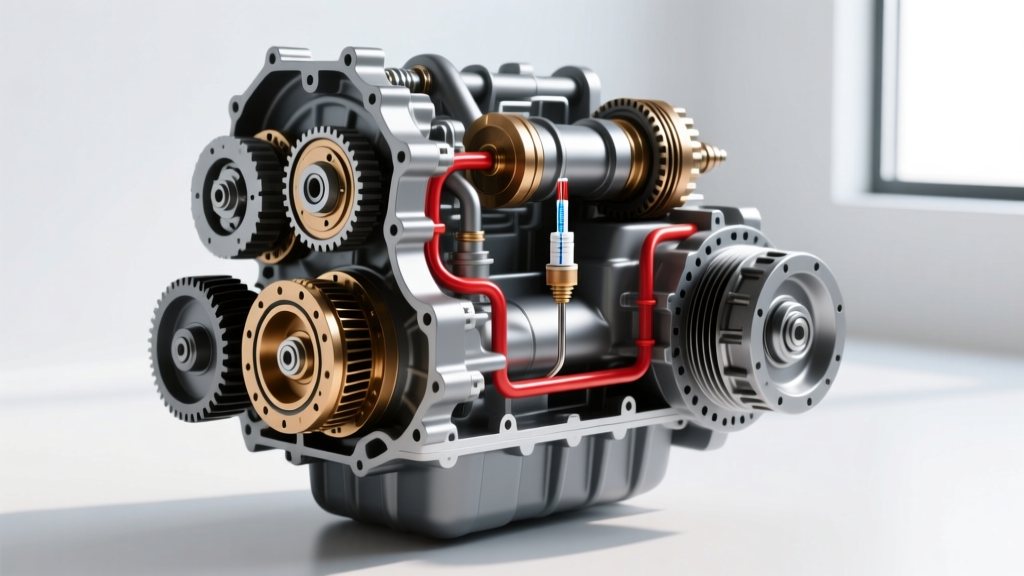
When enthusiasts and daily commuters alike ask, how does automatic transmission fluid work, the answer extends far beyond simple lubrication. In modern automatic transmissions, the fluid acts as a hydraulic medium, a thermal transfer agent, and a precisely engineered friction modifier. According to AMSOIL's engineering specifications, modern synthetic ATFs must maintain a high viscosity index to ensure that hydraulic pressure remains stable whether the transmission is operating at a freezing 0°C or a scorching 105°C. Without this hydraulic stability, clutch packs would slip, shift times would degrade, and the torque converter would fail to multiply engine torque effectively.
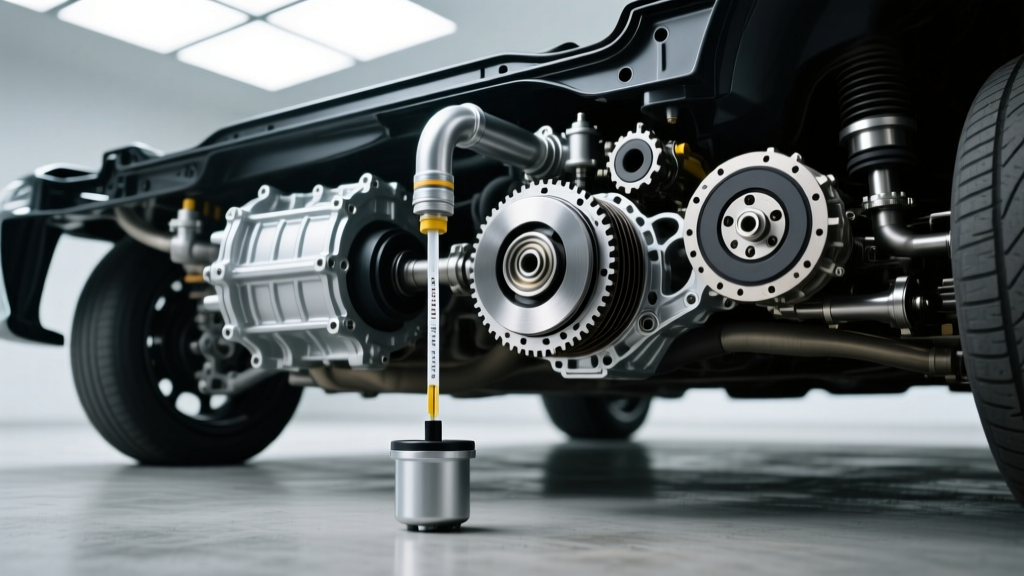
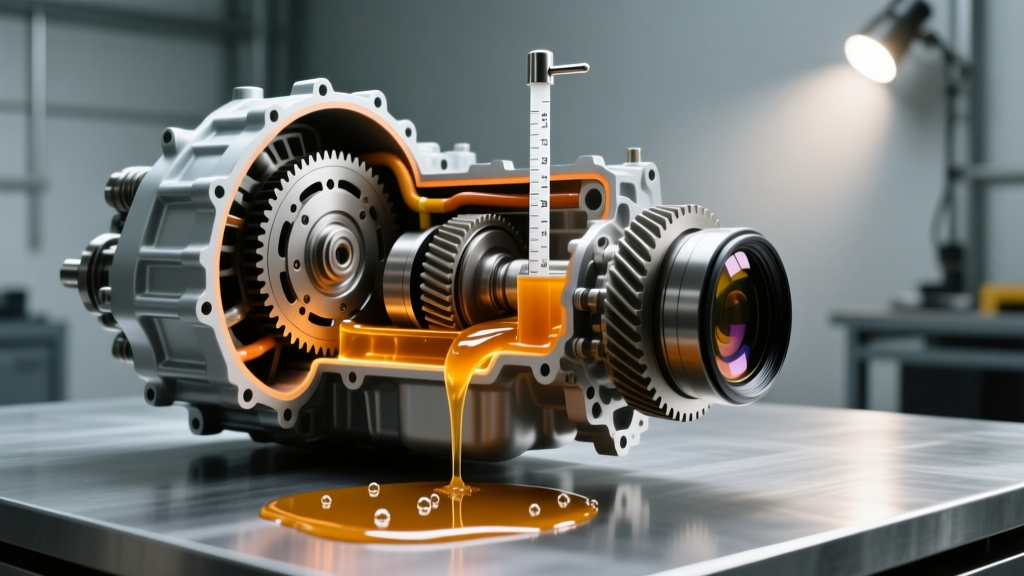
Understanding these fluid dynamics is critical when interpreting your transmission fluid dipstick reading. The dipstick is not merely a measuring tool; it is a diagnostic window into the hydraulic and thermal health of your drivetrain. A misinterpreted reading can lead to catastrophic overfilling, aeration, or severe clutch pack starvation.
Decoding the Dipstick: Cold vs. Hot Readings
The most common troubleshooting error in drivetrain maintenance is checking the fluid level cold. When a vehicle sits overnight, the torque converter drains a significant portion of the ATF back into the transmission pan. Furthermore, automatic transmission fluid expands significantly as it heats up. For example, Dexron VI and Mercon LV fluids exhibit a thermal expansion rate of roughly 7% to 9% between ambient temperature (20°C) and operating temperature (90°C).
The GM 6L80 Protocol
For the widely used GM 6L80 and 6L90 transmissions, the dipstick features both 'COLD' and 'HOT' crosshatch zones. However, professional diagnostic standards dictate that a true baseline reading must only be taken when the fluid temperature is between 180°F and 200°F (82°C to 93°C). To achieve this, the vehicle must be driven for at least 15 miles, then parked on a perfectly level surface with the engine idling and the transmission cycled through all gear ranges before settling in Park. If the fluid is checked cold, the drain-down effect will yield a false 'full' or 'overfilled' reading, prompting technicians to incorrectly drain fluid and cause immediate low-pressure faults.
Symptom Diagnosis Based on Dipstick Condition
The physical state of the fluid on the dipstick provides immediate clues about internal transmission health. Below is a diagnostic matrix mapping dipstick observations to specific mechanical failure modes.
| Dipstick Observation | Fluid Condition | Probable Failure Mode | Diagnostic Action |
|---|---|---|---|
| Level reads HIGH, fluid is bubbly/foamy | Aerated, pinkish froth | Overfilled pan causing planetary gears to whip air into the fluid, or suction line leak pulling air. | Check pan level; inspect pump suction seal. Aerated fluid causes delayed shifts and clutch slip. |
| Level reads LOW, fluid smells burnt | Dark brown/black, acrid odor | Severe clutch pack degradation. Friction material is suspended in the fluid, clogging the valve body. | Perform a stall test; drop pan to inspect for excessive clutch debris. Fluid flush is contraindicated. |
| Level reads NORMAL, fluid is milky/pink | Emulsified, resembles strawberry milkshake | Transmission Oil Cooler (TOC) failure inside the radiator. Engine coolant has cross-contaminated the ATF. | Immediately stop driving. Coolant destroys ATF friction modifiers and swells paper-based clutch linings. |
| Level fluctuates wildly between checks | Normal color, but level varies | Clogged transmission filter or failing pressure regulator valve causing fluid to hang in the cooler circuit. | Check line pressure via OBD-II PID; replace filter (ACDelco TF922 for 6L80). |
Troubleshooting Anomalous Readings: Aeration and Dilution
When diagnosing shifting complaints, the dipstick reading must be correlated with line pressure data. If your dipstick shows a low fluid level, but the transmission exhibits symptoms of an overfilled unit (such as fluid venting from the breather tube or harsh, slamming shifts), you are likely dealing with fluid aeration.
Aeration occurs when the transmission pump sucks in air alongside the fluid. This can happen if the fluid level is genuinely low, or if the O-ring on the dipstick tube itself has degraded. On the GM 6L80, the dipstick tube O-ring (ACDelco Part # 24230195, typically under $5.00) is a known failure point. When this O-ring flattens out, the high-volume gear pump pulls air through the tube seal, creating foam. The pump then sends this compressible foam to the clutch apply pistons, resulting in a soft, slipping shift despite the pan being full of fluid.
The Danger of Fluid Dilution
As noted by Consumer Reports automotive experts, cross-contamination is a silent killer of modern transmissions. If the dipstick reveals a milky substance, the fluid's dielectric strength and friction coefficients are entirely compromised. In vehicles equipped with internal radiator coolers, a micro-fracture in the cooler wall allows pressurized engine coolant (operating at 15-18 PSI) to breach the transmission cooler circuit (operating at 20-30 PSI) during specific thermal cycles, or vice versa. This requires immediate radiator replacement and a minimum of three back-to-back ATF drain-and-fills to purge the emulsified fluid.
Sealed Units vs. Dipstick Equipped Transmissions
As we navigate the 2026 automotive landscape, traditional dipsticks are increasingly rare. Transmissions like the ZF 8HP (found in BMW, Audi, Ram, and Jaguar vehicles) and the Toyota U660F are 'sealed' units. They lack a dipstick tube entirely, relying instead on an overflow plug located on the transmission pan.
ZF 8HP Overflow Plug Diagnostic Procedure
Troubleshooting fluid levels on a ZF 8HP requires strict adherence to thermal parameters. The fluid must be checked with the engine running, the vehicle perfectly level on a lift, and the transmission fluid temperature exactly between 30°C and 50°C (86°F to 122°F), verified via a bi-directional OBD-II scan tool reading the TFT (Transmission Fluid Temperature) PID.
- Connect the scan tool and monitor the TFT sensor.
- With the engine idling and the vehicle in Park, remove the plastic overflow plug from the ZF plastic oil pan.
- If fluid trickles out and stops, the level is correct.
- If no fluid emerges, the unit is low and must be pumped full until a steady trickle is achieved.
- Replace the O-ring on the overflow plug and torque it precisely to 12 Nm. Over-torquing will crack the plastic pan, necessitating a $400+ pan and filter assembly replacement.
Real-World Costs and Part Numbers for Maintenance
Proper diagnosis often leads to corrective maintenance. When sourcing parts for fluid level correction and troubleshooting, always use OEM-specified fluids to maintain the exact friction modifiers required by the clutch packs.
- GM 6L80 / 6L90: Requires Dexron VI. ACDelco Part # 10-9395 (approx. $9.50 per quart). Total dry fill capacity is 11.2 quarts, but a standard pan drop and filter change requires roughly 6.0 quarts. Pan bolt torque spec: 9 Nm (80 lb-in).
- Ford 6R80: Requires Mercon LV. Motorcraft Part # XT-10-QLVC (approx. $11.00 per quart). The 6R80 dipstick tube is prone to cracking near the exhaust manifold; replacement tube assembly (Ford Part # 7Z4Z-7A020-A) costs around $45.00.
- ZF 8HP: Requires ZF Lifeguard 8 or equivalent licensed fluid (approx. $22.00 to $28.00 per liter). Because the pan and filter are integrated plastic units, a fluid level check that reveals a contaminated filter mandates replacing the entire pan assembly (ZF Part # 1087.298.366, approx. $180.00 - $250.00).
Conclusion: The Dipstick as a Diagnostic Tool
Understanding how does automatic transmission fluid work is the first step in mastering drivetrain diagnostics. The dipstick is not just a stick with marks on it; it is a barometer of hydraulic pressure, thermal expansion, and internal mechanical wear. By correlating your dipstick readings with precise fluid temperature data, OBD-II line pressure PIDs, and physical fluid condition, you can accurately diagnose aeration, cooler failures, and clutch degradation long before they result in a catastrophic transmission failure. Always consult the specific OEM service manual for your vehicle's exact thermal check parameters and torque specifications.