The Hidden Costs of Overfilled Transmission Fluid Symptoms
In the modern automotive repair landscape of 2026, the intersection of DIY maintenance errors and complex electronic controls has created a highly costly diagnostic trap. When a vehicle owner or inexperienced technician overfills a transmission, the immediate result is not just a messy dipstick. Overfilled transmission fluid symptoms manifest as severe hydraulic aeration, erratic shifting, and delayed engagements. However, the most insidious consequence is the triggering of Transmission Fluid Temperature (TFT) sensor diagnostic trouble codes (DTCs), specifically P0711 (Circuit Range/Performance) and P0712 (Circuit Low Input).
When searching for the transmission fluid temperature sensor location to fix these codes, many DIYers inadvertently cause catastrophic damage to internal wiring harnesses or valve bodies, turning a $0 fluid correction into a $2,500 mechatronic replacement. This comprehensive cost analysis breaks down the physics of overfill symptoms, the true cost of sensor-related misdiagnoses, and exact repair protocols for today's most common automatic transmissions.
The Physics of Aeration and TFT Sensor Failure
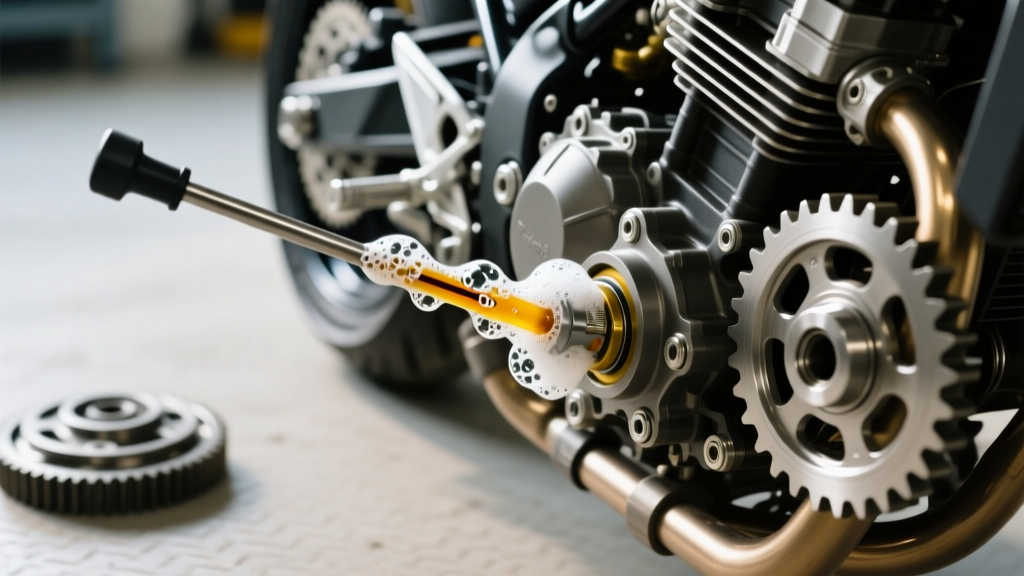
Automatic Transmission Fluid (ATF) serves as both a lubricant and a hydraulic medium. When the fluid level exceeds the maximum capacity, the rotating assembly (torque converter, clutch hubs, and planetary gearsets) physically whips the fluid. This introduces microscopic air bubbles into the hydraulic circuit, a phenomenon known as aeration.
Aerated fluid acts as a thermal insulator. Because the fluid is saturated with air, it cannot transfer heat to the transmission fluid temperature sensor efficiently. The Transmission Control Module (TCM) reads this insulated state as an abnormally low fluid temperature. In response, the TCM commands higher line pressures and alters shift timing to protect what it believes is a 'cold' transmission. This results in harsh, banging shifts and premature clutch wear.
Symptom vs. Potential Cost Breakdown
| Overfill Symptom | Root Cause | Estimated Repair Cost (If Ignored/Misdiagnosed) |
|---|---|---|
| Harsh 1-2 and 2-3 Shifts | TCM overcompensating for false 'cold' TFT readings | $1,200 - $3,500 (Premature clutch pack failure) |
| Slipping or Flaring | Aerated fluid compressing in clutch apply circuits | $2,500+ (Complete transmission rebuild) |
| DTC P0711 / P0712 | Insulated thermistor reading out of rational range | $45 - $2,200 (Depending on sensor integration level) |
| Fluid Leak from Breather | Thermal expansion pushing foamed fluid out of vent | $150 - $300 (Breather tube and fluid replacement) |
Transmission Fluid Temperature Sensor Location & Replacement Costs
The cost to resolve a TFT sensor code caused by an overfill depends entirely on the specific transmission architecture. In older vehicles, the sensor was a simple $20 standalone thermistor. In modern 6-speed, 8-speed, and 10-speed units, the sensor is deeply integrated into the valve body or the electro-hydraulic control module. Below is a cost analysis based on the three most prevalent transmission families on the road today.
1. GM 6L80 / 6L90 (8-Speed Variants)
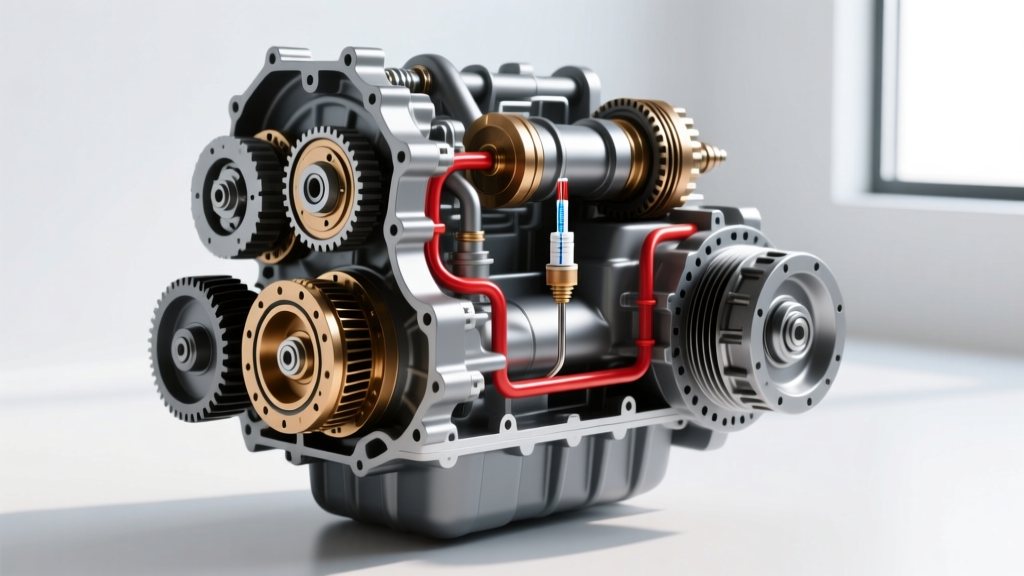
In the GM 6L80 and 6L90 transmissions, the transmission fluid temperature sensor location is not a standalone component. It is permanently embedded within the Transmission Electro-Hydraulic Control Module (TEHCM), which sits directly on top of the valve body inside the transmission pan.
- Part Number: GM TEHCM (e.g., #24252970 or updated #24271704)
- Part Cost: $350 - $550 (Source: GM Parts Center)
- Labor & Programming: $250 - $400 (Requires J2534 TCM flashing and VIN programming)
- Total Misdiagnosis Cost: $600 - $950
Failure Mode: A DIYer drops the pan to drain excess fluid, accidentally snags the delicate TEHCM wiring harness on the filter, and cracks the sensor housing. The TCM immediately throws a P0712 code, forcing a full TEHCM replacement.
2. Ford 6R80 / 10R80
Ford's 6R80 and 10R80 utilize a more traditional, yet still complex, valve body setup. The TFT sensor is a standalone thermistor pressed into the valve body casting, but accessing it requires complete valve body removal.
- Part Number: Motorcraft TFT Sensor (e.g., #SW-6752)
- Part Cost: $45 - $85
- Labor Cost: $400 - $600 (Pan removal, filter replacement, valve body R&R, and fluid refill)
- Total Misdiagnosis Cost: $445 - $685
Torque Spec Note: When reinstalling the Ford 6R80 valve body, the mounting bolts must be torqued to exactly 11 Nm (8 lb-ft) in the specified spiral sequence to prevent valve body warping, which causes cross-leaks and secondary shifting issues.
3. ZF 8HP (BMW, Chrysler, Audi, Jaguar)
The ZF 8-speed automatic is a masterpiece of engineering, but it is unforgiving of maintenance errors. The transmission fluid temperature sensor location is integrated directly into the Mechatronic unit (the combined valve body and TCM). Furthermore, the transmission pan is made of plastic and is a one-time-use component; the filter is molded into the pan.
- Part Number: ZF Mechatronic Unit (e.g., #1068.298.062 for specific BMW applications)
- Part Cost: $1,400 - $2,200
- Labor & Programming: $600 - $1,000
- Total Misdiagnosis Cost: $2,000 - $3,200
Failure Mode: Attempting to 'crack the pan' to let a little fluid out will destroy the plastic sealing sleeve and pan gasket. If the mechatronic sleeve is damaged during an improper fluid extraction, the entire unit must be replaced and programmed via OEM software. For more on ZF architecture, refer to the ZF Group Global technical documentation.
Cost-Effective Correction Protocol: Fixing the Overfill Safely
If you have identified overfilled transmission fluid symptoms and suspect the TFT sensor is reading incorrectly due to aeration, do not immediately drop the transmission pan. Follow this cost-effective, low-risk extraction protocol to correct the fluid level without risking the sensor harness.
Expert Thermal Expansion Warning: ATF expands significantly at operating temperatures (180°F - 200°F). Checking the fluid level via the dipstick when the transmission is cold will almost always result in an overfill once the vehicle reaches thermal equilibrium. Always verify fluid levels at the manufacturer-specified operating temperature range, typically between 85°C and 95°C (185°F - 203°F), using a bi-directional scan tool to monitor the TFT sensor data PID.
Step 1: Scan Tool Verification (Cost: $0 - $50)
Connect an advanced OBD2 scanner capable of reading live transmission data. Monitor the TFT PID. If the fluid is aerated, you will see the temperature reading fluctuate wildly or lag significantly behind the engine coolant temperature (ECT) after a 20-minute highway drive. This confirms aeration rather than a hard electrical failure of the sensor.
Step 2: Top-Down Extraction (Cost: $30 - $60)
If your vehicle is equipped with a dipstick tube or a top-fill plug (common on many Mercedes 7G-Tronic and Chrysler 8HP applications), use a pneumatic or manual fluid extraction pump. Insert the extraction hose down the fill tube until it hits the bottom of the pan, then pump out exactly 0.5 to 1.0 quarts of fluid. This avoids pan removal entirely, protecting the internal wiring and the TFT sensor.
Step 3: Controlled Pan Loosening (If No Dipstick Exists)
For vehicles like the ZF 8HP or GM 6L80 where no top extraction is possible, you must use the 'controlled drip' method.
- Place a large, calibrated drain pan beneath the transmission.
- Loosen all pan bolts by exactly two turns. Do not remove them.
- Loosen the rear-most bolts an additional three turns to tilt the pan backward.
- Allow the fluid to seep out until you have collected approximately 1 quart.
- Immediately tighten all bolts back to their factory torque specifications.
Critical Torque Specifications for Re-Sealing
| Transmission Model | Pan Material | Fastener Torque Spec | Replacement Requirement |
|---|---|---|---|
| GM 6L80 / 6L90 | Stamped Steel | 9 Nm (80 lb-in) | Reuse pan, replace gasket if torn |
| ZF 8HP (Chrysler/BMW) | Composite Plastic | 10 Nm (89 lb-in) | MUST replace pan/filter assembly and bolts |
| Ford 6R80 | Stamped Steel | 12 Nm (106 lb-in) | Reuse pan, replace cork/rubber gasket |
Final Cost Analysis Summary
Overfilled transmission fluid symptoms are frequently misdiagnosed as internal mechanical failures or electrical sensor faults. By understanding the physics of fluid aeration and knowing the exact transmission fluid temperature sensor location within your specific transmission architecture, you can avoid the devastating costs of unnecessary teardowns.
Correcting an overfill via top-down extraction or controlled pan loosening costs less than $50 in materials and takes under an hour. Conversely, misdiagnosing a P0711 code and aggressively tearing into a ZF 8HP or GM 6L80 valve body can easily result in $1,500 to $3,000 in collateral damage and programming fees. Always trust live data PIDs over physical dipstick readings, and respect the delicate electronic components housed within modern transmission pans.
For further reading on advanced hydraulic diagnostics and TCM logic strategies, industry professionals frequently consult Transmission Digest for up-to-date technical service bulletins and repair methodologies.