The Core Question: What Is Type F Automatic Transmission Fluid?
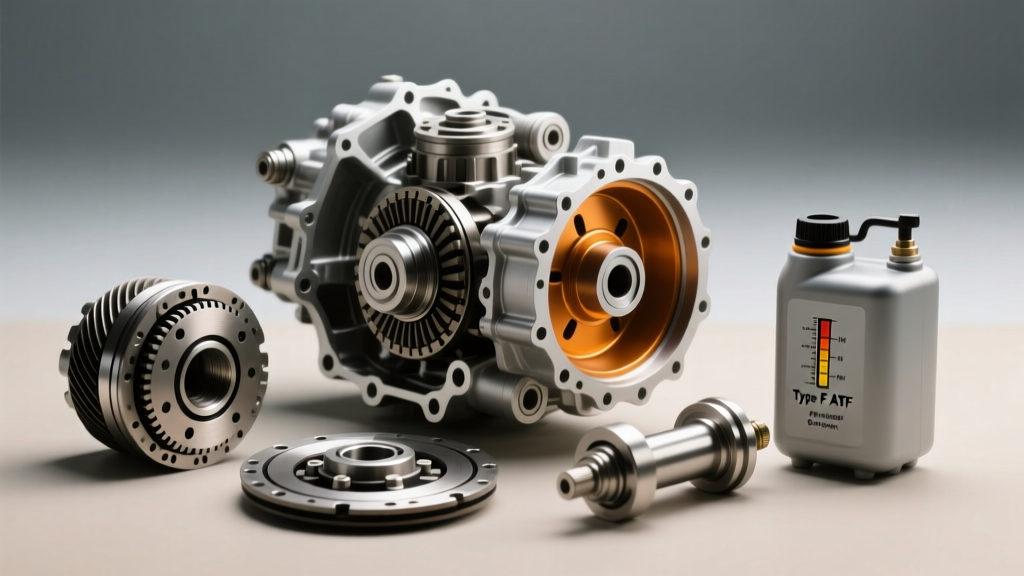
When restoring or maintaining classic American iron, particularly Ford vehicles from the 1960s through the early 1990s, you will inevitably encounter a specific lubrication requirement. This leads many enthusiasts and technicians to ask: what is type f automatic transmission fluid? Originally introduced by Ford in 1967 under the WSS-M2C33-F specification, Type F fluid was engineered for a very specific mechanical purpose. Unlike modern fluids that prioritize imperceptible shift quality and fuel economy, Type F was designed to provide maximum clutch holding power and rapid shift engagement.
Chemically, Type F is distinct because it contains zero friction modifiers. Modern fluids like Dexron VI or Mercon LV are packed with organic friction modifiers that allow clutch packs to slip slightly during engagement, creating a smooth, cushioned shift. Type F relies on a high static friction coefficient. When the hydraulic pressure applies the clutch packs or bands in a Type F-designed transmission, they lock up almost instantly. This results in the firm, positive, and sometimes harsh shifts that performance enthusiasts desire, but it also means that using the wrong fluid can lead to immediate mechanical failure.
Type F vs. Mercon/Dexron: The Friction Modifier Danger
Understanding the chemical difference is critical before checking your fluid levels or performing a service. If you introduce a friction-modified fluid (like standard Dexron) into a transmission designed for Type F, the clutch packs will slip excessively under load. This slippage generates immense heat, rapidly glazing the friction material and eventually burning out the bands and clutches. Conversely, if you put Type F into a later-model transmission requiring Mercon (which relies on friction modifiers for torque converter clutch lock-up), you will experience severe shift shudder, harsh engagements, and potential torque converter failure.
According to lubrication engineers and historical archives at Hemmings Motor News, the transition away from Type F began in the late 1970s and 1980s as consumer demand shifted toward luxury-grade, imperceptible shifting. However, for models equipped with the C4, C6, FMX, and early AOD transmissions, Type F remains the undisputed king of hydraulic actuation and clutch preservation.
Model-Specific Transmission Fluid Capacity Chart
Accurate fluid capacity data is essential. Overfilling a classic Ford transmission leads to aeration, where the rotating planetary gearsets whip the fluid into a foam. Foam is compressible, leading to delayed shifts, slipping, and burnt clutches. Underfilling causes pump cavitation and immediate starvation. Below is the definitive capacity guide for classic Ford automatic transmissions.
| Transmission Model | Production Years | Pan Drop / Service Fill | Dry Fill (Rebuild) | Recommended Filter P/N |
|---|---|---|---|---|
| Ford C4 (Dual-Range) | 1964–1981 | 4.0 - 5.0 Quarts | 8.5 - 9.0 Quarts | Motorcraft FT-29 |
| Ford C6 (Heavy Duty) | 1966–1996 | 5.0 - 6.0 Quarts | 10.0 - 11.0 Quarts | Motorcraft FT-30 |
| Ford FMX | 1968–1979 | 5.0 - 6.0 Quarts | 9.5 - 10.5 Quarts | Motorcraft FT-27 |
| Ford AOD (Early) | 1980–1993 | 5.0 - 6.0 Quarts | 11.0 - 12.5 Quarts | Motorcraft FT-114 |
| Ford E4OD (Early Trucks) | 1989–1998 | 6.0 - 7.0 Quarts | 14.0 - 15.0 Quarts | Motorcraft FT-128 |
Note: Capacities can vary slightly based on torque converter size and whether an auxiliary external cooler is installed. Always use the dipstick as the final authority.
Ford C4 and C6: The Workhorses
The C4 and C6 are legendary for their durability. When performing a standard pan-drop service on a C6, expect to drain roughly 5 to 6 quarts. The torque converter holds the remaining volume. When refilling, pour exactly 5 quarts of fresh Type F (such as Valvoline VV365 or Castrol Transmax) into the dipstick tube before starting the engine. This ensures the internal pump has immediate prime and prevents dry-start scoring on the front pump gears.
Ford AOD: The Overdrive Complication
The AOD (Automatic Overdrive) introduced in 1980 is notoriously sensitive to fluid levels and TV (Throttle Valve) cable pressure. The AOD pan is significantly deeper and holds more fluid. A critical detail for the AOD is the filter seal. The O-ring on the FT-114 filter must seat perfectly into the pump bore. If the O-ring is pinched or omitted, the pump will draw air alongside the fluid, resulting in catastrophic line pressure drops in 4th gear.
The Correct Type F Checking Procedure
Checking the fluid level in a classic Ford requires a different procedure than many modern or Chrysler vehicles. Follow these exact steps to ensure an accurate reading:
- Operating Temperature: The fluid must be at normal operating temperature (180°F - 200°F). Drive the vehicle for at least 15 miles, cycling through all gears to ensure the torque converter and cooler lines are fully purged of air and filled with fluid.
- Vehicle Position: Park the vehicle on a perfectly level surface. Leave the engine running. This is non-negotiable; if the engine is off, the torque converter drains back into the pan, giving a false high reading.
- Gear Selection: Unlike Chrysler products of the same era which required checking in Neutral, Ford C4, C6, and AOD transmissions must be checked with the gear selector firmly in PARK.
- The Wipe-and-Read: Pull the dipstick, wipe it with a lint-free shop towel, reinsert it fully, and pull it again. Read the level on the crosshatched 'HOT' zone. The fluid should be precisely at the top hole or upper edge of the crosshatch.
- Condition Assessment: Authentic Type F should smell slightly sweet or neutral. If it smells burnt (like toasted marshmallows), the clutches are slipping. If it is milky, coolant has breached the internal transmission cooler inside the radiator.
Torque Specifications and Pan Gasket Sealing
A massive point of failure during a fluid service is stripping the pan bolts or causing a leak due to improper gasket sealing. Classic Ford transmission pans are stamped steel and easily warped by over-tightening.
- Pan Bolt Torque: The standard 5/16-inch or 8mm pan bolts on a C4, C6, or AOD require only 8 to 10 ft-lbs (roughly 100 to 120 inch-lbs). Using a standard 1/2-inch drive torque wrench will almost certainly snap the bolt heads off or strip the aluminum case threads. Use a 1/4-inch drive inch-pound torque wrench.
- Filter Bolt Torque: The filter hold-down bolts (if equipped, as on some C6 applications) should be torqued to 6 to 8 ft-lbs.
- Gasket Selection: Avoid cheap cork gaskets which compress unevenly and leak. Use a high-quality reusable rubber or silicone-coated steel gasket (such as those from Fel-Pro or Moroso).
- The RTV Rule: Do not use RTV silicone sealant on the transmission pan gasket. Small beads of silicone can break off inside the pan, get sucked into the filter, and block the narrow hydraulic passages in the valve body, causing erratic shifting or total failure.
Sourcing Authentic Type F Fluid Today
As the automotive industry has moved toward ultra-low viscosity synthetic fluids, finding genuine Type F on the shelves of standard auto parts stores has become slightly more challenging, though it remains readily available through specialized suppliers and major lubricant manufacturers. When sourcing fluid, verify that the bottle explicitly states it meets the Ford WSS-M2C33-F specification. Major brands like Valvoline Global and Castrol continue to produce dedicated Type F formulations because the classic car restoration and heavy-duty racing markets demand it. Always purchase sealed, new containers; bulk fluid from open vats at quick-lube shops is highly susceptible to cross-contamination with friction-modified fluids.