The True Cost of Ignoring a Differential Whine
A high-pitched differential whine emanating from the rear or front axle at highway speeds is one of the most common, yet frequently ignored, automotive symptoms. While many drivers simply turn up the radio, that acoustic frequency is the sound of hypoid gear teeth micro-welding and bearings cavitating due to sheared gear oil. In the realm of preventive maintenance, addressing axle noise early is the difference between a $150 fluid service and a $2,500 ring-and-pinion rebuild.
The hypoid gear design used in nearly all modern automotive differentials relies on a sliding, rather than purely rolling, contact patch. This extreme sliding action requires gear oils heavily fortified with Extreme Pressure (EP) additives—typically zinc, phosphorus, and sulfur compounds. Over time, thermal cycling and mechanical shearing deplete these additives. When the fluid's viscosity drops below its engineered threshold, the boundary lubrication layer collapses, resulting in metal-on-metal contact that manifests as a distinct whine under load or deceleration.
2026 Differential Fluid Service Pricing Breakdown
Understanding the financial landscape of differential maintenance is crucial for budgeting your vehicle's long-term care. Pricing in 2026 reflects increased synthetic base stock costs and higher shop labor rates, but the preventive ROI remains undeniable. Below is a comprehensive breakdown of what you can expect to pay for a standard rear differential fluid service.
| Service Tier | Estimated Cost (Rear Solid Axle) | Estimated Cost (Front IFS/IRS) | What is Included |
|---|---|---|---|
| DIY Maintenance | $65 - $130 | $80 - $160 | Synthetic gear oil, RTV sealant or reusable gasket, brake cleaner, friction modifier (if required). |
| Independent Shop | $160 - $280 | $220 - $350 | Standard labor (1.0 - 1.5 hrs), bulk or bottled synthetic 75W-90/75W-140, basic gasket replacement. |
| Dealership Service | $275 - $450+ | $350 - $550+ | OEM-branded fluid, factory torque specs, multi-point inspection, high overhead labor rates ($160-$220/hr). |
Independent Rear Suspension (IRS) and Independent Front Suspension (IFS) differentials often cost more to service because they feature tighter packaging, requiring the removal of skid plates, exhaust heat shields, or crossmembers just to access the fill and drain plugs. Furthermore, late-model trucks with complex electronic locking differentials (such as the GM G80 or Ford's electronic locker) require meticulous care to avoid damaging internal wiring harnesses or position sensors during the drain-and-fill process.
Fluid Selection: Viscosity, Additives, and Pricing
Not all gear oils are created equal, and choosing the wrong viscosity is a primary catalyst for differential whine. The most common viscosities are 75W-90 and 75W-140. While 75W-90 is standard for daily-driven passenger vehicles and light-duty trucks, 75W-140 is heavily recommended for vehicles that tow, haul, or see sustained high-speed highway use, as it resists thermal thinning far better.
Here is a look at top-tier synthetic gear oils and their approximate 2026 retail pricing per quart:
- Mobil 1 Synthetic Gear Lubricant 75W-90 (Part #104361): ~$14 - $18 per quart. An excellent, widely available baseline synthetic that meets most OEM API GL-5 specifications.
- Red Line 75W-90 NS / 75W-140 Gear Oil: ~$28 - $34 per quart. Formulated with polyol ester base stocks, Red Line offers superior shear stability and film strength, making it a favorite for heavy-duty towing applications to prevent whine under high thermal loads.
- Amsoil Severe Gear 75W-90: ~$22 - $26 per quart. Known for high zinc and phosphorus content, providing exceptional protection for heavily loaded hypoid gears.
- OEM Fluids (e.g., Motorcraft, Mopar, ACDelco): ~$18 - $25 per quart. Required if your vehicle is under warranty or if the manufacturer specifies a proprietary friction modifier blend.
The Hidden Variables: Gaskets, RTV, and Friction Modifiers
When calculating your differential fluid cost, the oil itself is only part of the equation. Proper sealing and clutch-pack management are vital to a whine-free operation.
Sealing the Housing
Many modern differentials do not use a traditional cork or paper gasket; instead, they rely on a bead of RTV silicone. Using the wrong RTV can lead to leaks, low fluid levels, and subsequent gear whine. Permatex Ultra Black (Part #81180) or The Right Stuff are industry standards, costing around $10 to $18 per tube. For those who prefer a cleaner, reusable solution, LubeLocker manufactures elastomer-coated steel gaskets (e.g., Part #LL-10 for a Dana 44) that cost roughly $35 to $45 but eliminate curing times and RTV squeeze-out that can clog oil pickup tubes.
Friction Modifiers for Limited-Slip Differentials
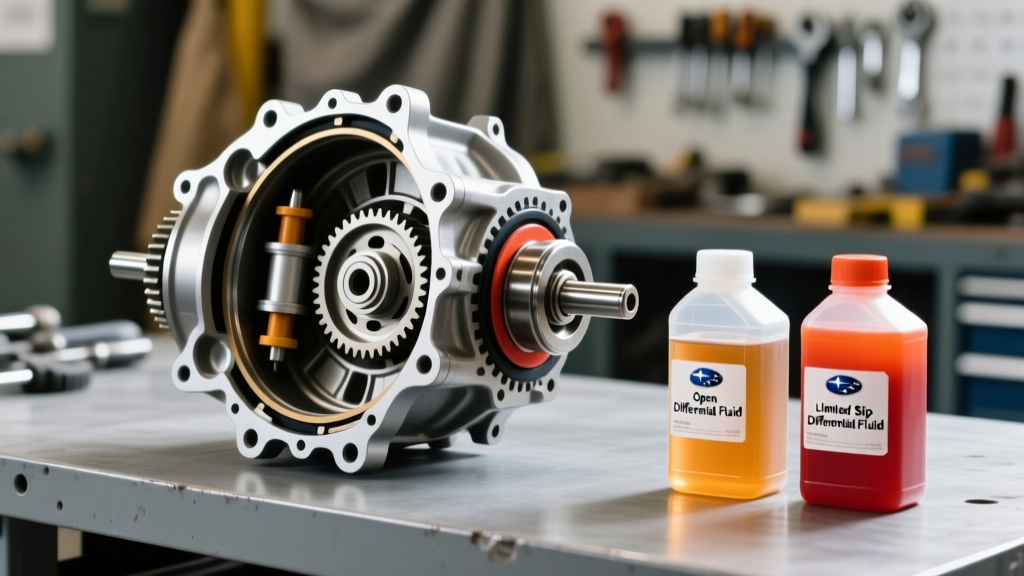
If your axle houses a clutch-type limited-slip differential (LSD), such as the Ford 8.8-inch Traction-Lok or Auburn Gear cones, you must add a friction modifier. Failing to do so will result in 'chatter' during low-speed turns, which quickly degrades the clutches and alters the harmonic resonance of the axle, contributing to a whining noise. A bottle of Motorcraft XL-3 Friction Modifier costs about $12 to $15. Note that gear-driven LSDs, like the Eaton Truetrac or Torsen, do not require friction modifiers.
Pro-Tip: When performing a DIY fluid service, always remove the fill plug before you remove the drain plug or drop the cover. There is nothing worse than draining your differential only to discover the fill plug is seized or stripped, leaving your vehicle immobile.
Preventive Maintenance: Torque Specs and Service Intervals
Over-torquing differential cover bolts is a rookie mistake that warps the stamped steel or cast aluminum cover, leading to micro-leaks. As fluid seeps out over thousands of miles, the gear oil level drops below the pinion bearing centerline, causing cavitation and a screaming differential whine. Always use a calibrated inch-pound or low-range foot-pound torque wrench.
| Axle Model | Cover Bolt Torque Spec | Fill/Drain Plug Torque | Fluid Capacity (Approx.) |
|---|---|---|---|
| Dana 44 (Jeep/Truck) | 30 - 35 lb-ft | 25 - 30 lb-ft | 2.0 - 2.5 Quarts |
| GM 8.6' 10-Bolt | 25 lb-ft | 20 - 25 lb-ft | 2.1 Quarts |
| Ford 8.8' Super 8.8 | 33 lb-ft | 25 - 30 lb-ft | 2.5 - 3.0 Quarts |
| Chrysler 9.25' AAM | 45 lb-ft | 30 - 35 lb-ft | 3.5 Quarts |
Service Intervals: For standard highway driving, most manufacturers recommend differential fluid changes every 50,000 to 60,000 miles. However, if your vehicle falls under 'Severe Duty'—which includes frequent towing, off-roading, or driving in extreme ambient temperatures—that interval should be halved to 25,000 to 30,000 miles to prevent the thermal breakdown that causes whine.
Diagnosing Whine Post-Service
What happens if you invest in the service, use top-tier synthetic fluid, and the differential whine persists? If the noise remains after a fluid change, the damage has likely progressed beyond preventive maintenance. Fresh gear oil cannot reverse pitted bearing races or spalled gear teeth. A whine that changes pitch exactly with vehicle speed (rather than engine RPM) usually points to worn pinion or carrier bearings. A whine that occurs only under load (acceleration) points to the drive side of the ring and pinion gears, while a whine on deceleration indicates wear on the coast side. In these scenarios, a full teardown, gear pattern analysis, and bearing preload adjustment by a drivetrain specialist are required.
Ultimately, spending $150 today on high-quality synthetic gear oil and proper sealing hardware is the most cost-effective insurance policy against the catastrophic failure and deafening whine of a neglected hypoid gearset.
For further reading on synthetic lubricant shear stability, refer to the Red Line Oil Gear Lubricant technical data and Mobil 1 Synthetic Gear Lubricant specifications.