The Drivetrain Misconception: Gears vs. Hydraulics
When most drivers and even some entry-level mechanics hear the word "differential," they immediately picture the heavy cast-iron or aluminum housing on the rear axle containing ring and pinion gears. However, in the realm of modern active All-Wheel Drive (AWD) and Four-Wheel Drive (4WD) systems, the term takes on a second, equally critical meaning related to fluid dynamics. Specifically, the differential pressure regulator is an electro-hydraulic valve that serves as the vital communication link between your transfer case and your axle differential.
For beginners and seasoned enthusiasts alike, understanding how hydraulic pressure bridges the gap between the front and rear axles is essential for diagnosing drivetrain bind, torque split failures, and premature clutch wear. In this guide, we will decode the transfer case and differential relationship, and explain exactly how a differential pressure regulator dictates where your engine's power ultimately meets the pavement.
The Transfer Case and Differential Relationship
To understand the regulator, we must first map the power flow. In a traditional rear-wheel-drive-based 4WD truck (like a Chevy Silverado or Jeep Wrangler), the transfer case is a distinct gear-driven unit bolted to the back of the transmission. Its job is to split torque between the front and rear driveshafts. The differentials (front and rear) then take that rotational energy and split it between the left and right wheels, allowing them to rotate at different speeds around corners.
However, in modern transverse-engine crossovers and performance AWD cars (such as the Ford Escape, VW Golf R, or Audi S3), the architecture is different. The "transfer case" is often a Power Transfer Unit (PTU) attached directly to the front transaxle. The PTU sends power via a driveshaft to the rear axle. But here is the catch: the driveshaft is always spinning when the vehicle is moving. To prevent the rear wheels from binding or pushing the car in dry corners, an active AWD coupling is placed either inside the rear differential housing or directly in front of it. This coupling uses a multi-plate clutch pack to engage or disengage the rear differential from the driveshaft.
This is where the hydraulic relationship begins. The clutch pack requires precise, variable clamping force to seamlessly transfer torque from the PTU (transfer case) to the rear differential without shocking the driveline.
What is a Differential Pressure Regulator in AWD Systems?
In an active AWD coupling (like the famous Haldex system or BorgWarner's Twin-Clutch setups), a small electric pump generates base hydraulic pressure using specialized gear oil. However, raw pump pressure is too aggressive and binary for smooth torque vectoring.
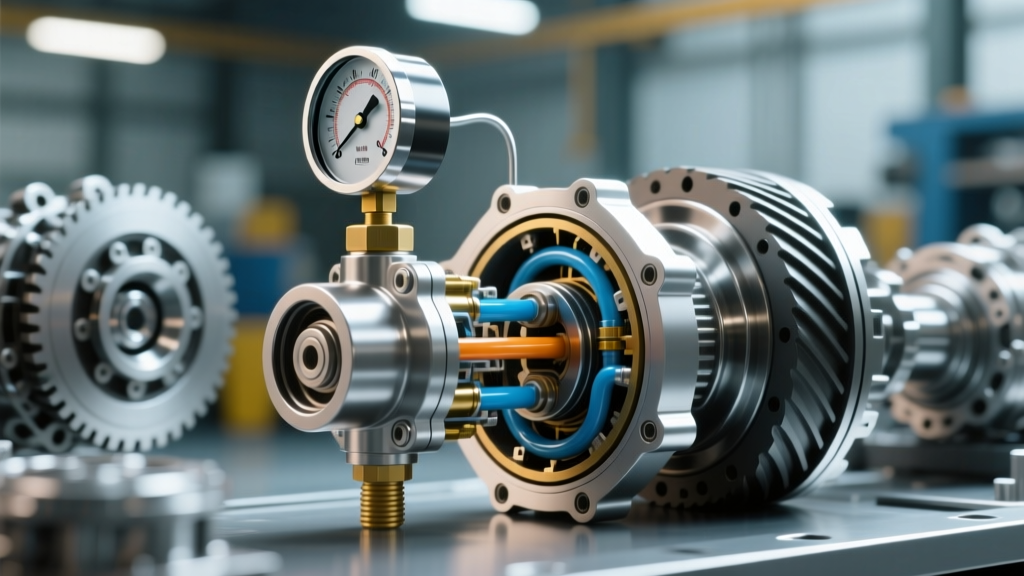
Enter the differential pressure regulator. In fluid power systems, a differential pressure regulator is designed to maintain a specific pressure difference between two circuits—in this case, the high-pressure supply from the pump and the variable apply pressure sent to the clutch pack piston. The vehicle's Drivetrain Control Module (DCM) sends a Pulse Width Modulated (PWM) electrical signal to the regulator's solenoid.
- Zero PWM Signal: The regulator vents the clutch apply pressure, resulting in 0% torque transfer to the rear differential (FWD mode).
- Partial PWM Signal: The regulator maintains a precise pressure differential, lightly squeezing the clutch pack to send 10% to 50% of torque rearward for cornering stability or light slip.
- Max PWM Signal: The regulator allows maximum pump pressure (often exceeding 500 PSI) to fully lock the clutch pack, creating a 50/50 torque split between the transfer case and the rear differential for deep snow or mud.
Without this regulator, the relationship between the transfer case and the differential would be violently abrupt, causing tire chirping, driveline wind-up, and catastrophic wear to the ring and pinion gears.
Comparing Active AWD Coupling Systems
Not all transfer case-to-differential links are created equal. Below is a comparison of common active AWD systems, highlighting how their pressure regulators and fluid requirements differ.
| AWD System Type | Typical Application | Fluid Specification | Max Clutch Pressure | Regulator Location |
|---|---|---|---|---|
| Haldex Gen 5 | VW Golf R, Audi S3, Lamborghini Huracan | VW G 060 175 A2 (0.6L - 0.8L) | ~45 Bar (650 PSI) | Integrated in rear diff cover |
| BorgWarner Active Torque Coupling | Ford Escape, Mazda CX-5 | Motorcraft XL-12 or SAF-XJ 75W-140 | ~35 Bar (500 PSI) | External to rear diff housing |
| Dana / Spicer E-Locker & Active | Jeep Cherokee (AD1/AD2), RAM TRX | API GL-5 75W-85 / 75W-140 | N/A (Mechanical/Pneumatic) | N/A (Uses solenoid shift forks) |
| ZF Active Kinematics | BMW xDrive (F-Series/G-Series) | DTF 1 Transfer Case Fluid | ~50 Bar (725 PSI) | Inside the main Transfer Case |
Source data aggregated from BorgWarner AWD Systems and SAE International Technical Papers on drivetrain torque vectoring.
Maintenance: Fluid, Filters, and Torque Specs
The differential pressure regulator is incredibly sensitive to fluid viscosity and contamination. Because the regulator relies on tight-tolerance spool valves and micro-screens to manage the pressure differential between the pump and the clutch pack, degraded fluid is the number one cause of transfer case-to-differential communication failure.
The Hidden Strainer Screen Issue
In systems like the Haldex Gen 5, there is no traditional inline filter. Instead, a small plastic strainer screen sits over the pump intake inside the rear differential housing. Over time, the friction material from the clutch pack sheds microscopic particles. These particles mix with oxidized gear oil to form a sludge that coats the strainer. When the pump starves for fluid, the differential pressure regulator cannot build the necessary pressure differential to engage the clutches. The vehicle defaults to FWD, and the driver may never notice until they are stuck in the snow.
Service Intervals and Specifications
While many manufacturers label these rear differential/PTU fluids as "lifetime," real-world drivetrain experts universally recommend servicing them to protect the pressure regulator and clutch packs.
- Service Interval: Every 20,000 to 30,000 miles for severe use (towing, track days, snow), or 40,000 miles for normal commuting.
- PTU (Transfer Case) Torque Spec: Most Ford/GM PTU drain and fill plugs require 35 Nm (26 lb-ft). Always use a new crush washer.
- Rear AWD Diff Torque Spec: Haldex Gen 5 drain plugs typically torque to 15 Nm (11 lb-ft), while the fill plug requires 40 Nm (30 lb-ft). Be careful not to strip the soft aluminum threads.
- Fluid Cost: OEM specialized fluids (like VW G 060 175 A2) cost roughly $30 to $45 per liter, while a complete PTU and rear diff service at a dealership can range from $250 to $450.
Diagnosing Pressure Regulator Failures
How do you know if the relationship between your transfer case and differential has been compromised by a failing differential pressure regulator? Look for these specific symptoms:
- Cornering Bind (Chatter): If the regulator spool valve sticks in the "open" position, it maintains a constant pressure differential across the clutch pack. This means the rear differential is partially locked to the transfer case even during tight, dry parking lot turns. You will feel a hopping or binding sensation from the rear axle.
- FWD Limp Mode (Traction Loss): If the regulator's internal solenoid fails electrically, or the intake screen clogs, the system cannot generate clamping force. The transfer case will continue to spin the driveshaft, but the rear differential will receive zero torque. A scan tool will usually reveal a "Clutch Pressure Too Low" or "AWD System Fault" code.
- Whining from the Rear Axle: A failing electric pump (often paired with the regulator assembly) will whine loudly as it cavitates due to low fluid levels or a blocked pickup screen.
Summary: Respecting the Hydraulic Link
The relationship between the transfer case and the differential is no longer just a matter of solid steel gears and mechanical linkages. In modern vehicles, torque is managed by fluid dynamics. The differential pressure regulator acts as the brain of the rear axle, interpreting digital commands from the ECU and translating them into physical hydraulic force. By understanding this component, and adhering to strict, frequent fluid change intervals with the correct OEM gear oil, you can ensure seamless torque split, protect your expensive ring and pinion gears, and maintain the all-weather safety your AWD system was designed to provide.