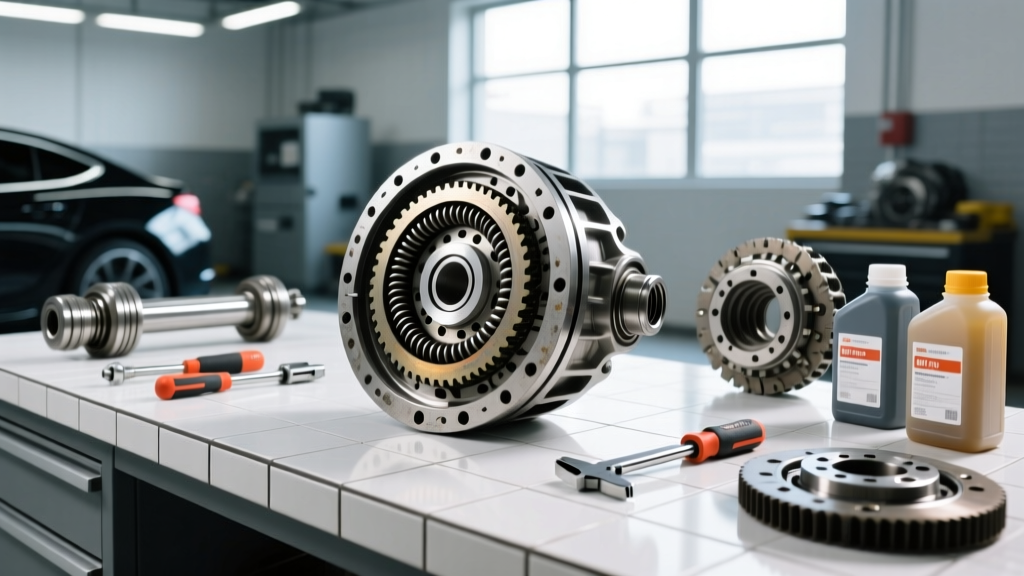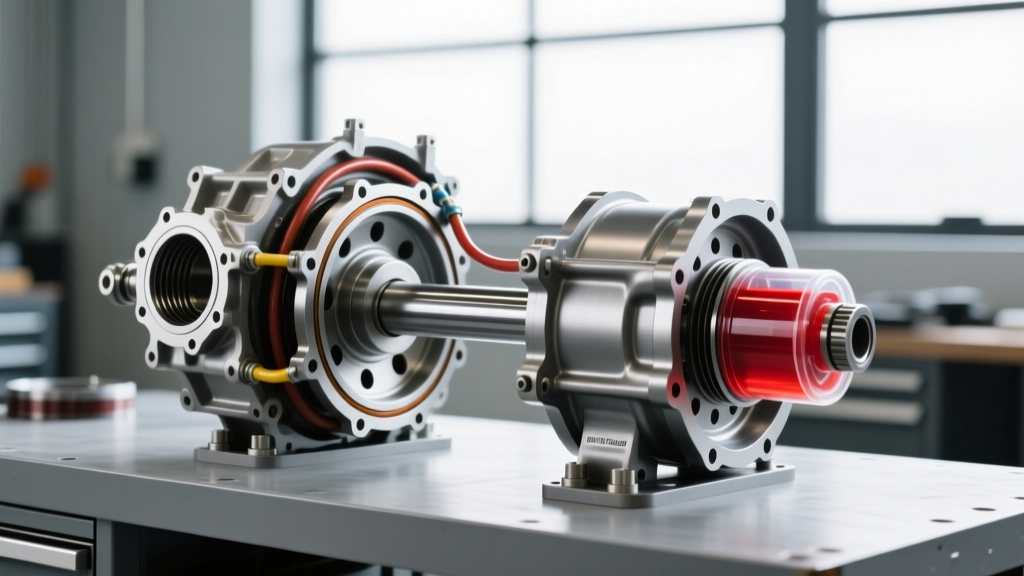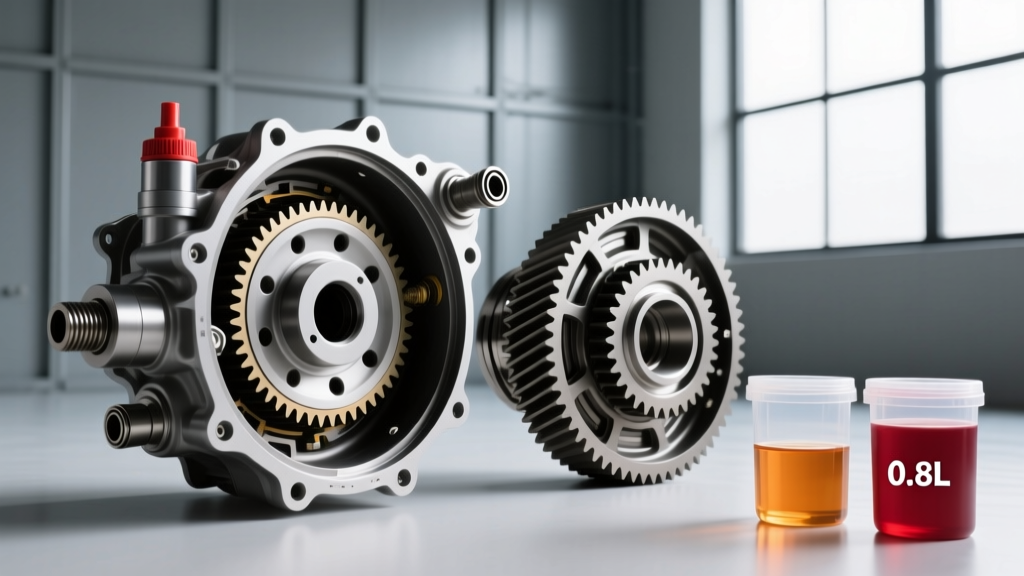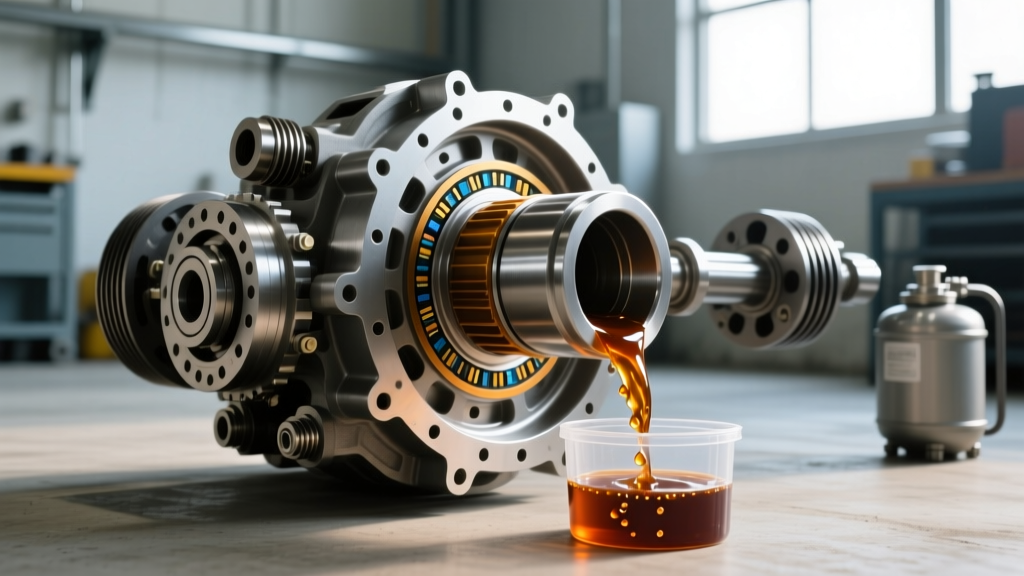
When most enthusiasts think of differential maintenance, they picture a standard passenger vehicle, a drain pan, and a simple breather cap. However, in the realm of heavy-duty commercial trucks, advanced off-highway vehicles, and severe-duty fleet applications, axle housings are equipped with external filtration systems monitored by a differential pressure cell (often referred to as a DP cell or delta-P sensor). Understanding how this sensor dictates your maintenance schedule is critical for preventing catastrophic ring and pinion failure.
This step-by-step how-to guide will walk you through the exact differential fluid change procedure and intervals for heavy-duty axles (such as the Dana Spicer S170 and Meritor MT-40-14X), while explaining how to interpret DP cell readings to optimize your drivetrain health in 2026.
What is a Differential Pressure Cell in an Axle System?
In standard light-duty axles (like the Ford 10.5 or GM 11.5), gear oil is typically 'splash-lubricated' and filtered only by a simple internal magnet. Heavy-duty commercial axles, however, utilize external spin-on filters and hydraulic cooler loops. A differential pressure cell is an instrumentation sensor mounted across the filter housing. It measures the pressure drop (delta-P) between the dirty inlet side and the clean outlet side of the gear oil filter.
- Normal Operation: Clean 75W-90 or 80W-140 gear oil flows freely. The DP cell reads a low differential pressure (typically 2 to 8 PSI).
- Filter Loading: As metallic particulates from the ring gear, pinion, and wheel bearings accumulate in the filter media, flow restriction increases. The DP cell registers a rising delta-P.
- Bypass Threshold: If the differential pressure cell detects a drop exceeding 15 to 25 PSI (depending on the axle manufacturer), it indicates the filter is clogged and the internal bypass valve has opened. Unfiltered, contaminated oil is now circulating through the differential.
Expert Insight: Never ignore a DP cell fault code or warning light. Running a commercial axle with a bypassing filter allows abrasive metallic slurry to score the pinion bearings and accelerate gear tooth pitting, leading to a $5,000+ axle rebuild.
Differential Fluid Change Intervals: Time vs. Sensor Data
Historically, fleet managers relied on strict mileage intervals. Today, condition-based maintenance using DP cell data and fluid sampling is the 2026 industry standard. Below is a comparison of maintenance intervals based on vehicle class and sensor integration.
| Axle Class / Model | Filtration Type | Standard Interval | DP Cell Trigger / Action | Fluid Capacity |
|---|---|---|---|---|
| Light-Duty (Ford 10.5) | Internal Magnet / Splash | 50,000 - 100,000 Miles | N/A (No DP Cell) | 3.0 - 3.5 Quarts |
| Medium-Duty (Dana S110) | External Spin-On | 100,000 Miles / 2 Years | 15 PSI Delta-P (Replace Filter) | 12 - 16 Pints |
| Heavy-Duty (Meritor MT-40-14X) | External Spin-On w/ Cooler | 250,000 Miles / 3 Years | 20 PSI Delta-P (Flush & Replace) | 28 - 34 Pints |
Tools and Materials Required
Before beginning the procedure, ensure you have the correct OEM or high-quality aftermarket materials. Using the wrong viscosity can trigger false DP cell readings due to cold-flow restrictions.
Parts & Fluids
- Gear Oil: Mobil Delvac Synthetic Gear Oil 75W-90 (API GL-5) or equivalent synthetic. Heavy-duty axles require extreme pressure (EP) additives to protect the hypoid gear sliding action.
- Filter: Baldwin B7578 or Donaldson P551313 (Heavy-duty synthetic media gear filter).
- Cleaning Supplies: Brake cleaner, lint-free shop towels, and a magnetic drain plug wand.
Specialty Tools
- Pneumatic or manual fluid transfer pump (capable of pumping high-viscosity 75W-90 gear oil).
- Torque wrench (1/2-inch drive, calibrated).
- DP Cell line bleeder kit (or 8mm/10mm wrenches for sensor petcocks).
- 3/4-inch NPT square drive or hex socket for axle fill/drain plugs.
Step-by-Step Differential Fluid Change Procedure
This procedure covers a full fluid and filter service on a heavy-duty axle equipped with an external filtration loop and differential pressure cell.
Step 1: Preparation and Sensor Isolation
Park the vehicle on a level surface and chock the wheels. If the axle is equipped with an active electronic DP cell tied to the chassis ECU, use your diagnostic scan tool to clear any pending delta-P codes and place the filtration monitoring system into 'Service Mode' to prevent false alarms during the bleed process. Wipe down the exterior of the filter housing and the axle fill/drain plugs to prevent environmental contamination.
Step 2: Remove the Fill Plug First
Critical Rule: Always remove the axle housing fill plug before removing the drain plug or spinning off the filter. If the fill plug is seized or stripped, you will be left with an empty axle and no way to refill it.
Torque Spec Note: Dana Spicer 3/4-inch NPT fill plugs typically require 35 to 45 lb-ft (47 to 61 Nm) to break loose. Apply penetrating oil if necessary.
Step 3: Drain the Fluid and Replace the Filter
- Place a high-capacity drain pan (minimum 5-gallon) under the axle and external filter housing.
- Remove the drain plug and allow the 75W-90 gear oil to evacuate. Inspect the magnetic plug for excessive metallic fuzz. Fine gray paste is normal; large chips or bronze-colored flakes indicate bearing or thrust washer failure.
- Using a filter strap wrench, remove the old spin-on filter. Expect up to a quart of oil to spill from the filter mount.
- Clean the filter mating surface with brake cleaner. Apply a thin film of clean gear oil to the new filter's rubber gasket.
- Pre-fill the new filter (e.g., Baldwin B7578) with fresh 75W-90 synthetic gear oil. This prevents the axle pump from running dry and protects the bearings during initial startup.
- Spin the new filter on by hand until the gasket contacts the housing, then tighten an additional 3/4 to 1 turn per manufacturer specifications.
Step 4: Reinstall Plugs and Refill the Axle
- Reinstall the axle drain plug. Torque to 35-45 lb-ft. Do not use Teflon tape on NPT plugs if the manufacturer specifies a liquid thread sealant; if using sealant, apply sparingly to avoid contaminating the gear oil.
- Using your transfer pump, fill the axle housing through the fill hole with fresh synthetic gear oil.
- Continue pumping until the fluid level reaches the bottom edge of the fill hole and begins to weep out.
Pro-Tip: If the vehicle is on an incline, the fluid level will be inaccurate. The vehicle must be perfectly level to ensure the pinion bearing receives adequate splash lubrication. - Reinstall and torque the fill plug to 35-45 lb-ft.
Step 5: Bleeding the Differential Pressure Cell Lines
This step is unique to axles with external filtration loops. The sensor lines connected to the DP cell will trap air when the filter is removed. If not bled, the trapped air will compress, causing the DP cell to read erratic, artificially high pressure differentials, triggering a false 'Filter Clogged' warning.
- Locate the bleeder valves on the DP cell sensor manifold (usually small 8mm or 10mm hex screws).
- Start the engine and engage the PTO or axle lube pump (if equipped with an independent electric pump). For standard road-going axles, safely raise the drive wheels and run the driveline in gear at a low RPM to circulate oil.
- Crack open the high-pressure and low-pressure bleeder valves on the DP cell until a steady stream of oil (free of air bubbles) emerges.
- Close the valves, wipe away spills, and verify that the dashboard delta-P gauge or diagnostic readout returns to the normal 2-8 PSI range.
Troubleshooting Common DP Cell and Axle Issues
Even after a meticulous fluid change, issues can arise. Here is how to diagnose them:
- High Delta-P Immediately After Service: This is almost always caused by air trapped in the sensor lines (failure to perform Step 5) or the use of an overly viscous fluid (e.g., using 80W-140 in an axle designed for 75W-90) causing cold-flow restriction through the new filter media.
- Emulsified (Milky) Gear Oil: If the drained fluid looks like a chocolate milkshake, water has breached the axle. In heavy-duty applications, this often occurs via a failed axle shaft seal or a compromised breather vent during deep water fording. The DP cell may read low, but the fluid's lubricity is destroyed. A complete flush is mandatory.
- Sensor Fouling: Over time, metallic sludge can clog the tiny capillary tubes connecting the filter housing to the differential pressure cell. If the sensor reads a flat 0 PSI even with a known clogged filter, the sensor lines must be removed and flushed with solvent.
Cost Breakdown: Dealership vs. DIY
Maintaining a heavy-duty axle with an external filtration system is more expensive than a standard passenger car. As of 2026, synthetic 75W-90 gear oil costs approximately $12 to $18 per quart. A heavy-duty axle requiring 18 quarts will cost over $250 in fluid alone.
- Dealership / Fleet Service Center: $450 - $700 (Includes synthetic fluid, OEM filter, DP cell diagnostic reset, and fluid sampling).
- Independent Heavy-Duty Shop: $300 - $500.
- DIY / Owner-Operator: $200 - $280 (Cost of bulk synthetic gear oil, aftermarket filter, and disposal fees).
Final Thoughts on Drivetrain Longevity
While the average consumer will never encounter a differential pressure cell on their daily driver, understanding its role in heavy-duty and commercial applications highlights the importance of condition-based maintenance. Whether you are servicing a Dana Spicer S170 on a Class 8 truck or simply changing the 75W-90 in your off-road SUV's locking differential, adhering to precise torque specs, using the correct API GL-5 lubricants, and respecting filtration limits are the keys to maximizing axle lifespan. For further technical specifications on commercial axle tolerances and filtration bypass thresholds, consult the engineering resources provided by Dana Incorporated and the industrial lubricant data sheets from Mobil Industrial.