The Intersection of Heavy-Duty Towing and Axle Maintenance
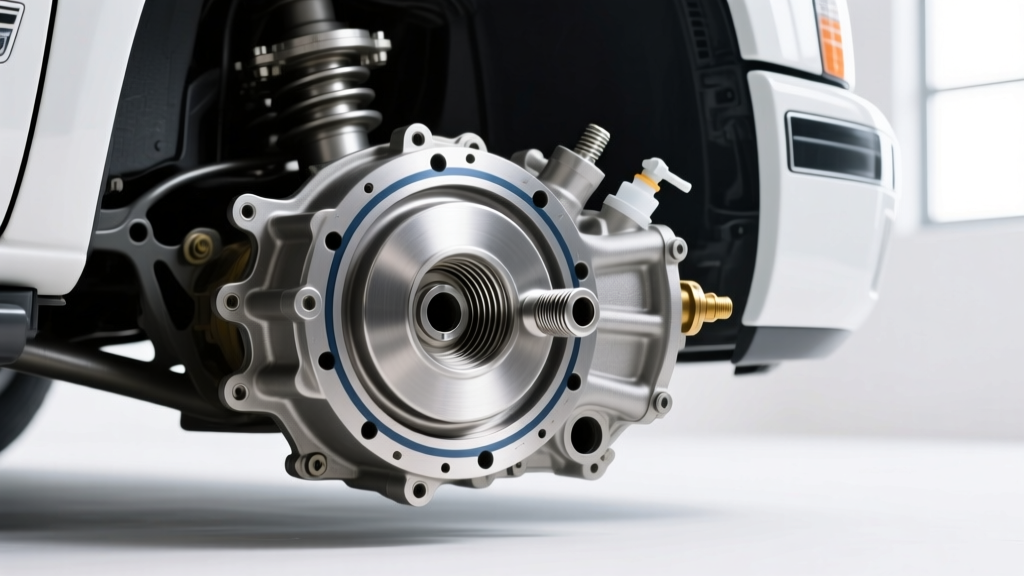
As of 2026, the 2020 Ram 2500 remains a dominant force in the heavy-duty truck segment, largely thanks to the robust American Axle & Manufacturing (AAM) 11.5-inch and 12.0-inch rear differentials. However, hauling max-payload fifth-wheel trailers and subjecting the drivetrain to high-stress towing generates immense heat and rotational force. Over time, this stress degrades the pinion and carrier bearings, leading to micro-deflections that destroy the axle seals. When a pinion seal begins to weep gear oil onto the driveway, a simple fluid top-off is never the answer. A complete seal and bearing inspection is mandatory.
Executing this repair requires precision, specialized tooling, and a strict adherence to factory specifications. Furthermore, because this job necessitates draining the housing, knowing the exact 2020 Ram 2500 rear differential fluid capacity is a critical logistical step before you ever put a wrench to the differential cover.
Identifying Your Axle and Fluid Specifications
Before ordering parts, you must verify which AAM axle is bolted under your Ram 2500. The standard heavy-duty setup is the AAM 11.5 (featuring a 14-bolt cover), while trucks equipped with the Max Tow package or specific dual-rear-wheel (DRW) configurations may feature the massive AAM 12.0. The fluid volumes and torque specifications differ slightly between the two.
| Axle Model | Ring Gear Size | Cover Bolts | 2020 Ram 2500 Rear Differential Fluid Capacity | OEM Fluid Recommendation |
|---|---|---|---|---|
| AAM 11.5 | 11.5 inches | 14 | 3.45 Quarts (3.27 Liters) | Mopar 75W-85 Synthetic (P/N 68218655AB) |
| AAM 12.0 | 12.0 inches | 14 | 3.80 Quarts (3.60 Liters) | Mopar 75W-140 Synthetic (P/N 68218657AB) |
Note: If your truck is equipped with an aftermarket differential cover (such as an AFE or Banks Power deep pan), your fluid capacity will increase by 1.5 to 2.5 quarts. Always measure by the fill-hole level, not just by volume.
Why Seal Failures Indicate Bearing Wear
Many DIY mechanics view a leaking pinion seal as a simple rubber degradation issue. In the AAM 11.5, this is rarely the case. The pinion seal rides on the machined surface of the pinion flange. If the pinion bearings (specifically the outer pinion bearing) develop wear or spalling, the pinion gear develops axial and radial play. This microscopic wobble acts like a rasp against the sealing lip of the rubber seal, tearing it from the inside out.
If you replace the seal without checking the bearing preload and rotational smoothness, the new seal will fail within 2,000 miles. According to data from Timken Automotive Aftermarket, over 60% of premature seal failures in heavy-duty solid axles are directly traceable to improper pinion bearing preload or pitted bearing races.
Sourcing the Correct OEM and Aftermarket Components
Do not compromise on bearing and seal metallurgy for a truck that tows. The AAM 11.5 requires high-tensile strength components to handle the torque output of the 6.7L Cummins turbodiesel.
- Pinion Seal: National 2043, Timken 2043, or SKF 2043. (Avoid unbranded white-box seals; the rubber compound often lacks the high-temperature resilience needed for 200°F+ gear oil).
- Pinion Flange Nut: Mopar P/N 05207056AB. The AAM 11.5 uses a prevailing torque nut. Once removed, it should ideally be replaced to ensure proper clamping force during reassembly.
- Carrier Bearings: Timken SET 1031 (Carrier) and Timken SET 1032 (Pinion) if a full rebuild is required due to water intrusion or severe spalling.
Step-by-Step Pinion Seal Replacement Procedure
This procedure assumes the bearings are in good condition and only the seal requires replacement. If you detect rotational notchiness or gear whine, a full teardown and shim recalibration is required.
1. Draining and Prepping the Housing
Place a high-capacity drain pan beneath the axle. Remove the 14 cover bolts using a 13mm or 1/2-inch socket (depending on the specific bolt head variation used in the 2020 model year). Allow the fluid to drain completely. Clean the mating surface of the axle housing and the differential cover with brake cleaner. Inspect the RTV silicone bead pattern on the old gasket; if you see metallic glitter suspended in the oil, stop immediately—the bearings are disintegrating.
2. Marking and Removing the Pinion Flange
Before removing the pinion nut, use a bright yellow paint pen to draw a reference line across the pinion nut, the flange, and the pinion shaft threads. This mark is your holy grail for reassembly. Use a heavy-duty flange holding tool (such as OTC 71000) and a 1/2-inch drive torque wrench to break the pinion nut loose. Remove the nut and slide the pinion flange off the splines using a three-jaw gear puller. Never hammer the flange off, as this will shock-load and brinell the carrier bearings.
3. Seal Extraction and Installation
Pry the old seal out using a dedicated seal puller to avoid gouging the aluminum or cast-iron seal bore of the AAM housing. Clean the bore thoroughly. Apply a thin film of fresh gear oil to the lip of the new Timken 2043 seal. Use a seal driver tool that matches the outer diameter of the seal to press it in perfectly square. Driving it in crooked will bind the pinion shaft and cause an immediate leak.
4. Reinstalling the Flange and Setting Preload
Slide the flange back onto the splines. Thread the new prevailing torque pinion nut onto the shaft. Here is where the Ram Trucks Owner's Manuals and factory service guides are unequivocal: Do not use an impact wrench to tighten the pinion nut.
Expert Warning: Using an impact gun to zip the pinion nut down to your reference mark will almost certainly over-crush the internal crush sleeve. Once a crush sleeve is over-compressed, the only way to fix the resulting excessive bearing preload is to completely disassemble the pinion gear, replace the crush sleeve, and start over.
Instead, use a long-breaker bar and a torque wrench, tightening in 5 lb-ft increments while constantly checking your paint reference mark. Stop exactly when the mark aligns.
5. Verifying Rotational Preload
Wrap a tool around the pinion flange or use a specialized inch-pound torque wrench on the pinion nut to measure rotational drag. For used bearings, the target rotational preload is typically between 10 and 15 inch-pounds. If the drag is below 10 in-lbs, the bearings are too loose and will howl. If it exceeds 25 in-lbs, the crush sleeve is over-compressed, and bearing failure is imminent.
Refilling: Matching Capacity to the Rebuild
With the seal replaced and the cover resealed using high-temp RTV silicone (allow 2 hours to cure), it is time to refill the housing. This is where confirming the 2020 Ram 2500 rear differential fluid capacity ensures you purchase enough gear oil before starting the job. For the standard AAM 11.5, you will need approximately 3.5 quarts of 75W-85 full synthetic gear oil.
Remove the fill plug (located on the upper front face of the axle tube). Pump the gear oil into the housing until it reaches the exact bottom edge of the fill hole threads. Reinstall the fill plug and torque it to 25 lb-ft. The fill plug must always be removed before the drain plug during any service to ensure you aren't left with an empty axle and a stuck fill plug.
Post-Rebuild Break-In and Monitoring
After reassembly, the differential requires a break-in period. Drive the truck for 15 to 20 miles at highway speeds to bring the gear oil up to operating temperature, allowing it to flow into the outer pinion bearing cavity. Park the truck on a level surface and let it sit for an hour. Re-check the area around the pinion flange for weeping. It is normal for the differential to run slightly warmer than usual for the first 500 miles as the new seal lip mates to the flange surface, but it should not be hot to the touch. By adhering to these precise tolerances and fluid specifications, your AAM 11.5 axle will reliably handle heavy towing for another 100,000 miles.