The Real Cost of Differential Neglect vs. Prevention
When automotive enthusiasts and fleet managers evaluate drivetrain maintenance, the cost of differential service is often unfairly scrutinized against the price of an engine oil change. In 2026, a standard rear differential fluid service costs between $60 and $130 depending on the axle and fluid choice. Contrast this with the cost of differential failure: replacing a shattered ring and pinion gear set, carrier bearings, and axle seals on a GM 8.6-inch 10-bolt or Ford 9.75-inch axle routinely invoices between $1,600 and $2,800 in parts and machine shop labor.
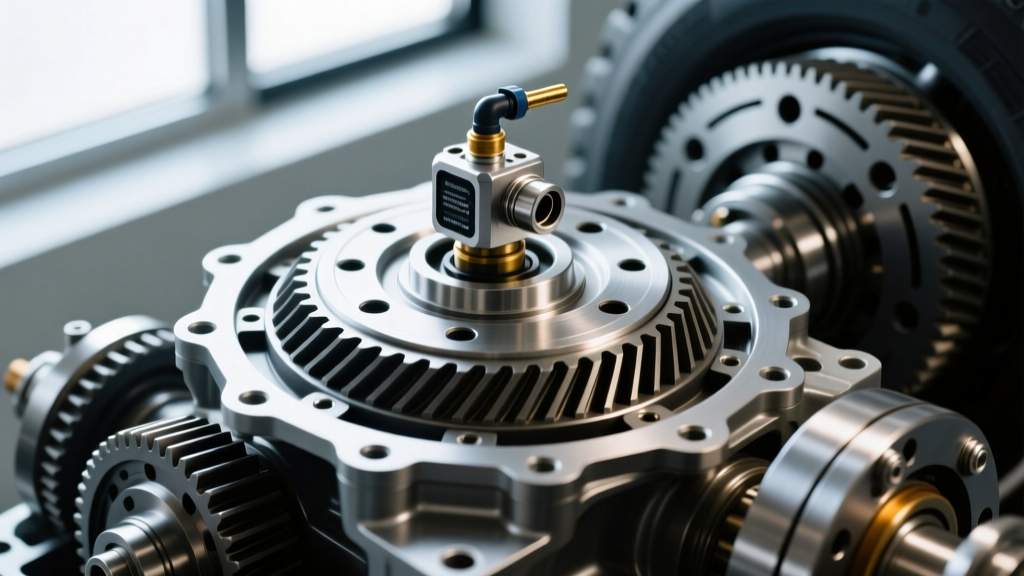
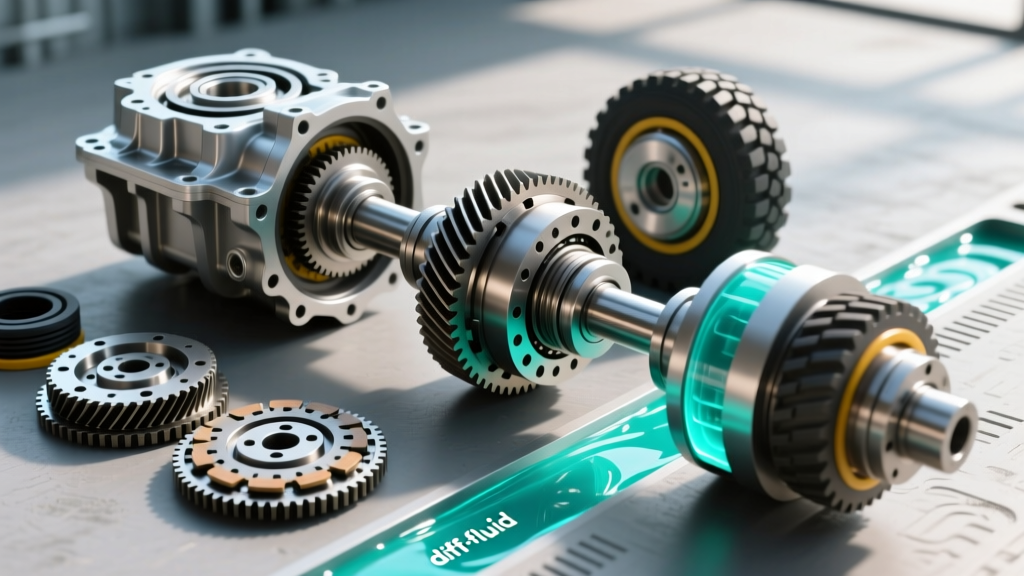
Understanding differential fluid types, API specifications, and viscosity grades is not merely academic; it is a financial imperative. The hypoid gear design used in 99% of modern solid axles and independent rear suspensions (IRS) relies on a specific chemical boundary layer to prevent metal-on-metal micropitting. This guide breaks down the exact fluid specifications, limited-slip requirements, and torque values you need to protect your drivetrain investment.
Decoding API Classifications: Why GL-5 is Non-Negotiable for Hypoid Gears
The American Petroleum Institute (API) categorizes gear oils primarily into GL-4 and GL-5 designations. Using the wrong classification is a leading cause of premature differential whine and catastrophic tooth shear.
- API GL-4: Formulated for manual transmissions and transaxles containing yellow metals (brass/bronze synchronizers). It contains moderate levels of Extreme Pressure (EP) additives.
- API GL-5: Engineered specifically for hypoid differentials. It contains high concentrations of sulfur-phosphorus EP additives. Under the extreme sliding friction and high-pressure contact patch of a hypoid ring and pinion gear, these additives react chemically with the steel surface to create a sacrificial solid film that prevents welding and scuffing.
Warning: Never use GL-4 in a standard automotive differential. The lack of sufficient sulfur-phosphorus compounds will result in rapid gear wear under load. Conversely, avoid using GL-5 in manual transmissions with brass synchronizers unless explicitly approved by the OEM, as the active sulfur can corrode yellow metals at high operating temperatures.
Viscosity Showdown: 75W-90 vs. 80W-90 vs. 75W-140
Governed by the SAE J306 standard, gear oil viscosity dictates the fluid's flow characteristics at both sub-zero temperatures and extreme operational heat. Selecting the right weight directly impacts parasitic drivetrain loss, fuel economy, and towing durability.
75W-90: The Modern OEM Standard
Most modern light-duty trucks and SUVs, including the Ford F-150 (8.8 and 9.75 axles) and late-model Jeep Wranglers (Dana 35/44), specify 75W-90 synthetic. It offers excellent cold-weather flow, reducing startup wear on pinion bearings, while maintaining a stable hydrodynamic film at standard operating temperatures of 180°F to 220°F.
80W-90: The Conventional Workhorse
Primarily found in older vehicles or budget maintenance schedules, 80W-90 conventional mineral oil is thicker at cold temperatures. While it provides adequate protection for light-duty commuting, it suffers from rapid oxidation and shear breakdown when subjected to the sustained 250°F+ temperatures generated by towing or off-roading.
75W-140: The Heavy-Duty Towing Specialist
For heavy-duty applications like the Ram 2500/3500 equipped with Dana 60 or Dana 70 axles, or any vehicle consistently towing near its Gross Combined Weight Rating (GCWR), 75W-140 is mandatory. The higher high-temperature viscosity prevents the fluid film from being squeezed out of the gear mesh under extreme torque multiplication.
2026 Differential Fluid Buyer’s Comparison Chart
Below is a comparison of top-tier differential fluids, reflecting current 2026 market pricing and specifications. For a comprehensive look at synthetic formulations, we recommend consulting Red Line Oil's Gear Oil lineup and AMSOIL Synthetic Gear Lube for their respective technical data sheets.
| Brand & Product | Viscosity | API Rating | Est. Price (2026) | Best Application |
|---|---|---|---|---|
| Amsoil Severe Gear | 75W-90 | GL-5 | $18.50 / qt | Daily driving, light towing, IRS axles |
| Red Line 75W140 | 75W-140 | GL-5 | $24.95 / qt | Heavy towing, rock crawling, Dana 60s |
| Valvoline SynPower | 75W-90 | GL-5 | $11.50 / qt | Budget-friendly synthetic street use |
| Motul Gear 300 | 75W-90 | GL-4/GL-5 | $22.00 / qt | High-performance track / transaxle use |
| Lucas Oil Limited Slip | Additive | N/A | $9.99 / btl | Clutch-type LSD chatter prevention |
The Limited-Slip Variable: Friction Modifiers and Chatter
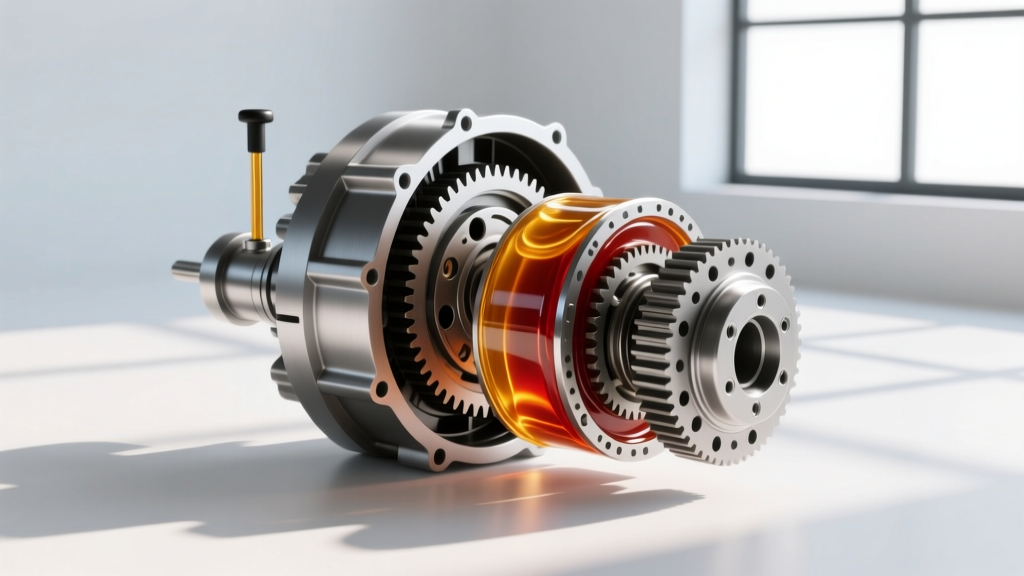
If your vehicle is equipped with a clutch-type Limited Slip Differential (LSD)—such as Ford's Traction-Lok, GM's Positraction, or an aftermarket Eaton Detroit Truetrac (gear-type, no additive needed)—the fluid specification is only half the battle. Clutch-type LSDs require a specialized friction modifier additive to allow the clutch packs to slip smoothly during cornering before locking under torque.
The Cost of Differential Chatter: Failing to add the required 4 to 8 ounces of friction modifier results in 'chatter' or 'judder' during low-speed turns. This is the sound of the clutch packs violently binding and releasing. Over time, this shatters the friction material, contaminates the gear oil with metallic debris, and destroys the carrier. OEM additives like Ford XL-3 (approx. $12) or GM EOS part #12377916 (approx. $15) are cheap insurance against a $600 carrier replacement.
Pro-Tip: Always add the friction modifier to the differential housing before pouring in the bulk gear oil. This ensures the modifier coats the clutch packs immediately and mixes thoroughly as the housing fills.
Axle-Specific Capacities and Torque Specifications
Over-torquing differential cover bolts is a common DIY mistake that leads to warped covers, crushed cork/rubber gaskets, and chronic leaks. Below are the exact specifications for three of the most common axles on the road.
Ford 8.8-Inch (Solid & IRS)
- Capacity: 2.5 to 3.0 Pints (varies slightly by IRS vs. Solid)
- Cover Bolt Torque (10mm): 28 - 38 lb-ft
- Fill Plug Torque: 33 lb-ft
- Note: The Ford 8.8 IRS (found in Mustangs and F-150s) requires careful attention to the fluid level, filling exactly to the bottom of the fill hole threads.
Dana 44 (Jeep / Light Truck)
- Capacity: 2.0 to 2.5 Pints
- Cover Bolt Torque (3/8" bolts): 30 - 40 lb-ft
- Fill Plug Torque: 25 lb-ft
- Note: Many aftermarket Dana 44 covers feature a secondary fill hole higher up for lifted vehicles with altered pinion angles. Always fill to the OEM factory plug level unless specifically tuned for pinion angle changes.
GM 8.6-Inch (10-Bolt Truck)
- Capacity: 2.4 Pints
- Cover Bolt Torque (10mm): 22 lb-ft (Do not exceed! The aluminum covers on newer models warp easily).
- Fill Plug Torque: 32 lb-ft
Synthetic vs. Conventional: Long-Term Cost of Differential Ownership
When calculating the total cost of differential ownership, synthetic gear oils vastly outperform conventional mineral oils in thermal stability and shear resistance. A conventional 80W-90 fluid may cost $7 per quart, but it requires changing every 30,000 miles, especially if the axle is submerged in water during off-road use (which emulsifies the oil, turning it into a milky, non-lubricating sludge).
A high-quality synthetic 75W-90 or 75W-140, costing $15 to $25 per quart, can safely extend service intervals to 60,000 or even 100,000 miles under normal towing conditions. Synthetics possess uniform molecular structures that resist volatility and oxidation, maintaining their SAE viscosity grade long after conventional oils have sheared down to a lower, less protective weight. Ultimately, paying a premium for synthetic gear oil reduces the lifetime cost of differential maintenance by cutting service intervals in half while providing superior boundary protection for your ring and pinion gears.