The Drivetrain Chain: Where Power Meets the Pavement
When you press the accelerator in a four-wheel-drive (4WD) or all-wheel-drive (AWD) vehicle, a complex mechanical ballet begins. Power flows from the engine, through the transmission (such as the ubiquitous ZF 8HP or GM 10L80), and into a component that acts as the great divider: the transfer case. But the journey doesn’t end there. That power must eventually reach the wheels, and that is where the axles and differentials take over. For off-road enthusiasts and daily drivers alike, understanding the relationship between your transfer case and your axles—specifically when equipped with limited slip differentials—is critical for maintaining traction, preventing catastrophic drivetrain binding, and ensuring your gear oil is doing its job.
As we navigate the automotive landscape in 2026, with heavier electric and hybrid trucks putting unprecedented low-end torque through drivetrain components, the synergy between the T-case and the differential is more important than ever. Let’s break down this relationship from a beginner’s perspective, while diving deep into the exact fluid specifications and torque data you need to keep it all turning smoothly.
Transfer Case vs. Differential: A Beginner’s Breakdown
To understand how these components interact, we first need to define their distinct roles. Think of the transfer case as the “front-to-back” manager, while the differential is the “left-to-right” manager.
| Feature | Transfer Case | Differential (Axle) |
|---|---|---|
| Primary Function | Splits torque between the front and rear driveshafts. | Splits torque between the left and right wheels on a single axle. |
| Location | Bolted directly to the rear of the transmission. | Located in the center of the front and/or rear axle housings. |
| Internal Gearing | Planetary gearsets, chain drives, and clutch packs (in AWD). | Ring and pinion gears, spider gears, or helical gearsets. |
| Typical Fluid | ATF (e.g., Dexron VI, ATF+4) or specialized fluids (e.g., AutoTrak II). | Heavy gear oil (e.g., 75W-90, 75W-140 GL-5) + friction modifiers. |
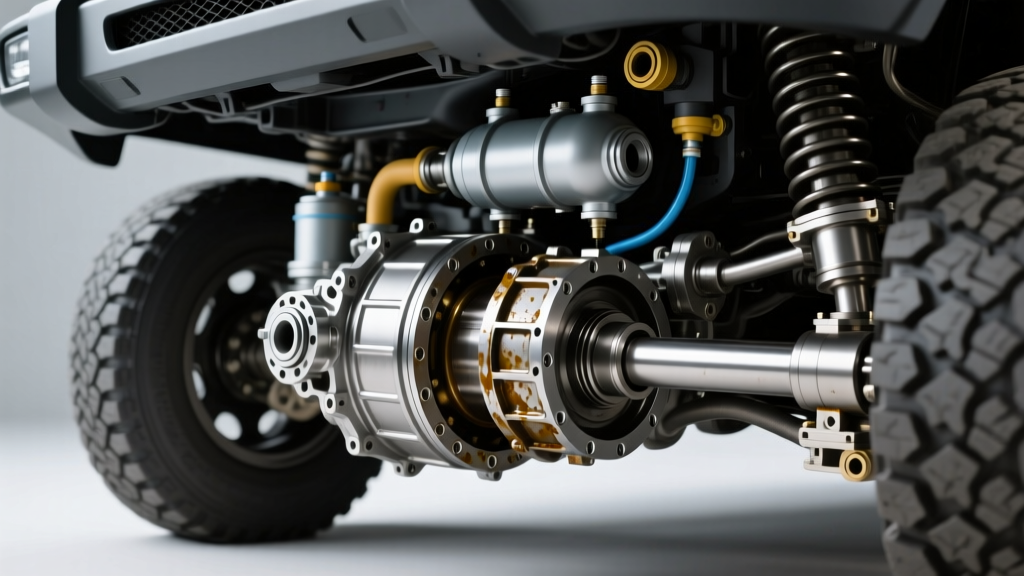
When you shift a traditional part-time 4WD system (like the NV241 found in Jeep Wranglers) into 4-High, the transfer case locks the front and rear output shafts together, forcing them to spin at the exact same speed. However, when you turn a corner, the outside wheels must travel a greater distance than the inside wheels. This is where the differential steps in, allowing the left and right wheels to rotate at different speeds while still receiving torque.
How Limited Slip Differentials Change the 4WD Equation
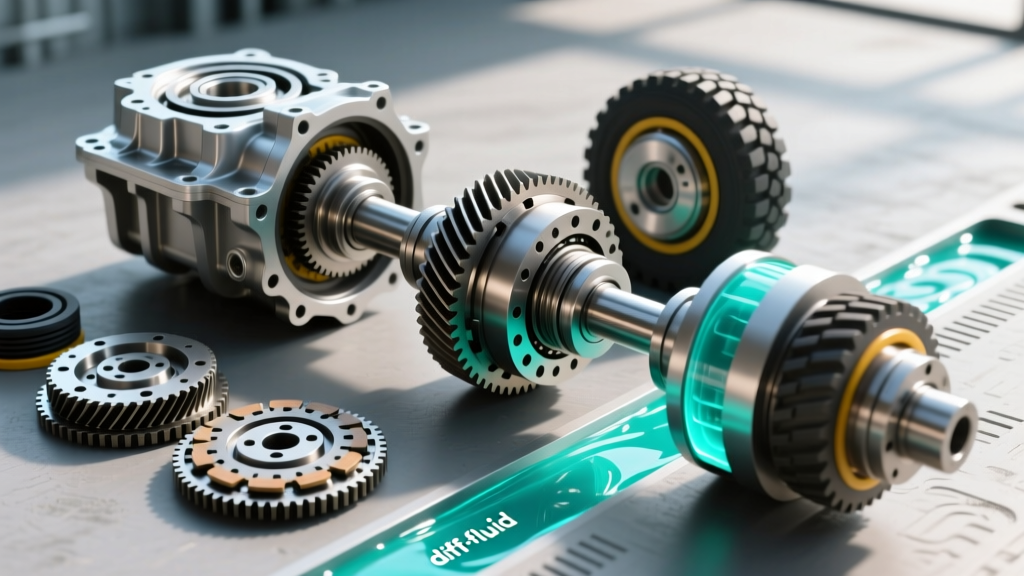
An “open” differential is great for paved roads, but it has a fatal flaw off-road: if one wheel loses traction, it sends 100% of the power to that spinning wheel, leaving you stuck. This is where limited slip differentials (LSDs) save the day. By utilizing internal clutch packs (like the Auburn ECTED Max) or helical gearsets (like the legendary Eaton Detroit Truetrac), an LSD senses wheel slip and mechanically transfers torque to the wheel that still has grip.
But how does this interact with the transfer case? If you are in 2WD and your rear axle is equipped with a clutch-type LSD, the differential manages the left-right traction split independently of the transfer case. However, when you engage 4WD, the transfer case locks the front and rear driveshafts together. If your vehicle has an LSD in the rear but an open differential in the front (a very common factory setup in trucks like the Ford F-150 or Chevy Silverado), the transfer case forces a 50/50 torque split front-to-rear, while the rear LSD further optimizes that 50% across the left and right rear tires. This creates a highly predictable, traction-rich platform for snow, mud, and loose gravel.
The Dreaded Drivetrain Wind-Up (And How to Avoid It)
One of the most common mistakes beginners make is engaging a locked, part-time transfer case on dry pavement. Because the front and rear axles are locked together by the T-case, they cannot slip. When you turn on dry pavement, the front wheels want to travel a different distance than the rear wheels. Since the tires cannot slip on the dry asphalt, the stress is absorbed by the drivetrain components. This is known as “drivetrain wind-up.”
Expert Warning: Drivetrain wind-up can shatter transfer case chains, snap axle shafts, and chip the teeth right off your ring and pinion gears. If you feel a severe “binding” sensation or hear a loud popping noise when turning in 4WD on dry pavement, immediately shift back to 2WD to relieve the tension.
Interestingly, full-time 4WD and AWD systems (using transfer cases like the BorgWarner 4406 or NV242) feature a center differential inside the transfer case itself. This center diff allows the front and rear driveshafts to slip slightly, preventing wind-up on dry pavement. If your T-case has a center diff, you can safely pair it with front and rear limited slip differentials for maximum all-weather performance without fear of binding.
The Lifeblood: Transfer Case and Differential Fluid Specs
Because our focus at AutoGearNexus is heavily on fluid dynamics and maintenance, we must address the most critical aspect of the T-case and differential relationship: they do not use the same fluid. Mixing these up is a fast track to a $3,000 rebuild bill.
Transfer Case Fluid Requirements
Transfer cases rely on high-flow, low-viscosity fluids to lubricate high-speed chain drives and actuate hydraulic clutch packs in AWD modes. Using thick gear oil here will starve the upper bearings and burn out the clutch packs.
- GM AutoTrak II (Part #88900333): Mandatory for GM AWD transfer cases with active clutch packs. Standard Dexron VI will cause chatter and failure.
- ATF+4: Required for most Jeep/Chrysler NV241 and NV231 transfer cases.
- Mercon LV / Dexron VI: Common in many Ford and GM part-time 4WD T-cases.
Differential Gear Oil & The LSD Additive Factor
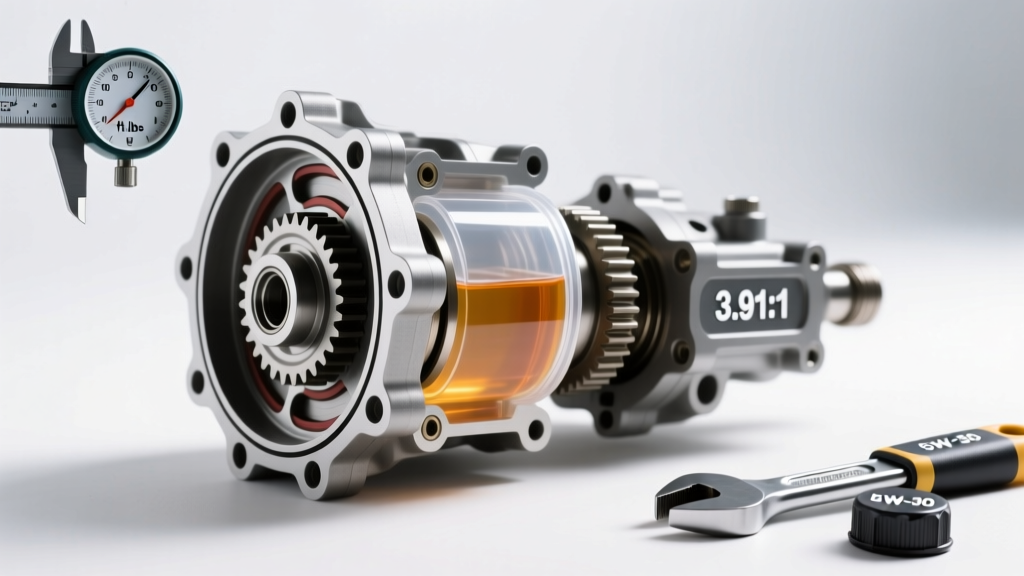
Differentials operate under extreme shear forces. The ring and pinion gears require thick, high-pressure gear oil, typically 75W-90 or 75W-140 GL-5. According to Red Line Oil’s technical guidelines, GL-5 ratings indicate the presence of extreme pressure (EP) additives, usually sulfur-phosphorus compounds, which protect the hypoid gear teeth from wiping under heavy loads.
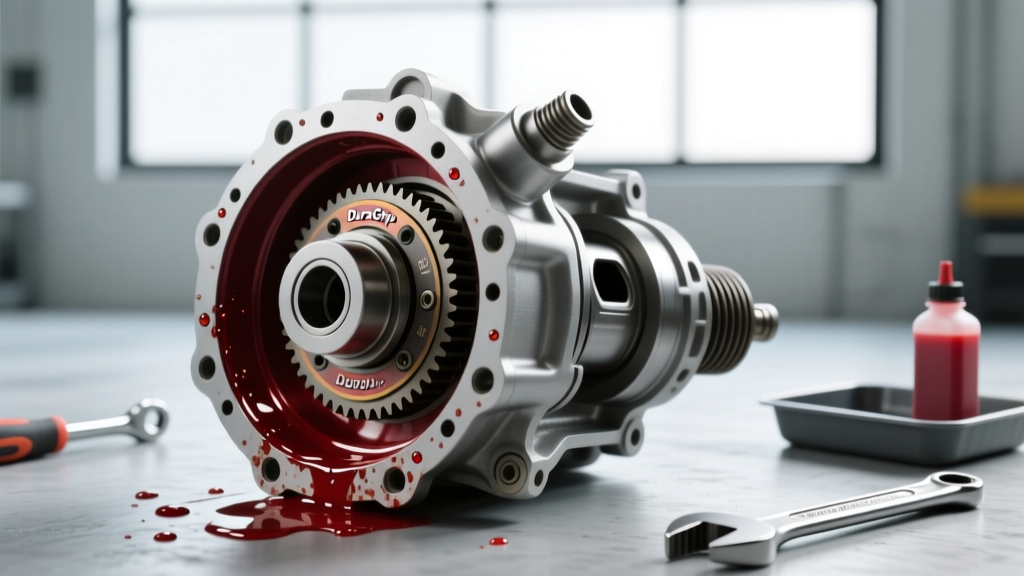
The LSD Catch: If your differential uses a clutch-based limited slip differential, you must add a Friction Modifier (e.g., Motorcraft XL-3 or Red Line Part #60104). Without it, the clutch packs will chatter violently during low-speed turns, causing premature wear and an annoying groaning noise. Note: Helical gear LSDs (like the Eaton Truetrac) and locking differentials (like the Detroit Locker or ARB Air Locker) do not require friction modifiers, as they rely on gear geometry or pneumatic/mechanical locking pins rather than friction clutches.
Real-World Maintenance: Torque Specs and Service Costs
Servicing the transfer case and differentials is a rite of passage for any 4WD owner. Neglecting the differential fluid degrades the LSD clutch packs and accelerates ring and pinion wear. Here is what you need to know for a standard service interval (typically every 30,000 to 50,000 miles, or immediately after deep water submersion).
Common Drain and Fill Specifications
| Component | Typical Capacity | Plug Torque Spec | Tool Required |
|---|---|---|---|
| NV241 / NV231 Transfer Case | 2.0 - 2.5 Quarts | 20 - 25 lb-ft | 15mm or 3/8" Square Drive |
| Dana 44 / M220 Differential | 1.5 - 2.0 Quarts | 25 - 30 lb-ft | 3/8" Square Drive or 13mm Hex |
| Ford 8.8 / 9.75 Rear Axle | 2.5 - 3.5 Quarts | 30 - 35 lb-ft | 3/8" Square Drive |
Cost Breakdown (2026 Estimates)
- DIY Fluid Cost: $40 - $80 per axle (Synthetic 75W-90 GL-5 + Friction Modifier). Transfer case fluid: $20 - $40.
- Independent Shop Rate: $150 - $250 for a complete 4WD fluid service (T-case + both axles).
- Dealership Rate: $350 - $550, often using OEM-branded fluids which carry a premium markup.
Pro-Tip: Always remove the fill plug before removing the drain plug. If your fill plug is seized or stripped, you do not want to be stuck with a differential full of empty air and no way to refill it. For stubborn plugs, apply a penetrant like PB Blaster 24 hours prior, and use a high-quality 6-point socket or a dedicated square-drive drain plug key to avoid rounding the edges.
Final Thoughts on Drivetrain Synergy
The relationship between your transfer case and your axles is a masterclass in mechanical load distribution. The transfer case dictates the macro-level traction strategy (front vs. rear), while Dana and other axle manufacturers engineer the differentials to handle the micro-level traction nuances (left vs. right). By understanding how limited slip differentials optimize this power delivery, and by strictly adhering to the correct fluid specifications and torque values, you ensure your 4WD system remains capable, quiet, and reliable for hundreds of thousands of miles. Whether you are crawling over rocks or navigating a snowy commute, respecting the drivetrain chain is the key to keeping the rubber side down.