The Overlooked Link Between Gear Oil and the Rear Differential Seal
When diagnosing a leaking axle, most mechanics and DIY enthusiasts immediately blame the rear differential seal for age, heat, or physical wear. However, as automotive tribology advances in 2026, drivetrain engineers emphasize that fluid-seal incompatibility is a leading, yet frequently overlooked, cause of premature elastomer failure. The differential housing is a high-stress, high-temperature environment, and the gear oil you choose does far more than lubricate the ring and pinion—it actively interacts with the sealing materials keeping that oil inside the axle tube.
Selecting the correct differential fluid type is not just about matching a viscosity grade; it is about ensuring the chemical additive package supports the specific elastomer used in your rear differential seal. Using a fluid with aggressive extreme pressure (EP) additives or incorrect seal conditioners can cause nitrile or polyacrylate seals to swell, shrink, or harden, leading to catastrophic weeping and eventual bearing contamination. This comprehensive 2026 buyer's guide breaks down the chemistry, specifications, and top product choices to protect your drivetrain.
The Chemistry of Gear Oil and Seal Elastomers
To understand why fluid selection matters, you must understand the materials used in modern and legacy axle seals. Original Equipment Manufacturers (OEMs) primarily rely on three types of elastomers for rear differential seals:
- Nitrile Rubber (NBR): Common in older or standard-duty axles (e.g., early GM 10-bolt, Ford 8.8). NBR is cost-effective but highly sensitive to extreme heat and certain sulfur-phosphorus EP additives found in aggressive API GL-5 fluids.
- Polyacrylate (ACM): Used in many modern passenger SUVs and light trucks. ACM offers better heat resistance than NBR but can become brittle if exposed to fluids lacking proper plasticizers.
- Fluoroelastomer (FKM / Viton): The premium standard for heavy-duty, towing, and high-performance applications (e.g., Dana 60, Ram 2500 AAM 11.5). FKM is highly resistant to chemical degradation and extreme heat, but it requires specific fluid conditioning to maintain its lip flexibility.
According to the SKF Knowledge Centre on Automotive Seals, the lip material must remain in a state of equilibrium with the surrounding lubricant. If a gear oil is overly 'dry' or lacks seal swell agents, the seal lip will lose its interference fit against the axle shaft, resulting in a slow weep that eventually washes out the wheel bearings.
Understanding API GL-5 and SAE J306 Viscosity Matrix
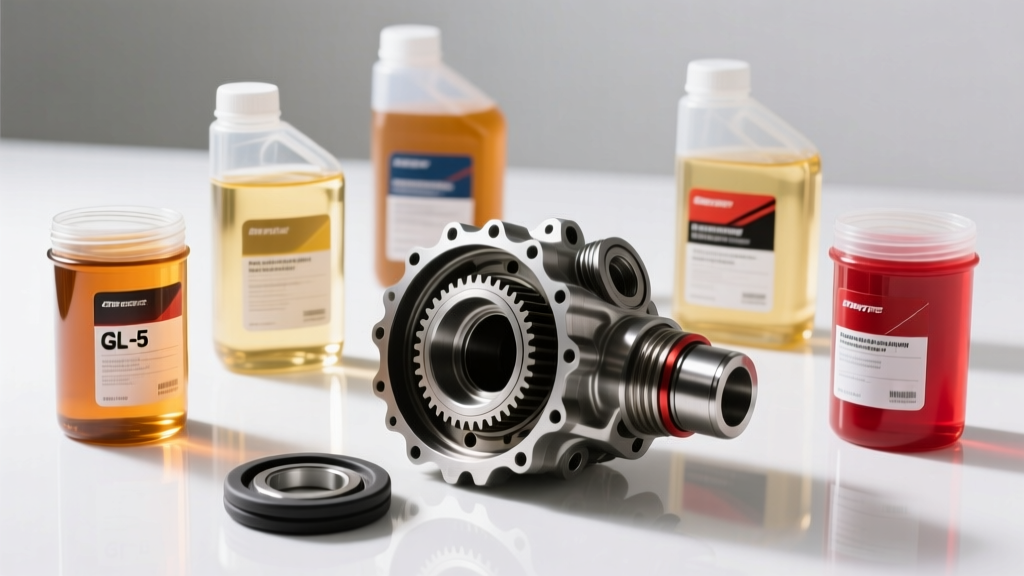
The American Petroleum Institute (API) classifies gear oils based on their extreme pressure capabilities, while the SAE J306 Standard dictates axle lubricant viscosity. For the vast majority of hypoid gear sets, API GL-5 is mandatory due to the high sliding friction of the ring and pinion teeth. However, the sulfur-phosphorus compounds that protect the gears can attack yellow metals and certain seals if not properly buffered.
| Viscosity Grade | API Spec | Best Application | Seal Compatibility Note |
|---|---|---|---|
| 75W-85 | GL-5 | Modern light-duty CUVs, EV reduction gears | Requires synthetic base to protect ACM seals at lower volumes. |
| 75W-90 | GL-5 | Standard half-ton trucks, daily driver SUVs | Universal compatibility; ideal for NBR and FKM seals. |
| 75W-140 | GL-5 | Heavy towing, off-road, high-horsepower builds | Thicker film protects FKM seals from high-heat hardening. |
| 80W-90 | GL-5 | Legacy conventional applications, budget rebuilds | Conventional bases may oxidize and form varnish on seal lips. |
2026 Buyer's Guide: Top Synthetic Gear Oils for Seal Longevity
When shopping for differential fluid, prioritize synthetic formulations with dedicated seal conditioners. Here is how the top contenders compare for the 2026 service cycle.
1. Amsoil Severe Gear 75W-90 (Part # SVGPK)
Price: ~$22.50 per quart
Best For: Extreme towing and modified axles.
Amsoil's Severe Gear line is renowned for its high Total Base Number (TBN), which neutralizes acids formed by gear wear. More importantly for our focus, Amsoil utilizes a proprietary ester-based synthetic stock that naturally conditions FKM and NBR seals. Users frequently report that switching to Severe Gear stops minor axle weeps caused by dried-out seal lips. It also includes the necessary friction modifiers for clutch-type limited-slip differentials (LSDs), eliminating the need for aftermarket additives that can sometimes alter fluid viscosity and seal interaction.
2. Mobil 1 Synthetic Gear Lube 75W-90 (Part # 104361)
Price: ~$16.00 per quart
Best For: OEM replacement and daily drivers.
Mobil 1 remains the benchmark for accessible, high-quality synthetic gear oil. It is the factory fill for numerous GM and Ford applications. Its additive package is specifically calibrated to be safe for standard NBR and ACM rear differential seals. While it may not have the extreme shear stability of boutique racing oils, its balanced seal-swell characteristics make it the safest bet for high-mileage axles where the original seals are still in place.
3. Valvoline Full Synthetic High Mileage 75W-90
Price: ~$14.50 per quart
Best For: Axles with over 100,000 miles.
Valvoline's High Mileage formulation includes targeted seal conditioners designed to rejuvenate older elastomers. If your rear differential seal is showing signs of minor sweating but is not yet actively dripping, this fluid's plasticizer package can help restore lip flexibility. It is an excellent, cost-effective choice for older GM 9.5-inch semi-floating axles and Ford 8.8-inch differentials.
4. Red Line 75W90 NS (Non-Slip) Gear Oil
Price: ~$24.00 per quart
Best For: Torsen/Helical LSDs and locker-equipped axles.
Red Line NS omits the friction modifiers required for clutch-type LSDs. This is critical because certain aftermarket friction modifiers contain solvents that can degrade polyacrylate seals over time. If your axle uses a gear-driven Torsen differential or a full locking spool, the NS formula provides maximum EP protection without introducing unnecessary chemical solvents into the seal environment.
Diagnostic Protocol: Is Your Fluid Destroying the Seal?
Before draining your differential, perform a forensic inspection of the fluid and the rear differential seal area. Use a magnetic drain plug or a telescoping magnet to check for ferrous debris. More importantly, evaluate the fluid's smell and texture:
- Burnt Odor & Varnish: Indicates thermal breakdown. The fluid has likely lost its seal-conditioning properties, leading to a hardened, cracked seal lip.
- Water Contamination (Milky Appearance): Water ingress destroys the elastomer structure of NBR seals, causing them to swell and lose their tension against the axle shaft.
- Axle Shaft Runout: Even the best fluid cannot save a seal if the axle shaft is bent. Use a dial indicator on the axle flange. Runout exceeding 0.005 inches will physically tear the seal lip, regardless of fluid chemistry. In such cases, replace the shaft and the seal (e.g., SKF 18721 for Ford 8.8, Timken 710490 for GM 10-bolt) simultaneously.
Service Procedure and Torque Specifications
Proper service ensures the new fluid remains sealed inside the housing. Always replace the crush washer or O-ring on your fill and drain plugs. If your axle uses a tapered NPT pipe plug, apply a high-quality PTFE thread sealant to prevent weeping from the threads, which is often misdiagnosed as a rear differential seal failure.
Common Axle Fill Capacities and Torque Specs
- Ford 8.8-inch (F-150, Mustang): Capacity: ~3.75 pints. Fill/Drain Plug Torque: 22 lb-ft (30 Nm).
- GM 9.5 / 10.5-inch Semi-Floating (Silverado 2500): Capacity: ~2.75 quarts. Fill Plug Torque: 25 lb-ft (34 Nm).
- Dana 60 (Heavy Duty Off-Road/Towing): Capacity: 3.0 to 4.0 quarts (depends on cover). Cover Bolt Torque: 30-35 lb-ft (use RTV silicone, no gasket, to ensure precise clamping and prevent case distortion that stresses seals).
- Chrysler AAM 11.5 (Ram 2500/3500): Capacity: ~3.4 quarts. Fill Plug Torque: 30 lb-ft (41 Nm).
Expert Tip: Never use an impact wrench to install differential cover bolts or fill plugs. Over-torquing the fill plug can crack the casting or distort the axle tube bore, subtly misaligning the rear differential seal and causing an immediate leak upon your first test drive. Always use a calibrated inch-pound or low-range foot-pound torque wrench.
Conclusion: Protecting the Seal Starts with the Fluid
The rear differential seal is the final barrier between your expensive ring and pinion gears and the elements. By selecting a high-quality synthetic gear oil tailored to your specific API and SAE requirements, you actively preserve the elastomer integrity of the seal. Whether you opt for Amsoil's severe-duty esters or Mobil 1's OEM-balanced chemistry, prioritizing fluid-seal compatibility in your 2026 maintenance schedule will save you from premature axle teardowns and costly bearing replacements.