You likely landed here searching for the jeep tj differential fluid capacity because it is time for your 30,000-mile axle service, or perhaps you just bought a used Wrangler and want to establish a reliable maintenance baseline. Routine differential service is the lifeblood of your 4x4. However, pulling the diff cover is also the ultimate diagnostic window into your axle's health. As we move through 2026, the trend of retrofitting classic 1997-2006 Jeep TJs with heavier 35-inch tires and advanced overlanding gear has pushed factory Dana axles to their absolute limits.
While draining your gear oil, you might notice a thick, glittery metallic paste on the drain plug, or you might realize that your factory 3.07 gears are completely inadequate for your new tire setup. This is where a basic fluid change evolves into a ring and pinion gear setup. This beginner-friendly explainer will bridge the gap between simple fluid maintenance and the精密 art of setting up Dana 30, 35, and 44 ring and pinion gears.
The Baseline: Jeep TJ Differential Fluid Capacity Reference
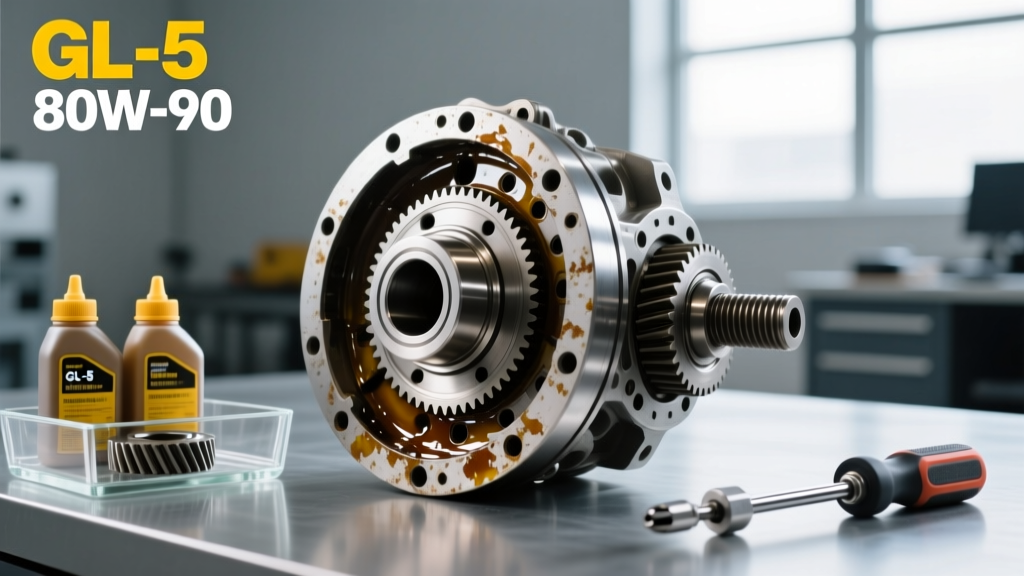
Before tearing into a gear setup, you must know what goes back into the housing. The Jeep TJ was primarily equipped with three Dana axle variants. Always use a high-quality GL-5 75W-90 or 80W-90 synthetic gear oil. If your rear axle features a Trac-Loc limited-slip differential, remember to add 4 oz of a friction modifier additive to prevent clutch chatter during tight turns.
| Axle Model | Location | Fluid Capacity (Pints) | Fluid Capacity (Liters) | Recommended Viscosity |
|---|---|---|---|---|
| Dana 30 | Front | 2.5 Pints | 1.18 L | 75W-90 GL-5 |
| Dana 35 | Rear | 3.5 Pints | 1.65 L | 75W-90 GL-5 + Additive |
| Dana 44 | Rear (Rubicon/Optional) | 4.0 Pints | 1.89 L | 75W-90 GL-5 + Additive |
Demystifying the Ring and Pinion: A Beginner’s Glossary
Setting up a ring and pinion is not black magic; it is a precise sequence of measurements. If you are upgrading from factory 3.07 gears to 4.10 or 4.56 ratios to restore your TJ's crawling ability, you must understand these four core concepts:
- Pinion Depth: The exact distance from the pinion gear head to the centerline of the ring gear. This is adjusted using shims placed under the inner pinion bearing. Even a 0.002-inch deviation will result in catastrophic gear whine or tooth shearing.
- Backlash: The amount of 'slop' or rotational play between the ring gear and the pinion gear when the pinion is held stationary. For Dana 30, 35, and 44 axles, the target backlash is typically between 0.006" and 0.010".
- Bearing Preload: The rotational resistance of the bearings. Pinion bearing preload (measured in inch-pounds) ensures the pinion doesn't wobble under load, while carrier bearing preload (adjusted via shims or threaded adjusters) keeps the ring gear rigidly centered.
- Contact Pattern: The physical footprint left by the gears when coated in marking compound. It tells you if your depth and backlash settings are correct.
The 4-Step Blueprint to Setting Up TJ Gears
According to the Spicer Technical Resources documentation, a proper gear setup requires patience, a clean environment, and specialized measuring tools. Here is the workflow for a Dana 35 rear axle, which is the most common TJ application.
Step 1: Pinion Depth and Bearing Preload
Your new gear set will have a pinion depth variance etched into the head of the pinion (e.g., '+1' or '-2'). This number dictates how many thousandths of an inch you must add or subtract from the factory shim thickness.
Pro-Tip for 2026 Builds: The factory Dana 35 uses a 'crush sleeve' to achieve pinion preload. Over-tightening the pinion nut crushes the sleeve to create resistance. If you over-crush it, you must replace the sleeve and start over. We highly recommend installing a Crush Sleeve Eliminator Kit (which uses a solid spacer and shims) to make setting pinion preload infinitely adjustable and far more durable for off-road use.
Step 2: Backlash and Carrier Bearing Preload
Once the pinion is set, mount the ring gear to the carrier. Use a high-strength threadlocker (Red Loctite) on the ring gear bolts and torque them to 65 lb-ft in a star pattern.
Mount a magnetic dial indicator to the housing, resting the probe perpendicular to the ring gear teeth. Rotate the carrier back and forth. If your backlash is too tight (e.g., 0.002"), you must move shims from the passenger side to the driver side of the carrier. If it is too loose, move shims the opposite way. You are chasing that golden 0.006" to 0.010" window.
Step 3: The Contact Pattern Test
Apply a thin coat of yellow gear marking compound to three or four teeth on the ring gear. Apply moderate rotational resistance to the ring gear with a gloved hand while turning the pinion yoke with a wrench.
Inspect the pattern on both the Drive (convex) and Coast (concave) sides of the teeth:
- Ideal Pattern: Centered vertically on the tooth face, slightly biased toward the heel (inner edge) under no-load, moving to the center under load.
- Too Deep (Pinion too close to ring): Pattern is biased toward the toe (outer edge). Add pinion depth shims.
- Too Shallow (Pinion too far from ring): Pattern is biased toward the root (bottom of the tooth). Remove pinion depth shims.
Cost Breakdown: DIY vs. Professional Axle Shops
Is a ring and pinion setup worth doing in your home garage? While you can save on labor, the cost of specialty tools (bearing pullers, dial indicators, torque multipliers) adds up. Below is a realistic cost analysis for a complete front and rear re-gear on a Jeep TJ.
| Expense Category | DIY Garage Build | Professional 4x4 Shop |
|---|---|---|
| Ring & Pinion Sets (Front & Rear) | $450 - $600 | $450 - $600 |
| Master Rebuild Kits (Bearings/Seals) | $250 - $350 | $250 - $350 |
| Specialty Tools (Press, Indicators) | $150 - $300 (Rental/Purchase) | $0 (Included in Labor) |
| Labor (Approx. 8-10 Hours) | $0 (Your Time) | $900 - $1,400 |
| Total Estimated Cost | $850 - $1,250 | $1,600 - $2,350 |
Critical Torque Specifications for Dana Axles
When reassembling your axle, guessing torque specs will lead to stretched bolts and failed bearings. Always refer to the Quadratec Jeep Library for factory service manual excerpts, but keep this cheat sheet handy for your Dana 30 and 35 builds:
- Ring Gear to Carrier Bolts: 60 - 70 lb-ft (Always use Red Loctite 271)
- Carrier Bearing Cap Bolts: 45 - 60 lb-ft (Ensure caps are returned to their exact original side and orientation)
- Pinion Bearing Preload (New Bearings): 14 - 25 in-lbs (Measured with an inch-pound beam torque wrench on a bare pinion without the seal)
- Pinion Yoke Nut (Crush Sleeve): Torque gradually up to 250+ lb-ft until target rotational preload is achieved. Do not use an impact wrench.
- Differential Cover Bolts: 20 - 25 lb-ft (Use RTV silicone or a reusable Lube-Locker gasket to prevent leaks)
Expert Warning: Never reuse the old pinion nut if you are using a factory crush sleeve. The nut features a prevailing torque nylon insert that degrades upon removal. Always buy extra pinion nuts and crush sleeves before starting your setup, as mistakes during the preload phase are common for beginners.
Final Thoughts on Axle Longevity
Understanding your jeep tj differential fluid capacity is just the first step in becoming a competent 4x4 owner. Whether you are simply swapping out dirty 75W-90 oil or diving deep into a 4.88 ring and pinion gear setup to turn those massive mud-terrain tires, precision is everything. Take your time, respect the dial indicator, and your Dana axles will reliably deliver power to the dirt for decades to come.