The Intersection of Fluid Life and Differential Noise
When a customer or fleet manager asks, "how long does differential fluid last?" they are rarely asking out of simple curiosity. More often than not, the question is prompted by a new, unsettling noise emanating from the rear or front axle. As we navigate the 2026 model year landscape, modern trucks, SUVs, and off-road vehicles are subjected to higher torque loads and more extreme thermal cycles than ever before. The differential is a marvel of mechanical engineering, relying on a microscopic film of gear oil to prevent catastrophic metal-on-metal contact between the ring and pinion gears, side gears, and spider gears.
Ignoring the lifecycle of your differential fluid doesn't just lead to degraded performance; it actively alters the acoustic signature of your drivetrain. This guide bridges the gap between fluid maintenance intervals and advanced noise diagnosis, providing drivetrain technicians and advanced DIYers with the exact specifications, diagnostic protocols, and failure mode analyses needed to save an axle before it requires a complete teardown.
The Baseline: How Long Does Differential Fluid Last?
Before diagnosing a noise, you must understand the chemical and mechanical lifecycle of the fluid protecting the gears. Differential fluid lifespan is not a single number; it is dictated by the fluid type, the API service classification, and the vehicle's duty cycle.
Normal vs. Severe Service Intervals
- Conventional Mineral Gear Oil (80W-90 GL-5): Under normal driving conditions, conventional fluid lasts between 30,000 and 50,000 miles. However, the Extreme Pressure (EP) additives—typically zinc and phosphorus compounds—begin to shear and deplete around the 25,000-mile mark.
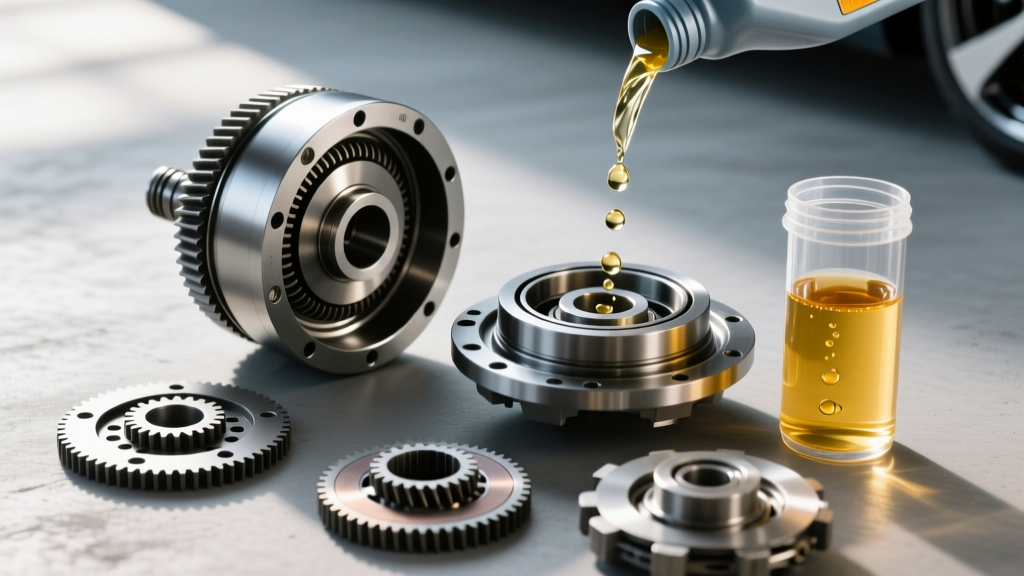
- Full Synthetic Gear Oil (75W-90 or 75W-140 GL-5): Synthetic fluids, such as AMSOIL Severe Gear or Mobil 1 Synthetic Gear Lube, offer superior shear stability and thermal resistance. Under normal conditions, these can last 60,000 to 100,000 miles.
- Severe Duty (Towing, Off-Road, Track Use): If the vehicle is used for heavy towing (over 5,000 lbs), frequent low-range 4WD operation, or competitive racing, the fluid lifespan is effectively halved. In these scenarios, synthetic fluid should be changed every 15,000 to 30,000 miles to prevent boundary lubrication failure.
When EP additives deplete, the fluid loses its ability to maintain a protective tribofilm under high-load, low-speed conditions. This leads to micro-pitting on the gear teeth, which is the exact genesis of the high-frequency gear whine that plagues neglected axles. For deeper chemical breakdowns of gear lubricants, refer to the AMSOIL Gear Lube Guide.
Auditory Diagnostics: Decoding Drivetrain Noise
Differential noise diagnosis requires a trained ear and an understanding of gear geometry. The ring and pinion gears operate on a hypoid design, meaning the pinion gear sits below the centerline of the ring gear. This creates a massive sliding friction component, which is why hypoid gears require GL-5 fluid with high sulfur-phosphorus EP additives. When the fluid fails, the noise changes based on the load state of the vehicle.
Drive-Side vs. Coast-Side Whine
A drive-side whine occurs under acceleration. This noise indicates wear or improper contact on the drive face (convex side) of the ring gear teeth. It is often caused by insufficient pinion bearing preload or incorrect gear backlash, exacerbated by degraded fluid that allowed the gears to run hot and lose their precise heat-treated surface hardness.
A coast-side whine occurs during deceleration (engine braking). This points to wear on the coast face (concave side) of the teeth. Coast-side wear is notoriously difficult to correct without replacing the gear set, as the sliding forces during deceleration are harsh and unforgiving when the fluid film is compromised.
Bearing Howl vs. Gear Whine
Technicians must differentiate between gear noise and bearing noise. A bearing howl is a continuous, low-to-mid frequency growl that changes pitch strictly with vehicle speed, regardless of whether the vehicle is accelerating or coasting. Pinion head bearing failure will howl loudest at low speeds (20-40 mph), while pinion tail bearing or carrier bearing failures tend to howl at higher highway speeds (60+ mph). Gear whine, conversely, will change pitch and volume distinctly when you lift off the throttle.
Noise-to-Failure Correlation Matrix
Use this diagnostic table to cross-reference the auditory symptom with the probable mechanical failure and its relationship to fluid degradation.
| Acoustic Symptom | Load Condition | Probable Mechanical Cause | Fluid Correlation |
|---|---|---|---|
| High-Pitch Whine | Acceleration | Drive-side gear tooth wear / Pinion depth error | EP additive depletion caused micro-pitting |
| Low-Pitch Growl | Coasting | Coast-side wear / Carrier bearing failure | Thermal breakdown led to varnish on bearing cages |
| Metallic Clunk | Load Reversal | Excessive backlash / Worn spider gears | Fluid starvation caused thrust washer erosion |
| Chatter / Bind | Low-Speed Turns | Limited-Slip Clutch Pack Degradation | Missing or depleted friction modifier additive |
Step-by-Step Diagnostic Protocol
If a vehicle presents with differential noise, do not immediately recommend a rebuild. Follow this systematic protocol to determine if a fluid service or a mechanical intervention is required.
Step 1: The Static Load Test
Place the vehicle on a lift with the wheels hanging free. Put the transmission in gear and let the axle spin under no load. Use a mechanic's stethoscope to isolate the noise. If the noise is present on the lift but disappears under road load, you are likely dealing with a worn pinion bearing that is shifting under the torque of vehicle weight. According to Spicer Technical Resources, pinion bearing preload must be checked with an inch-pound torque wrench; typical specs require 15 to 25 in-lbs of rotating torque for used bearings, and up to 35 in-lbs for new crush-sleeve setups.
Step 2: Fluid Inspection and Metallurgical Analysis
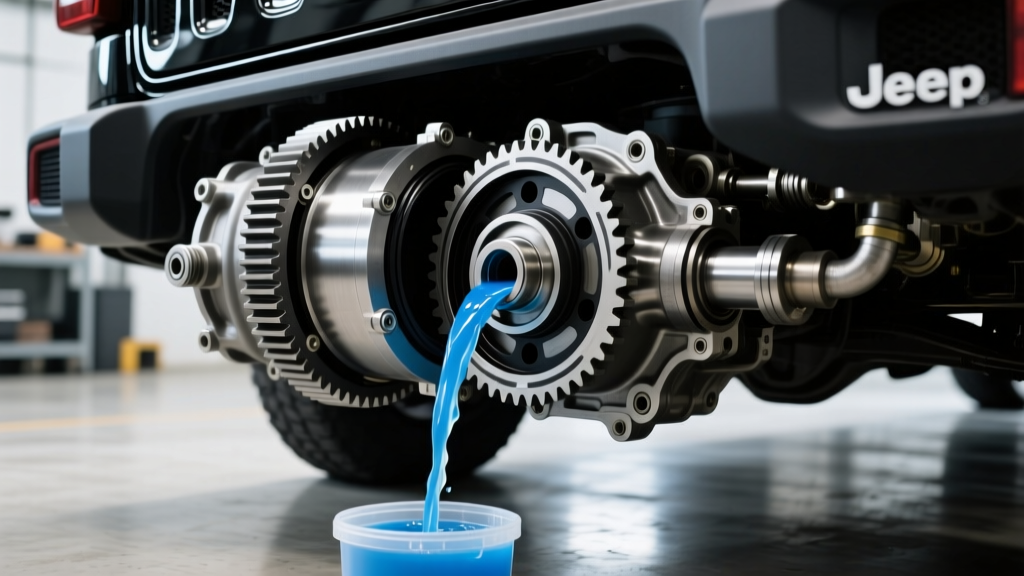
Drain the differential fluid into a clean, white drain pan. The condition of the fluid tells the story of the internal components:
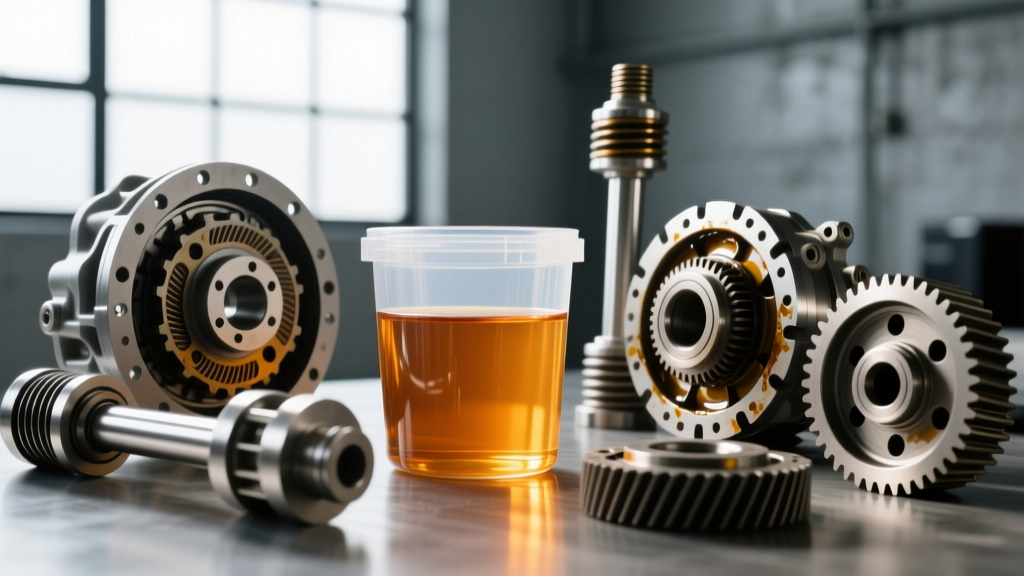
- Dark, burnt smell: Thermal breakdown. The fluid exceeded its 300°F+ operating limit, likely due to heavy towing without an aftermarket differential cover. Gears may be scored but salvageable.
- Glitter / Fine Metallic Paste: Normal wear for high-mileage axles. The magnet will catch the bulk of this. A fluid change with a high-quality synthetic like 75W-90 GL-5 may quiet the axle.
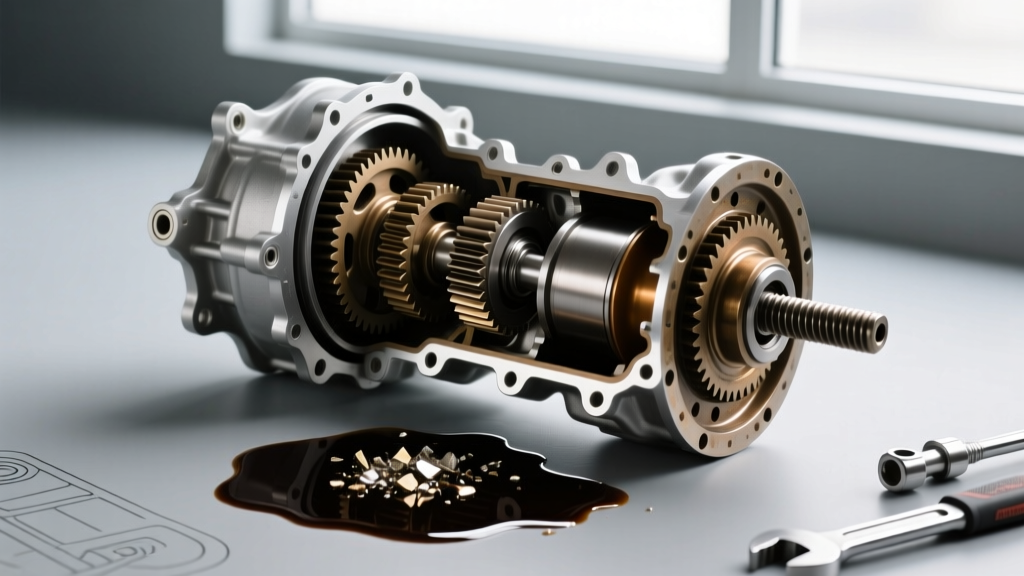
- Large Metal Chunks or Teeth Fragments: Catastrophic failure. The fluid is merely a crime scene. A full teardown and rebuild are mandatory.
- Brass/bronze flakes: Indicates the disintegration of the side gear thrust washers. Common in high-mileage GM 10-bolt and Dana 44 axles.
Step 3: Dial Indicator Backlash Measurement
Remove the differential cover. Torque the cover bolts to spec to prevent housing distortion (e.g., Ford 8.8 cover bolts: 20-25 lb-ft; Dana 44: 25-30 lb-ft). Mount a magnetic dial indicator to the housing and place the probe on the drive face of the ring gear tooth. Hold the pinion yoke stationary and rock the ring gear back and forth. Standard ring gear backlash specifications generally fall between 0.006" and 0.010". If your reading exceeds 0.015", the excessive clearance is causing the load-reversal clunk, and the carrier shims must be adjusted.
Expert Tip: If you are servicing a limited-slip differential (LSD) such as a Ford Trac-Lok or GM Eaton Positraction, the fluid change MUST include the correct friction modifier. Using standard GL-5 fluid without a modifier like Motorcraft XL-3 or GM EOS will result in immediate clutch-pack chatter during low-speed turns. Always perform three tight figure-eight turns in a parking lot after an LSD fluid change to work the modifier into the clutches.
When a Fluid Change Isn't Enough: Rebuild Economics
Understanding how long differential fluid lasts is ultimately about preventative economics. A standard differential fluid service using premium synthetic gear oil and a new gasket costs between $120 and $180 at an independent shop. However, if the fluid is neglected and the gear pattern shifts due to bearing wear, the costs escalate rapidly.
A complete ring and pinion rebuild—including a master rebuild kit (Timken bearings, seals, crush sleeve, shims), a new gear set (e.g., Yukon or Motive Gear), and specialized labor—typically ranges from $1,800 to $3,500 per axle. If the pinion gear destroys the pinion bore in the differential housing due to catastrophic bearing failure, the axle housing itself must be replaced or sleeved, pushing the repair cost well past $4,500.
For comprehensive teardown procedures and torque specifications for specific axle models like the AAM 11.5 or Dana 60, consult the Dana Resource Center. Remember, the differential fluid is the lifeblood of the axle. Changing it on time doesn't just prevent noise; it preserves the precise metallurgical tolerances that keep your drivetrain pushing power to the pavement efficiently.
Summary Checklist for Drivetrain Technicians
- Verify the exact API GL rating and viscosity required by the OEM (do not substitute GL-4 for GL-5 in hypoid gears).
- Always replace the differential cover gasket or use a high-temp RTV silicone (allow 1 hour cure time before filling).
- Check for aftermarket differential covers; some deep-sump covers require an additional 1 to 2 quarts of fluid.
- Test drive the vehicle for 15 miles post-service to circulate the fluid, then re-check the fill plug for leaks and top off if necessary as the fluid expands and fills the cooling fins.