The Hidden Threat: Internal Axle Pressure Spikes
When automotive enthusiasts and fleet managers think about differential maintenance, they usually focus on gear wear, bearing preload, or ring-and-pinion backlash. However, one of the most common causes of catastrophic axle fluid leaks has nothing to do with mechanical wear and everything to do with thermodynamics. As we navigate the heavy-duty towing demands of 2026, understanding the relationship between differential fluid color, thermal degradation, and internal housing pressure is critical for preventive maintenance.
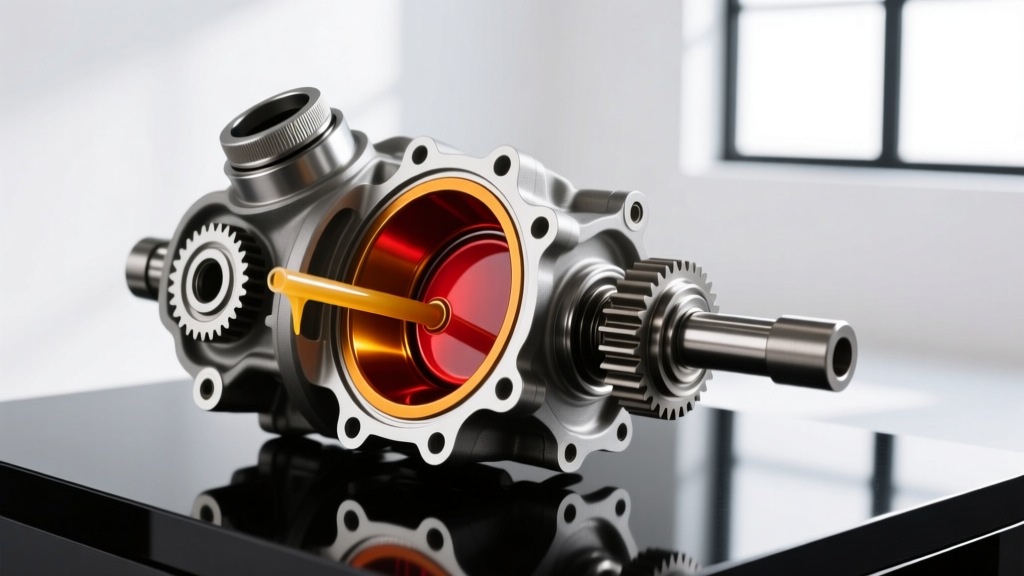
An axle housing is not entirely filled with gear oil. Typically, 15% to 20% of the internal volume is an air void. When the differential operates under heavy load—especially if the fluid has degraded and lost its friction-modifying properties—the internal temperature spikes. This heats the trapped air, causing it to expand. If the axle breather vent is restricted, this expansion creates a massive internal pressure spike that will blow out your pinion seal, axle shaft seals, or differential cover gasket.
Performing a Differential Pressure Calculation
To understand why fluid condition directly impacts seal integrity, we must perform a basic differential pressure calculation using the Ideal Gas Law (P1/T1 = P2/T2). This calculation reveals the exact pneumatic force pushing against your seals when the axle reaches operating temperature.
The Formula: P2 = P1 × (T2 / T1)
Where: P = Absolute Pressure (psi), T = Absolute Temperature (Kelvin)
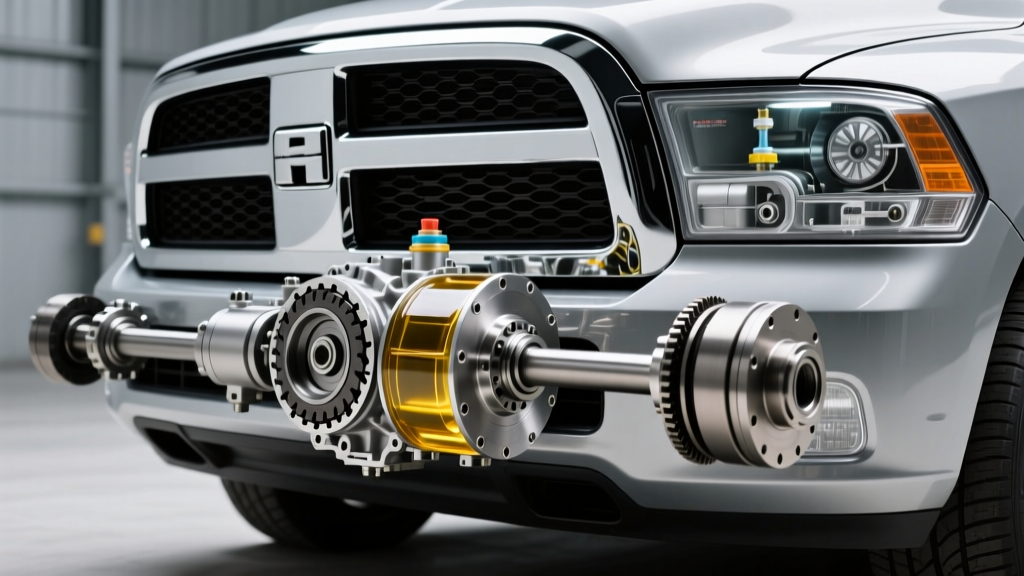
Let us run a real-world scenario on a GM AAM 11.5-inch rear axle found in modern Silverado 2500HD trucks:
- Initial State (Ambient): 70°F (294.26 K). Absolute atmospheric pressure (P1) is 14.7 psi.
- Operating State (Heavy Towing with Sheared Fluid): 240°F (388.7 K).
- Calculation: P2 = 14.7 × (388.7 / 294.26) = 19.42 psi (Absolute).
- Gauge Pressure (The Differential Pressure): 19.42 psi - 14.7 psi = 4.72 psi.
A standard pinion lip seal, such as the Timken 710481 or SKF 18656, is engineered to retain fluid via hydrodynamic lubrication and a light garter spring tension. It is designed to hold back perhaps 1 to 2 psi of static pneumatic pressure. When your differential pressure calculation yields a spike of 4.72 psi, the air forces its way past the seal lip, carrying atomized gear oil with it. This is why a 'mystery leak' at the pinion yoke often points to a clogged breather and overheated, degraded fluid.
Decoding Differential Fluid Color and Condition
Because fluid degradation is the primary catalyst for the extreme heat that causes these pressure spikes, inspecting the fluid's color and condition during a drain-and-fill is your best diagnostic tool. Gear oil contains Viscosity Index Improvers (VIIs) and extreme pressure (EP) additives like zinc dialkyldithiophosphate (ZDDP) and sulfur-phosphorus compounds. Over time, the hypoid sliding action of the ring and pinion shears these polymers, while heat oxidizes the base oil.
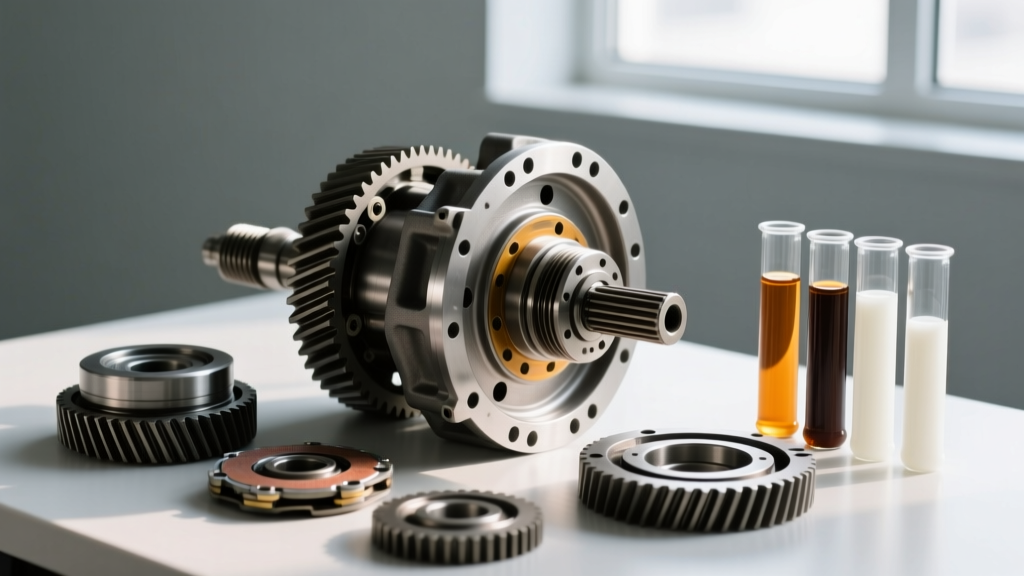
| Fluid Color / Appearance | Odor | Diagnosis & Mechanical Implication | Required Action |
|---|---|---|---|
| Honey / Translucent Amber | Mild, chemical sulfur | Optimal condition. VIIs are intact, EP additives are active. Heat dissipation is nominal. | Routine maintenance. Reinstall cover and torque to spec. |
| Dark Brown / Opaque | Burnt, acrid, sour | Severe oxidation and polymer shear. Fluid has likely dropped from a 75W-90 to a 75W-80 viscosity. Friction coefficients are elevated, causing excess heat. | Immediate flush. Inspect breather vent. Check for internal drag (brake calipers/bearings). |
| Milky / Chocolate Milk | Musty, damp | Water intrusion and hydrolysis. The sulfur-phosphorus additives have reacted with water to form mild sulfuric acid, etching bearing races. | Flush immediately. Pressure wash housing interior if possible. Replace axle shaft seals. |
| Black with Silver Glitter | Hot iron / metallic | Active spalling of the ring and pinion gears, or needle bearing failure in the pinion head. | Do not just change fluid. Drop the third member or axle assembly for a full rebuild and pattern check. |
How Fluid Shear Triggers Pressure Failures
Why does dark, burnt fluid cause the axle temperature to hit 240°F in the first place? Modern synthetic gear oils, such as AMSOIL Severe Gear 75W-90 or OEM equivalents like Motorcraft SAE 75W-140 Synthetic (Part # XL-3), rely on complex polymer chains to maintain their high-temperature viscosity. In high-offset hypoid gearsets, the sliding friction literally chops these polymer chains in half—a process known as mechanical shear.
When a 75W-140 fluid shears down to an effective 75W-90 or lower under extreme load, the hydrodynamic wedge between the ring gear teeth and the pinion gear teeth collapses. Metal-to-metal micro-welding occurs, generating immense localized heat. This heat transfers to the axle housing and the trapped air void, triggering the dangerous pressure spikes outlined in our differential pressure calculation above. Therefore, ignoring fluid color and condition is a direct pathway to over-pressurizing your axle housing.
Preventive Maintenance: Breathers, Seals, and Torque Specs
To mitigate the risks of thermal expansion and pneumatic seal failure, a comprehensive preventive maintenance protocol must address both the fluid chemistry and the housing ventilation. As of 2026, many heavy-duty trucks feature extended breather hoses routed high into the frame rails to prevent water ingestion during off-road use or deep snow driving. However, these hoses are notorious traps for mud, ice, and debris.
Step-by-Step Axle Service Protocol
- Temperature Check: Use an infrared pyrometer on the differential cover immediately after driving. If the cover exceeds 220°F (104°C) under normal loads, your fluid has sheared, and internal differential pressure is likely exceeding safe limits.
- Drain and Inspect: Remove the differential cover (do not rely solely on drain plugs, as they do not allow for visual inspection of the ring gear). Catch the fluid in a clean pan and evaluate against the Condition Matrix above.
- Clean and Prep: Scrape the RTV sealant from the housing and cover. Use a brake cleaner that is safe for painted surfaces to wash out metallic sludge from the bottom of the housing. Avoid leaving lint from shop towels inside the axle.
- Vent Verification: Locate the axle breather valve. On GM AAM axles, this is often a small plastic check-valve (GM Part # 15886631) pressed into the top of the housing or attached to a hose. Remove it and blow through it. If restricted, replace it with a universal sintered bronze breather like the Dorman 65117 or a high-flow vent from SKF.
- Refill and Seal: Apply a 3mm continuous bead of high-temp RTV silicone (e.g., Permatex Ultra Black) to the cover. Wait 10 minutes for the silicone to skin over before installation.
- Torque Specifications:
- GM AAM 11.5-inch (M8 Bolts): 25 lb-ft (34 Nm) in a crisscross pattern.
- Ford 10.5-inch / 10.25-inch (3/8-inch Bolts): 33 lb-ft (45 Nm).
- RAM AAM 11.5-inch: 25 lb-ft (34 Nm).
- Fluid Leveling: Fill with the manufacturer-specified fluid (e.g., ACDelco Dexron Gear Oil 75W-85 for lighter duty, or 75W-140 for severe towing) until it reaches the bottom of the fill hole. For vehicles with a high-offset cover, ensure you are filling to the *internal* level indicator, not the external plug height.
Summary
Differential maintenance extends far beyond simply swapping out old oil for new. By understanding the physics of thermal expansion and performing a basic differential pressure calculation, you can see exactly why a clogged breather and sheared fluid lead to blown pinion seals. Routinely diagnosing your differential fluid color and condition allows you to catch viscosity loss before it generates the extreme heat necessary to over-pressurize the axle housing. Keep your vents clear, torque your covers to spec, and your drivetrain will reliably handle the most demanding loads the road can offer.