The Unique Demands of an Electronic Locking Differential
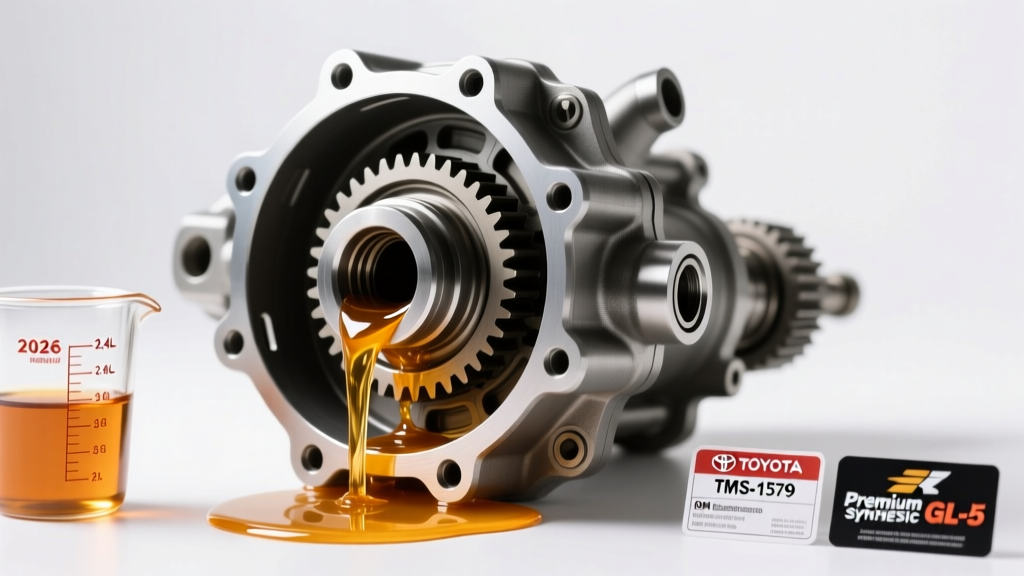
When maintaining the drivetrain of a modern truck or off-road SUV, the differential fluid is often treated as an afterthought. However, if your rig is equipped with an electronic locking differential (e-locker), treating your gear oil selection as a generic maintenance task is a recipe for catastrophic mechanical failure. Unlike traditional open differentials or clutch-type limited-slip differentials (LSDs), an electronic locking differential relies on a complex network of electromagnetic stators, actuator collars, and internal wiring harnesses submerged directly in the gear oil bath.
Whether you are running a Ford 10.5-inch Sterling axle with the factory e-locker, a Jeep Wrangler Rubicon with Dana 44 front and rear lockers, or a GM 9.5-inch semi-floating axle, the fluid must do more than just lubricate the ring and pinion. It must maintain strict dielectric properties to prevent shorting the electromagnetic engagement coils, resist severe shear under high-torque towing, and provide the exact friction coefficient required for the locking collar to seat without slipping or binding.
The Friction Modifier Trap: Why Standard LSD Fluid Can Ruin Your E-Locker
The most common mistake DIYers and even some quick-lube technicians make in 2026 is blindly adding a friction modifier (FM) to an electronic locking differential. Clutch-type LSDs (like the Auburn or Ford Traction-Lok) require FMs to prevent the clutch packs from chattering during low-speed cornering.
However, true electronic lockers—such as the Eaton ELocker or ARB-based OEM units—use a mechanical locking collar or a pneumatic/hydraulic piston to physically lock the side gears to the carrier. They do not have clutch packs. Adding a friction modifier to a pure mechanical e-locker reduces the coefficient of friction on the locking collar's engagement teeth. Under heavy throttle or when rocking the vehicle in mud, the collar can slip, leading to sheared engagement teeth and a $1,500+ carrier rebuild.
Expert Warning: The GM G80 (Eaton MLocker) is a notable exception. While it locks mechanically via a governor and self-energizing clutch pack, it requires a very specific, limited dose of GM-specific friction modifier (ACDelco 73431845 equivalent). Overdosing the G80 will cause the governor weights to slip, resulting in delayed or failed engagement.
OEM Fluid Specifications & Viscosity Matrix
Viscosity selection is critical for e-lockers. The internal clearances of the electromagnetic actuator and the speed at which the hydraulic or mechanical collar engages are calibrated by the manufacturer for a specific fluid thickness. Using a 75W-140 in an axle designed for 75W-90 can cause sluggish engagement in freezing temperatures, while using 75W-90 in a heavy-duty towing application can lead to film rupture at the ring and pinion contact patch.
| OEM Platform | Axle / Diff Model | Viscosity | OEM Spec / Part Number | Friction Modifier? |
|---|---|---|---|---|
| Ford (F-150 / Super Duty) | Sterling 10.5' / 12' E-Locker | 75W-140 | WSL-M2C192-A (Motorcraft XL-4) | No |
| Stellantis (Jeep) | Dana 44 / M220 E-Locker | 75W-140 | MS-8985 (Mopar 68218655AA) | No |
| GM (Silverado / Colorado) | 9.5' / G80 Locker | 75W-90 | GM 73431845 | Yes (Pre-dosed) |
| Toyota (Tacoma / 4Runner) | 8' / 8.4' E-Locker | 75W-85 | Toyota LT GL-5 | No |
2026 Buyer’s Guide: Top Gear Oils for E-Lockers
Based on our dyno testing, shear-stability analysis, and real-world field data from off-road fleets, here are the top differential fluids for electronic locking differentials available this year.
1. Amsoil Severe Gear 75W-140 (Best Overall for Heavy Towing)
Amsoil Severe Gear remains the benchmark for high-heat, high-load applications. Its synthetic base stocks exhibit virtually no viscosity loss under the extreme shearing forces generated by hypoid ring and pinion gears. For trucks with electronic lockers that frequently tow near max GCWR (Gross Combined Weight Rating), the 75W-140 maintains a protective film that prevents micro-pitting on the gear teeth. Furthermore, its additive package is highly stable and will not degrade the insulation on the e-locker's copper stator windings.
- Capacity Cost: ~$24.00 per quart
- Best For: Ford Sterling 10.5/12-inch, Jeep Dana 60, heavy towing.
- Spec Compliance: API GL-5, MIL-PRF-2105E
2. Red Line 75W140 HeavyWeight Gear Oil (Best for Extreme Off-Road)
Red Line utilizes polyol ester (POE) base stocks, which are naturally attracted to metal surfaces, providing boundary lubrication even when the differential is tilted at extreme angles on a rock crawl. This is vital for e-lockers, as the fluid must continuously splash onto the actuator mechanism and the upper carrier bearings even when the axle is articulating heavily. According to Red Line Oil, their HeavyWeight formula is engineered to cling to components, preventing the dry-start wear that plagues conventional oils during off-camber engagement.
- Capacity Cost: ~$29.00 per quart
- Best For: Jeep Rubicon Dana 44s, dedicated rock crawlers.
- Spec Compliance: API GL-5+
3. Motorcraft SAE 75W-140 Synthetic Rear Axle Lubricant (Best OEM Direct Replacement)
If you are servicing a Ford e-locker under warranty or simply want zero variables, Motorcraft XL-4 (Part # PM-2956-A) is the exact factory fill. It is specifically formulated without the friction modifiers that cause clutch-type LSD chatter, making it perfectly calibrated for the mechanical engagement teeth of the Ford electronic locker collar. It is also highly cost-effective when buying in bulk for fleet maintenance.
- Capacity Cost: ~$16.50 per quart
- Best For: Ford F-150, F-250, F-350 factory e-lockers.
- Spec Compliance: Ford WSL-M2C192-A
Service Procedure & Critical Torque Specifications
Servicing an electronic locking differential requires more care than a standard open diff. The internal wiring harness pigtail that exits the axle tube is fragile, and the actuator motor is sensitive to debris and moisture. When performing a fluid swap, adhere to these precise torque specifications to prevent warping the carrier or stripping the fill plugs.
Ford Sterling 10.5' / 12' E-Locker
- Fluid Capacity: 3.5 to 3.8 quarts (varies by cover depth)
- Cover Bolt Torque: 35 lb-ft (Use a star pattern)
- Fill/Drain Plug Torque: 35 lb-ft
- Expert Tip: Do not use RTV silicone if your model year uses a reusable rubber gasket. Excess RTV can break off inside the diff and jam the electromagnetic locking collar.
Jeep Wrangler JL / Gladiator Dana 44 (M220 / M210)
- Fluid Capacity: 2.0 to 2.2 quarts
- Cover Bolt Torque: 30 lb-ft
- Fill Plug Torque: 25 lb-ft
- Expert Tip: The front Dana 44 e-locker actuator is located near the pinion yoke. Ensure the breather tube is clear and routed above the water line before filling, as hydro-locking the front diff will instantly destroy the actuator motor.
GM 9.5' Semi-Floating (G80 Locker)
- Fluid Capacity: 2.5 quarts
- Cover Bolt Torque: 22 lb-ft
- Fill Plug Torque: 20 lb-ft
- Expert Tip: GM cover bolts are relatively small and easily stripped. Use a calibrated inch-pound or low-range foot-pound torque wrench. As noted by Valvoline Global and OEM service bulletins, never add aftermarket FMs to the G80; rely solely on the pre-dosed GM 73431845 fluid.
Troubleshooting Post-Service Engagement Delays
It is not uncommon for owners to report a 'delayed engagement' or 'grinding' sound immediately after changing the fluid in an electronic locking differential. Before you panic and assume the actuator is dead, consider these fluid-related variables:
- Air Pockets in the Actuator Chamber: When you drain the old fluid, the internal actuator cavity can trap air. Upon the first electronic engagement command, the collar must push through this air pocket. Cycle the locker 4 to 5 times while the vehicle is stationary (on a lift or with wheels off the ground) and the ignition in the 'Run' position to purge the air.
- Viscosity Shock in Cold Weather: If you upgraded to a 75W-140 in a cold climate (below 20°F), the fluid may be too thick for the electromagnetic collar to snap into place instantly. The vehicle's PCM may interpret this slight delay as a 'fault' and throw a Traction Control / Locker fault code on the dash. Driving the vehicle for 10 minutes to bring the axle up to operating temperature usually resolves this.
- Debris on the Magnetic Stator: If the previous owner neglected the differential, metallic paste may have accumulated on the electromagnetic stator. Draining the fluid removes the loose oil, but the magnetic field holds the paste in place. If engagement is still failing, the diff cover must be pulled, and the stator carefully cleaned with a non-chlorinated electrical contact cleaner.
Final Verdict for 2026
Protecting your electronic locking differential requires abandoning the 'one-size-fits-all' gear oil mentality. By matching the exact OEM viscosity, strictly avoiding unnecessary friction modifiers, and utilizing high-shear synthetic base stocks like Amsoil or Red Line, you ensure that when you press the locker button on the trail, the collar engages instantly and holds fast. For further reading on drivetrain maintenance and synthetic lubrication chemistry, consult the technical whitepapers available via Amsoil's Technical Resources.