When fleet managers, heavy-duty tow rig owners, and off-road enthusiasts ask, "is front and rear differential service necessary?" the conversation typically revolves around neglected maintenance schedules and the infamous high-pitch differential whine. However, from a tribological and thermodynamic perspective, the necessity and frequency of gear oil changes are entirely dictated by heat management and shear stability. In 2026, with modern heavy-duty trucks pushing well over 1,000 lb-ft of torque to the wheels, the thermal bottleneck of the axle assembly is the single greatest point of failure in the drivetrain.
The Thermal Bottleneck of Stamped Steel Axles
Standard factory differential covers—typically manufactured from thin, stamped steel—were designed for cost-efficiency and basic debris deflection, not thermal dissipation. When a hypoid ring and pinion gear set operates under heavy load, such as towing a 15,000-lb fifth-wheel up a 6% grade, the sliding friction between the gear teeth generates immense localized heat.
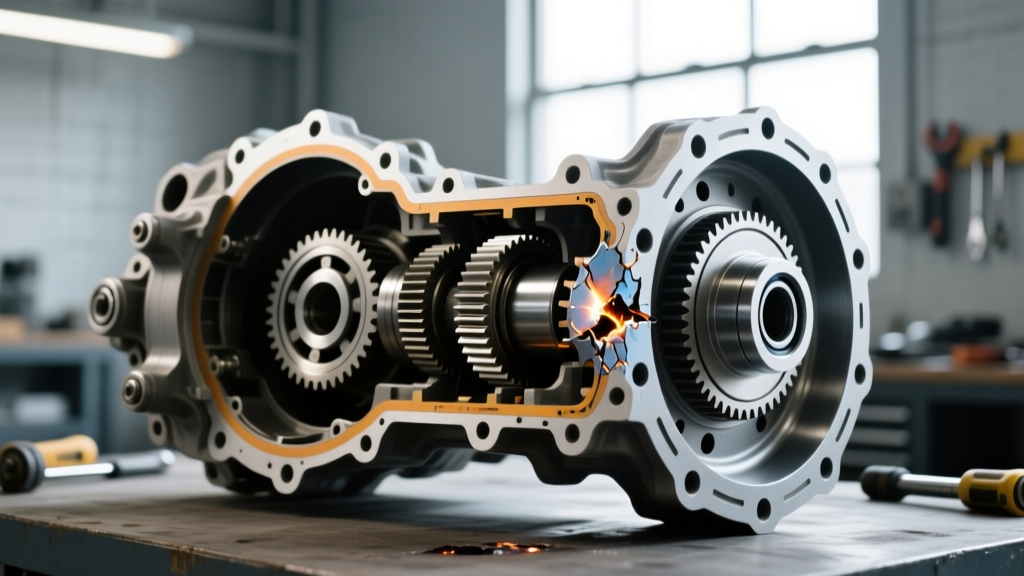
This heat transfers into the gear oil and subsequently to the differential housing. Stamped steel acts as a thermal insulator rather than a heat sink. Consequently, the fluid temperature spikes, leading to rapid oxidation. According to lubrication engineers, the general rule of thumb for gear oil degradation is that for every 18°F (10°C) increase in temperature above 180°F, the oxidation rate of the oil doubles. Once differential temperatures exceed 240°F, the extreme pressure (EP) additives—typically sulfur-phosphorus compounds required to prevent micropitting on hypoid gears—begin to volatilize and deplete.
The Tribology Reality: Upgrading your differential cover is not merely an aesthetic modification; it is a critical intervention in the thermal management of your axle assembly, directly altering the answer to whether frequent differential service is necessary.
Upgraded Differential Covers: Fins, Sumps, and O-Rings
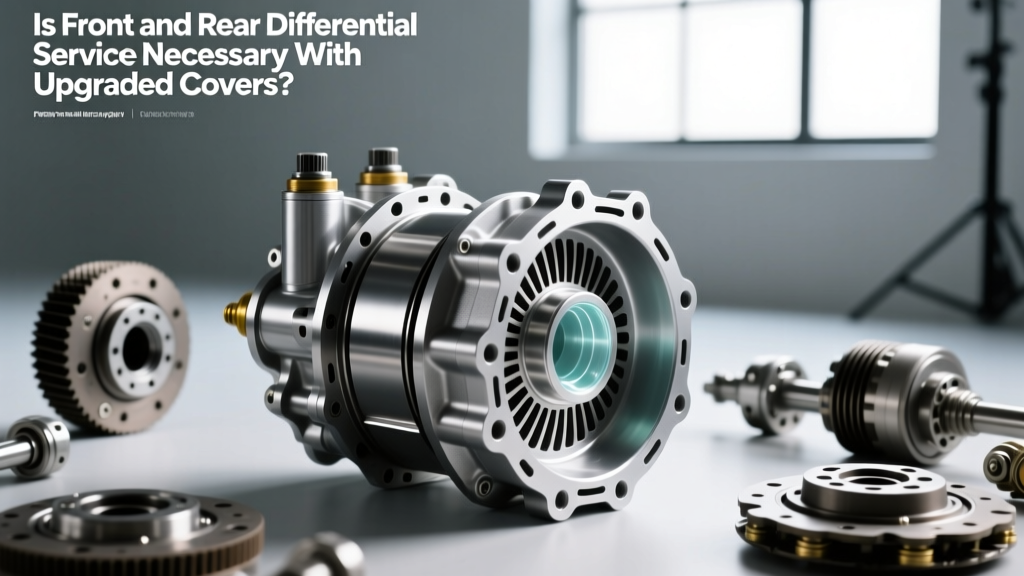
Aftermarket heavy-duty differential covers, such as those engineered by Mag-Hytec and AFE Power, address the thermal deficit through three primary engineering mechanisms:
- Convective Cooling Fins: Cast aluminum housings with deep external fins increase the surface area exposed to ambient airflow by up to 300%, dramatically improving convective heat transfer.
- Increased Fluid Capacity: Deeper sumps increase the total volume of gear oil. A larger fluid volume requires more thermal energy to raise its overall temperature, effectively increasing the axle's thermal mass and delaying the onset of critical fluid temperatures.
- Magnetic Drain Plugs and Dipsticks: Premium covers feature neodymium magnetic drain plugs that capture ferrous particulates from the ring and pinion break-in phase or normal wear, preventing abrasive lapping on the axle bearings and gear teeth.
Axle Thermal & Capacity Comparison Chart
Below is a technical comparison of stock versus upgraded differential covers for common heavy-duty axles, demonstrating the tangible impact on fluid capacity and operating temperatures during severe-duty towing.
| Axle Model (Application) | Stock Cover Capacity | Upgraded Cover Capacity | Est. Temp Reduction (Under Load) | Common Part Number (Mag-Hytec) |
|---|---|---|---|---|
| GM 11.5" AAM (Duramax/Sierra 2500HD) | ~3.4 Quarts | ~4.5 Quarts | 20°F - 25°F | GM11.5 |
| Ford 10.5" Sterling (F-250/F-350 Super Duty) | ~3.7 Quarts | ~4.8 Quarts | 15°F - 20°F | FD10.5 |
| Dana 60 (Front Axle, Various HD Trucks) | ~3.0 Quarts | ~4.0 Quarts | 10°F - 15°F | D60 |
| Chrysler 11.5" AAM (Ram 2500/3500) | ~3.4 Quarts | ~4.6 Quarts | 20°F - 25°F | C11.5 |
Installation Precision: Torque Specs and Sealing
When transitioning from a stamped steel cover to a thick-walled cast aluminum cover, installation precision is paramount to prevent gear oil leaks and housing distortion. The mating surface must be meticulously cleaned with a non-chlorinated brake cleaner to remove all factory RTV silicone residue.
Unlike factory covers that rely on messy RTV silicone bead sealing, premium aftermarket covers utilize a precision-machined O-ring groove. This allows for a positive seal using a reusable Buna-N or Viton O-ring, eliminating the risk of RTV squeeze-out breaking off inside the axle housing and clogging the oil pickup or bearing journals.
Critical Torque Specifications
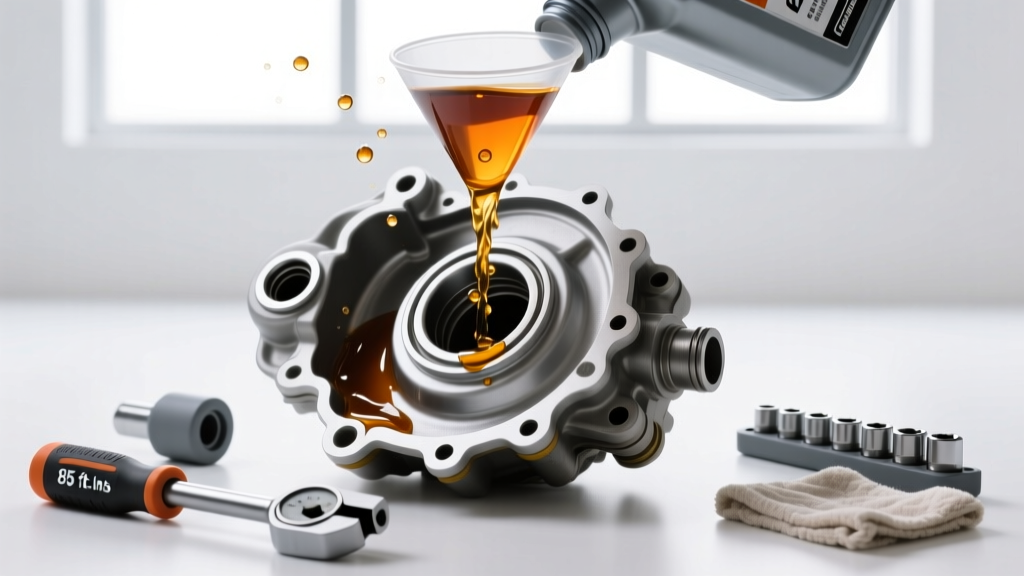
Over-torquing the cover bolts on an aluminum differential cover can strip the threads in the steel axle housing or warp the aluminum flange. Always use a calibrated inch-pound or low-range foot-pound torque wrench in a crisscross star pattern:
- GM 11.5" AAM (M10x1.5 Bolts): Torque to 33 lb-ft (45 Nm).
- Ford 10.5" Sterling (3/8"-16 or M10 Bolts): Torque to 35 lb-ft (47 Nm).
- Dana 60 / Dana 80: Torque to 30 - 35 lb-ft depending on fastener grade and thread pitch.
- Chrysler 11.5" AAM: Torque to 33 lb-ft (45 Nm).
So, Is Front and Rear Differential Service Necessary With Cooling Covers?
With the installation of a high-capacity, finned aluminum differential cover and a premium synthetic fluid like AMSOIL Severe Gear 75W-90 or 75W-140, the thermal environment of the axle is vastly improved. But does this mean you can ignore the differential entirely?
The definitive answer is yes, front and rear differential service is still absolutely necessary.
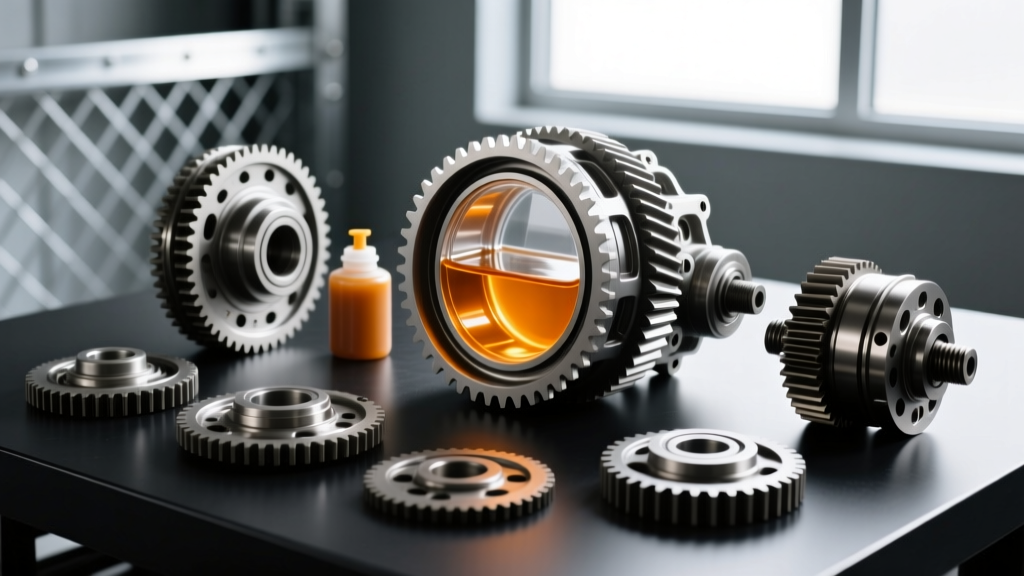
While an upgraded cover mitigates thermal oxidation, it does not prevent mechanical shear. Hypoid gear sets operate under extreme boundary lubrication conditions. The sliding action of the gear teeth physically shears the long-chain polymers in the gear oil over time, leading to a permanent loss of kinematic viscosity. Furthermore, water ingress through the axle breather tube during deep water crossings or extreme temperature fluctuations (which cause the axle to "breathe" in condensation) will emulsify the fluid, turning it into a milky, ineffective sludge that destroys bearings regardless of how cool the external fins keep the housing.
Revised Severe-Duty Service Intervals for Cooled Axles
By upgrading your differential covers and utilizing top-tier synthetic gear oils, you can safely extend your service intervals, provided you perform regular fluid analysis or visual inspections via the integrated dipstick. Here is the revised technical framework for differential service intervals:
- Stock Cover + Conventional/Standard Synthetic (Severe Duty Towing): Service every 30,000 to 50,000 miles. Fluid will exhibit severe darkening and sulfur odor due to thermal breakdown.
- Upgraded Cooling Cover + Premium Synthetic (Severe Duty Towing): Service every 75,000 to 100,000 miles. The fluid will maintain its viscosity index, but EP additive depletion and mechanical shear still mandate a change at the 100k mark.
- Submersion / Water Ingress Event: Immediate service required, regardless of mileage or cover type. If the fluid on the dipstick resembles a chocolate milkshake, the axle must be flushed and refilled immediately to prevent catastrophic bearing failure.
Ultimately, asking if front and rear differential service is necessary is a matter of protecting a massive financial investment. An upgraded differential cover buys you time, lowers operating temperatures, and provides diagnostic access via dipsticks and magnetic plugs, but it does not eliminate the fundamental laws of fluid dynamics and mechanical wear. Treat your axle assemblies with the same maintenance rigor as your engine and transmission, and they will reliably transfer torque to the pavement for hundreds of thousands of miles.