The Thermodynamics of Differential Heat and Housing Stress
When pushing a heavy-duty truck through a mountain pass or tracking a high-horsepower build, the differential acts as a massive friction generator. The ring and pinion gear mesh efficiency in a standard hypoid setup is typically between 95% and 98%. That 2% to 5% mechanical loss is converted directly into thermal energy. Under severe load, such as towing a 15,000-pound trailer up a 6% grade, internal gear oil temperatures can easily spike past 280°F (137°C). While modern synthetic 75W-140 fluids can survive these peaks, the metal housing containing them is subjected to extreme thermal expansion.
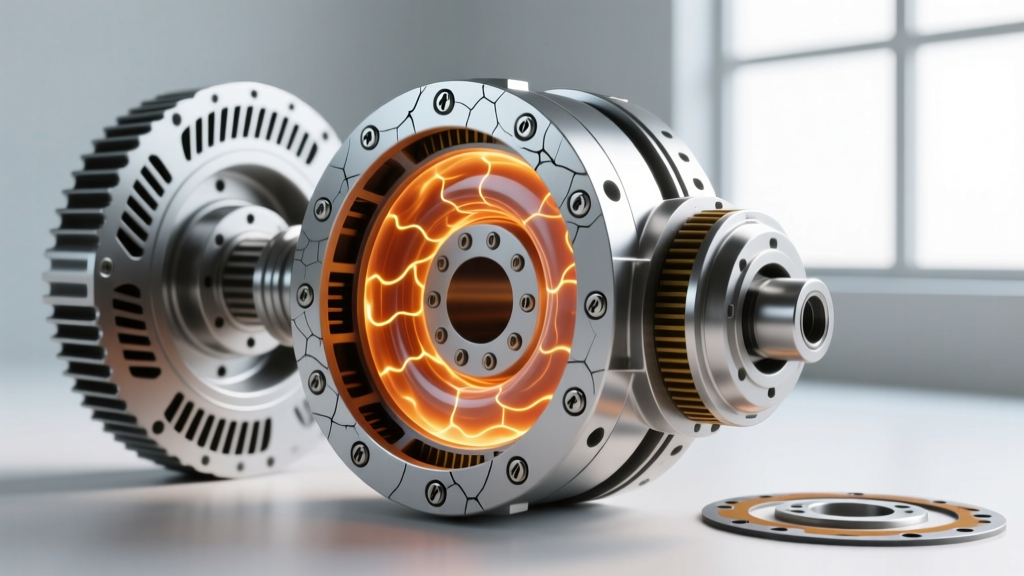
This continuous cycle of intense heating and rapid cooling creates localized hot spots and severe tensile stress within the casting. When the thermal gradient exceeds the metallurgical limits of the housing—especially during sudden quenching events like driving through a water crossing after heavy towing—the resulting shock can cause a catastrophic cracked differential housing. Understanding the relationship between differential cover design, heat dissipation, and housing metallurgy is critical for preventing this expensive failure.
Metallurgy and Thermal Shock: Why Housings Crack
To understand why a cracked differential housing occurs, we must examine the materials used in modern axle assemblies. Most heavy-duty differentials utilize nodular cast iron or cast aluminum alloys (such as A356-T6). While cast iron offers superior tensile strength and damping characteristics, it is brittle and highly susceptible to thermal shock.
The Danger of the Stamped Steel Cover
Original Equipment Manufacturer (OEM) differential covers are frequently made from stamped steel. While cheap to produce, stamped steel acts as a thermal insulator rather than a heat sink. It traps radiant heat inside the housing, causing the gear oil to retain thermal energy longer. Furthermore, stamped steel covers rely on RTV silicone or thin cork gaskets. When the housing expands under extreme heat, the mating surface between the cast iron housing and the flexible steel cover can warp, leading to micro-fractures in the housing's mounting flange or the carrier bearing webs.
Expert Insight: A cracked differential housing rarely happens from a single overheating event. It is almost always the result of cyclic thermal fatigue exacerbated by poor heat dissipation at the cover, combined with sudden environmental quenching.
Differential Cover Upgrades for Maximum Cooling
Upgrading your differential cover is the most cost-effective method to manage thermal expansion and prevent housing stress. By replacing a stamped steel cover with a finned, cast aluminum alternative, you increase the surface area for convective cooling and introduce a material that actively pulls heat away from the gear oil.
| Cover Type | Material | Heat Dissipation | Weight Impact | Best Application |
|---|---|---|---|---|
| OEM Standard | Stamped Steel | Poor (Insulates Heat) | Lightest | Light-duty commuter driving |
| Heavy-Duty OEM | Cast Iron | Moderate (High Thermal Mass) | Heaviest | Off-road rock crawling (impact resistance) |
| Aftermarket Finned | Cast Aluminum (e.g., Mag-Hytec) | Excellent (Active Heat Sink) | Moderate | Heavy towing, sled pulling, desert racing |
| Active Cooled | Aluminum w/ Fan/Pump Ports | Superior (Forced Convection) | Heaviest | Extreme commercial towing, track use |
Leading manufacturers like Mag-Hytec and PPE (Pacific Performance Engineering) engineer their covers with internal baffling and external cooling fins. According to Mag-Hytec Technical Information, their cast aluminum pans can drop differential fluid temperatures by 20°F to 40°F under load compared to stamped steel, significantly reducing the thermal expansion stress on the primary housing casting.
Sealing Under Thermal Expansion: RTV vs. O-Rings
When the differential housing and the new aluminum cover heat up, they expand at different rates due to their distinct coefficients of thermal expansion. This differential growth rate is a primary culprit for flange warping and eventual cracking near the bolt holes.
- RTV Silicone: If using RTV, you must select a sensor-safe, high-torque formula like Permatex Ultra Black (81878). As noted in the Permatex Gasket Maker Specifications, this formula resists the aggressive friction modifiers found in modern 75W-90 and 75W-140 synthetic gear oils. However, RTV requires a strict 24-hour cure time before filling with fluid to prevent blowouts under pressure.
- O-Ring Seals: Premium aftermarket covers utilize a machined groove with a thick rubber O-ring. O-rings are vastly superior for thermal cycling because they flex and compress dynamically as the aluminum cover and iron housing expand and contract at different rates, preventing the rigid stress transfer that leads to a cracked differential housing.
Active Cooling Systems: Beyond the Cover
For extreme applications—such as a Duramax or Cummins diesel truck towing max GCWR in high ambient temperatures—passive finned covers may not suffice. Active differential cooling systems utilize a PTO-driven or electric pump to draw hot gear oil from the bottom of the housing, push it through an external air-to-oil heat exchanger (mounted in front of the radiator or AC condenser), and return it to the top of the differential.
This forced circulation eliminates the localized hot spots on the ring gear and pinion bearings that cause uneven housing expansion. When installing external cooler lines, ensure you use high-pressure PTFE (Teflon) hoses rated for continuous 300°F operation, as standard rubber transmission cooler hoses will degrade rapidly when exposed to synthetic gear oil additives.
Diagnostic Checklist: Inspecting for Thermal Damage
If you suspect your axle has suffered from severe overheating, you must inspect the housing for micro-fractures before they propagate into a fully cracked differential housing. Follow this diagnostic protocol:
- Visual Flange Inspection: Remove the differential cover and clean the mating surface with brake cleaner. Look for hairline cracks radiating outward from the 10mm or 3/8-inch cover bolt holes.
- Dye Penetrant Testing: Apply a commercial dye penetrant (such as Permatex 80002) to the carrier bearing webs and the pinion snout area. Let it sit for 15 minutes, wipe it clean, and apply the developer powder. Any thermal cracks will immediately draw the red dye to the surface.
- Bore Measurement: Use a dial bore gauge to measure the carrier bearing bores. Extreme heat can cause the bores to distort out of round. If the bore is more than 0.002 inches out of spec, the housing is thermally warped and must be replaced or line-bored.
- Fluid Analysis: Drain the gear oil into a clear pan. If the fluid smells burnt (like sulfur and ash) or contains a high volume of fine, glitter-like metallic particulate, the pinion bearing has likely suffered thermal breakdown, transferring destructive harmonic vibrations into the housing.
Torque Specifications and Reassembly
Proper fastener torque is vital to distributing clamping load evenly across the cover flange. Uneven clamping creates localized stress risers that accelerate fatigue cracking. Always use a calibrated inch-pound or foot-pound torque wrench in a star pattern.
- GM 11.5-inch AAM (2500HD/3500HD): M10x1.5 cover bolts must be torqued to exactly 33 lb-ft.
- Ford 10.5-inch Sterling: Cover bolts torque to 33-35 lb-ft.
- Dana 60 / Dana 70: 3/8"-16 bolts should be torqued to 25-30 lb-ft. For further engineering data on Dana axle limits, refer to the Dana Spicer Technical Resources portal.
Cost Analysis and Final Verdict
Ignoring differential thermodynamics is a costly mistake. A premium finned aluminum differential cover costs between $180 and $350. An active external cooler kit ranges from $450 to $800. In stark contrast, replacing a cracked differential housing requires a bare casting ($800 to $1,500), a complete master rebuild kit with bearings and seals ($250 to $400), specialized setup tools, and roughly 8 to 12 hours of bench and labor time, easily pushing the total repair bill past $3,000.
By upgrading to a high-capacity, finned cast aluminum cover, utilizing O-ring sealing technology, and monitoring fluid temperatures during extreme duty cycles, you effectively manage thermal expansion. This proactive approach ensures the structural integrity of your axle assembly and permanently removes the threat of a cracked differential housing from your maintenance worries.