The Hidden Cost of Drivetrain Thermodynamics
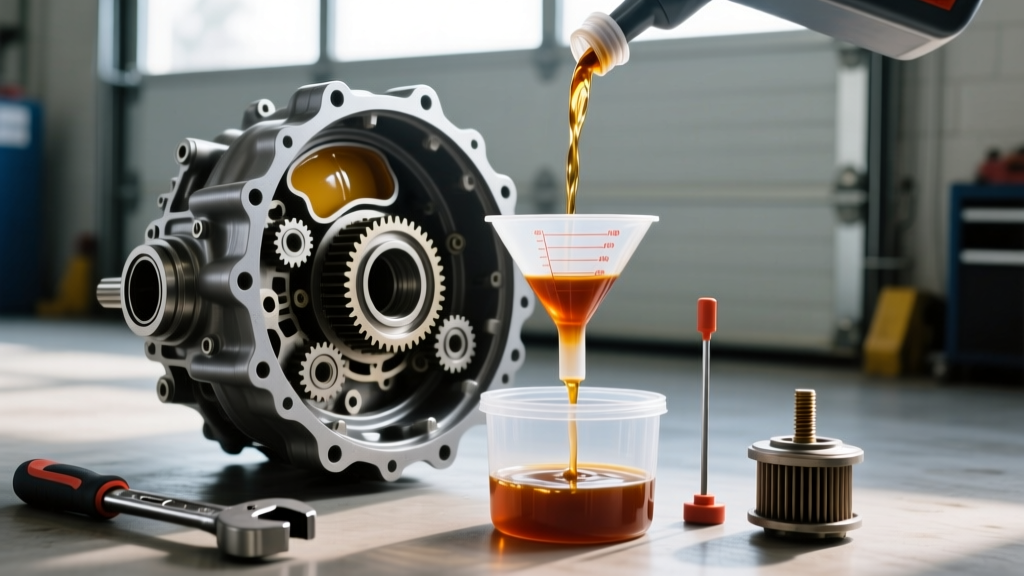
When enthusiasts and fleet managers budget for differential maintenance, the focus almost exclusively lands on the cost of the fluid itself. However, as we navigate the 2026 automotive landscape, the synergy between differential gear oil specifications and the often-ignored differential breather valve represents one of the most critical cost-saving relationships in drivetrain engineering. Selecting a high-performance gear oil without evaluating your axle's ventilation strategy is a financial gamble that frequently ends in blown pinion seals, contaminated brake rotors, and catastrophic bearing failure.
This comprehensive cost analysis breaks down the financial and mechanical realities of pairing specific API GL-5 gear oil viscosities with appropriate breather valve upgrades, ensuring your axle assemblies survive extreme thermal cycling without leaking expensive synthetic fluids onto the pavement.
Differential Gear Oil Specifications: Viscosity and Thermal Expansion
Differential gear oil specifications are dictated by the API (American Petroleum Institute) GL-5 standard, which mandates high levels of sulfur-phosphorus extreme pressure (EP) additives to protect hypoid ring and pinion gears. But beyond wear protection, the base oil's viscosity and thermal expansion coefficient dictate internal axle pressure.
When a differential operates under heavy load—such as a 2024+ Ford F-150 with a 9.75-inch rear axle towing 8,000 lbs, or a Jeep Wrangler Rubicon crawling in 4LO—internal fluid temperatures can easily exceed 250°F (121°C). At these temperatures, the gear oil expands, and the air pocket inside the axle housing pressurizes. If the differential breather valve cannot vent this pressure, the path of least resistance becomes your inner axle seals or the pinion seal.
Gear Oil Specification & Cost Matrix
| Gear Oil Specification | Primary Application | Thermal Expansion Factor | Avg. Cost Per Quart (2026) | Breather Demand |
|---|---|---|---|---|
| 75W-90 Synthetic (API GL-5) | Daily driving, light towing, IRS axles | Moderate | $18.00 - $22.00 | Low (OEM Cap Sufficient) |
| 75W-140 Synthetic (API GL-5) | Heavy towing, track use, solid axles | High | $23.00 - $28.00 | High (Remote Vent Recommended) |
| SAE 250 Racing Gear Oil | Dedicated off-road, drag racing | Extreme | $35.00 - $45.00 | Critical (Catch Can / High-Flow) |
Source data compiled from Red Line Oil Technical Information and current 2026 retail synthetic lubricant pricing.
The Differential Breather Valve: Your First Line of Defense
The factory differential breather valve is typically a rudimentary plastic or brass cap pressed into the top of the axle tube or differential cover. Its sole purpose is to allow expanding air to escape while preventing water and dirt from entering during cooling cycles. The problem? OEM breathers are notoriously prone to clogging from mud, road grime, and internal oil mist.
When you upgrade to a thicker, high-temperature 75W-140 gear oil specification to protect your ring and pinion under load, you are fundamentally altering the thermal dynamics of the housing. Thicker oils tend to trap more air bubbles (aeration) and generate higher internal splash pressures. If your OEM breather valve is restricted, internal pressures can spike past 4-6 PSI. Standard rubber lip axle seals are generally only designed to retain fluid, not withstand positive internal air pressure. The result is a blown seal.
The True Cost of a Blown Axle Seal
To understand the ROI of a breather upgrade, consider the repair cost of a failed seal caused by a clogged breather:
- Fluid Loss & Replacement: 3 quarts of 75W-140 synthetic ($75) + shop labor to drain and refill.
- Solid Axle Seal Replacement (e.g., Dana M220 or Ford 8.8): Requires removing the wheel, brake caliper, rotor, and axle shaft. Labor time: 1.5 to 2.5 hours per side. At an average 2026 shop rate of $175/hour, labor costs range from $262 to $437.
- Independent Rear Suspension (IRS) Seal Replacement (e.g., ZF rear modules): Often requires dropping the rear subframe or CV axle extraction. Labor time: 3.0 to 4.5 hours. Cost: $525 to $787.
- Collateral Damage: Gear oil contaminating rear brake pads and rotors, adding another $250 to $400 to the repair bill.
Total potential cost of ignoring the breather valve: $600 to $1,200+.
Cost Breakdown: OEM vs. Upgraded Breather Systems
Upgrading your differential breather valve is one of the highest-ROI modifications in drivetrain maintenance. Below is a price breakdown of common breather solutions, ranging from OEM replacements to severe-duty remote kits.
| Breather Valve Type | Part Number / Example | Hardware Cost | Installation Labor | Best For |
|---|---|---|---|---|
| OEM Plastic Replacement Cap | Spicer/Dana 10-102-3 | $6.00 - $12.00 | 0.1 hrs (DIY) | Stock trucks, highway driving |
| Extended Hose Fitting (1/4' NPT) | Custom Brass Fitting + Poly Hose | $15.00 - $25.00 | 0.3 hrs | Light off-road, water crossings |
| Remote Differential Breather Kit | ARB 1701102 | $55.00 - $75.00 | 1.0 hr | Overlanding, deep mud, heavy towing |
| High-Flow Catch Can Breather | Custom Fab / Racing Setup | $90.00 - $150.00 | 1.5 hrs | Dedicated rock crawling, racing |
For fleet vehicles or daily drivers subjected to heavy towing, the ARB Differential Breather Kit (or equivalent high-flow remote vent) is the sweet spot. By routing the vent line up into the engine bay or bed rail, you eliminate the risk of water ingestion during cooling cycles and ensure unrestricted airflow regardless of axle articulation or mud buildup.
Installation Torque Specs and Service Procedures
When servicing the differential gear oil and upgrading the breather valve, precision is required to avoid stripping threads or crushing gaskets. Below are critical torque specifications and procedural notes for common 2024-2026 axle platforms.
Dana M210 / M220 (Jeep JL / Gladiator)
- Differential Cover Bolts: M8 bolts torque to 25-30 lb-ft. Use a star-pattern tightening sequence.
- Breather Fitting: Typically 1/8' NPT or M10x1.0 metric. If installing an aftermarket brass barb for a remote hose, apply Loctite 567 PTFE thread sealant and torque to 12-15 lb-ft. Do not overtighten, as the cast-iron or aluminum diff cover threads are easily stripped.
- Fluid Capacity: Rear M220 requires approximately 2.4 quarts (2.27L) of 75W-140 GL-5.
Ford 9.75-Inch Rear Axle (F-150 / Expedition)
- Differential Cover Bolts: Torque to 33 lb-ft.
- Breather Location: Often located on the upper axle tube. If upgrading to a remote valve, ensure the new fitting is clocked correctly before the thread sealant cures to avoid kinking the vent hose.
- Fluid Capacity: 3.0 to 3.4 quarts depending on limited-slip additive requirements. Note: Ford specifies adding 4 oz of XL-3 Friction Modifier if equipped with a standard clutch-type Limited Slip Differential (LSD).
Always verify exact torque specifications and fluid capacities via the Spicer Parts Technical Resources portal or your vehicle's OEM service manual before beginning work.
Expert Verdict: Maximizing Drivetrain ROI
The intersection of differential gear oil specifications and breather valve functionality is a masterclass in preventative maintenance economics. Spending $25 on a high-quality 75W-140 synthetic gear oil to protect your ring and pinion is a wasted investment if a $4 clogged plastic breather cap allows internal pressure to blow out a $30 axle seal, resulting in $500+ in shop labor.
For any vehicle operating in 2026 that tows heavy loads, tackles off-road terrain, or sees track time, upgrading to a remote differential breather valve is non-negotiable. By matching the thermal expansion characteristics of your chosen API GL-5 gear oil with an unrestricted, elevated venting system, you effectively eliminate pressure-induced seal failures. This minor upfront hardware cost secures your fluid investment, keeps your brake rotors clean, and ensures your drivetrain remains reliable for hundreds of thousands of miles.