The Economics of Heavy-Duty Axle Rebuilds
When rebuilding a heavy-duty differential like a Dana 60, GM 14-bolt 10.5-inch, or Ford 10.5-inch Sterling, the financial focus usually lands on the ring and pinion gear sets or the master bearing kits. However, fleet managers and off-road enthusiasts frequently overlook two critical line items that dictate the long-term reliability and true cost of the service: the precision tooling required for assembly, and the highly specific differential gear oil specifications needed to keep hypoid gears alive under extreme loads. In this 2026 cost analysis, we break down the hidden expenses of axle service, starting with the essential tooling and moving deep into the chemistry, viscosity grades, and market pricing of modern gear lubricants.
Tooling Investment: The Differential Housing Spreader
Installing a carrier assembly into a heavy-duty axle housing requires overcoming significant bearing preload. The bearing bores in nodular or cast iron housings are machined to exact tolerances. Attempting to wedge the carrier into place with pry bars or brute force risks scoring the bearing seats, galling the housing, or worse, inducing a micro-fracture that will eventually split the casing under torque.
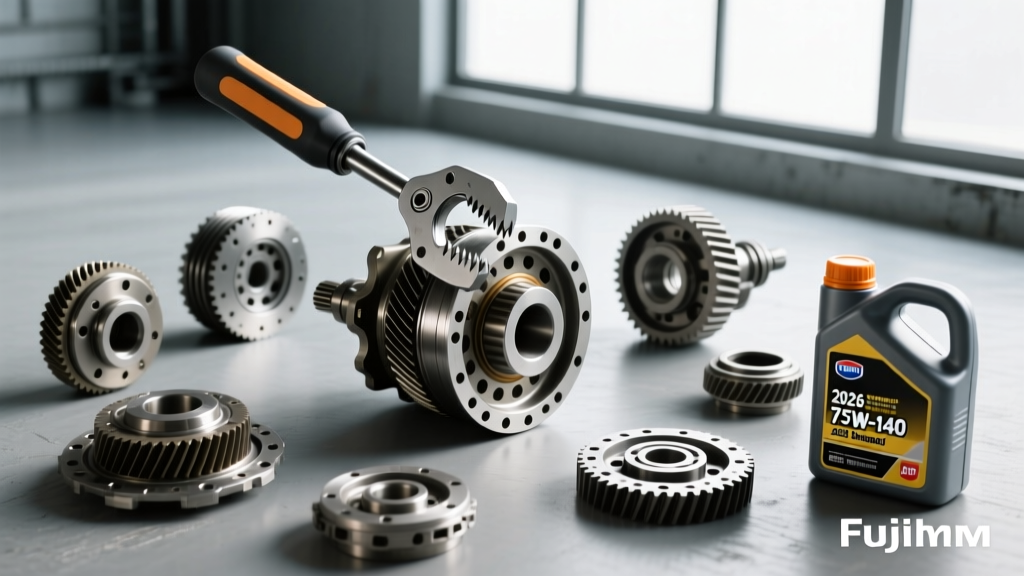
To prevent this, professional drivetrain technicians use a differential housing spreader. This tool applies controlled, symmetrical mechanical or hydraulic force to spread the housing legs by roughly 0.005 to 0.015 inches, allowing the carrier to drop in without resistance. Once the spreader is released, the housing clamps down on the carrier bearings with the precise preload required for gear longevity.
Spreader Tooling Cost Breakdown
- Purchase (OTC 6612 or equivalent heavy-duty adapter kits): $180.00 - $260.00
- Rental (Auto parts store loaner tool programs): $45.00 - $60.00 deposit/fee
- Cost of Failure (Replacing a cracked Dana 60 bare housing): $450.00 - $850.00+
Expert Insight: If you are performing a single gear swap, renting a spreader is the most cost-effective route. However, if you are running a shop or frequently swapping axle ratios for rock crawling and towing, purchasing a dedicated spreader pays for itself on the second use while eliminating the risk of catastrophic housing damage.
Differential Gear Oil Specifications: Chemistry and Cost
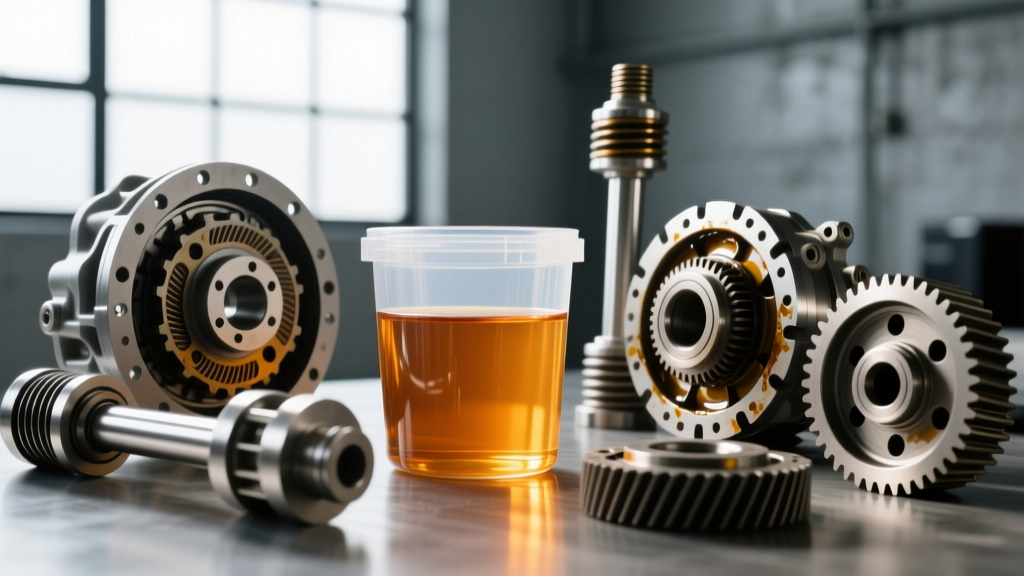
Once the housing is safely assembled and the carrier bearing caps are torqued to spec (e.g., 70-85 lb-ft for a Dana 60; 120-140 lb-ft for a GM 14-bolt), the focus shifts to lubrication. Differential gear oil specifications are governed by the API (American Petroleum Institute) and SAE J306 standards. For virtually all modern automotive and truck differentials, API GL-5 is the mandatory specification.
GL-5 gear oils contain high concentrations of sulfur-phosphorus Extreme Pressure (EP) additives. Under the intense sliding friction of hypoid gear teeth, these additives react with the metal surface to form a sacrificial iron-sulfide/iron-phosphide film. This prevents microwelding, spalling, and catastrophic gear seizure. However, this chemistry comes at a premium, and the cost varies wildly based on the base oil formulation (conventional vs. full synthetic) and the viscosity grade.
Viscosity Grades: 75W-90 vs. 75W-140 vs. 80W-90
Choosing the wrong viscosity not only impacts your wallet but also your fuel economy and axle temperatures. SAE J306 defines these grades based on kinematic viscosity at 100°C and Brookfield viscosity at low temperatures.
- SAE 75W-90: The modern standard for light-duty, half-ton trucks (Ford 8.8, GM 8.6) and daily-driven SUVs. Offers excellent cold-weather flow and fuel efficiency.
- SAE 75W-140: Specified for heavy towing, 3/4-ton and 1-ton axles (Dana 60, Dana 70, GM 11.5), and severe off-road use. Maintains a thicker protective film at extreme operating temperatures (250°F+).
- SAE 80W-90: A conventional, budget-friendly mineral oil. Prone to shearing and oxidation under heavy loads; largely being phased out of OEM severe-duty specifications.
2026 Gear Oil Market Price Matrix
Below is a cost comparison of premium and standard gear oils based on current 2026 market pricing. Note that heavy-duty axles like the Dana 60 rear require approximately 1.75 to 2.0 quarts (3.5 - 4.0 pints), while the GM 14-bolt 10.5-inch requires about 2.25 quarts.
| Brand & Product | Spec / Viscosity | Part Number | Price Per Quart | Best Application |
|---|---|---|---|---|
| Mobil 1 Synthetic Gear Lube | API GL-5 / 75W-90 | 104361 | $13.50 | Daily Driving / Light Towing |
| Amsoil Severe Gear | API GL-5 / 75W-140 | SVO | $23.50 | Heavy Towing / Off-Road |
| Valvoline High Performance | API GL-5 / 80W-90 | VV832 | $8.50 | Budget / Older Light-Duty Axles |
| Red Line ShockProof | GL-5 Equivalent / Heavy | 50204 | $26.00 | Competition Rock Crawling |
Cost-per-Mile Analysis: While a conventional 80W-90 mineral oil might save you $10 per fill-up, it degrades rapidly under towing loads, requiring 15,000-mile drain intervals. A full synthetic 75W-140 costs more upfront but can safely extend service intervals to 50,000+ miles under severe duty, ultimately lowering the long-term cost of ownership while protecting your ring and pinion investment.
The Limited-Slip Differential (LSD) Additive Tax
If your axle is equipped with a clutch-type Limited Slip Differential (such as the Ford Trac-Lok, GM G80 Eaton Locker, or aftermarket Eaton Detroit Truetrac), gear oil specifications become even more complex and expensive. Clutch-based LSDs require a specific friction modifier to prevent the clutches from grabbing and releasing abruptly, which causes a violent shuddering or 'chatter' during low-speed turns.
Note: Helical gear LSDs (like the Detroit Truetrac) do NOT require friction modifiers.
Friction Modifier Pricing
- Motorcraft XL-3 (Ford Spec): $14.00 - $16.00 per 4oz bottle
- ACDelco 10-4016 (GM Spec): $12.00 - $15.00 per 4oz bottle
- Red Line Limited Slip Friction Modifier: $18.00 per 4oz bottle
Most clutch-type differentials require 2 to 4 ounces of modifier added to the gear oil. Skipping this $15 additive to save money will result in premature clutch pack wear and unbearable drivetrain noise, turning a $200 fluid service into a $600 carrier rebuild.
Comprehensive Dana 60 Service Cost Breakdown
To provide a realistic picture of what a professional-grade differential service costs when factoring in tooling, precise gear oil specifications, and consumables, review the matrix below for a standard Dana 60 rear axle rebuild and fluid service.
| Line Item | Specification / Detail | Estimated Cost (USD) |
|---|---|---|
| Housing Spreader Tool | OTC 6612 (Rental Fee / Amortized Purchase) | $50.00 |
| Master Bearing Kit | Timken / SKF (Bearings, Crush Sleeve, Seals) | $140.00 |
| Ring & Pinion Set | Motive Gear 4.10 (Example Ratio) | $280.00 |
| Synthetic Gear Oil | Amsoil 75W-140 (2 Quarts) | $47.00 |
| Friction Modifier | ACDelco 10-4016 (If LSD equipped) | $14.00 |
| Consumables | RTV Silicone, Brake Cleaner, Threadlocker | $25.00 |
| Total DIY Parts & Tooling | Excludes Machine Shop / Professional Labor | $556.00 |
When you compare this to a dealership or specialty 4x4 shop quote—which typically ranges from $1,200 to $1,800 for a complete gear swap and fluid service due to high labor rates and shop markups on Mobil 1 or OEM-branded synthetics—the DIY route offers massive savings. However, those savings are entirely dependent on your willingness to invest in the correct tooling and adhere strictly to manufacturer gear oil specifications.
Expert Verdict: Maximizing Drivetrain ROI
The intersection of mechanical assembly and chemical lubrication is where drivetrain reliability is won or lost. Never compromise on the use of a differential housing spreader; the $50 rental fee is cheap insurance against an $800 housing replacement. Furthermore, treat differential gear oil specifications as a precise science rather than an afterthought. Match the SAE viscosity to your actual payload and towing demands, always utilize the correct API GL-5 rated synthetics for shear stability, and never skip the friction modifier for clutch-based LSDs. By budgeting accurately for these specific components and fluids, you ensure your axle system operates quietly, efficiently, and reliably for hundreds of thousands of miles.