The GMT800 Axle Ecosystem: G80 Locker vs. Aftermarket LSDs
As of 2026, the GMT800 platform remains a staple in the used truck market, with many examples surpassing 250,000 miles. When maintaining the drivetrain, owners frequently search for the exact 2004 Silverado rear differential fluid capacity to perform a routine service. However, before draining a single drop of gear oil, it is vital to understand the mechanical reality of your specific rear axle. The 2004 Silverado 1500 typically features the AAM (American Axle & Manufacturing) 8.625-inch 10-bolt semi-floating axle, while the 2500HD and 3500 models utilize the massive 10.5-inch or 11.5-inch 14-bolt full-floating axles.
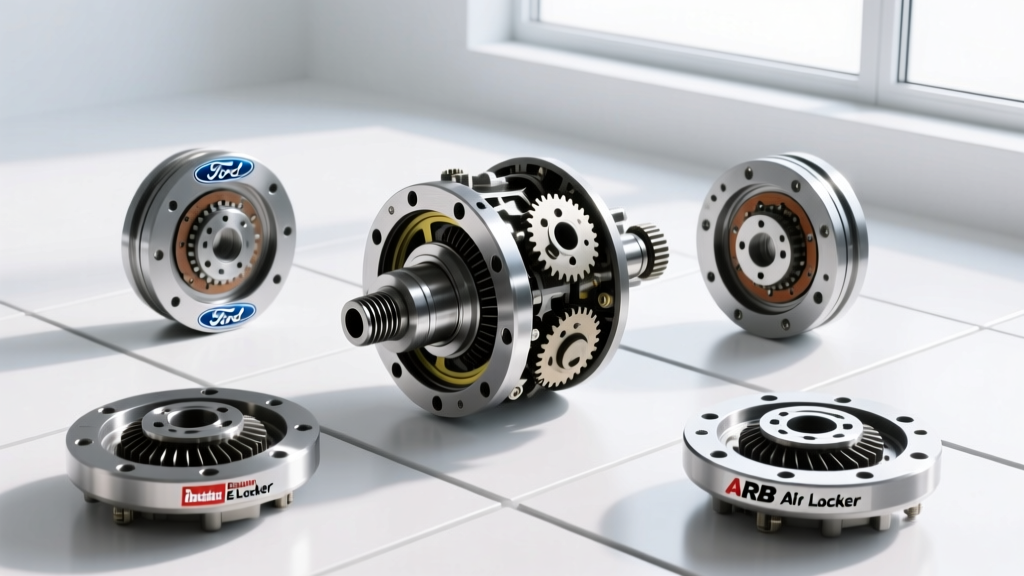
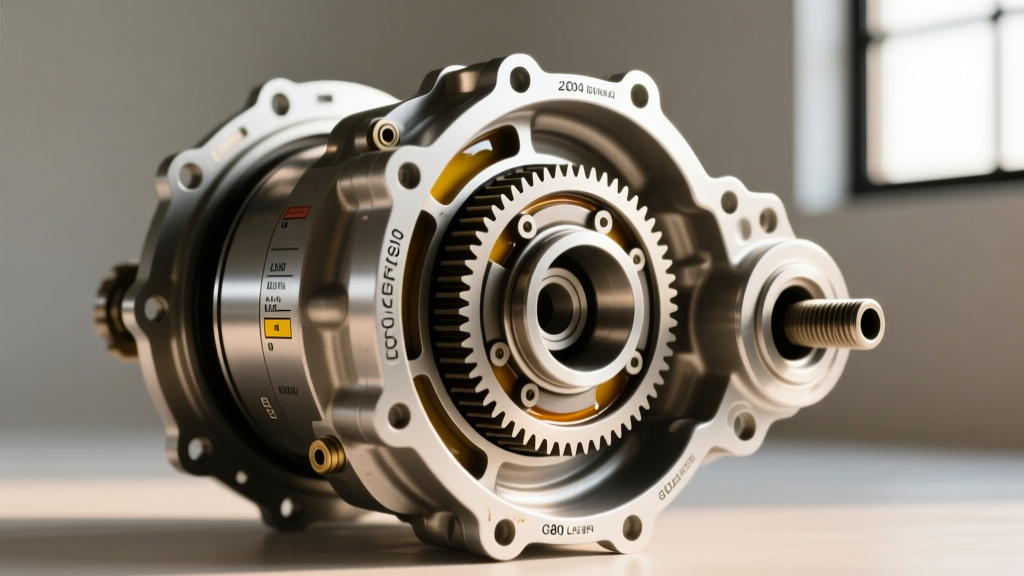
The most common point of confusion among Chevy truck owners revolves around the factory RPO G80 'locking differential.' Despite common forum misconceptions, the factory G80 is an automatic mechanical locker, not a traditional clutch-type limited-slip differential (LSD). It utilizes a flyweight governor and a locking pawl to engage a locking collar under wheel slip. Because it relies on mechanical engagement rather than clutch pack friction, the factory G80 does not require a limited-slip friction modifier additive. In fact, adding friction modifiers to a G80-equipped axle can cause the locking mechanism to slip or fail to engage entirely.
Conversely, many owners of the 2004 Silverado have swapped their open or G80 carriers for aftermarket clutch-type limited-slip differentials, such as the Eaton Positraction, Auburn Gear Pro-Series, or Motive Gear Ten Series. If your truck has been retrofitted with a clutch-type LSD, the maintenance protocol, fluid chemistry, and break-in procedures change drastically. According to Eaton Corporation, proper friction modifier application is the single most critical factor in the lifespan of a clutch-pack LSD.
Exact 2004 Silverado Rear Differential Fluid Capacity
When determining the exact 2004 Silverado rear differential fluid capacity, it is critical to identify your ring gear size and axle configuration. Overfilling can lead to excessive windage, foaming, and blown axle seals, while underfilling will starve the pinion bearings and ring gear teeth. Below is the definitive capacity and torque specification chart for the 2004 model year.
| Axle Type | Ring Gear Size | Fluid Capacity (Quarts) | Fluid Capacity (Liters) | Cover Bolt Torque |
|---|---|---|---|---|
| 10-Bolt Semi-Float (1500) | 8.625 inch | 2.1 - 2.3 qts | 2.0 - 2.2 L | 22 lb-ft |
| 14-Bolt Full-Float (2500HD) | 10.5 inch | 3.5 - 3.8 qts | 3.3 - 3.6 L | 30 lb-ft |
| 14-Bolt Full-Float (3500) | 11.5 inch | 3.8 - 4.0 qts | 3.6 - 3.8 L | 30 lb-ft |
Note: Always verify fluid level by inserting your finger into the fill hole (if equipped) or measuring from the bottom of the cover. The fluid should be exactly level with the bottom edge of the fill plug or the internal fill boss casting.
Clutch-Type LSD Operation and Friction Modifier Chemistry
To understand why maintenance is so specific, we must examine how a clutch-type LSD operates. Inside the carrier, side gears are pressed against stacks of alternating steel and friction-coated clutch discs. Pre-load is applied via S-springs or heavy coil springs. When the vehicle corners, the outside wheel must spin faster than the inside wheel. The clutch packs must slip just enough to allow this speed differentiation while still transferring torque to the wheel with traction.
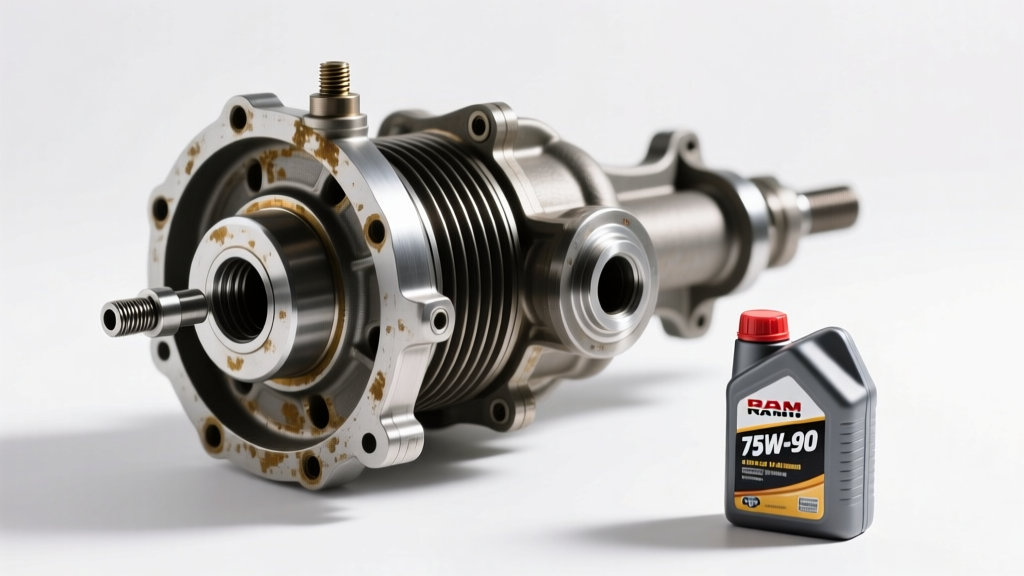
This is where gear oil chemistry becomes paramount. Standard 75W-90 GL-5 gear oil contains extreme pressure (EP) additives, typically zinc dialkyldithiophosphate (ZDDP) or sulfur-phosphorus compounds, designed to protect hypoid gear teeth under high shear. However, standard EP additives do not provide the necessary boundary lubrication for the microscopic slipping of the clutch friction materials.
Expert Warning: Running standard GL-5 gear oil in a clutch-type LSD without a friction modifier will cause 'stick-slip' friction. The clutch packs will grab, release, and grab again in rapid succession, resulting in severe chassis shudder, audible chirping during tight turns, and rapid destruction of the friction discs. Data from AMSOIL technical bulletins confirms that long-chain fatty acid friction modifiers are required to lower the static coefficient of friction, allowing the clutches to slip smoothly.
If you are servicing an aftermarket clutch-type LSD in your 2004 Silverado, you must use GM Limited Slip Axle Lubricant Additive (P/N 88900331) or an equivalent aftermarket modifier. The standard dosage is 4 ounces (118 ml) per 2 quarts of gear oil. Always add the modifier to the empty differential housing before pumping in the 75W-90 synthetic gear oil to ensure proper mixing.
Step-by-Step LSD Fluid Service Protocol
Performing a differential service on a high-mileage GMT800 requires precision. As noted by the drivetrain specialists at Ring-Pinion.com, improper sealing and contamination are the leading causes of post-service failures.
1. Drain and Clean
Unlike some modern axles with dedicated drain plugs, the 2004 Silverado 10-bolt requires removing the entire differential cover. Place a catch pan capable of holding at least 4 quarts beneath the axle. Remove the bottom bolt first to break the seal and allow the fluid to drain slowly before removing the perimeter bolts. Once the cover is off, use lint-free shop towels and a brake cleaner specifically formulated to leave zero residue (like CRC Brakleen) to wipe the internal magnets and the housing floor. Inspect the magnet for excessive metallic paste; a fine gray powder is normal for a 20-year-old axle, but chunky metal shards indicate bearing or gear failure.
2. Sealing: RTV vs. Gasket
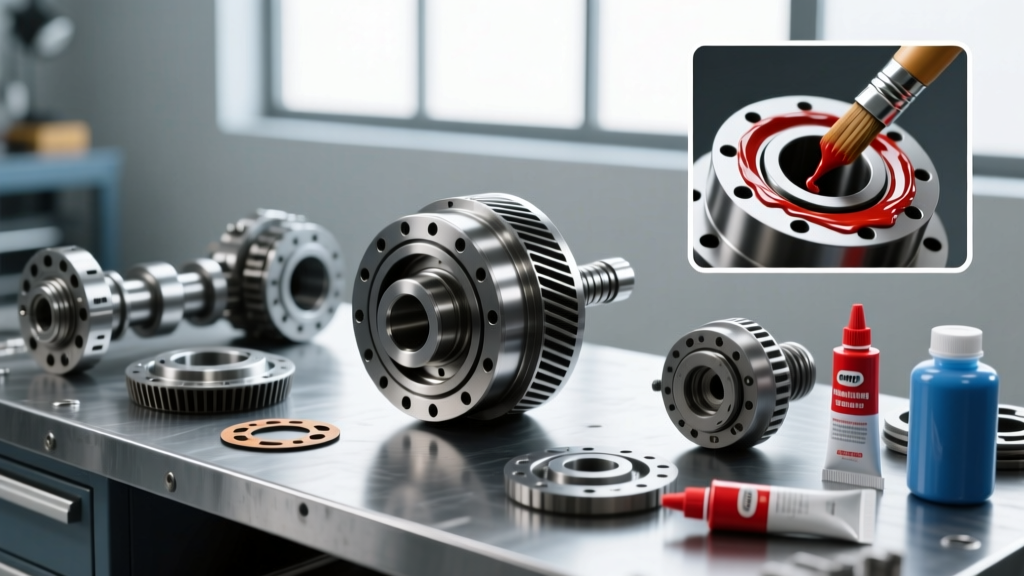
For the 10-bolt and 14-bolt AAM axles, skip the cheap cork or rubber gaskets. Use a high-quality RTV silicone specifically designed for gear oil environments, such as Permatex Ultra Black (P/N 80003). Apply a continuous 3mm bead around the cover flange, circling the inside of every bolt hole. Allow the RTV to skin over for 10 minutes before mating it to the housing to prevent silicone from squeezing inward and clogging the oil pickup.
3. Refill and Torque
Reinstall the cover and torque the bolts in a crisscross pattern to 22 lb-ft (10-bolt) or 30 lb-ft (14-bolt). Pump in your 4 ounces of friction modifier (if equipped with a clutch LSD), followed by your 75W-90 Synthetic gear oil (GM P/N 88900333 or equivalent) until it reaches the fill boss. Reinstall the fill plug and torque to 24 lb-ft.
Diagnosing LSD Chatter vs. Bearing Whine
Post-service diagnostics are crucial for verifying the health of your limited-slip differential. If you experience noise or vibration after a fluid change, use this diagnostic framework:
- Turn Chatter (Clutch Bind): If the rear end shudders or 'chirps' only during tight, low-speed parking lot turns, the clutch packs are binding. This means the friction modifier is either depleted, improperly mixed, or the wrong fluid was used. Solution: Drain and refill with fresh 75W-90 and an additional 2 ounces of friction modifier.
- Deceleration Whine (Pinion Bearing): A howling noise that occurs only when you let off the throttle between 45-65 mph indicates pinion bearing wear or improper ring-and-pinion backlash. Fluid changes will not fix this; a teardown and bearing replacement is required.
- Acceleration Whine (Ring Gear Side): Whining under load usually points to ring gear tooth wear or a crushed pinion crush sleeve altering the gear mesh pattern.
- Slip-and-Catch (G80 Locker): If you have the factory G80 and experience a harsh 'clunk' followed by a loss of locking ability, the internal governor weights may be stuck with sludge, or the locking collar teeth are rounded off. Friction modifier will not help here; the carrier must be rebuilt or replaced.
Maintaining the rear differential of a 2004 Silverado requires moving beyond generic internet advice. By understanding the precise fluid capacities, the mechanical differences between the G80 and clutch-type LSDs, and the chemical necessity of friction modifiers, you can ensure your truck's drivetrain survives the next 100,000 miles without failure.