The Economics of Differential Servicing in 2026
As we navigate the 2026 automotive service landscape, the cost of preventive drivetrain maintenance has shifted due to rising synthetic lubricant prices and specialized labor rates. For heavy-duty off-road platforms, agricultural trucks, and classic expedition vehicles, the differential is not just a gear reduction housing; it is the heart of the vehicle's traction management system. When maintaining vehicles equipped with a mechanical or pneumatic differential lock pedal, understanding the intersection of fluid dynamics, service pricing, and mechanical linkage health is critical for avoiding catastrophic drivetrain binding.
The national average for a complete front and rear differential fluid service in 2026 ranges from $160 to $450, depending on the service provider, vehicle architecture, and whether the system requires specialized limited-slip additives or high-viscosity synthetic gear oils. However, for owners of platforms like the classic Mercedes-Benz G-Wagen (W460/W461), military-spec Unimogs, or early heavy-duty Toyota Land Cruisers, the service protocol extends beyond a simple drain and fill. It requires a meticulous inspection of the actuator cylinders and shift collars that interface directly with the differential lock pedal mechanism.
Service Pricing Matrix: Dealership vs. Independent vs. DIY
Choosing where to service your axle differentials involves weighing the cost against the technician's familiarity with legacy or heavy-duty 4x4 systems. Many modern dealership service centers lack the institutional knowledge to properly service mechanical differential lock pedal linkages, often defaulting to expensive actuator replacements when a simple fluid flush and linkage lubrication would suffice.
| Service Provider | Average Cost (Front & Rear) | Fluid Quality | Linkage Inspection |
|---|---|---|---|
| Dealership Service Center | $320 - $480 | OEM Bulk 80W-90 | Rarely Included |
| Independent 4x4 Specialist | $180 - $260 | Top-Tier Synthetic 75W-90 | Standard Protocol |
| Quick-Lube / Chain Shop | $120 - $160 | Conventional GL-5 | Never Included |
| DIY Home Garage | $65 - $110 | Enthusiast Grade (Red Line / AMSOIL) | Owner Dependent |
Note: DIY costs reflect the purchase of premium synthetic gear oils, new crush washers, and thread sealants. Labor is factored at zero but requires approximately 2.5 hours of physical effort and proper jack stands.
The Differential Lock Pedal Connection: Why Fluid Matters
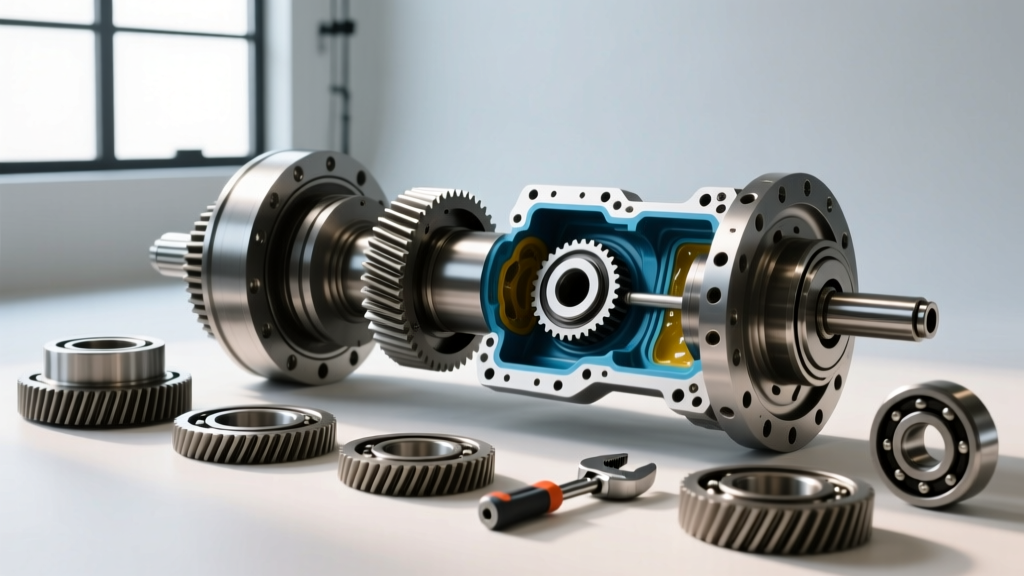
On platforms utilizing a foot-operated differential lock pedal, the physical act of pressing the pedal engages a complex series of mechanical linkages, vacuum solenoids, or hydraulic cylinders. These actuators push a shift fork inside the differential housing, sliding a locking collar over the spider gears to force both axle shafts to rotate at the exact same RPM.
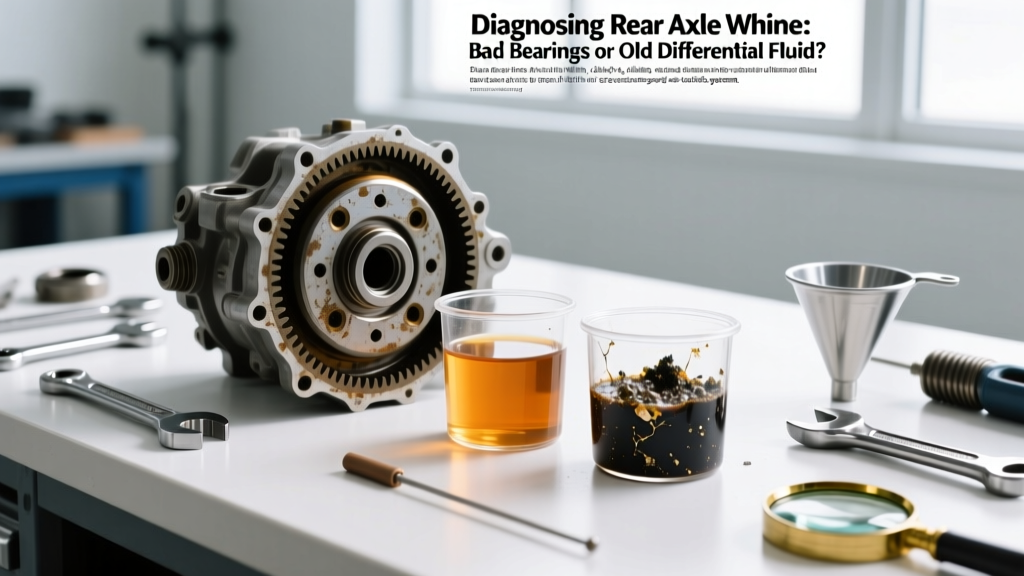
Why does gear oil matter to a mechanical pedal? Over time, conventional 80W-90 gear oil subjected to high shearing forces and moisture ingress develops a thick, varnish-like sludge. When this sludge coats the internal shift fork and locking collar, the physical resistance inside the housing increases exponentially. This manifests to the driver as a stiff, unyielding differential lock pedal, or a pedal that depresses fully but fails to engage the locker due to the collar hanging up on degraded oil deposits.
Common Failure Modes Linked to Degraded Fluid
- Pedal Stiffness: Sludge buildup on the shift fork rails increases the mechanical force required to move the collar, making the differential lock pedal difficult to depress.
- Delayed Engagement: Foaming or oxidized gear oil causes hydraulic resistance within the pneumatic actuator cylinder, resulting in a lag between pressing the pedal and hearing the locker 'clunk' into place.
- Shift Collar Teeth Shearing: Using an incorrect GL-4 fluid in a housing requiring GL-5 extreme pressure (EP) additives leads to micro-pitting on the locker collar teeth. When the pedal is pressed under load, the damaged teeth grind and refuse to mesh.
Platform-Specific Fluid Data and Torque Specifications
Accurate fluid selection is paramount. Using a friction-modified limited-slip fluid in an open differential with a mechanical locker can cause the shift collar to slip under high torque. Conversely, using a standard GL-5 fluid in a transfer case linked to the pedal mechanism (which often contains yellow metal synchronizers) will cause catastrophic sulfur-induced corrosion. Always consult factory documentation via resources like the Toyota Technical Information System or Mercedes-Benz Classic archives.
| Vehicle Platform | Front / Rear Capacity | Recommended Fluid Spec | Drain/Fill Torque |
|---|---|---|---|
| Toyota Land Cruiser (80 Series) | 3.2L / 3.5L (Locker) | 75W-90 GL-5 Synthetic | 39 Nm (29 ft-lbs) |
| Mercedes G-Wagen (W461) | 1.8L / 2.2L | 85W-90 GL-5 Mineral/Synthetic | 30 Nm (22 ft-lbs) |
| Nissan Patrol (Y61) | 2.8L / 3.1L | 80W-90 GL-5 | 43 Nm (32 ft-lbs) |
| Unimog (U1550L) | 4.5L / 5.0L | 85W-140 GL-5 Heavy Duty | 55 Nm (41 ft-lbs) |
Step-by-Step Preventive Maintenance Protocol
Executing a proper differential service requires more than just unbolting a plug. Follow this protocol to ensure the longevity of your ring and pinion gears, as well as the internal shift mechanisms governed by your differential lock pedal.
1. Preparation and Extraction
Drive the vehicle for 15-20 minutes to bring the axle assemblies up to operating temperature (approximately 140°F / 60°C). Warm gear oil flows more freely and suspends metallic particulates, ensuring a more complete drain. Safely support the vehicle on rated jack stands. Always remove the fill plug first before removing the drain plug. If the fill plug is seized or stripped, you will be stranded with an empty differential.
2. Hardware Replacement
Never reuse aluminum or copper crush washers. For Toyota applications, the standard 24mm drain plug requires a new aluminum gasket (Part #90430-24003). For Mercedes applications, inspect the magnetic drain plug for excessive ferrous shavings. A fine metallic paste is normal; chunks or spirals indicate ring and pinion gear failure.
3. Refilling and Additive Calibration
Use a high-quality synthetic gear lubricant. Brands like Red Line Oil and AMSOIL Synthetic Gear Lube offer superior shear stability and film strength compared to conventional oils. Fill the housing until the fluid level is exactly flush with the bottom thread of the fill hole. If your vehicle features a limited-slip differential (LSD) alongside a locking mechanism, ensure you add the precise volume of friction modifier (e.g., 4 oz of Ford XL-3 or equivalent) to prevent clutch pack chatter.
4. Actuator and Pedal Linkage Servicing
With the fluid replaced, cycle the differential lock pedal multiple times while the vehicle is safely elevated and the wheels are free to spin. Listen for the pneumatic hiss or mechanical clunk of the shift collar engaging. Apply a lithium-based marine grease to the external pedal pivot bushings and any exposed mechanical linkages to prevent environmental seizing.
Troubleshooting Matrix: Pedal Engagement Issues
If your differential lock pedal continues to malfunction after a fluid service, use this diagnostic matrix to isolate the fault:
| Symptom | Fluid-Related Cause | Mechanical / Electrical Cause |
|---|---|---|
| Pedal feels physically stiff | Incorrect high-viscosity fluid in cold climate | Seized pedal pivot or rusted linkage cable |
| Locker fails to engage | Sludge blocking the shift fork rail | Failed vacuum solenoid or torn actuator diaphragm |
| Loud grinding upon pedal press | Severe EP additive depletion causing gear wear | Sheared teeth on the internal locking collar |
| Locker engages but won't disengage | Varnish causing the shift collar to stick | Broken return spring inside the differential housing |
Final Thoughts on Drivetrain Longevity
Preventive maintenance on heavy-duty and expedition vehicles is an exercise in mechanical sympathy. The differential lock pedal is your direct physical interface with the internal locking mechanisms of your axles. By investing in premium synthetic gear oils, adhering to strict torque specifications, and replacing single-use crush hardware, you ensure that when you press that pedal in a low-traction environment, the drivetrain responds instantly and reliably. Ignoring fluid degradation not only threatens your ring and pinion gears but compromises the very traction systems that keep you moving forward.