The Bottleneck in Heavy-Duty Drivetrains: Why Connectors Matter
When building a reliable heavy-duty towing rig, enthusiasts and fleet managers often invest thousands into massive auxiliary transmission coolers, high-capacity deep pans, and billet torque converters. Yet, the most critical vulnerability in the entire thermal management system is frequently overlooked: the transmission cooling line connectors. As of 2026, modern diesel powertrains like the 6.7L Powerstroke paired with the 10R140, or the Duramax L5P mated to the Allison 1000, generate unprecedented low-end torque. This immense twisting force translates directly into transmission fluid heat, often pushing internal temperatures past 220°F under heavy gross combined weight rating (GCWR) loads.
A high-end stacked-plate transmission cooler for diesel trucks is entirely useless if the fluid cannot flow to it efficiently, or worse, if the connection points fail under pressure. Factory quick-connect fittings, while adequate for light-duty commuter use, become severe bottlenecks and catastrophic failure points in high-heat, high-vibration diesel environments. Understanding the fluid dynamics, material limitations, and upgrade paths for these connectors is essential for anyone serious about diesel drivetrain longevity.
Why OEM Plastic Quick-Connects Fail Under Heavy Towing
Original equipment manufacturers prioritize assembly line speed and cost-efficiency. To achieve this, most OEM transmission cooling lines utilize plastic push-lock quick-connect fittings secured by wire retention clips. These connectors are typically molded from acetal resin (POM) or nylon. While these polymers resist degradation from standard automatic transmission fluids (ATF) at normal operating temperatures, they are highly susceptible to thermal cycling and ultraviolet degradation over time.
In a heavy-duty diesel truck, the transmission cooling lines are often routed near the exhaust up-pipes, turbocharger downpipes, and the engine block. Ambient under-hood temperatures can easily exceed 180°F, while the fluid inside the lines spikes during torque converter slip. This constant expansion and contraction causes the plastic housings to become brittle. Furthermore, the internal O-rings within these plastic quick-connects flatten and lose their elastomeric memory after repeated exposure to 230°F+ fluid temperatures. The result is a sudden, catastrophic blowout of the transmission cooler line, leading to rapid fluid loss, complete lubrication starvation, and eventual transmission seizure.
Fluid Dynamics: Sizing Lines for the Allison 1000 and 68RFE
Upgrading your transmission cooler for diesel trucks requires matching the line diameter to the transmission's internal pump volume and pressure requirements. The GM Allison 1000 and the Ram 68RFE both utilize high-volume gerotor pumps that can flow upwards of 4 to 6 gallons per minute (GPM) through the cooler circuit. Restricting this flow with undersized lines or bottlenecked OEM connectors increases line pressure, forcing the transmission pump to work harder, which ironically generates more heat.
| Connector / Line Type | Nominal Inner Diameter | Max Flow Capacity (GPM) | Burst Pressure Limit (PSI) | Best Application |
|---|---|---|---|---|
| OEM Plastic Quick-Connect | 0.375" (3/8") | 3.5 - 4.2 GPM | 150 PSI | Stock / Light Duty |
| OEM Steel Hardline (Flared) | 0.430" (7/16") | 5.0 - 5.8 GPM | 1,200+ PSI | Heavy Towing (OEM) |
| -6AN Braided PTFE Hose | 0.348" (approx 3/8") | 4.5 - 5.2 GPM | 3,000+ PSI | Street / Mild Towing |
| -8AN Braided PTFE Hose | 0.492" (approx 1/2") | 7.0 - 8.5 GPM | 3,500+ PSI | Severe Duty / Sled Pulling |
Upgrading Transmission Cooling Line Connectors to -8AN
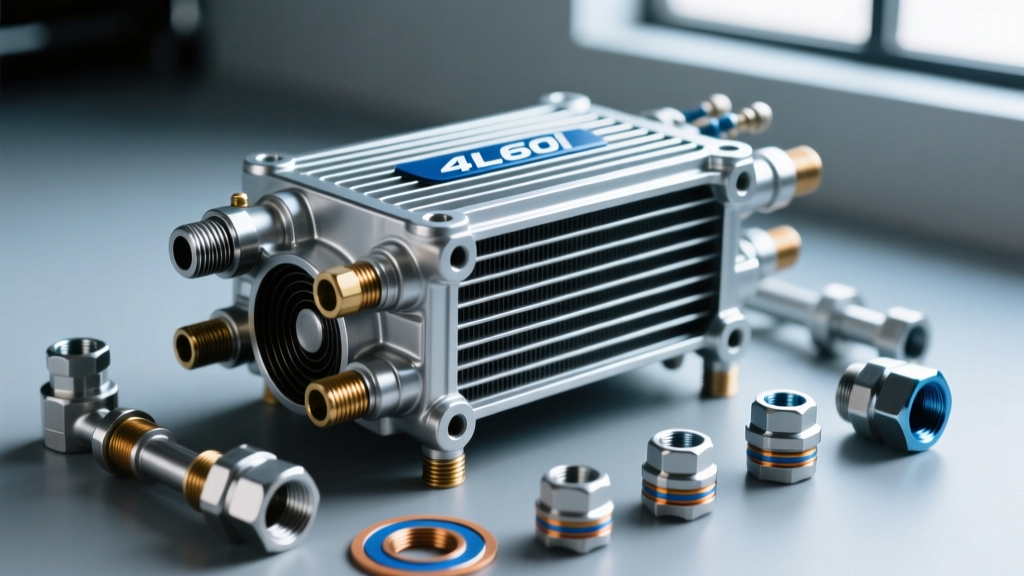
To eliminate the plastic quick-connect failure point and maximize flow to your auxiliary transmission cooler, the industry standard upgrade is converting to AN (Army-Navy) flare fittings, specifically -8AN for severe-duty diesel applications. This conversion involves cutting off the factory plastic connectors and either welding on AN bungs or using billet aluminum adapter fittings that thread directly into the transmission case and radiator/cooler ports.
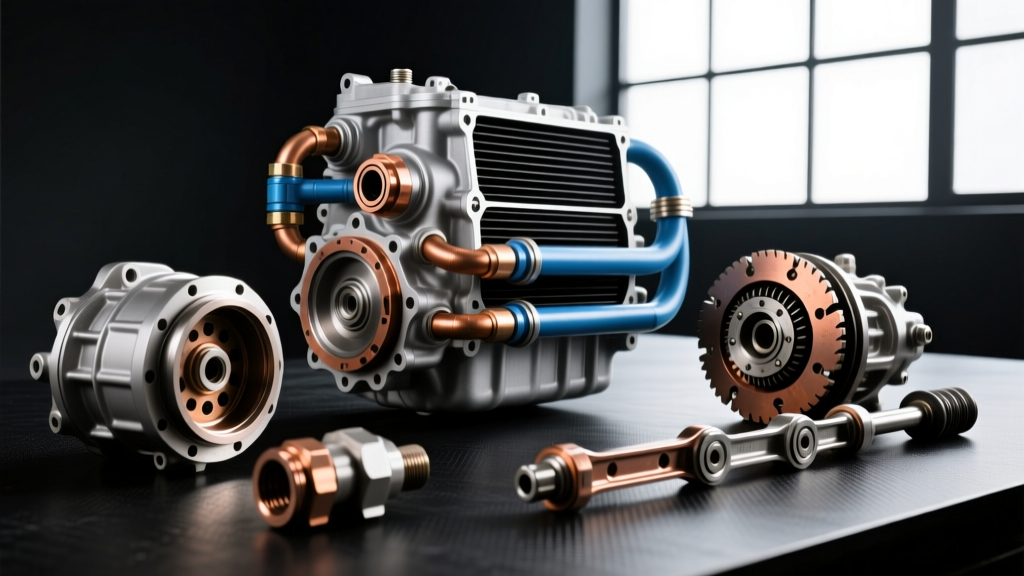
For the Allison 1000, the transmission case features 1/4" NPT ports for the cooler lines. You can utilize a billet 1/4" NPT to -8AN male flare adapter (such as the Earl's 981906ERL or Russell 640830). On the Ram 68RFE, the cooler lines often thread into the transmission case via metric or 1/2"-20 inverted flare fittings, requiring specific inverted-flare-to-AN adapter sleeves. Upgrading to PTFE-lined stainless steel braided hoses ensures that the lines will never degrade from under-hood heat, abrasion, or internal ATF chemical breakdown.
Adapter Selection and Thread Sealants
A critical mistake made during the installation of aftermarket transmission cooling line connectors is the misuse of thread sealants. AN flare fittings seal via a 37-degree machined metal-to-metal flare; they do not require, and should never have, thread sealant applied to the flare or the AN threads. Applying Teflon tape to AN threads can cause tape shreds to break off and lodge inside the transmission's thermal bypass valve or torque converter, causing catastrophic hydraulic failures.
However, when threading an NPT-to-AN adapter into the aluminum transmission case, a high-temperature liquid thread sealant or PTFE paste (like Permatex 80633) is mandatory. NPT (National Pipe Taper) threads rely on thread deformation for sealing, and without a proper sealant, high-pressure ATF will weep past the threads, creating a dangerous fire hazard if the fluid reaches the hot exhaust components.
Selecting a Stacked-Plate Transmission Cooler for Diesel Trucks
Once the lines and connectors are upgraded to support high-volume flow, the cooler itself must be optimized. For diesel trucks, Derale Performance and Mishimoto consistently recommend stacked-plate designs over traditional tube-and-fin or plate-and-fin coolers. Stacked-plate coolers utilize a series of hollow aluminum plates stacked together, creating massive surface area contact with the ambient air while maintaining large internal fluid passages that minimize pressure drop.
A tube-and-fin cooler might drop fluid temperatures effectively, but its restrictive internal tubing can cause a 15 to 25 PSI pressure drop across the cooler circuit. In a 10R140 or Allison 1000, this pressure drop can starve the torque converter clutch (TCC) of the apply pressure needed to maintain lockup, resulting in converter slip and exponential heat generation. A high-flow stacked-plate cooler typically restricts pressure by less than 3 to 5 PSI, ensuring the transmission's hydraulic circuits operate exactly as engineered.
Thermal Management and Routing Best Practices
When installing an auxiliary transmission cooler for diesel trucks, placement is just as critical as the hardware. The cooler must be mounted in front of the A/C condenser and engine radiator to access the highest velocity of ambient air. However, diesel trucks feature massive intercoolers for the turbochargers. If the transmission cooler completely blocks the lower third of the intercooler, it can cause elevated intake air temperatures (IATs), leading to engine defueling and reduced towing power.
Expert Insight: Always utilize a thermostatic bypass valve when installing massive auxiliary coolers on daily-driven diesel trucks. Transmission fluid must reach at least 160°F to boil off condensation and maintain proper viscosity. A cooler that is too efficient in freezing winter climates can cause the fluid to remain too thick, leading to cavitation at the pump and delayed shift events.
Torque Specifications and Installation Protocol
Working with aluminum transmission cases and high-pressure hydraulic lines requires strict adherence to torque specifications. Over-torquing an NPT adapter into the Allison 1000 or 68RFE case will easily strip the soft cast aluminum threads, requiring expensive helicoil repairs or case replacement. According to Summit Racing's AN Fitting Torque Guidelines, precision is paramount.
- 1/4" NPT to -8AN Adapter (Into Trans Case): 12-15 ft-lbs (Use high-temp PTFE sealant, do not over-tighten).
- -6AN Flare Nut Connection: 10-12 ft-lbs (Lubricate threads with a drop of ATF to prevent galling).
- -8AN Flare Nut Connection: 15-20 ft-lbs (Ensure the 37-degree flare is fully seated before applying torque).
- Allison 1000 Transmission Pan Bolts: 18 lb-ft (If dropping the pan to install a cooler line bypass delete kit).
- 68RFE Cooler Line Block Bolts: 8-10 lb-ft (For external filter adapter blocks).
Troubleshooting Leaks and Thermal Bypass Issues
Even with billet transmission cooling line connectors and premium PTFE hoses, leaks can occur if the mating surfaces are compromised. If you experience a micro-leak at the transmission case adapter, do not simply tighten the fitting. Drain the fluid, remove the adapter, and inspect the aluminum threads for micro-fractures. Clean the threads with a dedicated solvent, apply fresh liquid PTFE sealant, and torque to spec.
Another common issue in diesel truck cooling systems is the factory thermal bypass valve. Many OEM transmissions feature a bypass valve designed to route fluid back to the pan when the fluid is cold, preventing it from flowing to the cooler. Over time, the internal spring and spool valve in these bypass units can stick in the open position due to varnish buildup or clutch material debris. If your transmission is running hot despite having a massive stacked-plate cooler and upgraded -8AN lines, verify that the thermal bypass valve is actually closing and forcing fluid out to the cooler circuit. Bypassing or deleting this valve (in warm climates) is a common, highly effective modification for ensuring 100% of the fluid is cooled at all times.
Final Thoughts on Drivetrain Preservation
Upgrading your transmission cooler for diesel trucks is a holistic process. Spending $800 on a premium stacked-plate cooler is a wasted investment if you rely on $5 plastic quick-connects and restrictive 3/8" rubber hoses to deliver the fluid. By systematically eliminating factory bottlenecks, upgrading to -8AN billet transmission cooling line connectors, and adhering to strict torque and routing protocols, you ensure that your Allison, 68RFE, or 10R140 transmission survives the brutal thermal demands of modern heavy-duty towing.