The Hidden Economics of 4L60E Transmission Cooler Upgrades
When enthusiasts and fleet owners decide to upgrade their cooling system, the focus is almost exclusively on the heat exchanger itself. You research tube-and-fin versus stacked-plate designs, calculate BTU dissipation, and select the perfect auxiliary unit. However, the most critical bottleneck in your cooling system—and the most frequent source of budget overruns—lies in the 4L60E transmission cooler line fittings and adapters.
Upgrading the cooler on GM's legendary 4L60E (and its 4L65E/4L70E siblings) requires bridging the gap between the transmission case, the factory hard lines, the radiator's internal cooler, and your new external unit. In 2026, with supply chain stabilizing and aftermarket manufacturers offering more specialized adapter kits than ever, the pricing landscape has shifted. This comprehensive cost analysis breaks down the exact pricing, part numbers, and hidden financial risks associated with 4L60E transmission cooler line fittings and adapters, ensuring your project stays on budget and out of the limp-mode danger zone.
The 4L60E Fitting Evolution: What Are You Working With?
Before calculating costs, you must identify your transmission's production era, as GM changed the cooler line interfaces midway through the 4L60E's lifecycle:
- 1993–1996 (Early 4L60E): Utilized standard 1/2'-20 and 5/8'-18 UNF inverted flare fittings threading directly into the transmission case and radiator.
- 1997–2013 (Late 4L60E): Transitioned to push-in quick-connect fittings at the radiator side, while retaining threaded fittings at the transmission case. These quick-connects rely on internal O-rings and retaining clips.
Mismatching your adapters to your specific model year is the number one cause of blown lines and immediate fluid loss. Let's break down the three primary routing and adaptation strategies, analyzing the upfront costs, tooling requirements, and long-term reliability economics.
Cost Matrix: Fitting Strategies Compared
| Adaptation Strategy | Estimated Parts Cost | Tooling Cost | Durability & Risk | Flow Restriction |
|---|---|---|---|---|
| OEM Quick-Connect Retention | $15 - $30 | $0 | Moderate (O-ring degradation) | Low |
| Cut & Clamp Hose Barbs | $25 - $45 | $15 (Tubing Cutter) | Low (High blow-off risk at 200+ PSI) | Moderate |
| -6 AN Flare Conversion | $70 - $130 | $40+ (AN Wrenches) | Exceptional (Motorsport grade) | Lowest |
Strategy 1: Retaining OEM Quick-Connects (The Budget Route)
If you are installing a secondary cooler in-line with the factory radiator loop on a 1997+ 4L60E, the cheapest method is utilizing adapters that plug directly into the factory quick-connect hard lines.
Part Breakdown & Pricing
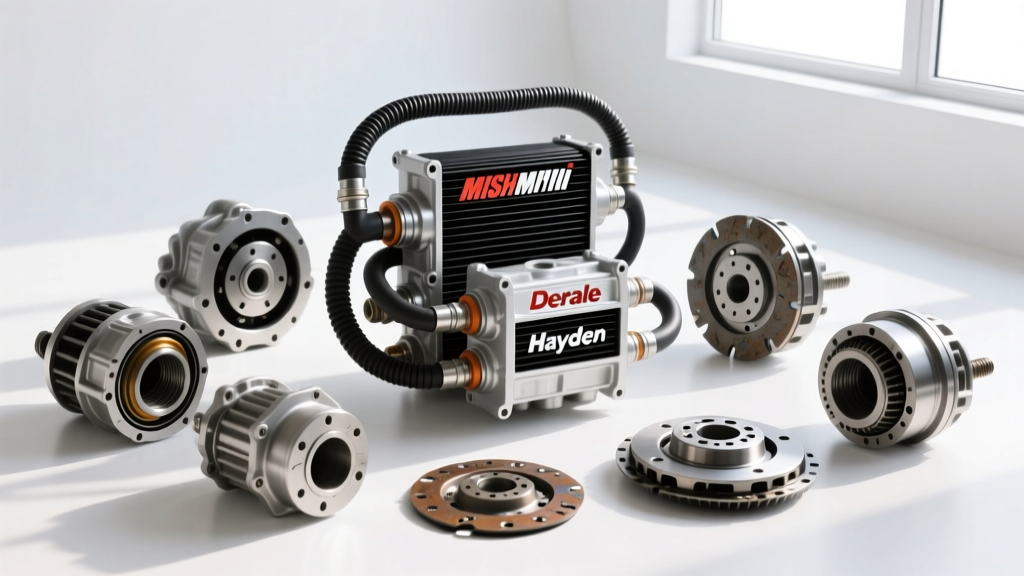
- Derale 45958 Adapter Kit: Priced around $22.99, this kit includes 5/8' and 1/2' quick-connect to 3/8' hose barb adapters. It allows you to slip the factory lines off the radiator, plug these adapters in, and run standard 3/8' ID rubber transmission hose to your external cooler.
- GM OEM Replacement Clips & O-Rings: If your factory lines are brittle, you may need to replace the quick-connect ends. GM part number 15136035 (5/8' fitting) retails for roughly $12.00 at dealerships or authorized online parts distributors.
The Cost of Failure: While upfront costs are under $35, the factory quick-connects rely on small internal rubber O-rings. In high-heat environments (like towing a trailer in summer), these O-rings harden and shrink. A $2 O-ring failure on the highway will drain your 4L60E's 11.2-quart fluid capacity in under three minutes, resulting in a $2,500+ transmission rebuild. From a total-cost-of-ownership perspective, this is a high-risk budget shortcut.
Strategy 2: Cut and Clamp Barbs (The 'Backyard' Route)
Many DIYers choose to cut the factory steel hard lines and use standard hose barbs with worm-gear clamps. We strongly advise against this for the 4L60E, but it remains a common practice, so we must analyze its economics.
Part Breakdown & Pricing
- Brass Hose Barbs (3/8' NPT to 3/8' Barb): Approximately $4.50 each at local hardware stores.
- Stainless Steel Hose Clamps: $1.00 to $2.00 each.
- 3/8' Gates Transmission Cooler Hose: Roughly $1.50 per foot.
The Hidden Cost of Line Pressure: The 4L60E is not a low-pressure system. While cruising, line pressure might sit around 80-100 PSI. However, during heavy throttle shifts, torque converter clutch (TCC) lockup, or when placed in Reverse, the 4L60E's internal pump can spike line pressure to 200–225 PSI. Standard worm-gear clamps on rubber hose barbs are notorious for slipping under these transient pressure spikes. A blown cooler line will not only destroy your transmission but will coat your exhaust system in flammable Dexron VI fluid, creating a severe fire hazard.
Strategy 3: -6 AN Flare Conversion (The Professional Standard)
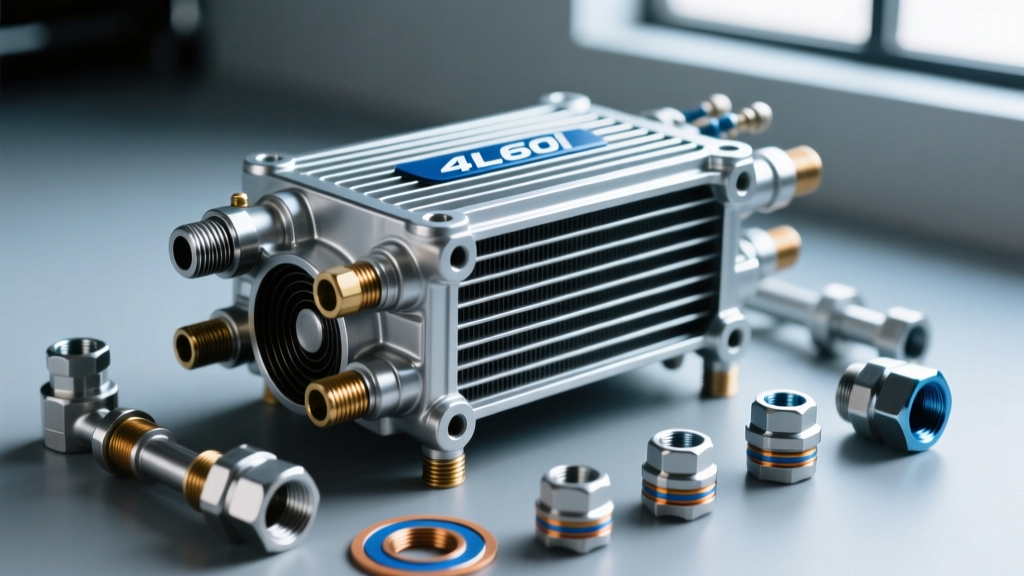
For dedicated tow rigs, off-road vehicles, and track cars, converting the 4L60E cooler lines to -6 AN (Army-Navy) 37-degree flared fittings is the gold standard. This requires threading adapters directly into the transmission case and utilizing braided stainless steel or hard-anodized aluminum lines.
Part Breakdown & Pricing
- Transmission Case Adapters: The 4L60E case requires a 1/2'-20 UNF to -6 AN male adapter for the cooler return, and a 5/8'-18 UNF to -6 AN adapter for the cooler feed. High-quality steel adapters from brands like Summit Racing's transmission fitting catalog cost between $12.00 and $18.00 each.
- -6 AN Braided Stainless Hose: Expect to pay $6.00 to $9.00 per foot for quality PTFE-lined stainless hose.
- -6 AN Hose Ends (Socketless or Crimp): $14.00 to $22.00 per fitting.
While the initial parts cost pushes past $120, the elimination of rubber hose degradation, worm-gear clamp failures, and quick-connect O-ring leaks makes this the most economically sound choice for long-term reliability. Furthermore, the smooth 37-degree flare interior creates virtually zero flow restriction, ensuring the 4L60E's lube circuit receives adequate volume.
Hidden Costs: Tooling, Fluids, and Thread Repair
When budgeting your 4L60E transmission cooler upgrade, you must account for the hidden costs that rarely make it into the initial shopping cart.
1. Aluminum Thread Stripping & Repair
The radiator on most 4L60E-equipped trucks (like the Silverado or Tahoe) features an aluminum internal cooler tank. The factory steel fittings are often seized due to galvanic corrosion. If you apply excessive force without heat, you will strip the aluminum threads.
Cost Impact: A new OEM replacement radiator costs between $180 and $350. Alternatively, you can use a 5/8'-18 or 1/2'-20 helicoil thread repair kit, which costs about $25.00, but requires specialized drill bits and extreme precision to avoid dropping aluminum shavings into the cooling system.
2. The Teflon Tape Tax (A Fatal Mistake)
Never use PTFE (Teflon) thread sealant tape on transmission cooler fittings. The 4L60E relies on a highly sensitive Pressure Control (PC) solenoid and a Torque Converter Clutch (TCC) PWM solenoid. If a single strand of Teflon tape shears off inside the fitting and travels through the fluid, it will lodge in the solenoid screens or valve body separator plate orifices.
Cost Impact: This results in erratic shifting, burnt clutches, or total limp mode. Diagnosing and dropping the pan to clean the valve body will cost you $150+ in labor and gasket kits, not to mention the risk of a full rebuild. Always use fittings with proper O-ring bosses or apply a minimal amount of liquid thread sealant only to the first two threads, keeping the fluid path entirely clear.
3. Dexron VI Fluid Replacement
Disconnecting the cooler lines will inevitably result in fluid loss. The 4L60E cooler circuit and torque converter hold a significant volume of fluid. You will lose between 2 to 4 quarts during a standard swap.
Cost Impact: In 2026, a high-quality full-synthetic Dexron VI or compatible LV (Low Viscosity) fluid costs approximately $9.00 to $13.00 per quart. Budget an extra $40.00 just for fluid top-offs and line-flushing procedures.
Torque Specifications for 4L60E Cooler Fittings
To avoid the costly thread-stripping mentioned above, adherence to precise torque specifications is mandatory. Always use a calibrated inch-pound or low-range foot-pound torque wrench when installing adapters into the transmission case or radiator.
- 5/8'-18 UNF (Steel into Aluminum Radiator): 12 - 15 ft-lbs. (Use a drop of blue Loctite if the threads feel sloppy).
- 5/8'-18 UNF (Steel into Cast Iron/Aluminum Trans Case): 20 - 25 ft-lbs.
- 1/2'-20 UNF (Steel into Aluminum Radiator): 10 - 12 ft-lbs.
- 1/2'-20 UNF (Steel into Trans Case): 15 - 20 ft-lbs.
- -6 AN Aluminum Hose Ends (into Steel Adapters): 12 - 15 ft-lbs. Always lubricate the AN threads with a drop of assembly lube or clean motor oil before torquing to prevent galling.
Final Verdict: Where Should You Invest Your Budget?
When analyzing the cost of 4L60E transmission cooler line fittings and adapters, the cheapest upfront option is rarely the most economical over the lifespan of the vehicle. While OEM quick-connect adapters and hardware store hose barbs might save you $80 on installation day, they introduce catastrophic failure points into a high-pressure hydraulic system.
Investing $120 to $150 in a proper -6 AN flare conversion kit, paired with the correct UNF thread adapters and PTFE-lined stainless hoses, provides motorsport-level reliability. For a deeper look into high-flow adapter configurations, consulting resources like Derale Performance adapter kits can help you match the exact thread pitch and flow requirements of your specific 4L60E model year. Protect your transmission's hydraulic integrity by treating your fittings not as mere plumbing, but as critical, pressure-bearing components.