Pinpointing the 4L60E Transmission Temperature Sensor Location
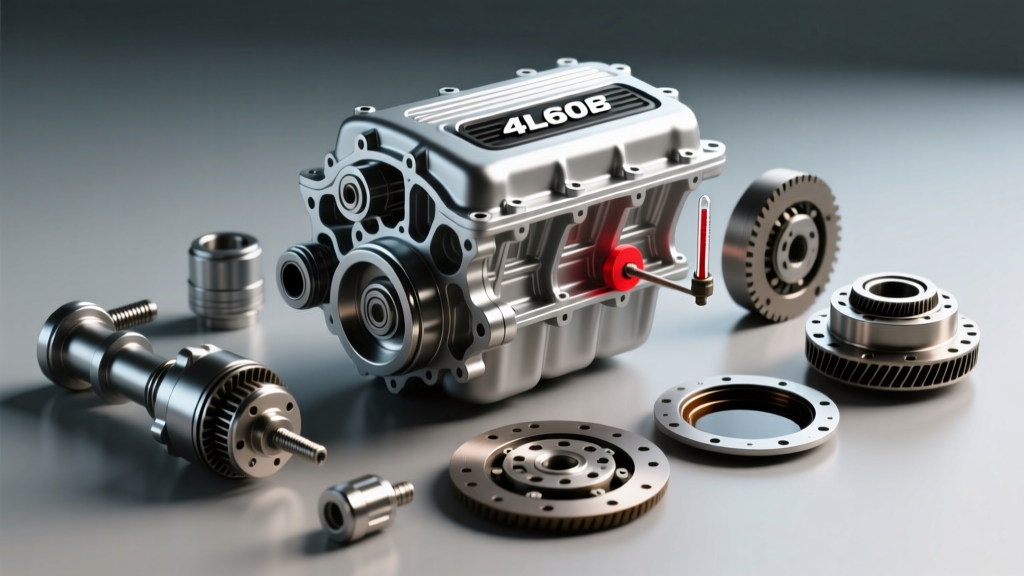
If you are towing a heavy trailer or running a modified torque converter, keeping your GM 4-speed automatic alive is a numbers game. Knowing the exact 4L60E transmission temperature sensor location is the first step in diagnosing overheating issues, shift flares, or torque converter clutch (TCC) lockup failures. Unlike later models that feature external plug-and-play sensors, the 4L60E utilizes an internal Negative Temperature Coefficient (NTC) thermistor.
This sensor is integrated directly into the internal valve body wiring harness, submerged in the transmission fluid pan. The Powertrain Control Module (PCM) relies on this thermistor to dictate shift scheduling, line pressure modulation, and TCC lockup thresholds. If the fluid exceeds roughly 265°F, the PCM will trigger limp mode or inhibit overdrive to protect the clutches.
Accessing the Internal TFT Sensor
To inspect, test, or replace the factory Transmission Fluid Temperature (TFT) sensor, you must drop the transmission pan. Here are the critical specifications for the job:
- Fluid Capacity (Pan Drop): Approximately 5.0 to 6.0 quarts of ACDelco Dexron VI.
- Pan Bolt Torque Spec: 97 lb-in (8 lb-ft). Warning: These are M6x1.0 bolts. Using lb-ft instead of lb-in will snap the bolts in the aluminum case.
- Sensor Resistance Testing: Use a multimeter to test the thermistor pins on the external 16-way case connector (Pins E and M on most 1996-2006 harnesses).
Factory Thermistor Resistance Chart
| Fluid Temperature (°F) | Approximate Resistance (Ohms) | PCM Voltage Signal |
|---|---|---|
| 32°F (0°C) | 9,500 - 10,500 Ω | ~4.6V |
| 68°F (20°C) | 3,800 - 4,200 Ω | ~3.9V |
| 176°F (80°C) | 450 - 550 Ω | ~1.5V |
| 212°F (100°C) | 280 - 320 Ω | ~1.0V |
Source: GM Powertrain Service Manual & Summit Racing Technical Docs.
Why Factory Monitoring Falls Short for Towing
While the internal 4L60E TFT sensor is highly accurate for PCM logic, it is virtually useless for the driver. Most factory gauge clusters in Silverados, Tahoes, and Camaros do not display a real-time transmission temperature gauge. Furthermore, because pre-2007 GM trucks utilize Class 2 serial data rather than modern CAN bus networks, generic OBD2 scanners often fail to read the TFT PID without custom configuration. By the time the factory 'Check Engine' light triggers a P0711 (Sensor Range/Performance) or P0218 (Overtemp) code, your Dexron VI fluid has already begun to oxidize, and your clutch packs may be glazed.
To proactively manage transmission cooling, enthusiasts and commercial towers must turn to aftermarket monitoring solutions. Below is our 2026 buyer’s guide to the best transmission temperature monitoring systems, categorized by installation method and data accuracy.
Comparing Aftermarket Temperature Monitoring Solutions
1. OBD2 Bluetooth & Digital Dash Integrations
For daily drivers who want cabin monitoring without cutting into cooler lines, OBD2 dongles paired with apps like Torque Pro or hardware like the ScanGauge II remain popular. However, reading the 4L60E's internal sensor via the OBD2 port requires mapping the correct Class 2 GM PID (often hexadecimal 22 1940 or specific manufacturer modes).
Pros: Zero mechanical wrenching; utilizes the factory PCM logic.
Cons: Data latency (up to 2-3 seconds); reliant on an aging internal thermistor; difficult to configure on pre-CAN GM trucks.
2. Standalone Gauge Kits with Inline Cooler Line Sensors
The gold standard for towing and track use is a standalone gauge kit that reads fluid temperature outside the transmission. Kits from AutoMeter and Shift Solenoid include a 1/8" NPT brass temperature sender. This sender is installed inline on the transmission's 'out' cooler line (the line routing from the transmission to the radiator/auxiliary cooler).
Pros: Instantaneous analog or digital readouts; highly visible; independent of PCM failures.
Cons: Requires cutting/splicing hard lines or using adapter fittings; measures cooler line temp, which can be 10-15°F hotter than the sump pan temp.
3. Auxiliary Cooler Fan Controllers (Derale / Mishimoto)
If your goal is automated cooling rather than just observation, inline thermal switches are the way to go. Brands like Derale offer inline thermostatic fan controllers that tee into the cooler lines. When the fluid hits a preset threshold (e.g., 180°F), the relay triggers an auxiliary cooler fan.
Pros: 'Set and forget' automation; protects the transmission even if the driver isn't watching a gauge.
Cons: Requires electrical relay wiring; adds draw to the alternator.
Feature & Pricing Comparison Chart
| Monitoring Type | Example Product | Est. Cost (2026) | Install Difficulty | Best Application |
|---|---|---|---|---|
| OBD2 Digital Scanner | ScanGauge II / Torque Pro | $40 - $170 | Easy (Plug & Play) | Light towing, daily driving |
| Inline Analog Gauge Kit | AutoMeter Phantom 2-1/16" | $180 - $240 | Moderate (Line tapping) | Heavy towing, off-road |
| Inline Digital Stepper | Shift Solenoid OLED Dash | $250 - $350 | Moderate (Line tapping) | Performance, track, towing |
| Thermostatic Fan Switch | Derale Inline Thermostat | $60 - $90 | Hard (Plumbing & Relays) | Automated auxiliary cooling |
Installation Realities: Tapping the 4L60E Cooler Lines
If you opt for an inline gauge kit or an auxiliary cooler switch, you must tap into the 4L60E cooler lines. The 4L60E typically uses 3/8" inverted flare or 1/2" quick-connect fittings for the cooler lines, depending on the model year and whether the vehicle has a factory tow package.
Step-by-Step Inline Sensor Installation
- Identify the 'Out' Line: Start the truck cold. Feel both lines at the transmission. The line that gets warm first is the 'out' line (fluid exiting the trans to the cooler). This is where you want to measure peak heat.
- Cut and Adapt: If you have hard steel lines, use a tubing cutter to remove a 2-inch section. Install a Derale 3/8" Inverted Flare to 1/8" NPT Female Adapter (or equivalent union).
- Thread Sealant Warning: When threading the brass temperature sender into the adapter, use liquid PTFE thread sealant. Do not use standard Teflon tape. If tape shreds and enters the cooler line, it will clog the radiator's internal transmission cooler or the auxiliary cooler matrix, causing catastrophic flow restriction.
- Torque Specs: Brass senders are fragile. Torque the sender to 10-15 ft-lbs maximum. Over-tightening will crack the brass housing, resulting in an immediate fluid leak and air ingestion into the cooler circuit.
Expert Tip: Never install an inline temperature sensor on the 'return' line (fluid coming back from the cooler). The return line temperature is heavily influenced by ambient air and radiator coolant temps, giving you a false sense of security regarding the actual heat generated by the torque converter and clutch packs.
Managing the Heat: Safe Operating Ranges
Regardless of the monitoring system you purchase, you must know your thresholds. Modern synthetic fluids like ACDelco Dexron VI or Amsoil Signature Series are rated for higher thermal breakdown points than legacy Dexron III, but the physical clutch materials in the 4L60E remain the weak link.
- 160°F - 190°F: Optimal operating range. TCC lockup is active, fluid viscosity is ideal for valve body lubrication.
- 200°F - 220°F: Acceptable for short, steep grades while towing. Monitor closely.
- 230°F - 250°F: Danger zone. Transmission fluid begins to varnish. The 3-4 clutch pack (a known 4L60E weak point) is at high risk of slipping and burning.
- 265°F+ : Critical failure imminent. PCM will likely command limp mode. Pull over immediately and let the engine idle to circulate fluid through the cooler.
Expert Verdict: Which Setup Should You Buy?
If you are strictly looking to diagnose a P0711 code or verify PCM shift logic, you must access the 4L60E transmission temperature sensor location inside the pan, test the NTC thermistor resistance, and replace the internal harness if out of spec.
However, if your goal is proactive monitoring for a tow rig or a high-stall street/strip build, skip the OBD2 dongles. The data latency on older GM Class 2 networks is too slow to catch a sudden temperature spike during a WOT pull or a long mountain grade. Invest in a high-quality AutoMeter inline gauge kit or a Derale inline thermostatic switch tied to an auxiliary Mishimoto cooler. Tapping the cooler line takes an extra hour of wrenching, but the real-time, unfiltered data it provides is the only reliable way to protect your 4L60E from thermal degradation in demanding environments.