The Hidden Bottleneck in Heavy-Duty Axle Cooling
As of 2026, modern heavy-duty trucks and performance SUVs—such as the Ram 3500 equipped with the AAM 12.0 axle or the Ford F-350 with the Dana 80—are pushing more torque and towing heavier loads than ever before. While factory engineering has improved, sustained heavy towing on 6% grades will still push differential gear oil temperatures past 230°F (110°C). At these temperatures, even premium synthetics like AMSOIL Severe Gear 75W-90 begin to experience accelerated oxidation and viscosity shear.
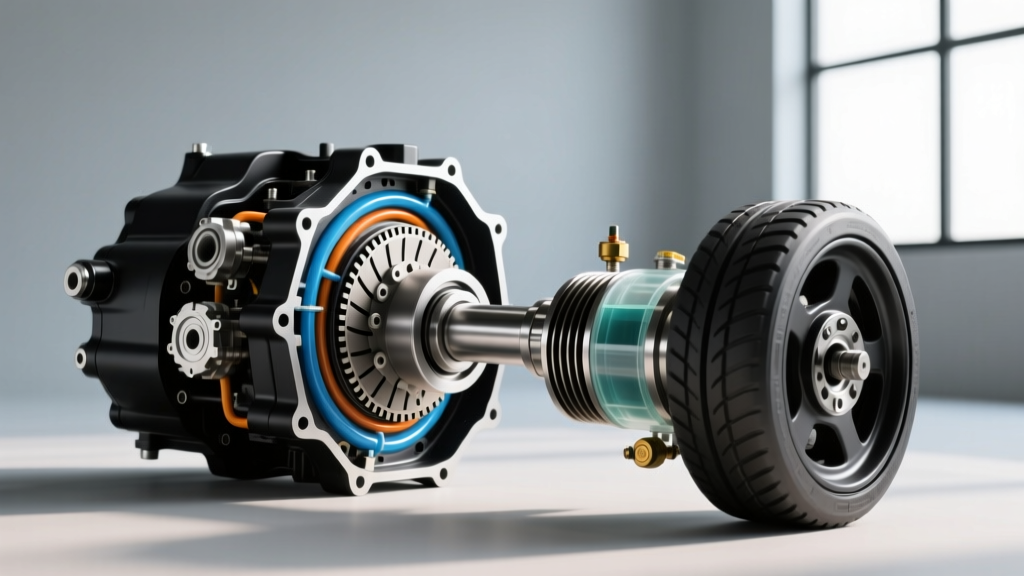
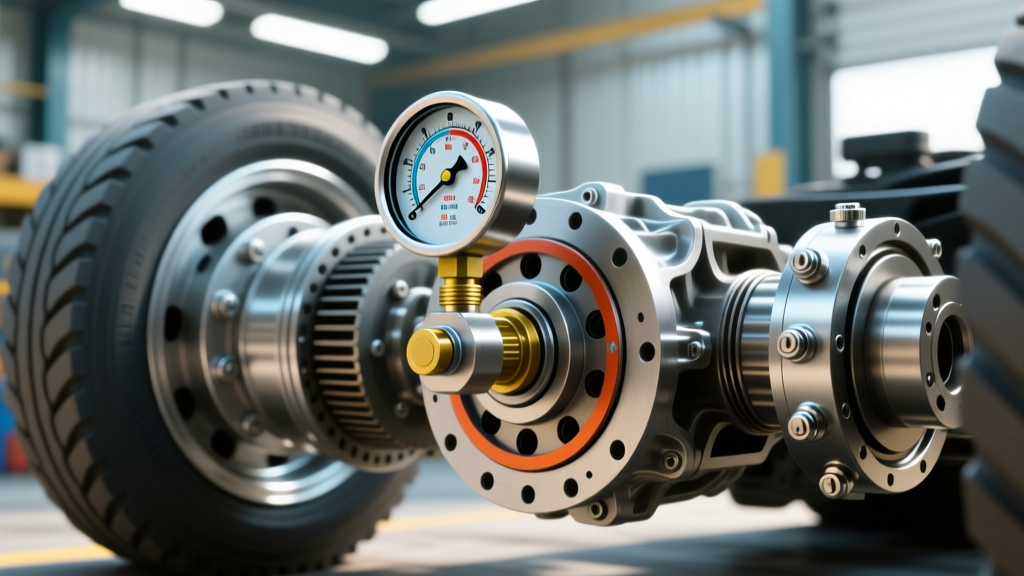
The ultimate performance upgrade for truck and SUV differential maintenance is the installation of an external axle lube cooler paired with a high-flow filtration system. However, simply bolting on a cooler and filter is only half the battle. To truly monitor the health of your axle and the restriction level of your external filter, you need precise instrumentation. This is where integrating a diaphragm type differential pressure gauge into your custom cooling loop transitions your setup from a blind modification to a data-driven performance system.
Why Standard Gauges Fail in Axle Lube Loops
Many DIY mechanics attempt to monitor axle filter restriction using standard Bourdon tube pressure gauges. This is a critical engineering mistake when dealing with automotive gear oils. Standard gauges are designed for low-viscosity fluids like water, air, or light hydraulic oils. They feature narrow internal passageways that easily clog when exposed to the thick, metallic-particle-laden environment of a differential.
Furthermore, 75W-90 and 75W-140 synthetic gear oils exhibit massive viscosity swings. At a cold start of 20°F (-6°C), the oil behaves almost like a solid, generating massive initial pressure spikes. A standard gauge will peg, permanently damaging its internal mechanical linkages. A diaphragm type differential pressure gauge solves this by utilizing a flexible, heavy-duty elastomer membrane (typically Viton/FKM) to separate the high and low-pressure ports. The open, flush-mounted diaphragm design prevents clogging from metallic axle debris while accurately measuring the delta-P (pressure drop) across the external filter housing.
| Feature | Standard Bourdon Tube Gauge | Diaphragm Type Differential Pressure Gauge |
|---|---|---|
| Internal Passageways | Narrow, prone to clogging with gear sludge | Open, flush-mounted diaphragm seals |
| Viscosity Tolerance | Low (Hydraulic oil, water, air) | High (75W-140 Gear Oil, heavy synthetics) |
| Pulsation Dampening | Poor (requires external snubbers) | Excellent (diaphragm mass absorbs spikes) |
| Seal Compatibility | Standard Buna-N (swells in gear oil additives) | Viton/FKM (resists EP and ZDDP additives) |
Sizing and Installing the Gauge on an AAM 11.5 / 12.0 Axle
When upgrading the AAM 11.5 or 12.0 axles found in late-model Ram and GM HD trucks, you are typically tapping into the external cooler return lines. The goal is to measure the pressure immediately before the external filter (High Pressure) and immediately after the filter (Low Pressure).
Plumbing and Fitting Specifications
- Line Size: Most heavy-duty external axle cooler kits utilize -8 AN (1/2") or -6 AN (3/8") hoses. You must install a tee-fitting with a 1/4" NPT female port on both the pre-filter and post-filter lines.
- Isolator Fluid: If your diaphragm type differential pressure gauge utilizes capillary tubes rather than direct mounting, ensure the capillary system is filled with a compatible inert fluid. However, for axle applications, a direct-mount gauge with a 316L stainless steel diaphragm and Viton O-rings is highly preferred to avoid capillary shear.
- Thread Sealant: Never use standard Teflon tape on NPT fittings entering an axle lube loop. Shreds of tape will bypass the filter and score the ring and pinion gears. Use a liquid PTFE thread sealant rated for synthetic gear oils.
Target Pressure Drops and Filter Bypass Specs
Understanding the data your gauge provides is crucial for differential maintenance. High-flow external axle filters (such as those from Baldwin or Wix designed for custom lube loops) typically feature an internal bypass valve set to open between 15 and 22 PSI.
If your diaphragm type differential pressure gauge reads a delta-P of 3 to 8 PSI at operating temperature (180°F - 200°F), your filter is flowing optimally. If the gauge consistently reads above 15 PSI under load, the filter media is restricted, and the internal bypass valve has opened. This means unfiltered, metallic-laden gear oil is circulating through your pinion bearings and ring gear. Immediate service is required.
Complete Upgrade Kit: Parts, Costs, and Torque Specs
Executing this upgrade requires precision. Below is a comprehensive Bill of Materials (BOM) and torque specification guide for integrating an external cooler, filter, and differential pressure monitoring system into a standard heavy-duty truck axle.
| Component / Fastener | Specification / Part Detail | Estimated Cost | Torque Spec / Note |
|---|---|---|---|
| Diaphragm Differential Gauge | 0-30 PSI Range, Viton Diaphragm, 1/4" NPT | $180 - $280 | Hand tight + 1/2 turn (15 lb-ft max) |
| External Axle Cooler Kit | Derale or Hayden HD Trans/Axle Cooler w/ Fan | $250 - $400 | Mount with anti-vibration isolators |
| Inline Filter Head & Element | 1"-12 Thread, 10-Micron Synthetic Media | $85 - $120 | Filter Head: 25 lb-ft |
| AAM 12.0 Fill Plug | OEM Reusable Magnetic Plug | $15 | 33 lb-ft (45 Nm) |
| AAM 12.0 Drain Plug | OEM Reusable Magnetic Plug | $15 | 33 lb-ft (45 Nm) |
| AN Hose Fittings | -8 AN to 1/2" NPT 90-degree Swivel | $12 - $18 each | Wrench tight, do not over-torque swivels |
Maintenance Intervals for the Upgraded System
Upgrading your truck or SUV differential with an external cooler and a diaphragm type differential pressure gauge fundamentally changes your maintenance schedule. Instead of changing gear oil based on arbitrary mileage intervals (e.g., every 30,000 miles), you can transition to condition-based maintenance.
For severe-duty towing applications, monitor the gauge weekly. When the delta-P increases by 5 PSI over your baseline clean-filter reading, it is time to replace the external filter element. The gear oil itself should be sampled and tested for viscosity breakdown and iron content (ppm) every 50,000 miles. By maintaining the axle fluid temperature below 200°F and ensuring 10-micron filtration via active pressure monitoring, you can easily extend the life of your ring and pinion set by over 40%, saving thousands of dollars in catastrophic drivetrain rebuilds.
Final Thoughts on Axle Instrumentation
Treating your truck's axle like an industrial fluid power system is the hallmark of true performance maintenance. The harsh chemical environment of extreme pressure (EP) additives and the physical brutality of metallic wear particles demand specialized tools. By investing in a high-quality diaphragm type differential pressure gauge, you gain real-time visibility into the lifeblood of your drivetrain, ensuring your rig can handle the most punishing 2026 towing demands without missing a beat.