The Symbiosis: How the Transfer Case and Differential Communicate
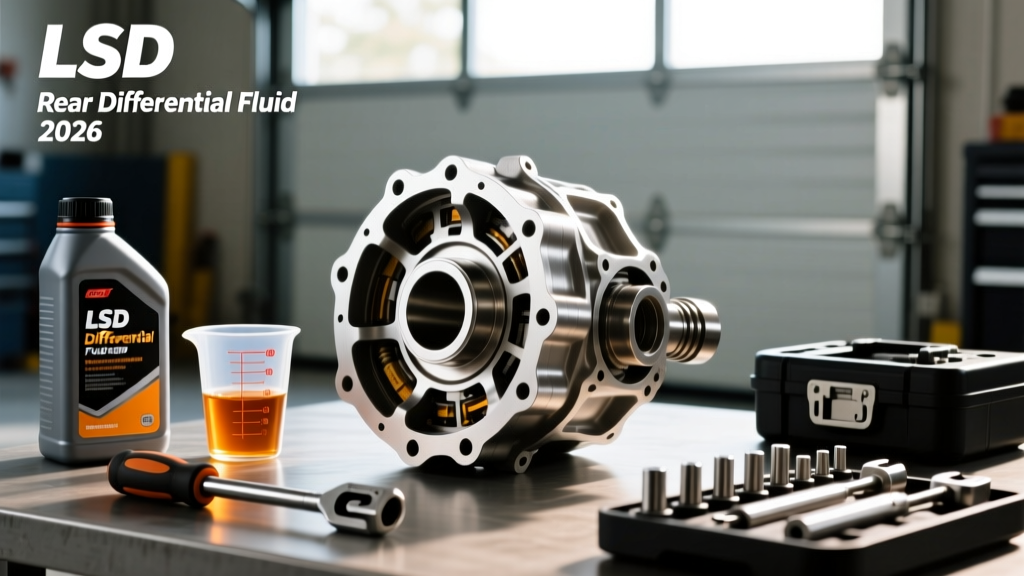
If you are new to modern drivetrains, you might think of the transfer case and the rear differential as two completely separate, disconnected metal boxes. In older, traditional 4x4 trucks, that was mostly true. The transfer case split power front-to-rear, and the rear differential split power left-to-right using a simple mechanical gearset. But as we navigate the highly integrated AWD platforms of 2026, that relationship has evolved into a complex, computer-controlled symbiosis.
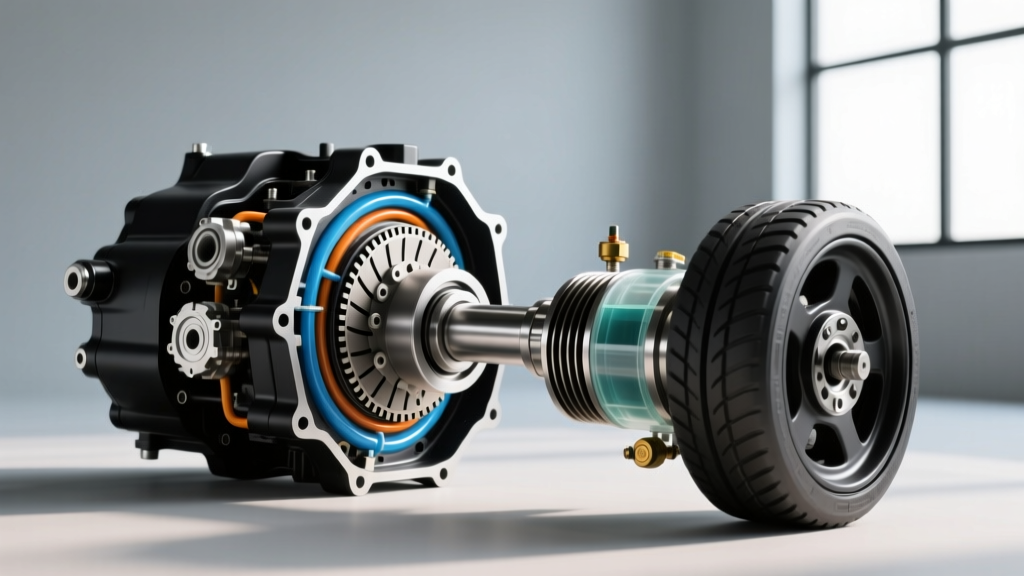
In modern active AWD systems—such as the GM Twinster, Ford’s Twin-Clutch Rear Drive Unit (RDU), or BorgWarner’s eco-friendly torque-vectoring setups—the transfer case and the rear differential are in constant digital and hydraulic communication. The transfer case dictates the baseline front-to-rear torque split, while the rear differential uses internal electro-hydraulic clutch packs to vector torque side-to-side. To make this happen seamlessly without binding the drivetrain, the system relies entirely on hydraulic fluid pressure. When things go wrong, the secret to diagnosing the issue lies in a concept known as calculating differential pressure.
What Does 'Calculating Differential Pressure' Actually Mean?
Let’s break this down with a beginner-friendly analogy. Imagine your AWD control module is the brain, the clutch packs inside the differential are the muscles, and the hydraulic gear oil is the nervous system. The brain sends an electrical signal to a solenoid, commanding a specific amount of hydraulic pressure to engage the clutch pack and transfer torque.
However, the computer doesn’t just send a signal and hope for the best. It uses a pressure transducer (a sensor) to read the actual hydraulic pressure being generated inside the differential or transfer case clutch housing. Calculating differential pressure is the diagnostic process of comparing the Commanded Pressure (what the brain asked for) against the Actual Pressure (what the muscles actually received). The mathematical difference between these two numbers is the 'pressure delta' or differential pressure.
If the module commands 250 PSI to lock the rear axle during hard acceleration, but the transducer only reads 210 PSI, you have a differential pressure delta of 40 PSI. This discrepancy is the exact trigger for the dreaded 'AWD Fault' or 'Service Drivetrain' warnings on your dashboard.
Why Does the Pressure Delta Happen?
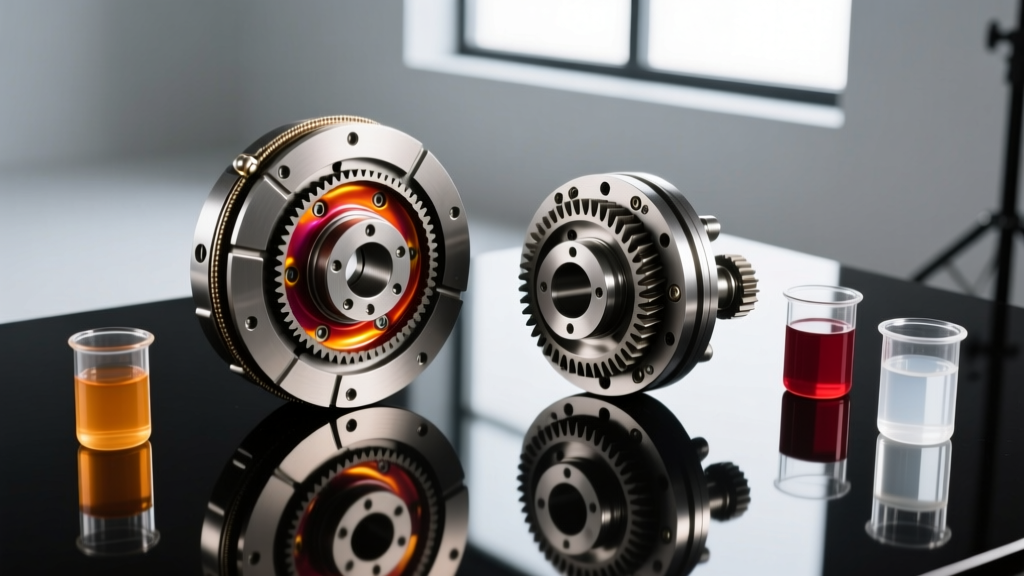
Because the gear oil inside your differential and transfer case serves a dual purpose—it lubricates the heavy-duty ring and pinion gears and acts as the hydraulic medium for the microscopic clutch packs—fluid condition is paramount. Over time, the intense shearing forces between the clutch friction plates literally tear the molecular chains of the gear oil apart. This is called viscosity shear breakdown.
When a specialized 75W-85 synthetic fluid shears down to the equivalent of a 50-weight oil, it becomes too thin to hold high hydraulic pressure. The internal pump cavitates, or the solenoid valves bleed off fluid faster than they can build pressure. The result? The computer struggles to reach its target, the differential pressure delta widens, and the AWD system disables itself to prevent catastrophic mechanical binding.
Diagnostic Data: Reading Clutch Pressure PIDs
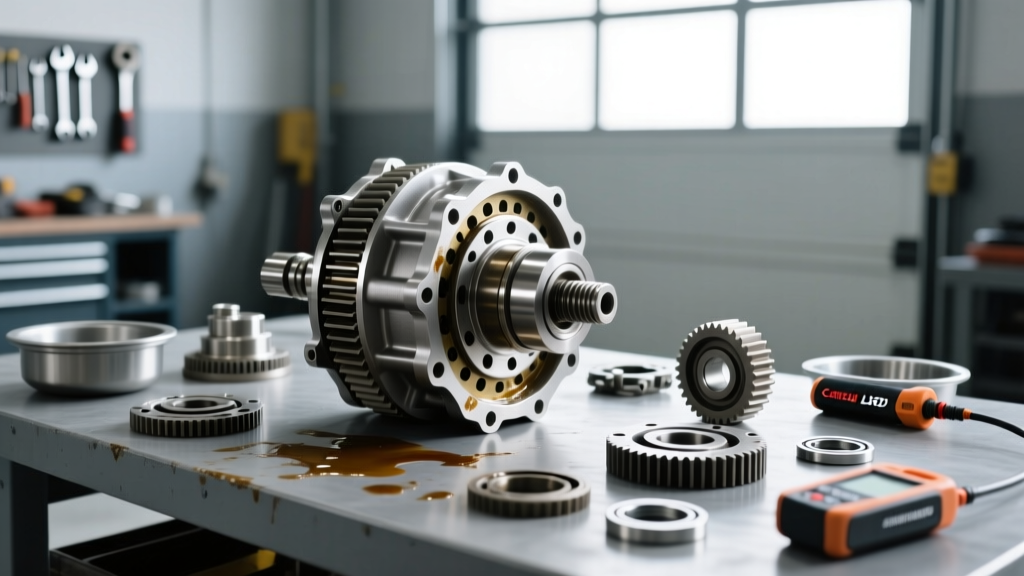
To diagnose the transfer case and differential relationship, professional technicians use a bi-directional OBD2 scan tool to read live Parameter IDs (PIDs). By monitoring these PIDs while driving, you can see exactly where the hydraulic relationship is failing.
| AWD System Architecture | Required Fluid Spec | Common Part Number | Max Line Pressure | Acceptable Delta Limit |
|---|---|---|---|---|
| GM Twinster (AAM RDU) | Dexron ULV / Specific AWD | ACDelco 19355656 | 450 PSI | < 15 PSI |
| Ford Twin-Clutch RDU | 75W-85 Synthetic API GL-5 | Motorcraft XZ-75W85-Q | 380 PSI | < 20 PSI |
| BMW xDrive (ATC / Transfer Case) | Shell TF0870 / Equivalent | BMW 83222446673 | 400 PSI | < 12 PSI |
Note: Always verify exact fluid specifications for your specific VIN. Using standard 75W-90 GL-5 gear oil in a clutch-pack-equipped RDU will cause immediate friction material shudder and catastrophic pressure loss.
Step-by-Step: Diagnosing a Pressure Delta Fault
If you are experiencing torque bind, hesitation, or an AWD warning light, follow this diagnostic framework to evaluate the transfer case and differential relationship:
- Connect a Bi-Directional Scanner: You need a tool capable of reading manufacturer-specific chassis and drivetrain PIDs (e.g., Snap-on Zeus, Autel MaxiSys, or a high-end OBDLink). Standard code readers will not display hydraulic pressure data.
- Locate the Clutch Pressure PIDs: Navigate to the AWD or Transfer Case control module. Look for PIDs labeled 'AWD Clutch Commanded Pressure' and 'AWD Clutch Actual Pressure'.
- Perform a Static Key-On Engine-Off (KOEO) Test: With the vehicle on a lift and wheels off the ground, command the clutch pack to engage via the scanner's active controls. The actual pressure should snap to the commanded pressure almost instantly. A sluggish response indicates a clogged internal pickup filter or a failing solenoid.
- Perform a Dynamic Load Test: Safely drive the vehicle on a dry, straight road under moderate acceleration. Log the PIDs. If you are calculating differential pressure deltas that exceed 25-30 PSI under load, the fluid has likely suffered severe shear breakdown.
- Evaluate the Delta: If the delta is high but the fluid is fresh, suspect a failing internal hydraulic pump or a worn clutch pack seal. If the fluid is old or the incorrect viscosity was used at the last service, a fluid flush is your mandatory first step.
The Real Cost of Ignoring the Hydraulic Relationship
Many beginners assume that an AWD fault is an electrical sensor issue and simply clear the code. This is a costly mistake. When the actual pressure fails to meet the commanded pressure, the clutch packs slip excessively. This slipping generates immense heat, which glazes the friction material and contaminates the fluid with microscopic metallic and Kevlar debris.
According to drivetrain diagnostic data compiled by AA1Car AWD Systems Diagnostics, ignoring a hydraulic pressure delta fault can escalate a simple $120 fluid service into a $2,200+ Rear Drive Unit (RDU) or transfer case replacement. The friction materials weld themselves to the steel plates, resulting in a permanently locked rear axle that will hop and bind during low-speed turns, eventually destroying the ring and pinion gears.
Maintenance Specs: Keeping the Drivetrain Healthy
To maintain the precise hydraulic relationship between your transfer case and differential, strict adherence to maintenance intervals and torque specifications is required. Here is a baseline guide for modern clutch-pack AWD systems:
- Service Interval: Every 45,000 to 60,000 miles for normal driving; every 30,000 miles for severe duty (towing, track use, or frequent off-roading).
- Fluid Capacity: Most active RDUs hold between 1.2 and 1.8 quarts. Transfer cases typically hold 1.5 to 2.5 quarts. Always measure exactly what comes out.
- Drain & Fill Plug Torque: For most GM AAM and Ford RDU housings, the drain and fill plugs require exactly 18 lb-ft (25 Nm). Over-torquing can crack the cast aluminum housing, leading to catastrophic fluid loss.
- Friction Modifiers: Some older systems require a separate friction modifier additive (e.g., Motorcraft XL-3). However, most 2026-spec synthetic fluids (like Dexron ULV) have the modifier pre-blended. Adding extra modifier to a pre-blended fluid will lower the coefficient of friction too much, causing the clutches to slip and the pressure delta to widen.
Summary: Respect the Fluid, Respect the Physics
The relationship between your transfer case and your differential is no longer just a mechanical shaft spinning in a tube. It is a highly calibrated hydraulic circuit. By understanding the importance of calculating differential pressure and monitoring the delta between commanded and actual clutch pressures, you can diagnose drivetrain faults long before they result in mechanical failure. Always consult SAE J306 viscosity classifications and OEM service manuals to ensure your gear oil is up to the task of acting as both a heavy-duty lubricant and a precision hydraulic fluid. For deeper engineering insights into torque vectoring hardware, reviewing whitepapers from BorgWarner AWD Technologies provides an excellent look into how these clutch packs are engineered to handle immense hydraulic stress.